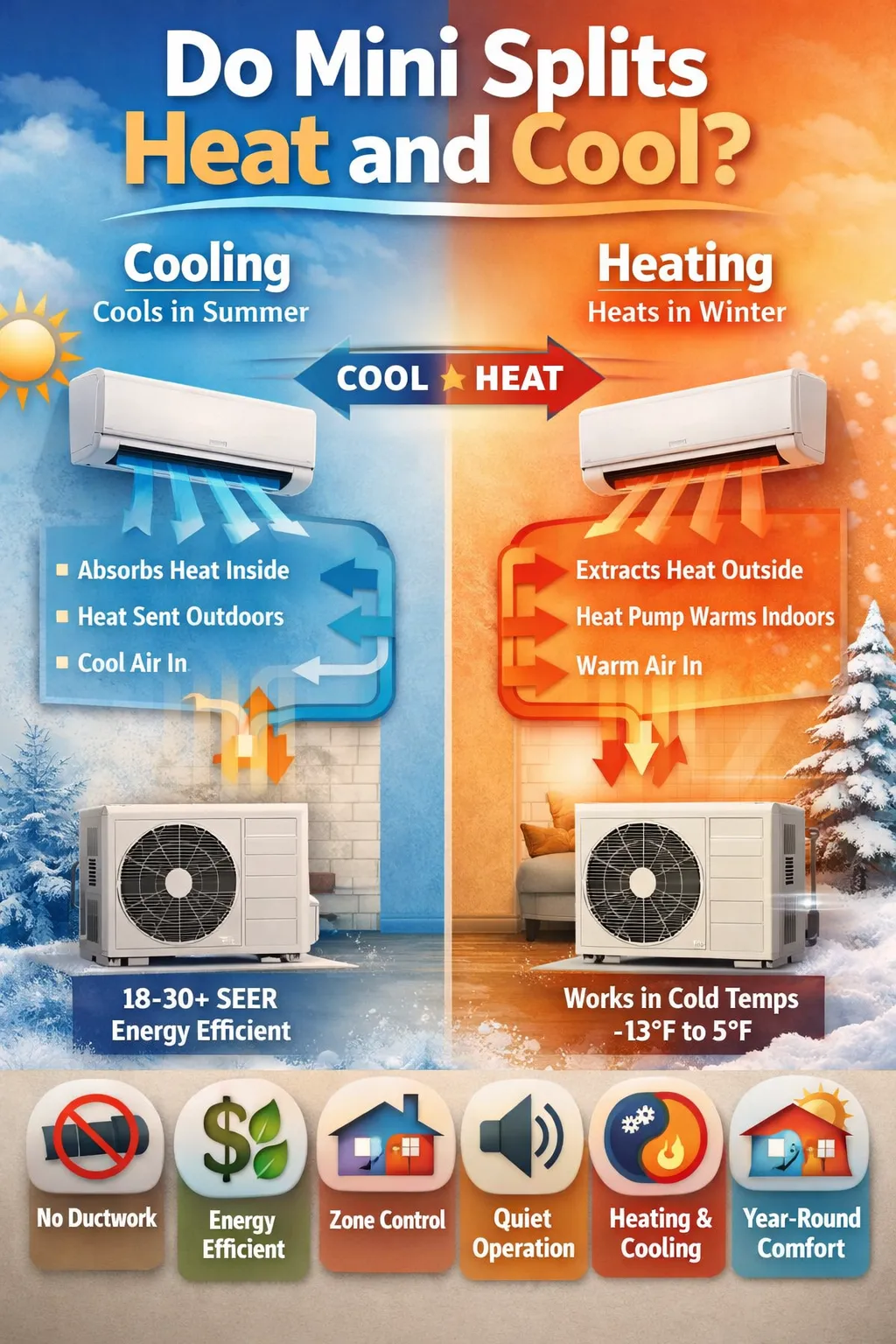
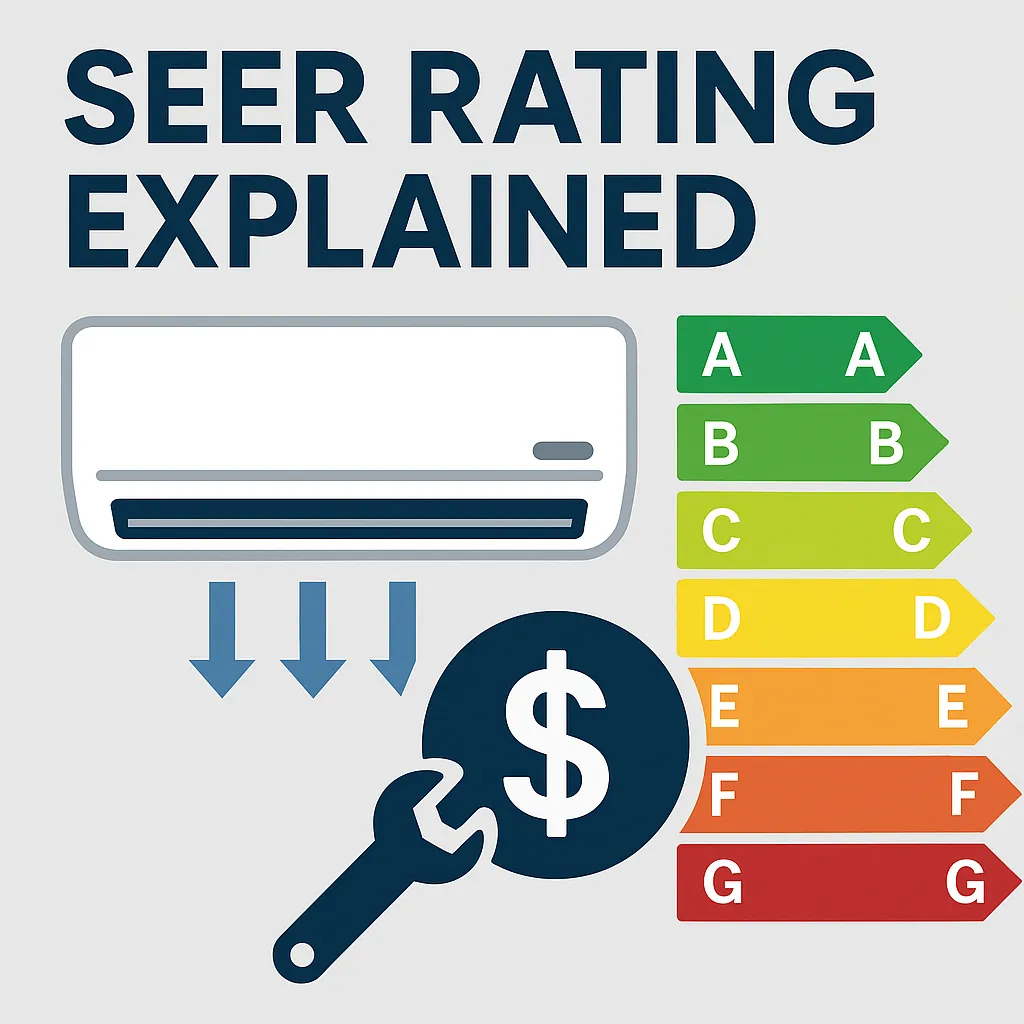

If you've been researching HVAC systems, and you're wondering what SEER means, you're not alone. So what is SEER, or SEER Rating? SEER is an abbreviation for "Seasonal Energy Efficiency Ratio". It is a rating system that helps normal people like you and I know how efficient an air conditioner is at cooling.
An apt comparison might be MPG in a car. The higher the rating, the more efficient, and the less electricity the system uses. For example a typical 24 SEER system uses 33% less electricity than the 16 SEER one. Over 15-20 years, that could be $1,350 or more in energy savings alone. In the this next section we'll explain exactly how SEER ratings are calculated.
How to Calculate SEER
SEER = Seasonal Energy Efficiency Ratio
SEER = Total cooling (BTU) ÷ Electricity used (Watt-hours)
SEER vs SEER2
Old SEER (pre-2023): Test conducted in lab conditions. Overestimated performance.
New SEER2 (2023+): Tested under more realistic conditions. Closer real world estimate.
Conversion: SEER2 is about 5 percent lower than SEER
- Old SEER 20 = New SEER2 19
- Old SEER 22 = New SEER2 21
- Old SEER 24 = New SEER2 23
Important: Always compare apples-to-apples. SEER and SEER2 numbers are not the same. All Zone Air systems use SEER2 ratings.
SEER Rating Tiers (What They Mean)
- 13-15 SEER2: BAD this technology is long outdated. This is frankly bad performance.
- 16-18 SEER2: OKAY while not impressive, this is reasonable for a central HVAC system. Would be considered low for any mini split.
- 19-21 SEER2: GOOD. For a central system this is good. For a mini split, it's okay.
- 22-24 SEER2: GREAT you can qualify for all relevant tax credits and rebates. Most central systems likely can't achieve this.
- 25+ SEER2: BEST Mini splits with this rating are often very expensive. But yes they are ULTRA high efficiency.
Estimated Yearly Cost (in cooling mode) 12K BTU, 8 hrs/day, 6 months
- 14 SEER2: $216/year
- 18 SEER2: $168/year
- 22 SEER2 (Zone Air): $144/year
- 24 SEER2 (Zone Air): $126/year
Based on $0.14/kWh national average
High SEER systems will often be comparable to low SEER systems after rebates and the electricity savings can usually pay for the unit in under 5 years.
SEER2 vs EER
SEER2: Seasonal average (65-104°F) helpful when estimated longer timelines.
EER: Peak performance (95°F) helpful when estimated peak power consumption.
If you live in extreme heat: Look for high SEER2 AND high EER.
HSPF2: Heating Efficiency Rating
HSPF2 = Heating Seasonal Performance Factor 2
- 8 HSPF2: OKAY $450/year, $6,750 over 15 years
- 10 HSPF2: Good $360/year
Savings: $1,350 over 15 years estimated with 10 HSPF2 vs budget 8 HSPF2.
Combined savings: $2,500-$3,000 total (cooling + heating) over 15 years.
Bottom Line
SEER and SEER2 can help estimate energy consumption (in cooling mode) over longer time periods, while EER measures energy use at high demand. HSPF2 is similar to SEER2, except its for when the unit is in heating mode! I hope this guide helped you understand SEER ratings. If you have any questions please reach out to our team at Zone Air!