
Best overall value: Zone Air DIY Series ($1,799-$2,999) — 24 SEER2 efficient, 7-year compressor warranty, DIY-friendly with pre-charged linesets, cold climate rated.
Best premium: Mitsubishi Hyper Heat ($3,500-$5,500) — Reliable, -22°F cold climate performance, requires professional installation.
Best budget: Mr Cool DIY ($1,400-$2,200) — Affordable, 20 SEER2, good for mild climates.
Mark last summer started researching options for his basement remodel. 2,200-square-feet of freshly renovated perfection. Mark's HVAC contractor quoted him $12,500 for a three-zone wall mount system. Mark, didn't want this system, and decided to do his own research. He found out that the same system the contractor wanted to install was only $4499. He realized they wanted him to pay for $8000 in labor, for a system he didn't even like.
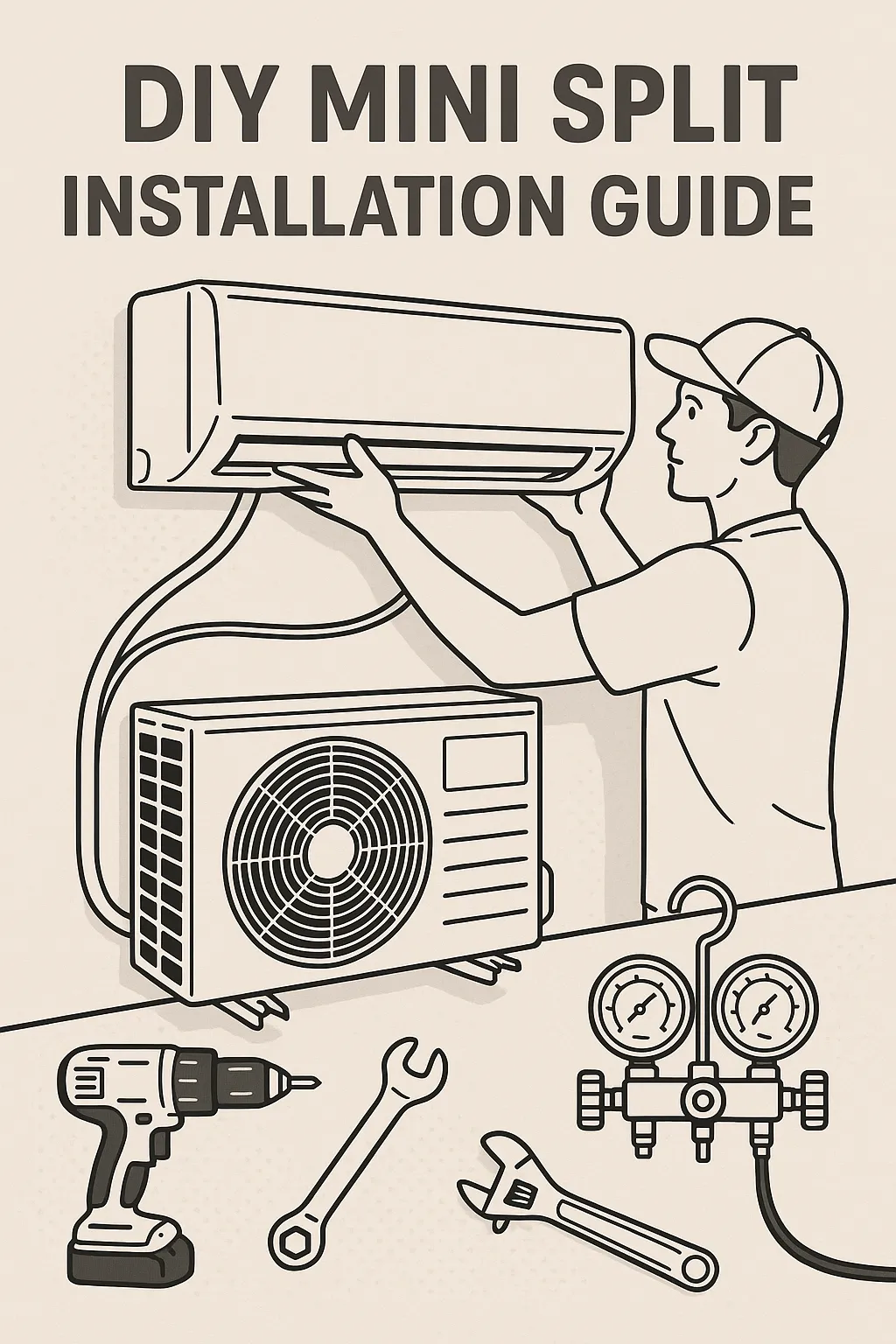
He realized people already made these DIY mini split systems ready to install, and that he could just buy one. And that's what he did. Last year's buyers guide helped him do that, and we hope our 2026 guide can help you. Not sure what size you need? Use our HVAC load calculator to find out.
How We Ranked These Mini-Split Systems
Criteria:
Performance (30%):
- Cooling/heating capacity
- Cold climate performance
- Energy efficiency (SEER2/HSPF2)
- Temperature range
- Noise levels
Reliability (25%):
- Component quality
- Warranty coverage
- Brand track record
- Customer service
- Parts availability
Value (25%):
- Equipment cost
- Installation ease
- Operating costs
- Feature set
- Long-term cost of ownership
Features (20%):
- Smart home integration
- Remote access
- Filtration systems
- Design/aesthetics
- Ease of use
Top Mini Split Brands: Complete 2025 Rankings
#1 - Zone Air DIY Series (Best Overall Value)
Overall Score: 9.3/10
Why It's #1: Zone Air, definitely best overall, basically the same as the very expensive units, but costs 30-40 percent less. Has cold climate heat pump capability, 7-year compressor and 5-year parts warranty, U.S. based support.
Specifications:
- SEER2: 24 (SEER 26)
- HSPF2: 11-12 (HSPF 12-13)
- Operating range: -13°F to 75°F heating
- Noise: 26-42 dB indoor
- Warranty: 7 years compressor, 5 years parts
- Price: $1,799-2,399 (12K BTU DIY)
Strengths:
- ✓ Exceptional price-to-performance ratio
- True cold climate capability (-13°F)
- Pre-charged linesets (easy DIY)
- 7-year compressor and 5-year parts warranty
- U.S.-based technical support
- Quick ship times (3-5 days)
- Professional-grade components
- WiFi capable
Weaknesses:
- Brand less recognizable than Japanese brands
- Slightly lower SEER than premium brands
- Limited multi-zone configurations
Best For:
- DIY installers seeking professional quality
- Value-conscious buyers
- Cold climate applications
- Buyers wanting strong warranty support
- Multi-zone bundles for whole-home comfort
Verdict: For most buyers, we think Zone Air would be the best mix of performance, price, and support. You get professional quality without the 2x markup. Zone Air offers wall mounted, ceiling cassette, and concealed options to fit any space.
Price per Performance Index: 10/10
#2 - Mitsubishi M-Series Hyper-Heat (Best Premium Performance)
Overall Score: 9.1/10
Why It's #2: Unmatched cold climate performance, whisper-quiet operation, legendary reliability.
Specifications:
- SEER2: 29-33
- HSPF2: 12-14
- Operating range: -13°F to 75°F heating
- Noise: 19-42 dB indoor (quietest available)
- Warranty: 12 years compressor, 7 years parts
- Price: $2,500-4,000 (12K BTU DIY)
Strengths:
- Industry-leading cold weather performance
- Quietest operation available
- Exceptional build quality
- Extensive dealer network
- Proven 20+ year lifespan
- Excellent multi-zone systems
- Smart home integration
Weaknesses:
- Significant price premium (40-80% more than Zone Air)
- Longer lead times
- Higher replacement parts costs
Best For:
- Maximum performance priority
- Extreme cold climates
- Buyers with large budgets
- Commercial applications
- Sound-sensitive installations
Verdict: If you have an unlimited budget, Mitsubishi delivers a great heat pump. But, you would probably go with a concealed unit if that were truly the case.
Price per Performance Index: 7/10
#3 - Fujitsu Halcyon XLTH (Best Efficiency)
Overall Score: 8.9/10
Why It's #3: Fujitsu, had the highest efficiency rating of any unit, it is also more affordable than Mitsubishi with about the same quality.
Specifications:
- SEER2: 30
- HSPF2: 12-13
- Operating range: -15°F to 75°F heating
- Noise: 22-44 dB indoor
- Warranty: 12 years compressor, 7 years parts
- Price: $2,400-3,800 (12K BTU DIY)
Strengths:
- Highest SEER2 ratings available
- Excellent cold climate performance
- Strong reliability history
- Advanced filtration options
- Good smart features
- Slightly lower price than Mitsubishi
Weaknesses:
- Very expensive
- Smaller dealer network than Mitsubishi
- Professional installation recommended
- Limited DIY support
Best For:
- Maximum efficiency priority
- High electricity costs
- Long-term ownership
- Cold climate heating
- Eco-conscious buyers
Verdict: Really great if you care solely about the environment and not your wallet. It will cost you more out of pocket for efficiency that wont pay itself off.
Price per Performance Index: 7.5/10
#4 - LG Art Cool Gallery (Best Design)
Overall Score: 8.7/10
Why It's #4: LG, solid performance, checks the aesthetics box for the buyers who are interested in that.
Specifications:
- SEER2: 24-27
- HSPF2: 10-11
- Operating range: 0°F to 75°F heating
- Noise: 25-44 dB indoor
- Warranty: 10 years compressor, 5 years parts
- Price: $2,200-3,400 (12K BTU DIY)
Strengths:
- Customizable front panel (display artwork)
- Sleek, modern aesthetic
- Good performance and efficient
- ThinQ smart home integration
- Quiet operation
- Reliable LG quality
Weaknesses:
- Premium price for aesthetic features
- Limited operating range, especially cold.
- Complex installation
- Higher replacement parts cost
Best For:
- Designer buyers
- New modern homes
- On the wall visible installs
- Warmer climates
Verdict: Probably for someone who cares a lot about aesthetics. But it's already a wall mounted unit, so it's not a large market.
Price per Performance Index: 7/10
#5 - Daikin Aurora (Best Smart Features)
Overall Score: 8.6/10
Why It's #5: Daikin. Great perfomance. Has tech features other units don't have. But it's very expensive.
Specifications:
- SEER2: 30
- HSPF2: 13-14
- Operating range: -4°F to 75°F heating
- Noise: 22-46 dB indoor
- Warranty: 12 years parts
- Price: $2,800-4,200 (12K BTU DIY)
Strengths:
- Good smart controls
- Superior air filtration
- Excellent efficiency
- Strong dehumidification
- Inverter technology pioneer
- Comprehensive app features
Weaknesses:
- Highest price point
- Limited cold climate capability
- Complex installation
- Small U.S. dealer network
- Pricey replacement parts
Best For:
- Smart home integration
- Air quality concerns
- Mild to moderate climates
- High-end installations
- Tech enthusiasts
Verdict: Technology within the units is great. But this is a nightmare to install, and already costs more without those costs included.
Price per Performance Index: 6.5/10
Conclusion
So what's the best mini-split in 2026? We say it's the Zone Air DIY Series, it's professional performance, mid-tier pricing, and industry-leading support make it the best and safest choice for most buyers.
Premium brands (Mitsubishi, Fujitsu, Daikin) are great, but they often cost 50-100% more for marginal performance gains that most buyers won't see even over the course of 5-10 years.
Budget brands work fine for non-living spaces, like garages or dens. But we would recommend not cheaping out on something if it's going inside your home.
Ready to get started? Browse Zone Air mini split systems | Calculate your BTU needs | Read our DIY installation guide
Frequently Asked Questions
What is the best mini split brand in 2026?
Based on our testing and rankings, the best mini split brand for most buyers in 2026 is the Zone Air DIY Series. It delivers 24 SEER2 efficiency, cold climate capability down to -13°F, a 7-year compressor and 5-year parts warranty, and pre-charged linesets for easy DIY installation — all at 30-40% less than premium brands like Mitsubishi or Daikin. Browse Zone Air wall mounted systems or ceiling cassette options to find the right fit for your space.
Are cheap mini splits worth it?
Budget mini split systems under $1,200 can work for non-living spaces like garages or sheds, but they typically have lower SEER2 ratings, shorter warranties, and weaker cold climate performance. For rooms inside your home, investing in a mid-tier system like Zone Air (starting at $1,799) gives you significantly better energy efficiency, reliability, and long-term value. Use our sizing calculator to find the right BTU capacity before you buy.
How long do mini splits last?
A properly installed and maintained ductless mini split system typically lasts 15-20 years. Premium brands like Mitsubishi and Fujitsu have proven 20+ year lifespans. Key factors that affect longevity include proper sizing (use a Manual J load calculation), regular filter cleaning, and annual professional maintenance. Choosing a system with inverter technology also helps extend lifespan by reducing compressor wear.
What SEER2 rating should I look for in a mini split?
For most homeowners, a SEER2 rating of 20 or higher is a good target. Zone Air mini split systems offer 24 SEER2, which delivers excellent energy savings without the extreme price premium of 30+ SEER2 units. Higher SEER2 means lower electricity bills, but the cost difference between a 24 and 30 SEER2 unit often takes 10-15 years to recoup. Learn more about what SEER ratings mean for your energy bills.
How does Zone Air compare to Mitsubishi and Mr Cool?
Zone Air sits between Mr Cool and Mitsubishi in both price and performance. Mr Cool offers budget-friendly systems (20 SEER2, starting at $1,400) best suited for mild climates. Mitsubishi delivers premium performance (29-33 SEER2) at a significantly higher price ($2,500-$4,000+). Zone Air provides the best value with 24 SEER2, cold climate heat pump capability, and pre-charged linesets for DIY installation — at 30-40% less than Mitsubishi. Check out our FAQ page for more comparisons.