
Your AC died on the hottest day of summer. Now you're facing a choice: mini-split or central air? If you're wondering what the real difference is between a ductless mini split and central AC, you're not alone—it's one of the most common questions homeowners ask. The decision affects your wallet for the next 15-20 years, so let's cut through the noise and figure out which system actually makes sense for your home.
The bottom line upfront: Mini-splits cost 30-40% less to run but may cost more upfront. Central air is simpler if you already have ducts. Here's everything you need to know.
Ductless vs Central AC: Quick Comparison
Mini-Split:
- Efficiency: 22-24 SEER2
- Monthly cooling bill: $30-$50
- Installation: 1 day
- DIY friendly: Yes (with pre-charged systems)
- Lifespan: 15-20 years
- Upfront cost: $2,000-$6,800
- Best for: No ducts, zone control, efficiency
Central Air:
- Efficiency: 14-18 SEER2
- Monthly cooling bill: $100-$150
- Installation: 1-2 days (or 1-2 weeks with new ducts)
- DIY friendly: No
- Lifespan: 12-15 years
- Upfront cost: $4,000-$8,000 (with ducts)
- Best for: Existing ducts, simplicity
What is a Mini-Split System?
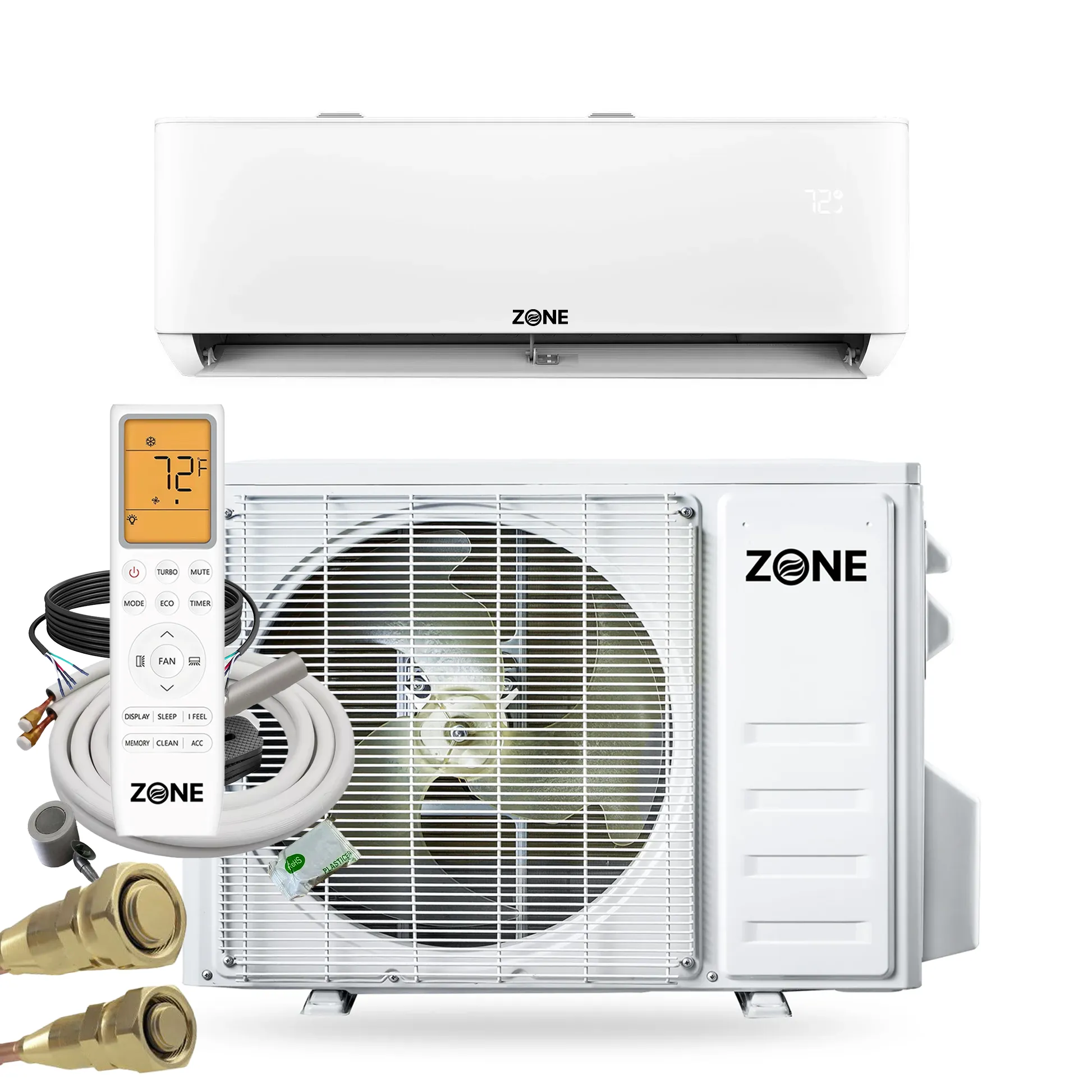
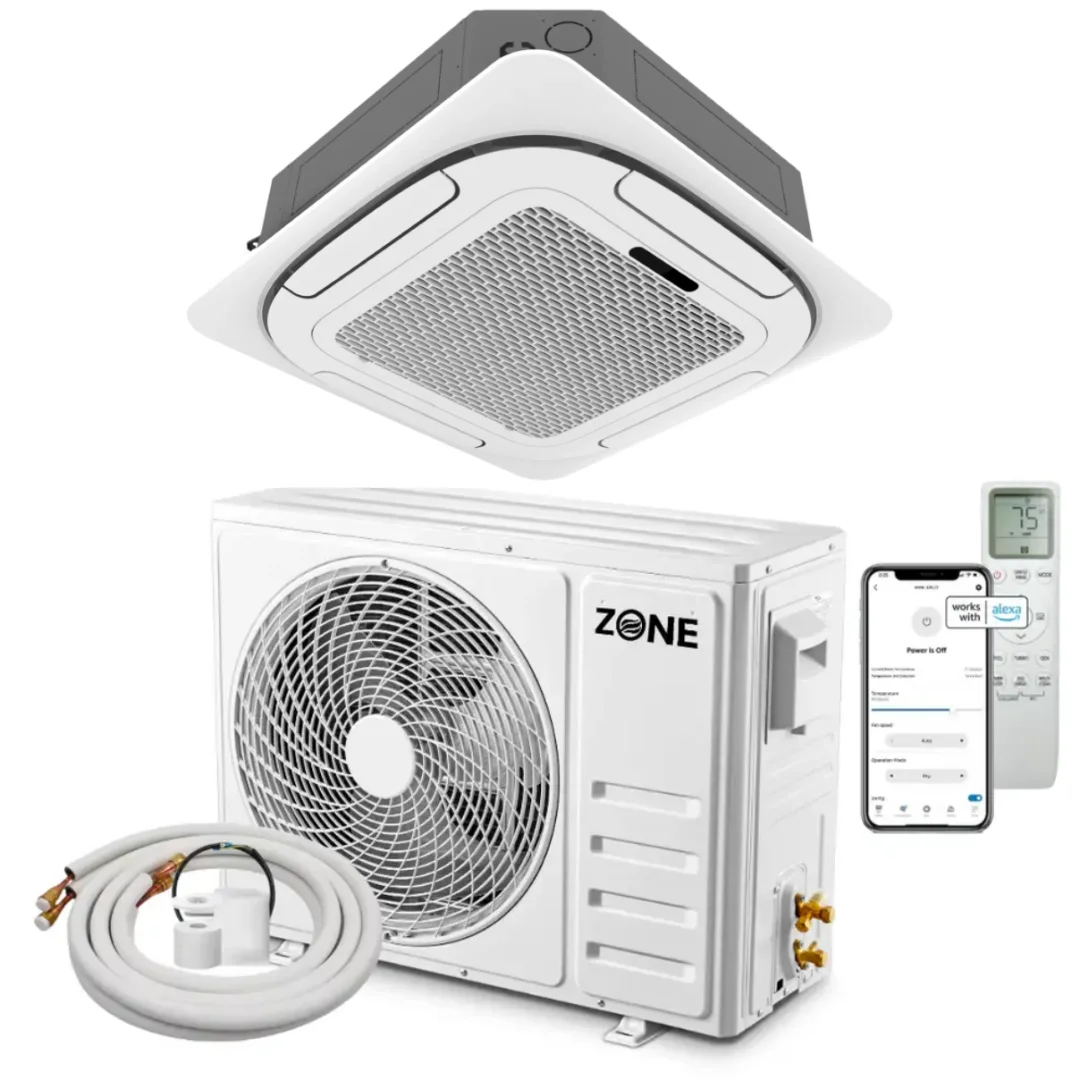
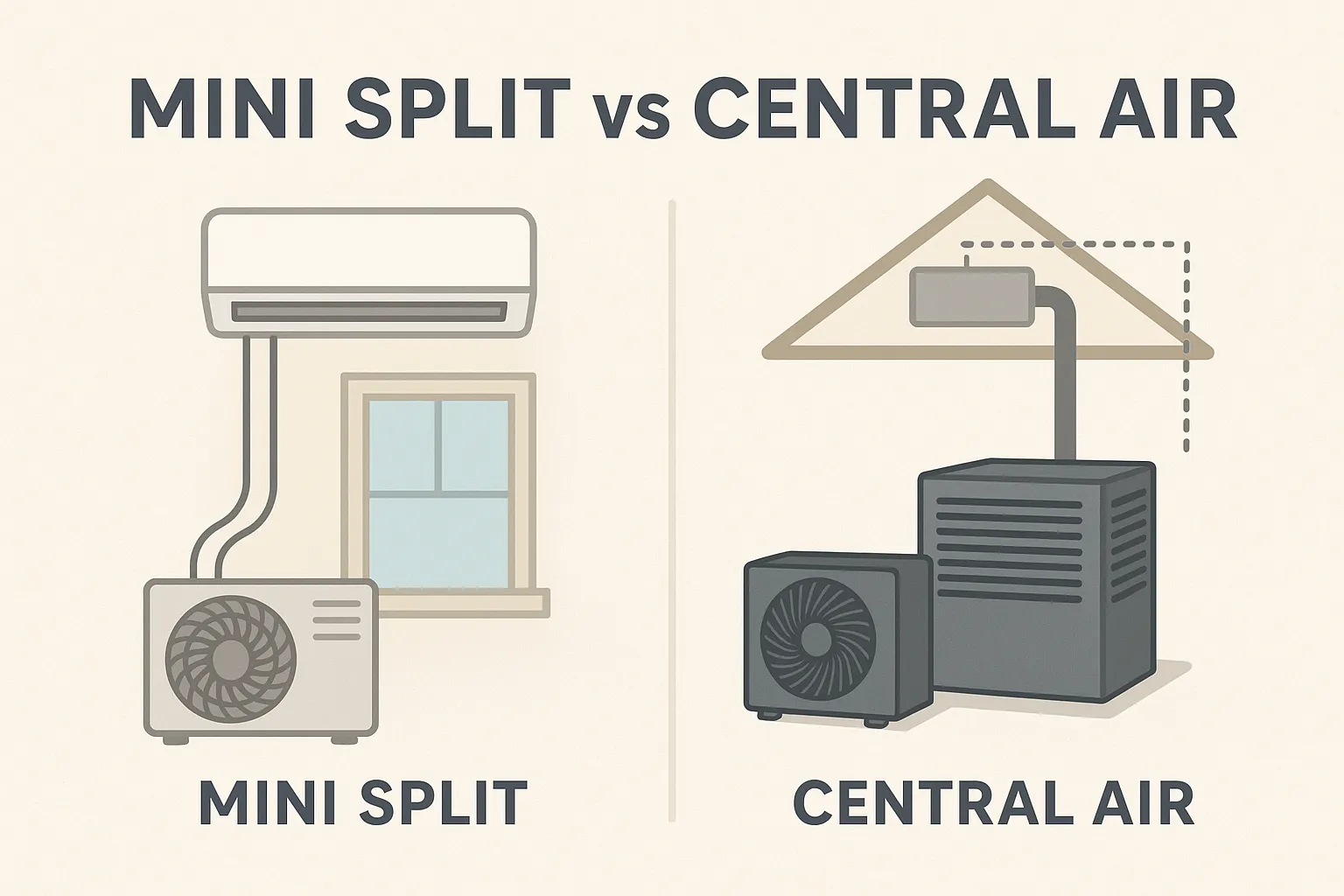
A mini-split has two parts: an outdoor compressor and indoor air handler(s) connected by a thin conduit through a 3-inch hole in your wall. No ductwork needed.
Key difference: Central air pushes cooled air through ducts to every room. Mini-splits deliver air directly where you need it—meaning zero duct losses and the ability to control each room independently.
Modern mini-splits also heat (heat pump function) and work down to -13°F, making them viable year-round in cold climates.
Why Mini-Splits Win on Efficiency
40-60% lower energy bills. Mini-splits achieve 22-24 SEER2 vs 14-18 for central air. That's the difference between a $50 monthly bill and a $120 one.
Here's why they're so efficient:
No Duct Losses
Central air loses 20-30% of cooled air through duct leaks before it reaches your rooms. Mini-splits deliver air directly—zero loss.
Zone Control Saves Money
Cool only the rooms you're using. Work from home? Cool your office, not the empty bedrooms. Sleep at night? Cool bedrooms only. This saves 15-25% on cooling costs.
Inverter Technology
Central air compressors cycle on/off at full blast (wasteful). Mini-split inverters run continuously at the exact speed needed (efficient).
Easy DIY Installation
One customer in Denver installed his system himself in an afternoon. Just drill a 3-inch hole, mount the units, connect pre-charged lines—done. No contractors, no $3,000 labor costs, no weeks of disruption.
Federal Rebates Stack Up
Get 30% back (up to $2,000/year) in federal tax credits, plus $300-$800 in utility rebates. A $2,800 system costs under $2,000 after incentives.
Perfect for Additions & Problem Spaces
Garage conversions, sunrooms, basement apartments—mini-splits work where extending ductwork would cost thousands. Lines run up to 80 feet.
Zone Control = Happy Family
Set your bedroom to 65°F while your partner keeps their office at 72°F. No more thermostat wars. Single-zone systems target specific rooms, while multi-zone systems control 2-4 zones from one outdoor unit.
Ductless vs Central Air Pros and Cons
Higher Upfront Cost
Whole-home mini-split coverage costs $4,000-$16,500 vs $4,000-$8,000 for central air replacement (if you already have ducts).
But: You'll recover the difference in 3-5 years through energy savings. One Phoenix homeowner spent $3,200 more on mini-splits, but her bills dropped from $280/month to $140/month. She'll save $25,000+ over 15-20 years.
Note: If you don't have ducts, installing them costs $5,000-$15,000. Mini-splits suddenly become the cheaper option.
Visible Units
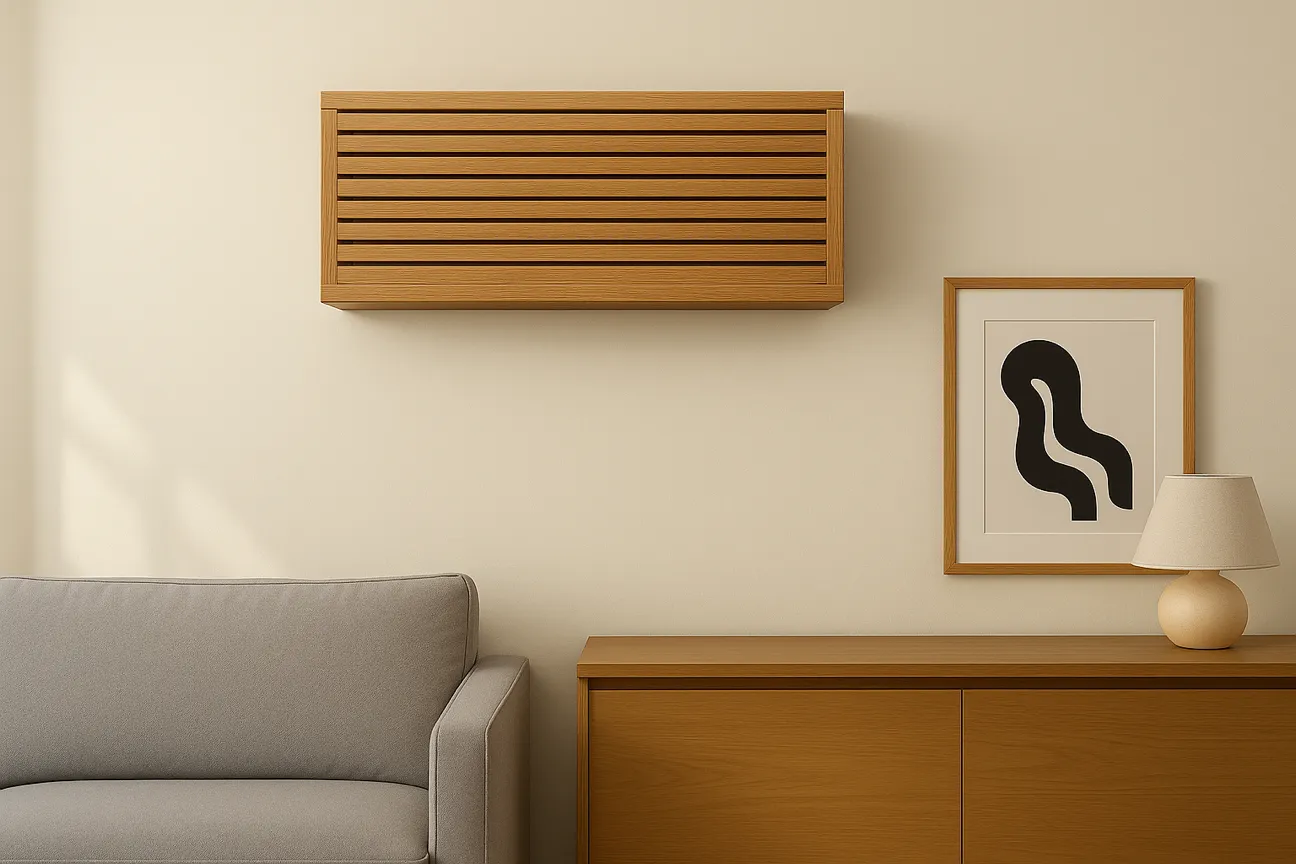
Mini-split heads mount on your walls—you'll see them. Central air vents are subtle ceiling grilles.
Some people love the modern look. Others hate it. That's personal preference.
Air Filtration
Central air filters your entire home's air through one MERV-13 or HEPA filter. Mini-splits filter each room individually with built-in filters.
Solution: If you have serious allergies, add standalone air purifiers in key rooms while keeping mini-split efficiency.
Mini Split vs Central Air Cost: The ROI Breakdown
Payback period: 3-5 years through energy savings.
Real example: Massachusetts homeowner spent $8,200 (after rebates) on mini-splits. Bills dropped from $3,500/year to $1,700/year. He'll save $27,000+ over 15 years.
Lifespan advantage: Mini-splits last 15-20 years vs 12-15 for central air. You'll avoid one full replacement cycle ($4,000-$12,000 saved).
Home resale value: Energy Star systems appraise higher. Buyers love low utility bills.
📊 Interactive Cost Comparison: See your exact savings with our interactive calculator. Compare installation costs, monthly bills, and lifetime savings for your home size.
For detailed cost analysis, check our complete mini-split cost guide.
When Central Air Makes Sense
You Already Have Ducts
If your home has good ductwork, central air is simpler: $4,000-$12,000 for a new system, 1-2 day install, one thermostat controls everything.
You Want Set-It-and-Forget-It
One thermostat, same temperature everywhere, no managing multiple units. Some people prefer this simplicity (even though it costs 30-40% more to run).
Superior Whole-Home Air Filtration
Central air filters all your home's air through one MERV-13 or HEPA filter. Great for serious allergies.
When Central Air is Expensive
No Existing Ducts = Budget Killer
Installing ductwork costs $5,000-$15,000 (small homes) to $12,000-$25,000 (large homes). Add the AC system ($4,000-$12,000), and you're at $9,000-$37,000 total.
Mini-splits cost $7,000-$16,500 for whole-home coverage—and install in one day without tearing into walls.
Ongoing Costs Add Up
- Energy bills: 30-40% higher than mini-splits
- Duct cleaning: $300-$500 every 3-5 years
- Filters: $900-$2,700 over 15 years
- Maintenance: $1,500-$3,000 over 15 years
Total extra cost: $4,000-$6,000+ over the system's life
Which System is Right for You?
Choose Mini-Splits If:
✅ No existing ducts – Save $5,000-$25,000 on ductwork installation ✅ Want lower energy bills – Save 30-40% on operating costs ✅ Like zone control – Different temps in different rooms ✅ Comfortable with DIY – Save $1,500-$3,000 in labor ✅ Targeting specific spaces – Additions, garages, basement apartments
Choose Central Air If:
✅ Already have good ductwork – Simpler $4,000-$12,000 replacement ✅ Want set-it-and-forget-it – One thermostat, same temp everywhere ✅ Have serious allergies – Superior whole-home filtration ✅ Very large home (3,000+ sq ft) with existing ducts
The stats: 75% of homeowners get better long-term value from mini-splits through energy savings, longer lifespan, and comfort control.
Why Choose Zone Air Mini-Splits?
True DIY-friendly: Pre-charged linesets mean no vacuum pump, no EPA certification, no specialized tools. Install it yourself in a weekend and save $1,500-$3,000.
Top efficiency: 24 SEER2 cooling, 12 HSPF heating—beats most central air by 30-50%. Qualifies for $2,000 federal tax credits + $300-$800 utility rebates.
Works on standard outlets: 9K and 12K BTU models plug into regular 115V outlets (same as your fridge). No expensive electrical upgrades.
Cold climate rated: Heats down to -13°F (operates to -22°F). NEEP certified. Homeowners in Minnesota and Montana use these as primary heat.
Real warranty: 7-year compressor warranty and 5-year parts warranty (vs typical 1-3 year warranties).
Free tech support: Phone and email support from actual HVAC technicians who've helped thousands of DIY installations.
Ready to save 30-40% on energy bills? Now that you understand the key differences between mini splits and central air systems, you can make an informed choice. Single-zone systems for specific rooms. Multi-zone systems for whole-home control.
FAQ: Mini-Split vs Central Air
How big of a mini-split do I need?
Quick sizing: 9,000 BTU (up to 350 sq ft), 12,000 BTU (350-550 sq ft), 18,000 BTU (550-850 sq ft), 24,000 BTU (850-1,200 sq ft).
But ceiling height, insulation, windows, and climate matter too. Use our sizing calculator for accurate recommendations.
Can a mini-split cool my entire house?
Yes! Multi-zone systems (2-4 indoor units, one outdoor unit) handle homes up to 2,500+ sq ft. Proper placement is key.
Do mini-splits work in winter?
Absolutely. Modern cold-climate models heat down to -13°F, operate to -22°F. NEEP certified. Homeowners in Minnesota and Montana use them as primary heat.
Can I DIY install without HVAC experience?
Yes, with pre-charged systems. If you've installed ceiling fans or run basic electrical, you can do this. Takes 4-8 hours. DIY guide here.
Mini-split vs central air: monthly cost difference?
Mini-split: $30-$50/month. Central air: $100-$150/month. That's $300-$600 annual savings, or $12,000-$18,000 over 15 years.
Which is quieter?
Mini-splits: 19-44 dB (quieter than a whisper at low speed). Central air: 45-60 dB plus duct rattles.
Related Articles: