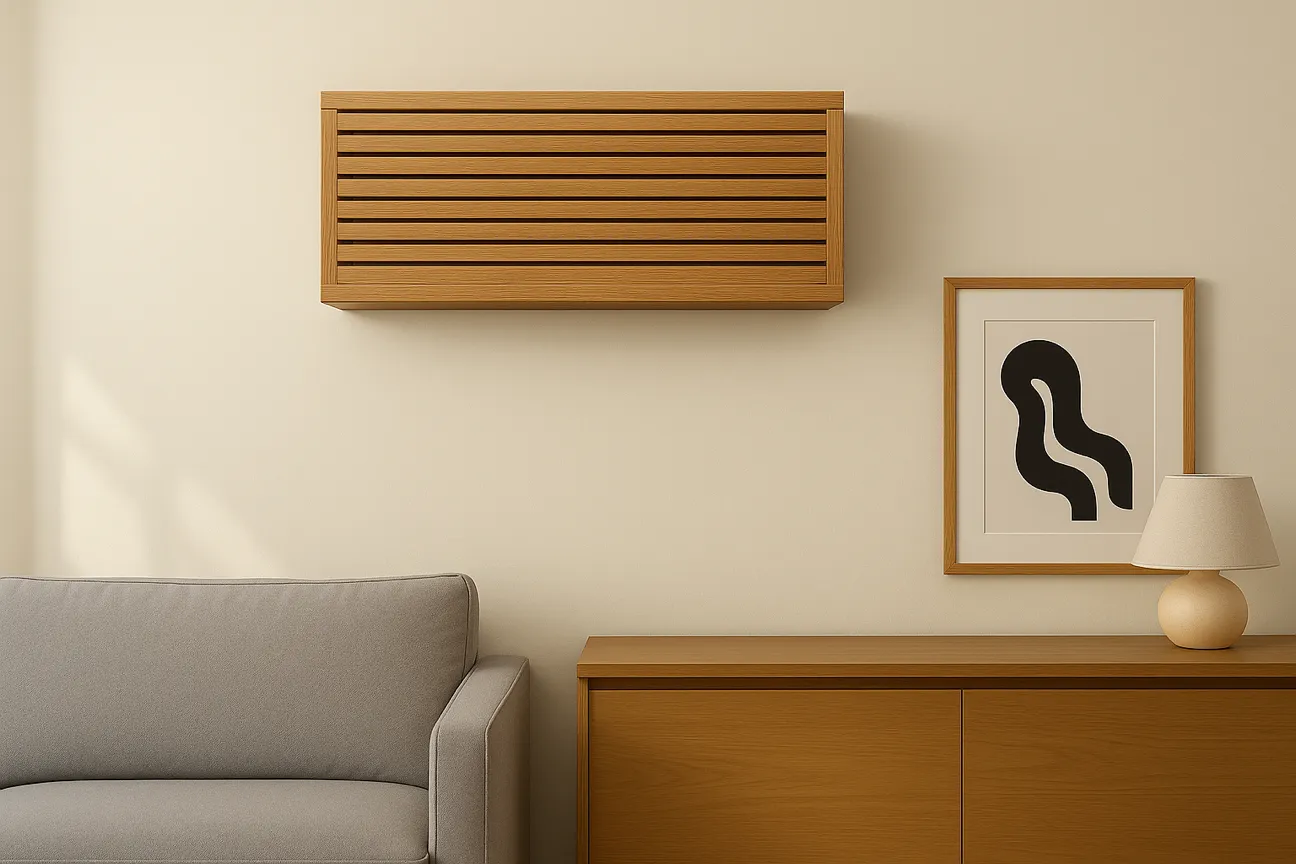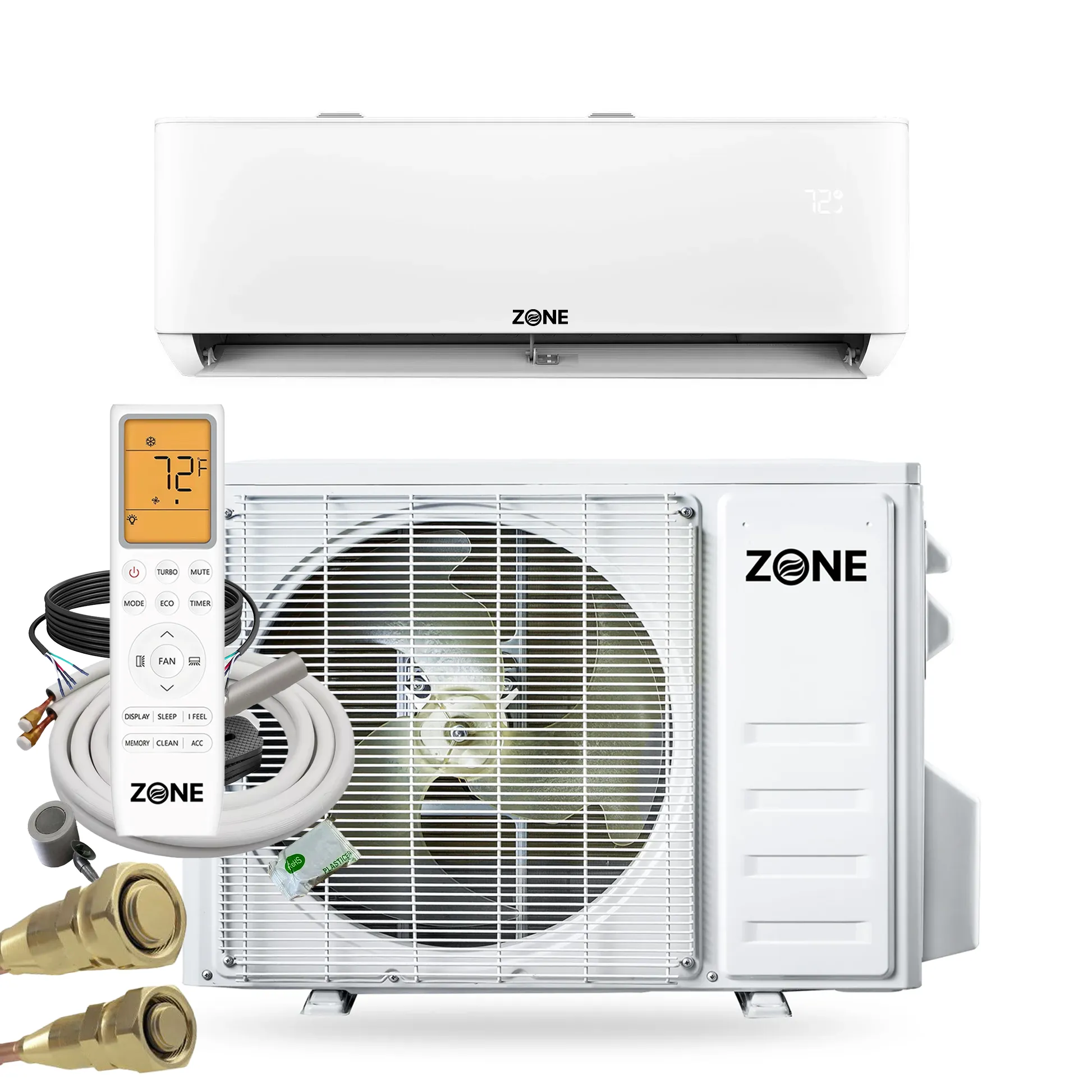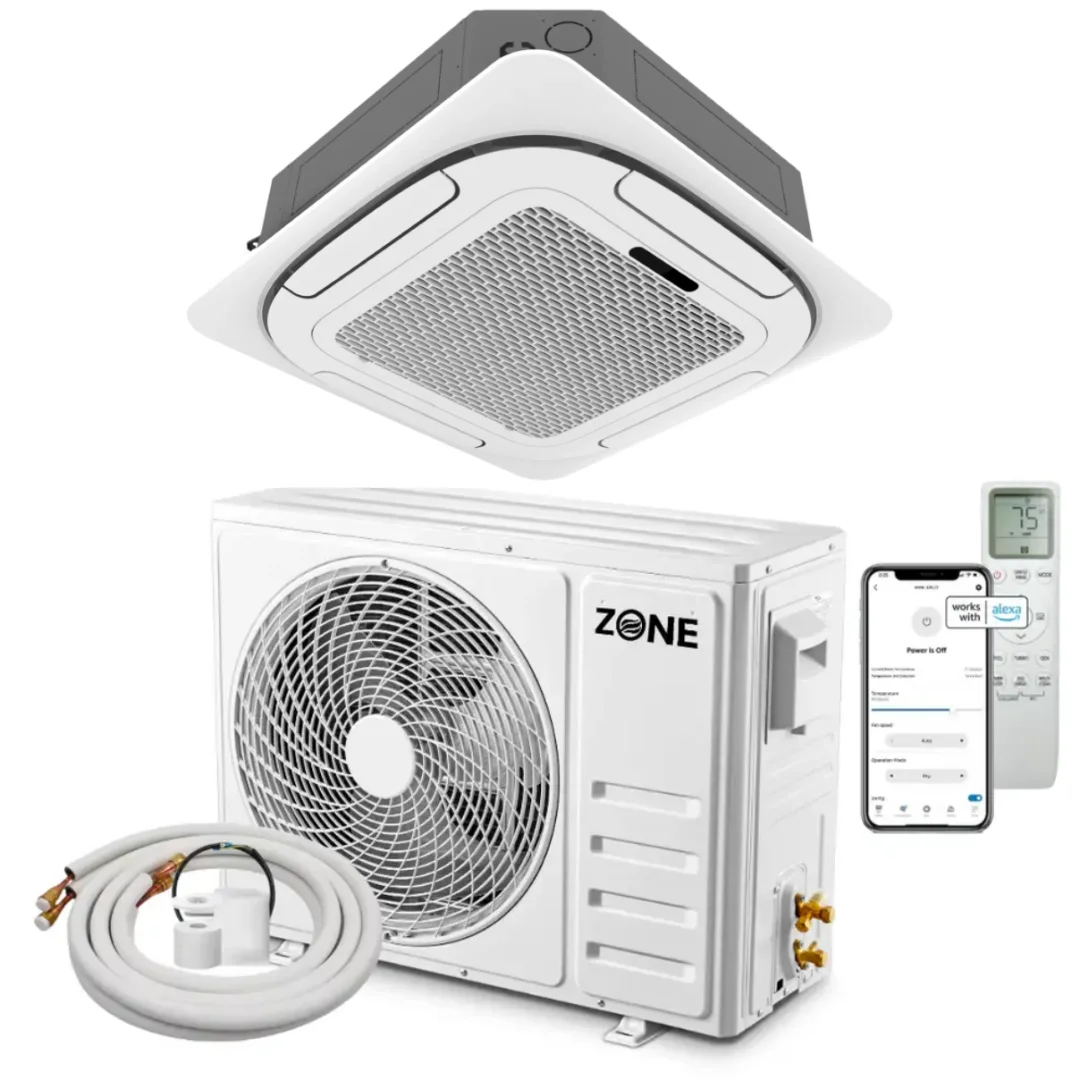
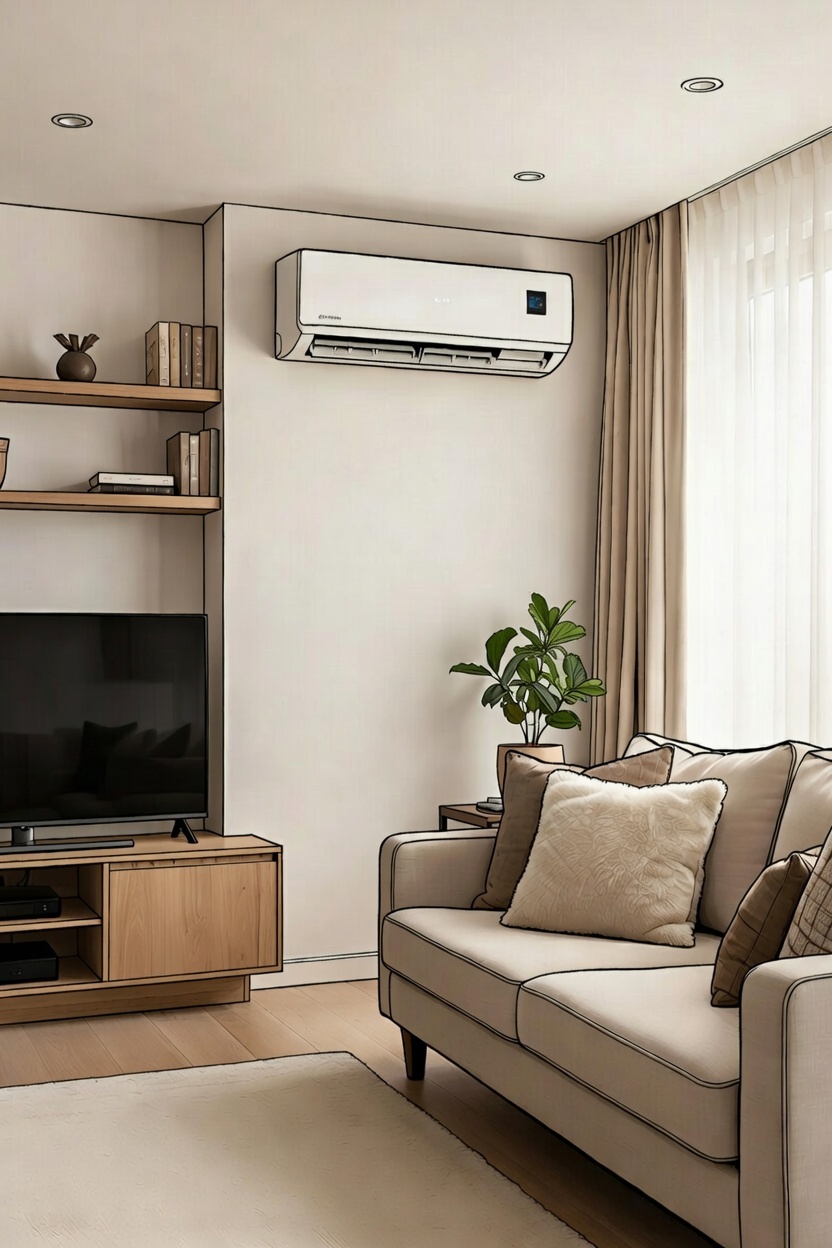

Ductless mini split systems seem to be everywhere now. These efficient, cost-effective mini split systems make heating and cooling a breeze. No pun intended. But only if they're running well. Mini split systems are known for their energy efficiency, reducing air loss due to leaky ducts. They provide flexibility in installation, allowing for various mounting options such as wall, ceiling, concealed, or floor. And they can provide both heating and cooling, making them versatile for year-round use. But, if you're taking on a project like this, you'll end up wondering "what size mini split do I need?" or "should I size up or down?" With advancements in technology and energy efficiency gains in these ductless systems, these answers change all the time. Trying to size your mini split without the most recent and accurate information is impossible, and more than that, it can cost you big. Selecting the correct size ductless mini split system is an investment in your home's future.
Mini split specifications and descriptions probably have you asking yourself, "what does BTU/h mean?" This is what we use to rate the heating and cooling capacities of a mini split AC system or heat pump. It stands for British thermal units per hour — a measurement of thermal energy. British thermal units (BTUs) tell you how much cooling power or heating capacity a mini split system has. The higher the BTU rating, the higher the cooling capacity of the unit. In other words, the more BTUs, the more square feet your mini split can cool or heat. Understanding the BTU mini split relationship is the first step to finding the right mini split system for your space.
How Many BTUs Do I Need?
BTU mini split sizing go hand in hand. The right size mini split will make all the difference for climate comfort, energy efficiency, and reliability. A properly-sized mini split system can save energy and keep you comfortable for years, while the wrong size leads to higher energy bills, poor performance, and shorter equipment life. This is why in the HVAC industry we are constantly improving our estimation techniques and load calculations to help answer the question "what size mini split do I need?" Before we get into how to size a mini split system correctly, we'll look at why proper sizing matters.
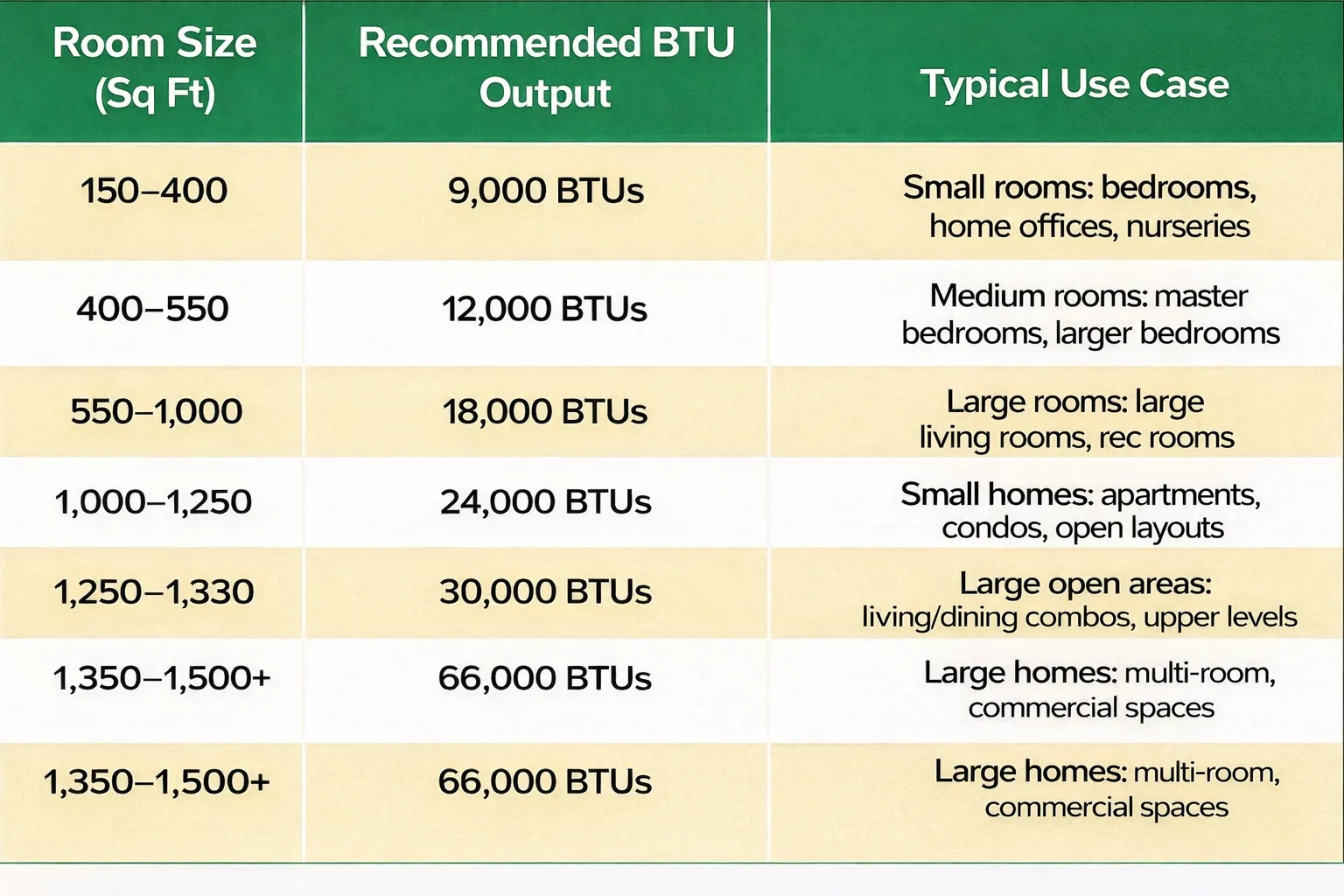
Mini Split Sizing Chart
Common mini split sizes range from 9,000 BTU (up to 400 sq ft) to 36,000 BTU (over 1,500 sq ft). Here's a quick mini split sizing chart to help you size your mini split system based on room size and square footage:
| Room Size (sq ft) | BTU Mini Split Size | Tonnage | Typical Use | |---|---|---|---| | 150–300 sq ft | 9,000 BTU | 0.75 Ton | Bedroom, office | | 300–500 sq ft | 12,000 BTU (one ton) | 1 Ton | Master bedroom, large office | | 500–750 sq ft | 18,000 BTU | 1.5 Ton | Living room, open floor plans | | 750–1,000 sq ft | 24,000 BTU | 2 Ton | Large room, open floor plans | | 1,000–1,500 sq ft | 30,000–36,000 BTU | 2.5–3 Ton | Whole floor, garage |
A general guideline is to use 20 to 25 BTUs per square foot of living space to estimate the size of a mini split system. For example, a 500-square-foot room generally requires 9,000 to 12,000 BTUs. But this mini split sizing chart is only a starting point — factors like insulation quality, ceiling height, sun exposure, and climate zone all affect mini split sizing and can change how many square feet a given BTU mini split can effectively cover.
For the most accurate sizing, use our Zone Air mini split BTU calculator or get a professional load calculation done.
Problems with Oversized Mini Split Systems
Oversizing a mini split system can lead to short cycling, which prevents the unit from running long enough to properly dehumidify the air, leaving your home feeling clammy. An oversized unit turns on and off too frequently because the mini split system reaches the desired temperature too quickly. This short cycle behavior means more stress on system components, increased energy consumption, and higher energy bills. In the long run, an oversized mini split leads to frequent repairs, lower energy efficiency, shorter system lifespans, and operating costs that add up fast.
The bottom line: An oversized unit is not better — it wastes energy, creates uncomfortable humidity levels, and costs more to operate. Proper sizing ensures optimal performance and longevity of the mini split system.
Problems with Undersized Mini Split Systems
An undersized mini-split system will run continuously but may not adequately heat or cool the space, leading to decreased comfort and higher energy bills. A mini split that's too small might run excessively or almost nonstop without ever reaching the desired temperature. This leads to expensive electricity bills, increased energy consumption, and excessive wear. Over time, these undersized ductless systems will be less reliable and will have issues sooner than a properly sized unit. The operating costs of an undersized mini split system are significantly higher than a right-sized one because the outdoor unit and indoor units are working at maximum capacity nonstop.
It is generally advised to oversize a unit slightly rather than undersize it to avoid increased electricity costs and failure to reach the desired temperature. However, the best approach is always to use a professional load calculation or our Zone Air mini split BTU calculator for precise sizing.
How to Size Your Mini Split System
To size a mini split system, you should calculate the required BTUs based on the square footage of the space. In general, sizing your mini split depends completely on how well suited you want your mini split system to be for your home. You can take a lot of variables into account to be as accurate as possible, or just a few to get a rough estimate. The best performance, comfort, and energy efficiency come from a mini split that's sized correctly for your home's square footage, insulation, and climate.
Below is a series of questions that will help you estimate your heating and cooling needs. (For the most accurate estimates, get a professional load calculation from an HVAC professional, or use our Zone Air mini split calculator)
Easy Sizing Method
You Will Need to Know:
- Square footage of the room or space
- Primary use (heating or cooling — if both, use heating)
If primary use is cooling: square footage × 22 = required BTU capacity
If primary use is heating or both: square footage × 30 = required BTU capacity
Examples
Cooling Example: A 500 sq ft room × 22 = 11,000 BTU minimum
Heating Example: A 500 sq ft room × 30 = 15,000 BTU minimum
This is your approximate BTU requirement for your mini split.
Heating is typically less efficient than cooling, so that's why heating requires more BTUs per square foot.
Your easy estimate is done, please be cautious as this is a rough estimate. You would want to purchase a mini split system with a BTU rating close to this measurement. For those that want more accurate sizing, you can use these additional questions.
Advanced Sizing Method (Additional Questions)
You Will Need:
- Age of home (affects insulation quality)
- Ceiling height
How Old Is Your Home?
Older homes tend to have poor insulation and more air leakage, which increases your BTU requirements. Add the following to your BTU estimate based on your home's age:
- 10 years: +2.5% (to original BTU estimate)
- 20 years: +5%
- 30 years: +10%
- 40 years: +15%
- 50+ years: +20%
How High Are Your Ceilings?
Ceiling height affects the BTU requirements, as taller ceilings require more capacity to heat or cool the increased volume of air. Rooms with ceilings higher than 8 feet require more capacity, adding approximately 10-12.5% per additional foot of height:
- 8 ft: +0% (add in addition to newly calculated estimate)
- 10 ft: +5%
- 12 ft: +10%
Example
11,000 BTU 20 years old = 11,000 + 5% = 11,550 12 ft ceilings = 11,550 + 10% = 12,705 BTU total
This is a better estimate than most people get, but keep in mind it's not perfect. For precise load calculations, please use our Zone Air mini split BTU calculator, or contact a local HVAC professional for a professional load calculation.
Factors That Affect Mini Split Sizing
Many factors affect mini split sizing beyond just room size and square footage. Factors like insulation quality, ceiling height, and window quantity all contribute to the BTU requirements for a mini split system. Let's look at each one and how it changes the size mini split you need.
Room Size and Square Footage
Room size directly influences the BTU requirements for mini split systems, with larger spaces needing more BTUs to maintain comfort. To size a mini split, start by measuring how many square feet your room is. A 150 sq ft bedroom needs far fewer BTUs than a 1,000 sq ft open floor plan. For rooms with open floor plans, measure the total square footage of the connected space — not just one section.
Ceiling Height
Ceiling height affects the BTU requirements because taller ceilings mean a larger volume of air that your mini split system needs to heat or cool. Standard 8-foot ceilings are the baseline for most BTU calculations. Rooms with ceilings higher than 8 feet require more capacity, adding approximately 10-12.5% per additional foot of height. A room with 10-foot ceilings has 25% more air volume than the same square footage with 8-foot ceilings — which means your mini split needs more cooling capacity and heating power to maintain the desired temperature.
Insulation Quality
Insulation quality significantly impacts BTU requirements, with well-insulated spaces needing fewer BTUs compared to poorly insulated ones. Homes with poor insulation lose heat in winter and gain heat in summer, forcing your mini split system to work harder. Insulation and windows can require an increase in BTU capacity by 10-20% if the room is poorly insulated or has many windows. Newer homes or homes with good insulation keep conditioned air inside better, so they may need a smaller size mini split. If you have poor insulation, consider upgrading it before installing your mini split — it will reduce energy consumption and lower utility bills.
Sun Exposure and Windows
Rooms with many large, south- or west-facing windows may require 10-20% more cooling capacity due to increased heat gain. Large windows that receive direct sunlight throughout the day can significantly increase the heat load in a room. Sun exposure is one of the most commonly overlooked factors that affect mini split sizing. If your room has large windows with heavy sun exposure and direct sunlight, increase your BTU estimate by 10-20% to account for more heat gain. You may also consider window treatments to reduce energy consumption and lower utility bills.
Climate Zone
Climate conditions play a crucial role in determining BTU requirements, as extreme temperatures necessitate larger mini split systems to maintain indoor comfort. In climates with extreme temperatures, mini split systems need to be larger to effectively maintain the desired indoor conditions. If you're in a cold climate, learn more about how mini splits perform in cold weather. A mini split system in Phoenix, Arizona will need significantly more cooling power than the same square footage in Seattle, Washington. If you live in an extreme climate zone, factor in an additional 10-30% on your BTU calculations.
Heat-Generating Appliances and Occupants
The presence of heat generating appliances and the number of occupants can add to the heat load, requiring an increase in BTUs. Kitchens with ovens, server rooms, workshops, and spaces with multiple computers or equipment all generate extra thermal energy that your mini split needs to overcome. For each major heat-generating appliance, add 1,000-2,000 BTU to your estimate. For occupants, add approximately 400-600 BTU per person in rooms that regularly have more than 2-3 people.
How Many Rooms Can a Mini Split Cool?
A single indoor air handler should be used for one room or space, but a single outdoor unit can power many indoor units. This is the difference between a single zone and a multi zone mini split system.
Single Zone Mini Split Systems
A single zone mini split system has one outdoor unit connected to one indoor unit — perfect for heating and cooling a single room. Single zone systems are ideal when you need to add an air conditioner or heat pump to one specific space, like a bedroom, garage, or home office. Zone Air mini split single zone systems are available from 9,000 to 18,000 BTU.
Multi Zone Mini Split Systems
In multi zone mini split systems, one outdoor unit connects to multiple indoor units — typically 2 to 4 indoor air handlers or indoor heads. The outdoor unit must be sized for the entire home, while the indoor units must be sized for individual rooms. A multi zone system allows zoned heating and cooling, enabling customized temperature control for different areas of your home. Multi zone mini split systems are perfect for larger spaces and when you need to heat and cool how many rooms you want independently. Check out our Zone Air mini split multi zone systems to cool multiple zones with one outdoor unit.
Sizing a Mini Split for a Garage
Garages present unique challenges when it comes to mini split sizing. To size a mini split for a garage, measure the garage size and calculate the total square footage. Then follow these steps:
- Calculate basic BTU requirement: For a garage, multiply the square footage by 20 BTUs per square foot. For example, a 600 sq ft garage would need at least 12,000 BTU as a baseline.
- Adjust for ceiling height: If the garage ceiling is higher than 8-10 feet, increase the BTU rating by 10% to 30%.
- Adjust for insulation quality: Poorly insulated garages require more BTUs, and you may need to increase the BTU by 30-50%.
- Adjust for climate: In hotter climates, you may need to increase the BTU rating by 30-40% for a garage.
- Consider additional heat sources: Consider additional heat sources, such as direct sunlight or running vehicles, which can increase the BTU rating by 10-20%.
Proper insulation of your garage is crucial for maximizing the energy efficiency of a mini split AC system. A mini split system can effectively cool a three-car garage with a capacity ranging from 18,000 to 24,000 BTUs. For precise sizing, use our Zone Air mini split BTU calculator.
Why a Professional Load Calculation Is the Most Accurate Method
While the easy and advanced sizing methods above give you a solid estimate, a professional load calculation is the most accurate way to determine the proper size of a mini split system for your home. A professional load calculation (also called a Manual J calculation) takes into account square footage, insulation quality, ceiling height, window size, sun exposure, climate zone, number of occupants, heat generating appliances, and dozens of other variables that affect mini split sizing.
HVAC professionals and HVAC contractors use specialized software for precise load calculations that consider every factor in your specific home. Hiring a certified HVAC technician for installation ensures proper sizing based on a Manual J load calculation. However, this service typically costs $150-$300. For a free alternative, our Zone Air mini split BTU calculator provides accurate sizing for most homes.
Benefits of a Properly Sized Mini Split System
When you find the perfect mini split size for your space, the benefits are significant:
- Energy savings: A right-sized mini split system reduces energy consumption and lowers utility bills. You won't waste energy on an oversized unit that short cycles or an undersized unit running nonstop. You may also qualify for federal tax credits and rebates that save up to $2,000.
- Optimal performance: Proper sizing ensures optimal performance and longevity of the mini split system. Your Zone Air mini split will maintain the desired temperature efficiently in both heating and cooling modes.
- Quiet operation: Mini split systems operate quietly, making them suitable for use in spaces like workshops or home offices. A properly sized unit runs at lower speeds more often, which means quieter operation.
- Low maintenance: Mini split systems typically require less maintenance than traditional HVAC systems, as they have fewer components and no ductwork. Zone Air systems also come with pre-charged linesets for simplified installation.
- Lower operating costs: Accurate sizing means lower operating costs over the life of the mini split system — potentially saving hundreds per year on energy bills.
- Long lifespan: A properly sized ductless mini split system avoids the short cycle wear of oversizing and the nonstop strain of undersizing, giving your indoor units and outdoor unit a longer, healthier life.
Improper mini-split installation and design are two big reasons that homeowners have problems with their mini-split heating and cooling systems. Don't skip the sizing step.
What Size Mini Split Do I Need? Final Recommendations
So, what size mini split do I need? Here's a quick summary to help you find the right mini split system:
- Measure your square footage — How many square feet is the room or space? Room size is the starting point for all BTU calculations.
- Use the mini split sizing chart — Match your square footage to the recommended BTU mini split size in the table above.
- Adjust for your specific factors — Account for ceiling height, insulation quality, sun exposure, large windows, climate zone, and heat generating appliances.
- Consider single zone vs multi zone — Determine how many rooms you need to heat and cool. A single zone system covers one space, while a multi zone mini split handles multiple indoor units from one outdoor unit.
- Get a professional load calculation or use our BTU calculator — For the most precise sizing and accurate sizing, use our Zone Air mini split BTU calculator or consult an HVAC professional.
Mini split systems allow for zoned heating and cooling, enabling customized temperature control for different areas of a home. They are relatively easy to install compared to traditional HVAC systems, as they do not require ductwork. And when sized correctly, a Zone Air mini split heat pump will deliver energy savings, lower utility bills, and reliable comfort for 15-20 years. Shop Zone Air mini split systems to find the best mini split size for your home.
Related Articles:
- Zone Air Mini Split BTU Calculator
- DIY Mini Split Installation Guide
- Mini Split Installation Cost Guide
- Mini Split vs Central Air
- What Is a SEER Rating?
- Single Zone vs Multi Zone Mini Splits
- How Much Money Can a Mini Split Save Me?
- Do Mini Splits Work in Cold Weather?
- Can I Get a Tax Credit for My Mini Split?
- How to Find a Good Mini Split Installer
Frequently Asked Questions
What happens if my mini split is too big for the room?
An oversized mini split will short cycle — turning on and off frequently without running long enough to properly dehumidify your space. This leads to clammy, uncomfortable air, higher energy bills, and increased wear on the compressor. Proper sizing using a Manual J load calculation or our BTU sizing calculator ensures your system runs efficiently and lasts longer.
How many BTU per square foot do I need for a mini split?
A general rule is 20-25 BTU per square foot for cooling and 25-30 BTU per square foot for heating. However, this varies based on ceiling height, insulation quality, sun exposure, and climate zone. A 500 sq ft room typically needs a 12,000 BTU mini split, while a 300 sq ft bedroom may only need a 9,000 BTU unit. Use our sizing calculator for a more accurate estimate.
Can one mini split cool multiple rooms?
A single indoor unit is designed to heat and cool one room or open space. However, a dual zone or multi-zone mini split system connects multiple indoor units to one outdoor unit, allowing you to cool several rooms independently. Zone Air offers multi-zone bundles that let you control temperatures in 2-4 rooms from a single outdoor condenser. Learn more about how multi-zone systems work.
What size mini split do I need for a garage?
For a standard 2-car garage (400-500 sq ft), a 12,000 BTU mini split is typically sufficient. A 1-car garage (200-300 sq ft) works well with a 9,000 BTU unit, while a 3-car garage (600-900 sq ft) may need an 18,000 BTU system. Garages often need extra capacity due to poor insulation and large doors, so increase your BTU estimate by 20-30%. Check out our garage mini split guide for detailed sizing.
What size mini split do I need for a bedroom?
Most bedrooms (150-300 sq ft) are well served by a 9,000 BTU mini split. A larger master bedroom (300-500 sq ft) may need a 12,000 BTU unit. For bedrooms, a wall mount mini split is the most popular choice due to easy installation and quiet operation. Consider a ceiling cassette if you prefer a more discreet look. Visit our FAQ page for more sizing guidance.