
Concealed Mini Split Systems
Hidden slim-duct mini splits that install above the ceiling. Short duct runs to multiple rooms with only discreet vents visible. Up to 19.6 SEER2.
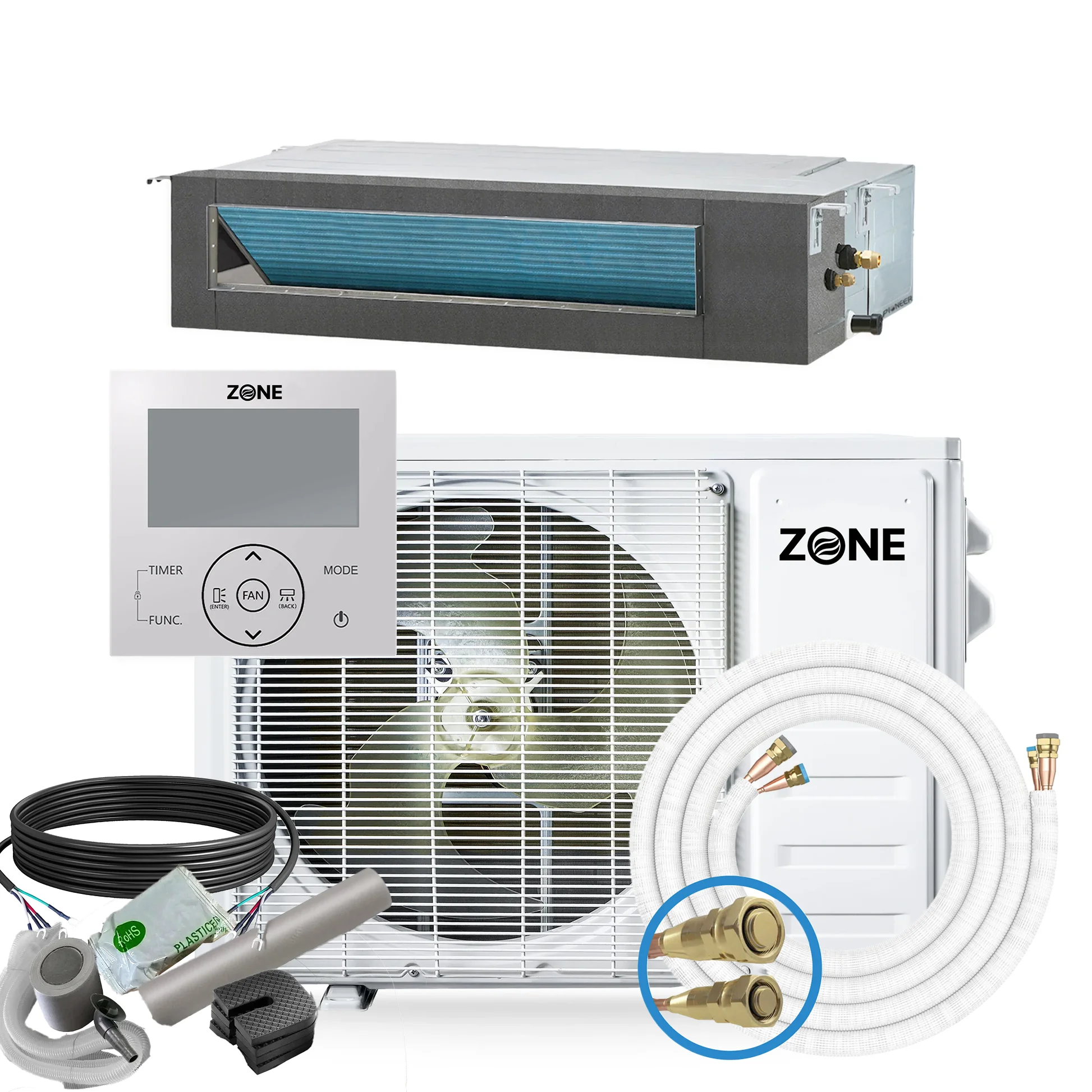
Zone Air® Thin-Air 9,500 BTU 19.6 SEER2 230V Concealed Mini-Split Heat Pump AC - Up to 475 Sq Ft
Zone Air® Thin-Air 11,000 BTU 19 SEER2 230V Concealed Mini-Split Heat Pump AC - Up to 550 Sq Ft
Zone Air® Thin-Air 17,000 BTU 20.3 SEER2 230V Concealed Mini-Split Heat Pump AC - Up to 850 Sq Ft
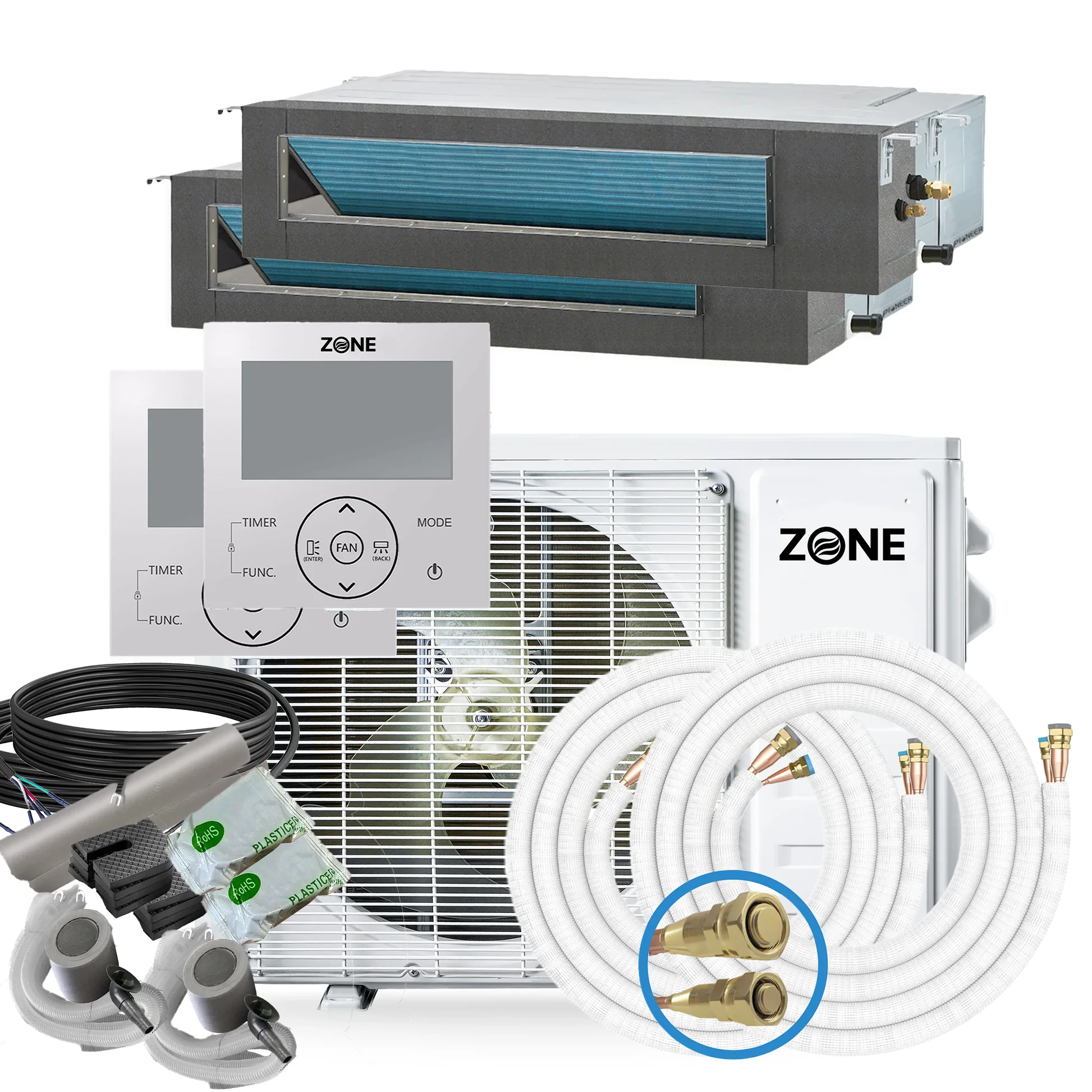
Zone Air® Thin-Air DUAL ZONE 22,000 BTU (11K+11K) 19 SEER2 230V Concealed Mini-Split Heat Pump System - Up to 1,100 Sq Ft
Zone Air® Thin-Air DUAL ZONE 22,000 BTU (11K+11K) 19 SEER2 230V Concealed Mini-Split Heat Pump System - Up to 1,100 Sq Ft
Ducted Mini Split Systems
Shop concealed mini split systems — the indoor unit hides in your attic or ceiling space while short duct runs deliver heating and cooling to multiple rooms. Only discreet vents are visible.
- ✓Up to 19.6 SEER2 energy efficiency
- ✓Completely hidden above the ceiling — only vents visible
- ✓Short duct runs to 2–4 rooms from one indoor unit
- ✓Heat pump heating down to -13°F year-round
- ✓Pre-charged linesets for simpler installation
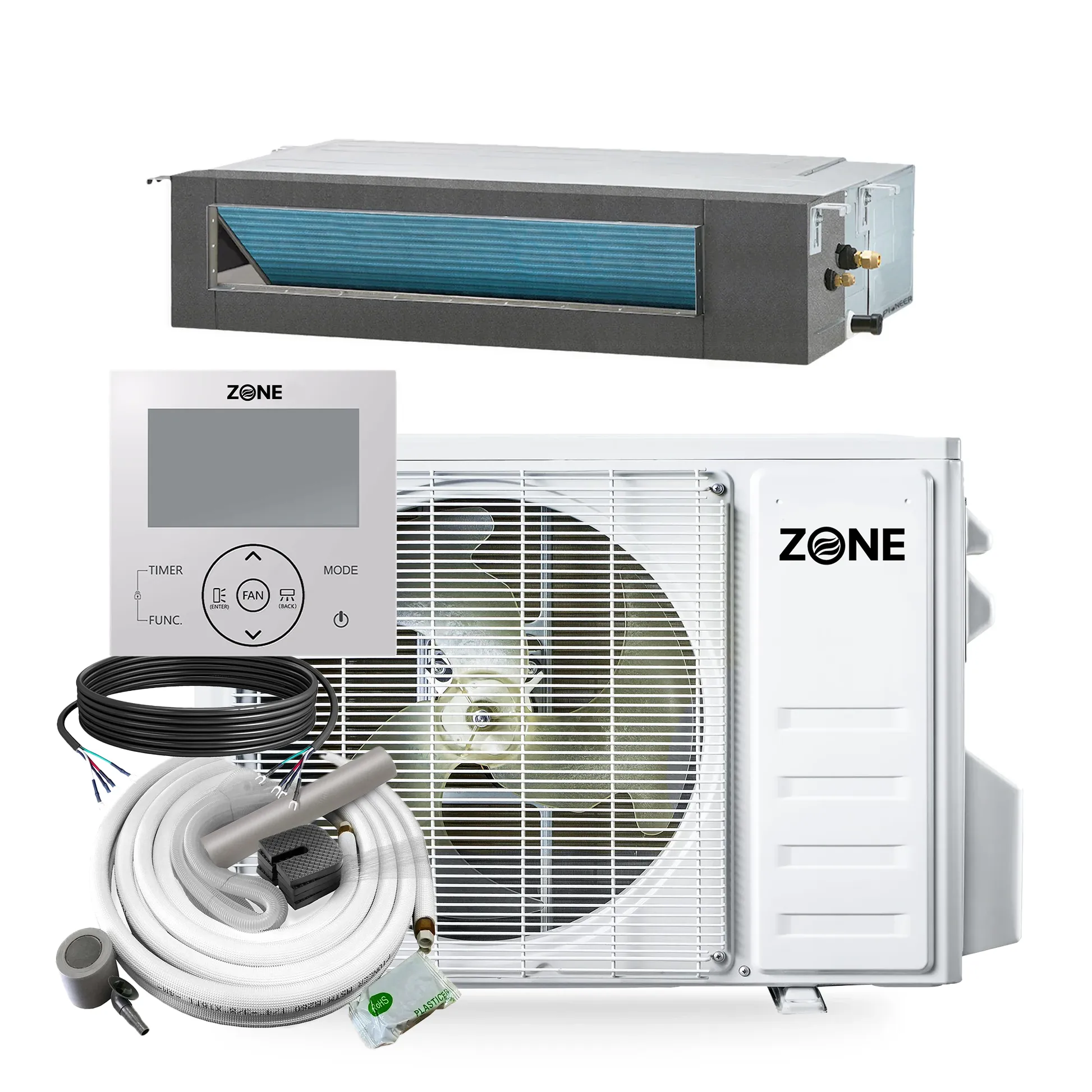
Ducted mini split systems — also referred to as "concealed" or "slim-duct" systems — combine inverter technology with hidden air distribution for a completely invisible heating and cooling solution. Ducted mini split systems utilize a compact indoor air handler and small, flexible ducts to deliver cooled air and heated air through discreet ceiling or wall vents. The indoor unit installs above the ceiling, in an attic, or in a closet, while only recessed supply and return grilles remain visible. Ducted mini split systems are ideal for homeowners seeking powerful comfort without compromising aesthetics.
How Ducted Mini Split Systems Work: Two Main Components
Every ducted mini split system has two main components — an indoor unit (the air handler) and an outdoor unit (the heat pump or condenser). The indoor air handler installs out of sight and connects to the outdoor unit via refrigerant lines and wiring. A fan inside the air handler pushes cooled air or heated air through short duct runs to ceiling or wall vents in the room. Return air flows back through a separate grille to complete the cycle.
Unlike a traditional central air system that runs long ductwork throughout the house, ducted mini splits use short duct runs — typically under 15 feet. This means ducted mini split systems can help avoid the 20–30% air loss typically associated with traditional ducted central air systems. Ducts in a central air system can be responsible for 20–30% air loss in a typical home, so shorter duct runs from a ducted mini split dramatically improve efficiency.
Many ducted mini split systems are heat pumps, providing efficient cooling in summer and reliable heating in winter. Ducted mini splits can provide heating up to four times more efficiently than traditional heating systems like furnaces or baseboard heaters.
Why Ducted Mini Splits Are More Efficient Than Central Air
Ducted mini split systems are often more efficient than traditional HVAC systems due to reduced energy loss through ducts. Because ducted mini splits use short duct runs instead of a full central air system's ductwork network, the system delivers cooled air and heated air with far less waste. Ducted mini splits utilize inverter technology, which adjusts the compressor speed to match real-time heating or cooling needs, enhancing energy efficiency.
Ducted mini split systems offer energy efficiency with ratings up to 28.5 SEER2 in some models. Zone Air ducted mini split systems feature up to 19.6 SEER2 — well ahead of what most central air systems can deliver. Higher efficiency means lower monthly energy bills and a cooling system that doesn't waste power. Many of our ducted mini split models are Energy Star certified, offering better long-term savings and potential utility rebates.
Ducted Mini Splits for Multiple Rooms: Central Mini Split Units
Ducted mini split systems can condition multiple rooms from a single unit. A ducted mini split can typically cool 2 to 4 rooms, depending on the unit size and duct design. This makes them function like central mini split units — one air handler hidden in the attic or ceiling space distributes heating and cooling to multiple rooms through branched ductwork and recessed ceiling vents.
These systems provide customizable room-by-room temperature control, allowing users to heat or cool only occupied areas. These systems provide flexible control for climate customization in different home areas. Mini splits can provide more temperature control by allowing each unit to be set to a different temperature. For example, our 12K BTU ducted mini split can comfortably control a master bedroom, bathroom, and walk-in closet from a single indoor unit installed in the attic — eliminating the need for multiple wall mounted units.
Ducted systems provide a more discreet, centralized solution for multiple rooms. If you need to control more zones, our dual-zone 22K BTU ducted mini split system connects two indoor units to one outdoor unit, covering up to 1,200 sq ft across multiple zones. See all available dual zone bundles — including wall mount, ceiling cassette, and concealed options with independent temperature control.
Ducted Mini Split Installation: What to Know Ahead of Time
A ducted mini split installation involves calculating load requirements and planning duct runs. Ducted mini split systems require more planning than wall mounted units, but the installation process is less invasive compared to full, traditional ductwork, making it suitable for older homes without existing ducts. Ducted mini splits are ideal for renovations, older homes, and additions, requiring minimal and small-diameter ductwork.
Here's a high-level overview of the install process:
- Ceiling or attic access: The indoor unit needs 8–12 inches of vertical clearance above the ceiling or in an attic space
- Duct routing: Plan short duct runs from the air handler to supply vents in each room
- Condensate drainage: Built-in pump handles water removal
- Service access: A small recessed access panel is needed for filter maintenance
- Connect the outdoor unit: Place the outdoor unit on a stable pad with good airflow, then connect refrigerant lines
A typical DIY mini-split job involves electrical work, wall mounting, and drilling holes through walls. Most high-efficiency ducted mini split systems require 208–230 Volt service. Many homeowners work with an HVAC contractor on the ductwork design, then connect the refrigerant lines themselves using our pre-charged linesets. Using an HVAC contractor provides many advantages for mini-split installation — especially for the ductwork layout. For a step-by-step walkthrough of the process, consult our DIY mini split installation guide.
Ducted vs Ductless vs Wall Mounted Mini Splits
If you're trying to decide between ducted, ductless, and wall mounted mini splits, here's the difference:
- Ducted mini splits hide the indoor unit above the ceiling or in an attic and use short duct runs to supply cooled air or heated air through recessed ceiling vents. Only the vents are visible — the equipment is completely concealed. Ducted mini split systems provide discreet, whole-home airflow without bulky ductwork.
- Wall mounted mini splits mount the indoor unit visibly on a wall. They're easier to install where there is no existing ductwork and offer zoned control and higher efficiency compared to ducted systems — but the unit itself is visible in the room.
- Central air systems use a full network of ducts running throughout the house, which can lead to significant energy loss and is expensive to install or replace.
Ductless mini splits offer zoned control and higher efficiency compared to ducted systems, but ducted mini splits give you the hidden, centralized look that many homeowners prefer. Many brands sell DIY mini splits in single-zone and multi-zone configurations — so you have options regardless of which style you choose.
Whisper-Quiet Operation
These systems operate quietly due to tucked-away air handlers and outdoor compressors, making them unobtrusive. The whisper-quiet performance of ducted mini splits is achieved by keeping most mechanical noise with the outdoor condenser unit. With the indoor unit hidden above the ceiling in an attic or closet, sound levels in the room drop dramatically. Zone Air ducted mini split indoor units operate at just 39 dB in quiet mode — ideal for bedrooms and offices where silent operation matters.
Shop Ducted Mini Split Prices: Models In Stock
Zone Air ducted mini split prices offer strong value compared to other brands. All models are in stock and ready to ship:
- 9K BTU Concealed — Regular price $2,599.99, now $2,299.99 (save $300). 19.6 SEER2. In stock.
- 12K BTU Concealed — Regular price $2,999.99, now $2,699.99 (save $300). 19 SEER2. In stock.
- Dual Zone 22K BTU (11K+11K) — Regular price $5,699.99, now $4,899.99 (save $800). Covers up to 1,200 sq ft across 2 zones. In stock.
Ducted mini split systems typically have a higher upfront cost compared to traditional HVAC systems, but they offer long-term energy savings that can pay for themselves over time. The price difference is offset by lower monthly bills, less maintenance, and a system that doesn't lose energy through long duct runs.
EZ Pay financing options are available with no-credit/bad-credit and ZERO-interest options. Not sure what size or capacity you need? Use our mini split sizing calculator to find the right BTU for your room, insulation, ceiling height, and more.
Maintaining Your Ducted Mini Split System
Regular maintenance is essential for ducted mini splits to ensure optimal performance and longevity. Here are the key steps to maintain your ducted mini split system:
- Clean or replace air filters regularly — Cleaning or replacing air filters regularly is a key maintenance task for ducted mini splits. These systems typically feature built-in air filters that capture dust and allergens, improving indoor air quality compared to traditional ducts. Check filters every 1–2 months.
- Clean the coils — Inspect and clean the indoor unit coils periodically to prevent dust buildup that can reduce efficiency.
- Inspect the outdoor unit — Inspecting and cleaning the outdoor unit is important to prevent debris buildup that can affect performance. Keep the area around the outdoor unit clear of obstructions for proper airflow and efficiency.
- Check refrigerant levels — Checking the refrigerant levels is a critical part of maintaining ducted mini splits to ensure efficient operation.
- Schedule professional service — Scheduling professional maintenance at least once a year can help identify potential issues before they become serious problems.
Manufacturer's Warranty and Support
Ducted mini split systems often come with a manufacturer's warranty for added peace of mind. Zone Air ducted mini splits include a comprehensive manufacturer's warranty covering parts and compressor. Most manufacturers offer up to 12-year warranties on equipment installed by licensed HVAC techs.
Customer support is available via phone, email, or live chat. Our team can help you plan your duct layout, choose the right capacity for your zones, and walk you through the installation manual. For more on how mini split efficiency translates to savings, check out what SEER ratings mean for your energy bills.
What's Included with Every Ducted Mini Split System
Each concealed mini split system includes everything you need to get started:
- Slim-duct indoor air handler unit
- Outdoor condenser unit (heat pump)
- Pre-charged 16 ft lineset
- Wireless remote control (wired thermostat optional)
- Built-in condensate pump
- Installation manual, hardware, and instructions
Ductwork and grilles are sourced separately to match your specific ceiling and room layout. Installing a single zone is ideal if you're adding cooling or heating to a room that ducts are having trouble reaching — or if you want to upgrade a garage, business space, or addition without extending your central air system's ductwork.
Shop Zone Air ducted mini split systems today and create whole-home comfort without sacrificing your home's design.
Frequently Asked Questions About Ducted Mini Splits
Common questions about concealed mini split systems, installation, and pricing.
What is a concealed mini split?
How is a ducted mini split different from central air?
Can a concealed mini split cool multiple rooms?
What does ducted mini split installation involve?
How much does a concealed mini split cost?
Explore More Mini Split Systems
Browse our full range of mini split systems, bundles, and accessories.
Wall Mount Systems
Wall-mounted mini splits for individual rooms. 9K–18K BTU, 115V and 230V options from $1,899.
Learn More →Dual Zone Bundles
Two indoor units, one outdoor unit. Independent temperature control in two rooms from $4,299.
Learn More →Ceiling Cassettes
Ceiling-mounted mini splits with 4-way airflow for offices, commercial spaces, and modern homes.
Learn More →Line Set Extensions
Pre-charged refrigerant line extensions for longer runs. No vacuum pump needed.
Learn More →Accessories
Professional mounting brackets, wall caps, and installation accessories.
Learn More →Sizing Calculator
Find the right BTU capacity for your room size, insulation, and climate.
Learn More →Installation Guide
Step-by-step DIY mini split installation walkthrough with tips and tools.
Learn More →SEER Rating Guide
Learn how SEER2 ratings affect energy efficiency and your utility bills.
Learn More →Invisible Comfort, Powerful Performance
Concealed mini splits hide completely above the ceiling — delivering heating and cooling to multiple rooms with only discreet vents visible. Free shipping on every order.
Shop All Products