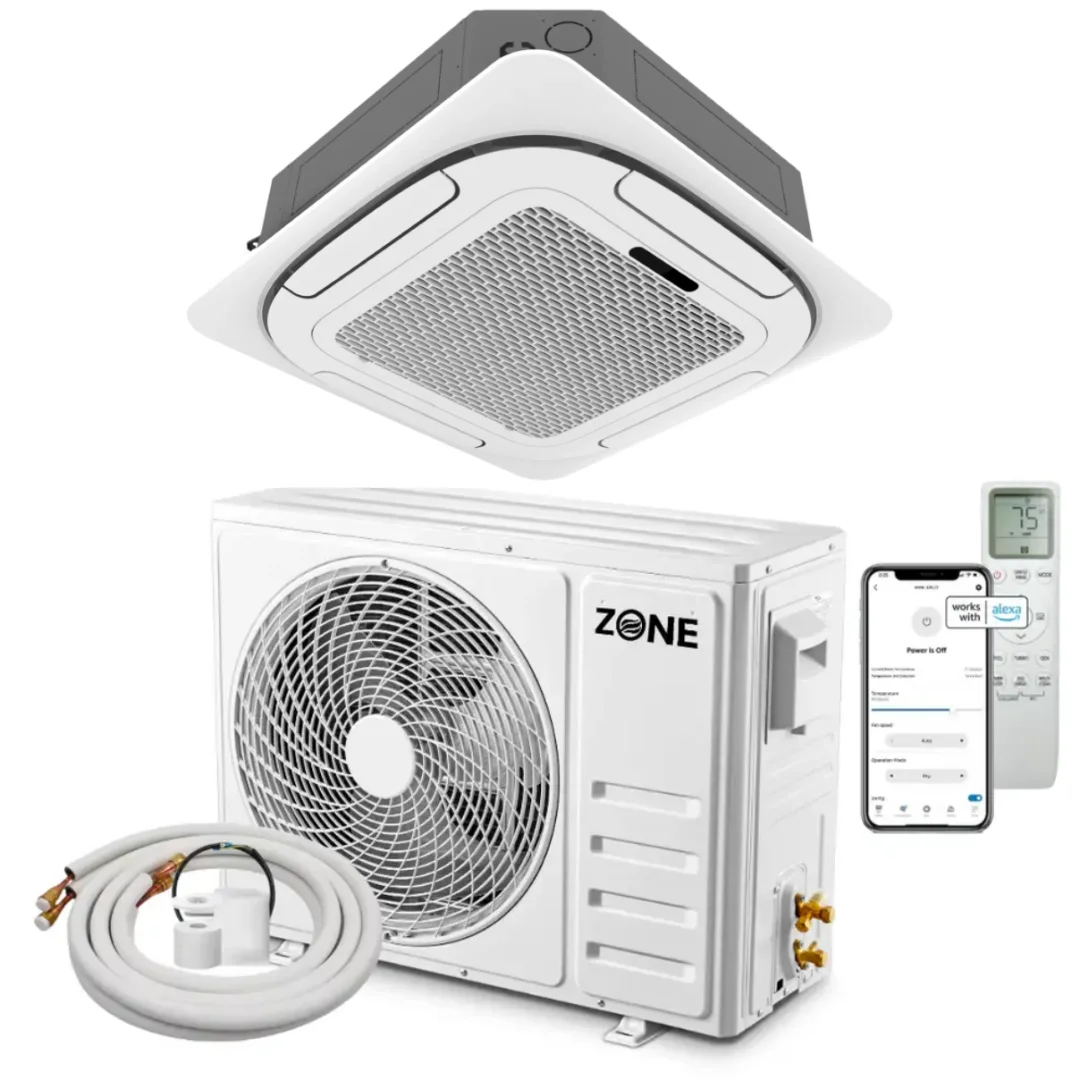

Trying to clear out a cluttered space or get a neater look? A ceiling cassette mini split can be just the ticket. This guide is all about what ceiling cassette mini splits are, how they fit into mini split systems, and how to choose, install, and maintain them for top-notch performance.
What Are Ceiling Cassette Mini Splits?
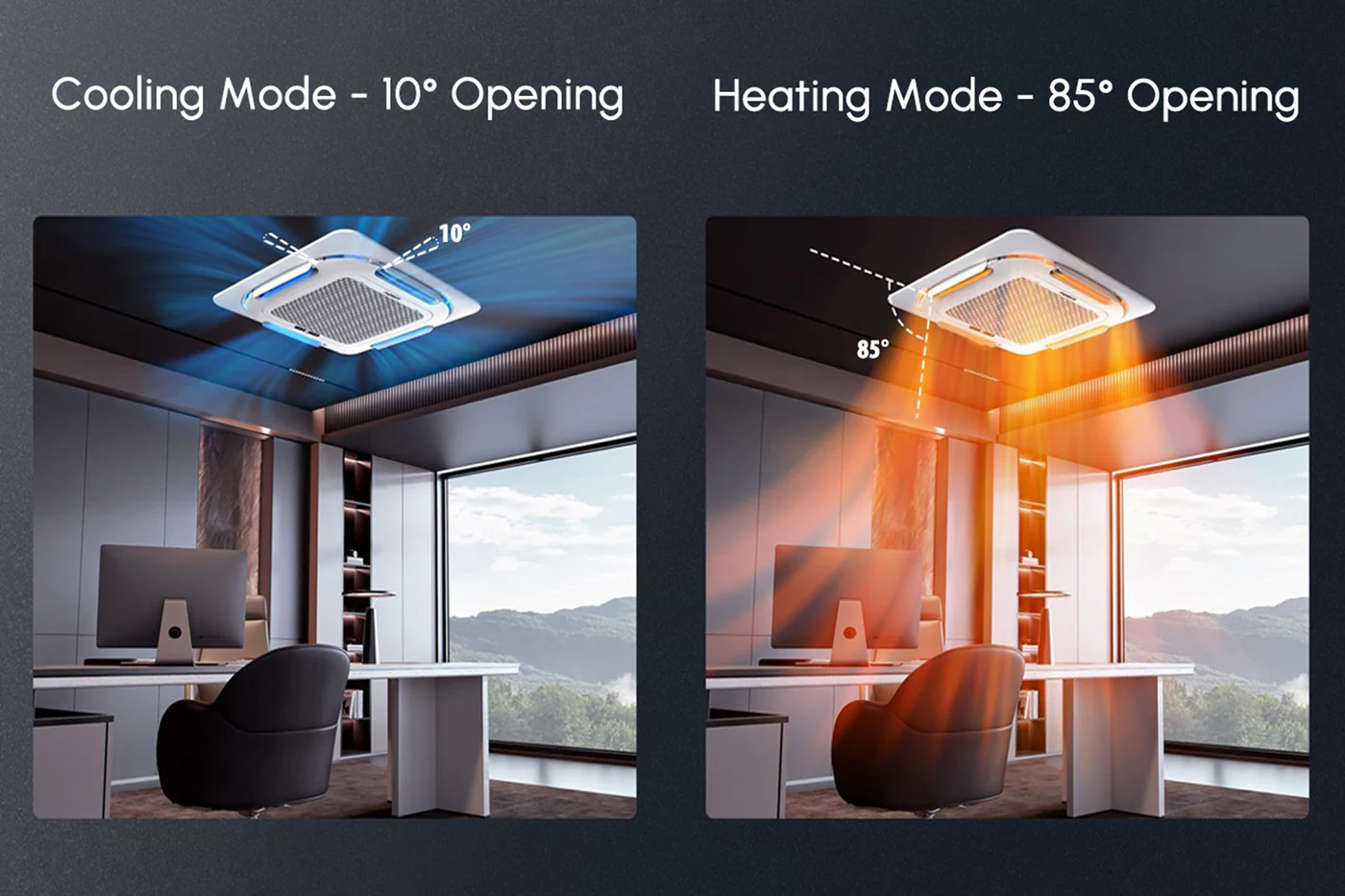
Ceiling cassette mini splits are a type of indoor unit in a ductless mini split system that mounts right into the ceiling rather than on a wall or floor. Unlike most wall units, they blow air down from above — sometimes in multiple directions — to make sure the whole room feels nice and even.
In super simple terms: a ceiling mini split uses a ceiling cassette indoor unit plugged into refrigerant lines with an outdoor unit (the condenser/heat pump). The system moves heat in or out of your space to give you reliable heating and cooling without all those pesky ducts.
What This Guide Will Help You With
We want to make sure you have all the info you need to get a ceiling cassette system up and running properly, so this guide will be covering:
- Exactly how ceiling cassettes work inside mini split systems
- Comparing recessed vs surface mounted options
- Sizing a system correctly (BTU/capacity)
- Planning installation and checking your ceiling's all set
- Picking the right accessories, controls, and maintenance routines
- Looking at costs, brands, warranties, and making sure your installer is qualified
All About Ceiling Cassettes
Ceiling Cassette Placement and Appearance
A ceiling cassette mini split usually gets placed near the center of the room to get the airflow nice and balanced. If you go for a recessed model, it'll sit flat with the ceiling for a super sleek look that won't draw attention away from your décor. If that's not possible, surface mounted models will sit below the ceiling.
How They Fit Into a Mini Split System
In a mini split system, the indoor unit handles air distribution and heat exchange indoors, while the outdoor unit (condenser/heat pump) handles the heat exchange outside. They connect via refrigerant line sets (plus some wiring and a drain of course). The indoor unit sucks in heat from the room during cooling, or releases heat into the room during heating.
Where Ceiling Cassettes Work Well
Ceiling cassettes work great in:
- Residential rooms where wall space is at a premium (compared to a wall mount mini split), or you just want a more discreet look
- Commercial spaces like offices, studios, and small retail where even airflow and zoning is key
What Ceiling Cassettes Bring to the Table in Mini Split Systems
Why They Can Be More Energy Efficient
Ductless mini split designs avoid all the ductwork losses you get with traditional systems. That's why mini split efficiency is often way better compared to ducted systems, especially when you're dealing with old buildings with leaky ducts. According to the U.S. Department of Energy, duct losses in central forced-air systems can account for more than 30% of energy consumption for heating and cooling.
Even More Evenly Distributed Airflow
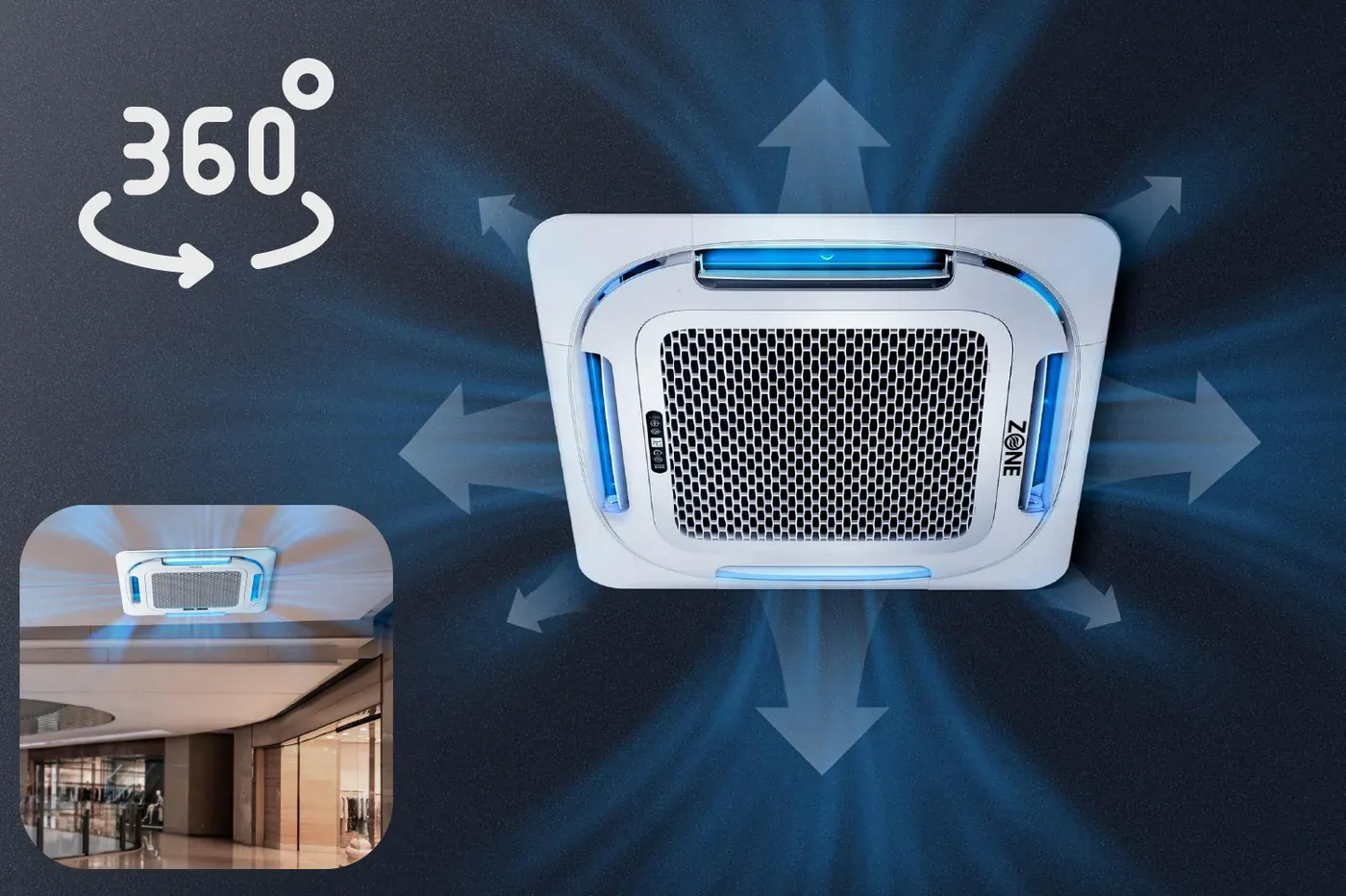
Many ceiling cassette units can deliver airflow in multiple directions to spread conditioned air across the space more evenly. That helps cut down on those annoying hot/cold spots and keeps your temperature consistent.
More Discreet Ceiling Installation
A recessed ceiling cassette gives you a low-visual-impact solution compared to wall units, which can be way more visible in a room. If looks are a top concern, this is often the major difference people care about.
Zoning and Quiet Operation
Each indoor unit acts as its own zone, which means you can keep different temperatures in different rooms and avoid heating or cooling spaces that aren't in use. And many mini split systems are known for running quiet — some indoor units can keep the noise down to around 19–25 dBA under light load.
Energy Efficiency and Heat Pump Performance
A Closer Look at SEER and HSPF Ratings
SEER (Seasonal Energy Efficiency Ratio) looks at cooling efficiency over a whole season. The higher the SEER, the better your cooling efficiency and lower energy use. Learn more about what SEER ratings mean and how they affect your bills.
HSPF (Heating Seasonal Performance Factor) looks at seasonal heating efficiency for a heat pump. The higher the HSPF, the more efficient your heating.
When comparing models, take a look at both SEER and HSPF together so you can get a full picture of both cooling and heating performance.
How Heat Pump Heating Works
A heat pump doesn't "make" heat like an electric resistance heater does. It just moves heat:
- In heating mode, the outdoor unit sucks heat out of the air outside and transfers it indoors through the refrigerant
- In cooling mode, the system moves heat from indoors to outdoors
Tips to Squeeze Out More Energy Efficiency
- Clean those filters so airflow stays strong
- Don't block airflow vanes with tall furniture
- Set realistic temperature setpoints and use schedules
- Use zoning: only condition the rooms you're actually using
- Make sure you've got the right refrigerant charge during installation (incorrect levels can really hurt efficiency and reliability)
- Choose the right capacity — oversizing can cause issues with short cycling and reduced comfort
How Much of an Efficiency Gain Can You Expect with Ceiling Cassettes?
Since ductless systems don't rely on ductwork, they avoid all the leakage and thermal losses you get with traditional setups. That often translates to way better delivered comfort per watt — especially in older buildings with leaky ducts.
Ceiling Cassette Indoor Unit Design and Features
Some ceiling cassette units come with all sorts of great features like multiple airflow vanes, sleek designs, and built-in sensors to keep things running smoothly. Here's a more detailed look at what to look for.
Four-Way Airflow Vane Function and How It Helps
Many ceiling cassettes use four-way airflow vanes to distribute conditioned air across a room in multiple directions. This setup helps spread the air rather than just blasting it along one wall — which is super helpful for keeping the whole space comfortable.
Occupancy Sensor Features to Save Energy and Hassle
Some of these ceiling cassettes come with motion or occupancy sensors that can do some pretty cool things, including:
- Turning the unit down or off when the space is empty
- Adjusting airflow to avoid blowing straight at people
- Helping you save energy while still keeping the place comfortable
Thinking About Indoor Unit Noise and Size for a Ceiling Mount
With ceiling installs, you can really hear the difference if an indoor unit is quiet — especially in rooms like bedrooms or offices. The depth of the unit also matters — you need to make sure it'll fit between joists, or above a finished ceiling without any issues. Just remember to plan for a way to get in there for maintenance, or else it'll become a real pain.
Installation: Ductless Mini Splits That Are Easy for Pros (and a Bit Less Easy for DIYers)
Installation can be done by the right crew, but with ceiling cassettes there are extra structural and clearance requirements to think about. Even if a system is marketed as "easy installation," it's still a good idea to think of ceiling cassette installs as a job for a pro.
Basic Refrigerant Line Routing (High-Level Overview)
- Pick a spot for the indoor unit (usually right in the middle of the room)
- Plan the refrigerant line from the indoor unit to the outdoor unit
- Route the drain line so it's got a good slope
- Run all the wiring and communication lines according to the manufacturer's specs
- Hook everything up (using pre-charged linesets where available), pressure test, evacuate, and get the system up and running
- Double-check that it's working OK and there are no leaks
Required Ceiling Clearances and Joist Details to Keep in Mind
- You need a flat, sturdy ceiling with enough clearance above for the cassette itself, the piping, and airflow
- Joists can be a problem, so you've got to plan around them
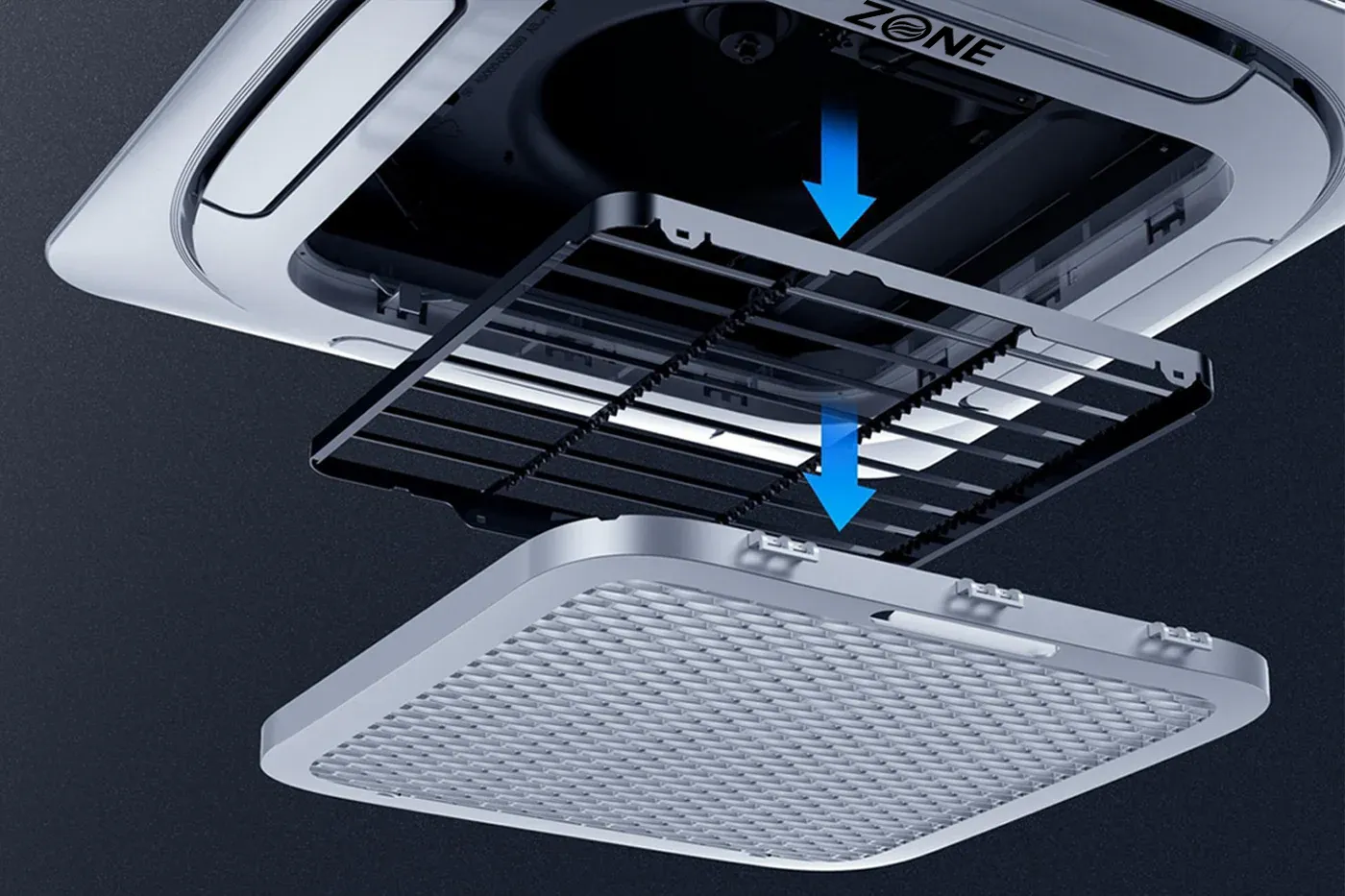
- Make sure there's still space for service access panels and filter removal
It Really Is a Good Idea to Have a Licensed HVAC Pro Do the Install
Proper installation is super important for safe operation, code compliance, efficiency, and warranty protection. Plus it'll help prevent issues down the line. And if you don't get it right, you could end up with a system that causes damage over time. The ACCA (Air Conditioning Contractors of America) provides industry standards for proper HVAC system installation and load calculations.
Confirming the Outdoor Unit Location Is Super Important Too
Before you start setting up the indoor unit, make sure the outdoor unit is in a good spot — with a stable pad or wall bracket, good airflow around the condenser, reasonable line lengths and clean routing, and ideally not near bedroom windows if possible.
Recessed vs Surface Ceiling Cassettes: Which One Is Right for You?
The Benefits of a Recessed Mounting
- Looks super sleek and won't stick out in your finished space (similar to concealed systems)
- Great for residential homes where aesthetics matter
- Often the preferred choice for a tidy, high-end look
Surface Mounted Cassettes Have Their Advantages Too
- Useful when you can't get into the ceiling
- Good for retrofits, or when the layout is tricky
- Usually easier to access in tight spaces
Making Sure Your Suspended Ceiling Grid Is Compatible
If you're working in a commercial space with drop ceilings, you'll want to check that the cassette size is compatible with your ceiling grid — this usually involves checking the unit dimensions against the grid module before you even buy.
Sizing and Choosing the Right Mini Split Capacity
Some Basic BTU Sizing 101
Capacity is usually measured in BTU/h (British thermal units per hour) and the higher it is, the more heating/cooling you're going to get — but bigger isn't always better. Sizing your system depends on a lot of factors including room size, insulation and air sealing, ceiling height, window area and sun exposure, local climate, number of occupants, and internal heat loads. For a deep dive on sizing, check out our guide on what size mini split you need.
A Room-by-Room Sizing Checklist
For each room or zone, take note of:
- Square footage and ceiling height
- Number and size of windows
- Insulation level (walls/ceiling)
- Sun exposure (north, south, west)
- Typical use (bedroom vs kitchen vs office)
- Any special loads (server closet, gym equipment, etc.)
Multi-Zone Mini Splits: How They Work and What to Look For
Multi-zone systems connect multiple indoor units to one outdoor unit. Zone Air offers dual zone bundles that pair ceiling cassettes with other indoor unit types. They're super useful if you want to zone across several rooms, but make sure:
- Each room gets the right indoor unit type and size
- The total connected indoor capacity matches the outdoor unit's design limits
- You understand how simultaneous heating/cooling works for your chosen system
Accessories and Controls for Ceiling Cassette Mini Splits
Wi-Fi Thermostat Options to Make Life Easier
Wi-Fi controls can enable:
- Remote temperature control
- Scheduling
- Energy monitoring (check what's available for your model)
- Alerts for maintenance reminders
Wired Remote Control Options When Reliability Matters
Wired controls are more common in commercial spaces because they're reliable and easy to standardize across buildings. Plus they help prevent misplaced handheld remotes.
Optional Motion and Occupancy Sensors to Save Energy
If your model supports it, occupancy sensors can reduce wasted energy in under-used rooms, conference rooms, or offices with variable schedules.
Maintenance, Troubleshooting, and Longevity
A Simple Maintenance Schedule to Keep Your System Running Smoothly
- Every 2–4 weeks: Have a look at the filters (more often if you've got pets or dust)
- Monthly: Give the filters a clean if they're visibly dusty
- Seasonally: Check the drain line and make sure water is draining properly
Some Basic Coil Cleaning Steps
- Power off the system
- Remove and clean the filters
- Take a look at the coil surface for dust buildup
- Use the manufacturer-approved cleaning methods (avoid harsh chemicals)
- Make sure everything is dry and reassembled just right
Common Fault Codes to Log and What to Do About Them
Fault codes can be a right pain, especially when they're brand specific. Here's what it makes sense to log:
- The exact code you got
- Date and time of the fault, and what the system was doing at the time (heating or cooling)
- Indoor and outdoor conditions at the time
- Any recent power events or maintenance you've done
Doing this makes it a lot easier and cheaper for the pros to sort out the problem.
The Importance of Annual Professional Maintenance
Get a technician in to do the following once a year (or before the peak heating/cooling season):
- Take a good look at the electrical connections and wiring for any signs of wear
- Check the refrigerant levels and look for any leaks
- Give the coils a good clean
- Make sure everything is draining properly
- Double-check the system is working okay for both heating and cooling
Ceiling Cassette Mini Splits: Commercial vs Residential Use Cases
Commercial Considerations and Layout Tips
Commercial spaces can be a challenge when it comes to airflow. Here are some things to keep in mind:
- Get even airflow in open-plan areas by prioritizing the right layout and zoning
- Plan zones for different areas of your office, like conference rooms and open offices
- Use wired controls to keep everything consistent
- Think about how your staff will access the system and how filters will be scheduled
Residential Placement and Aesthetic Tips
When it comes to residential installs, here are some things to keep in mind:
- Place the cassettes in key rooms, but not directly over tall cabinets (you know, for airflow reasons)
- If you want a super discreet look, go with recessed cassettes
- Think carefully about bedrooms — noise and airflow direction are key considerations
Typical Capacity Ranges by Use Case
- Residential rooms: These usually need smaller capacities, depending on the load in each room
- Light commercial spaces: These might need larger capacity or multiple zones to get good coverage. The key is to size each room properly, rather than just guessing
Buying Guide: Comparing Models, Brands, and Costs
Comparison Table Fields for Features
Here are some key fields to compare when you're looking at different models:
| Category | What to Compare | |---|---| | Performance | SEER, HSPF, heating low-temp rating, capacity range | | Comfort | Airflow modes, vane control, humidity control, temperature control features | | Noise | Indoor unit dBA, outdoor unit dBA | | Installation | Required ceiling depth, joist constraints, line length limits, drain requirements | | Controls | Wi-Fi, wired remote, app quality, automations | | Reliability | Parts availability, error code clarity, service network | | Warranty | Parts term, compressor term, registration steps, labor coverage |
Comparing Warranties and Service Terms
When you're looking at different warranties and service terms, here are some things to pay attention to:
- The registration process and any deadlines you need to meet
- Whether the warranty is any different for residential vs commercial installs
- How widely available the service network is in your area (this is almost as important as the paper warranty)
Budget Ranges by Capacity and Zones
Prices can vary a lot depending on the brand and market, but generally:
- More zones and higher capacity = higher price
- Installs in the ceiling tend to cost more than wall units because of the extra work involved (ceiling work, drainage, access, etc.)
Evaluating Installer Availability and Qualifications
A good installer should be:
- Licensed and insured
- Following local codes and manufacturer install manuals
- Pressure testing the system, evacuating properly, and doing the commissioning
- Explaining maintenance and warranty registration clearly
Frequently Asked Questions
What is a ceiling cassette mini split?
A ceiling cassette mini split is an indoor unit that mounts directly into your ceiling, either recessed flush or surface mounted below it. It connects to an outdoor heat pump via refrigerant lines and delivers conditioned air downward — often in four directions — for even temperature distribution. Unlike wall mount mini splits, ceiling cassettes are nearly invisible, showing only a slim grille panel from below.
How much does a ceiling cassette mini split cost?
A ceiling cassette indoor unit typically costs more than a wall mount unit due to the additional installation complexity. Expect to pay $2,000-$4,500 for a single-zone system including installation, depending on BTU capacity and brand. Zone Air ceiling cassette systems offer competitive pricing with professional-grade components. For multi-zone setups, check out our dual zone bundles for package savings.
Are ceiling cassettes harder to install than wall mounted mini splits?
Yes, ceiling cassette installation is more involved than a wall mount because it requires ceiling access, proper structural support, condensate drainage routing, and adequate clearance above the unit. While wall mount mini splits can often be a DIY mini split project with pre-charged linesets, ceiling cassettes are best handled by a licensed HVAC professional to ensure proper drainage and code compliance.
What is the difference between a ceiling cassette and a wall mount mini split?
The main difference is placement and aesthetics. A wall mount mini split hangs on the wall and is visible in the room, while a ceiling cassette recesses into the ceiling for a nearly invisible look. Ceiling cassettes also distribute air in multiple directions (often four-way), providing more even coverage for larger or open rooms. Wall mounts are easier to install and less expensive, while ceiling cassettes are ideal when wall space is limited or a discreet look is preferred. For an even more hidden option, consider a concealed system.
What rooms are best suited for ceiling cassette mini splits?
Ceiling cassette mini splits work best in rooms with accessible ceiling space and where even airflow matters. Great choices include open-plan living areas, commercial offices, studios, kitchens, and master bedrooms where you want a discreet look. They're especially popular in spaces where wall space is occupied by windows, artwork, or cabinetry. For a personalized recommendation, use our mini split sizing calculator to find the right capacity for your room, or visit our FAQ page for more guidance.
Final Thoughts
If you want even airflow, a discreet ceiling look, and zoning without sacrificing energy efficiency, ceiling cassette mini splits are a great option for both residential and commercial spaces. Just remember: the biggest wins come from getting the sizing right, doing the install properly (especially drainage and line routing), and keeping up with regular maintenance.
Ready to get started? Browse Zone Air ceiling cassette mini splits | Calculate your BTU needs | Learn about multi-zone systems