18,000 BTU Mini Split Systems
An 18,000 BTU mini split — 1.5 tons of cooling — is the right pick for large open spaces 600–1,000 sq ft: great rooms, finished basements, garage workshops, master suites with sitting areas, and small ADUs. At this capacity 230V is required (115V can't carry the current draw), and only wall-mount form factor is available. Zone Air 18K systems hit 23.5 SEER2, heat down to -13°F outdoor, and ship with a pre-charged R-454B Quick Connect lineset, free shipping, and a 5-year parts / 7-year compressor warranty.

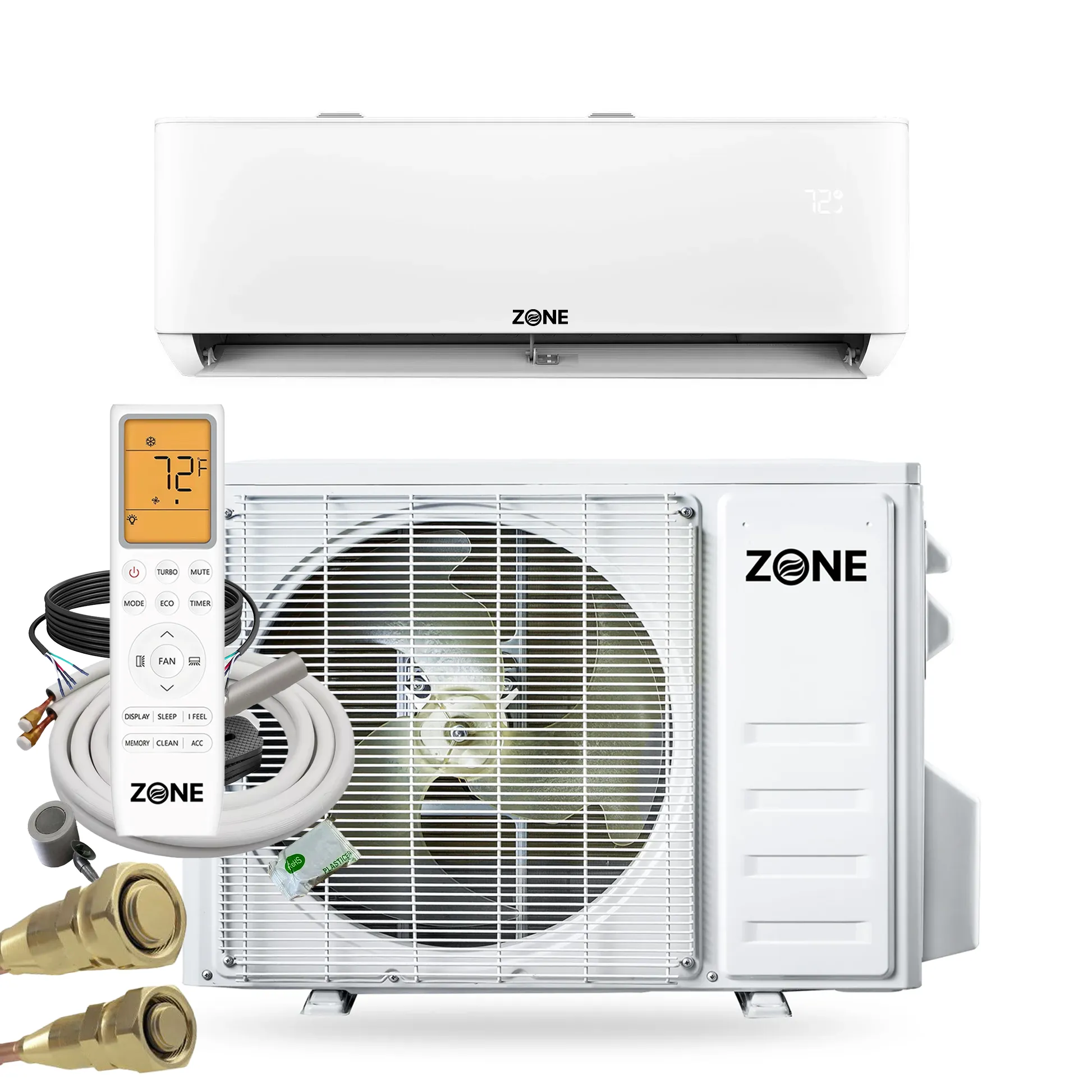
Single-Zone Systems
One indoor unit, one outdoor unit — for a single room.
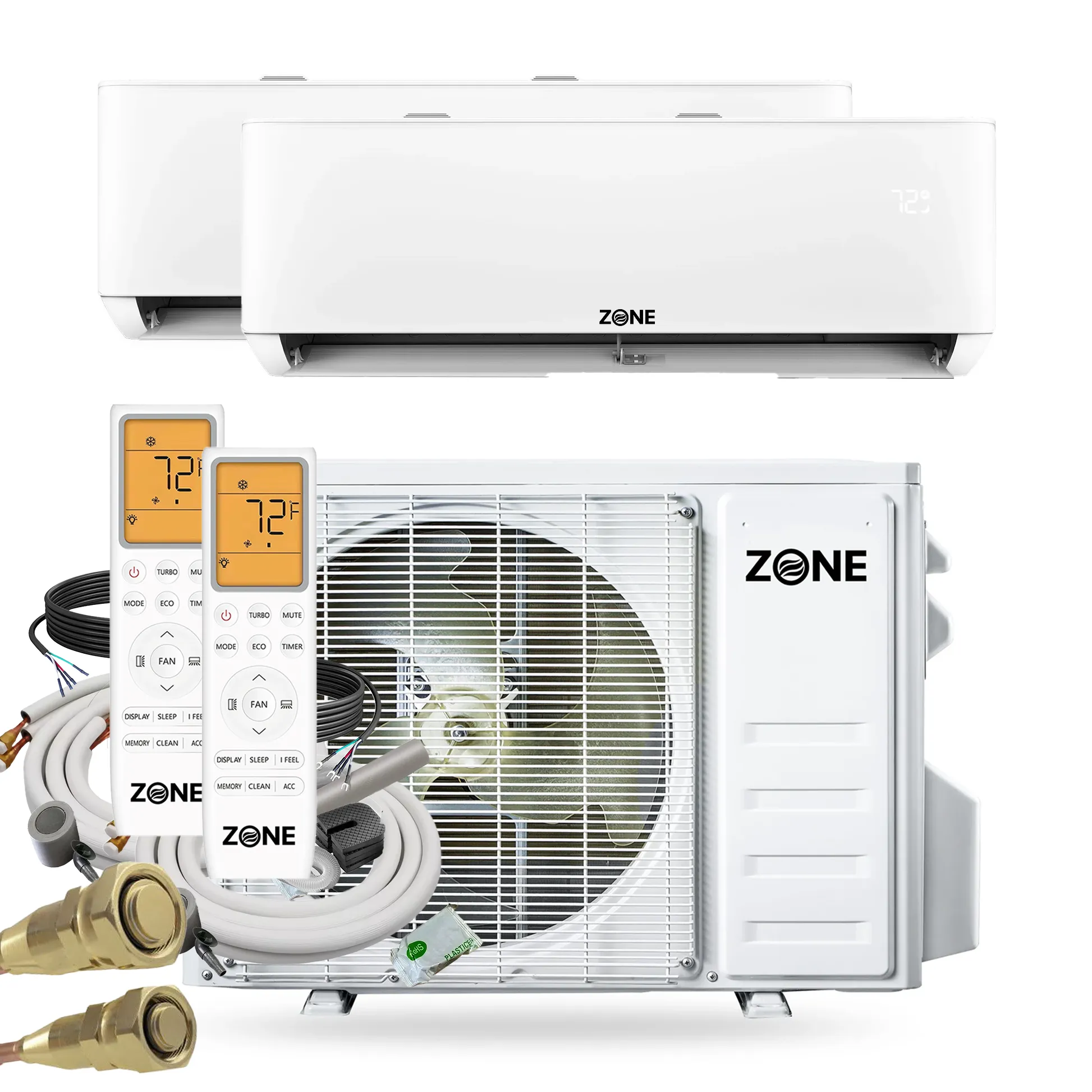
Multi-Zone Bundles
Two indoor heads sharing one outdoor condenser — cool/heat two rooms with one system.
Benefits of an 18,000 BTU Mini Split
18,000 BTU is 1.5 tons of cooling — enough for a 600–850 sq ft room or open-plan space. At this capacity Zone Air offers a single-zone 230V wall mount; we don't make an 18K cassette or concealed because the indoor unit dimensions become impractical. For larger or multi-room cooling, two 9K heads on a dual-zone outdoor or a 12K + 18K bundle often beats a single 18K system on both efficiency and zoning flexibility.
- ✓Cools rooms 600–850 sq ft with standard 8 ft ceilings
- ✓230V only — power draw exceeds 115V circuit capacity
- ✓23.5 SEER2 with inverter compressor
- ✓Heat pump heating to -13°F outdoor
- ✓Available as single-zone wall mount or 12K+18K dual-zone bundle
Benefits of an 18,000 BTU Mini Split
Why a 1.5-ton single-head 18,000 BTU mini split is the right call for great rooms, basements, and ADUs — and what you get for the 18k BTU step up from a 12K.
1.5 tons of cooling for 600–850 sq ft
18,000 BTU equals 1.5 tons — enough capacity for great rooms, finished basements, and open-plan ADUs without short-cycling on partial loads.
23.5 SEER2 — premium efficiency
At the 1.5-ton class, 23.5 SEER2 is honest premium-tier. Inverter operation drops cooling cost 20–40% in mild weather where the compressor doesn't need full output.
Heat pump rated to -13°F outdoor
Heating capacity holds at 19,000 BTU at 47°F outdoor and stays usable down to -13°F. For most U.S. climates an 18K can be the only heat source for the room it serves.
DIY install with pre-charged R454B
The 16 ft pre-charged R454B lineset removes the vacuum pump and EPA license requirement. First-time DIYers finish in 5–10 hours on a 230V circuit.
Single-zone simplicity
One outdoor unit, one lineset penetration, one electrical circuit. Less to install, less to service, and a lower equipment cost than two single-zone systems for the same total BTU.
Whisper-quiet inverter operation
Indoor sound as low as 32 dB in quiet mode — quieter than a refrigerator. The compressor lives outdoors so the great room or basement stays silent during long runs.
An 18K BTU DIY mini split is a powerful ductless HVAC system for large rooms, home additions, garages, studios, and open living spaces where you want efficient heating and cooling without extending existing ductwork. Delivered in packaging engineered to ensure your system arrives safely, Zone Air 18K systems provide targeted comfort for spaces up to 1,000 sq ft in favorable conditions, giving homeowners independent temperature control with a simpler DIY installation process.
Shop Zone Air 18K BTU mini split systems to create a comfortable space faster, spend less on installation, and enjoy high-efficiency performance powered by modern heat pump technology.
18K BTU DIY Mini Splits for Every Space
An 18k BTU mini split is designed for homeowners who need more capacity than a small bedroom unit but do not want the cost or disruption of a full contractor-installed system. By handling the installation themselves, homeowners can significantly reduce overall costing — including unit price, tools, refrigerant, and labor — making DIY mini split systems a more affordable option compared to hiring professionals. Homeowners can achieve energy savings and independent climate control by utilizing DIY mini split systems in home additions or individual rooms.
Large Living Areas and Open Floor Plans
Choose an 18K BTU unit for large living areas, great rooms, and open concept spaces around 750–900 square feet. In well-insulated homes with good airflow, an 18k BTU DIY mini split air conditioner provides targeted cooling for spaces up to 1,000 sq ft.
This size is especially useful for family rooms with vaulted ceilings, sun exposure, or minimal wall separation. Instead of relying on an existing central HVAC system that may struggle to push enough air through the house, a ductless split system delivers heating and cooling directly where comfort is needed.
Home Additions and Converted Spaces with Air Handler Options
An 18K system is an excellent choice for finished basements, attic conversions, garage workshops, studios, and bonus rooms. These spaces often need independent control because they were not designed around the original ductwork.
The Department of Energy estimates traditional homes can lose up to 20% of conditioned air through leaky ducts, making DIY mini splits highly efficient. A ductless mini split avoids that problem by connecting the indoor air handler to the outdoor unit with a refrigerant line set, giving the room its own efficient comfort zone.
Multi-Zone System Applications
An 18K BTU air handler can also work as the higher-capacity part of a multi-zone system. Pair it with smaller indoor units for bedrooms, offices, or guest rooms to balance temperature throughout the home — a typical mini split system includes two units: an indoor air handler and an outdoor condenser.
This setup is ideal for a master suite, large family room, or main living area that needs more output than standard bedrooms. If you are comparing Zone Air with MRCOOL DIY or other DIY-friendly brands, review the capacity, line set length, warranty, and installation instructions before choosing the best system for your layout.
Choose the Right 18K BTU System for Your Needs
The right 18K BTU mini split depends on space size, insulation, climate, ceiling height, window exposure, and how often the system will be running. Higher efficiency, proper sizing, and correct installation all help reduce monthly utility bills over time.
For Standard Insulation Homes
For homes with decent insulation standards, a standard 18K unit efficiently heats and cools about 750–850 square feet in moderate climates. Homes built after 2000 often perform well with this size, provided the floor plan is open enough for air to move naturally.
Energy-efficient HVAC systems can significantly reduce monthly utility bills, with some systems achieving up to 24 SEER2 efficiency ratings. The SEER (Seasonal Energy Efficiency Ratio) rating measures the efficiency of air conditioning systems, including mini split systems, by calculating the cooling output during a typical cooling season divided by the total electric energy input during the same period.
For Cold Climate Heat Pump Applications
For northern regions, cold climate certified 18K heat pump systems are designed to keep heating performance stable in winter. Zone Air cold climate options are built for reliable year-round comfort, with advanced models maintaining heating efficiency down to -13°F.
Enhanced heat pump technology helps the outdoor condenser extract heat even when outdoor air is cold. If you use the system for primary heating, check the product page for low-temperature performance, rebate eligibility, and expected comfort range before you install.
For Older Homes with Insulation Challenges
Older homes, especially homes built before 1980 or houses with single-pane windows, may need the extra capacity of an 18K BTU system to compensate for heat loss and heat gain. Variable speed compressors adjust output based on actual load requirements, helping the unit avoid constant on/off cycling.
Mini split systems can achieve SEER ratings as high as 24, indicating their potential for high energy efficiency and lower operational costs compared to traditional HVAC systems. Higher SEER ratings generally correlate with lower energy consumption, leading to significant savings on electricity bills over time, especially in regions with long cooling seasons.
Advanced Technology That Delivers Results
Zone Air 18K DIY mini split systems combine high-output heating and cooling with technology that makes installation easier and everyday control more convenient. Compared with expensive pro-only systems, a DIY-ready unit can deliver professional-grade comfort with fewer barriers. Honestly, even those with limited technical skills can achieve professional-grade comfort with this DIY-ready unit.
Pre-Charged R-454B Line Sets
Zone Air systems use Quick Connect pre-charged lines to simplify installation — the same approach used by other DIY-friendly brands like MRCOOL. Our 18k DIY mini split systems do not require ductwork, making installation much easier for DIYers. Pre-charged line sets allow for easier installation of ductless mini split systems without the need for specialized tools or training, making them accessible for DIY homeowners.
Pre-charged line sets eliminate the need for vacuuming and refrigerant charging during installation, which are typically complex steps requiring professional expertise. That means no vacuum pump, no separate refrigerant charging process, and fewer special tools when the system is installed according to instructions.
Smart WiFi Control and Energy Monitoring
Smart WiFi control lets you adjust temperature from your phone, whether you are at home, at work, or anywhere in the world. Use the app to set schedules, reduce energy use while you sleep, and create automatic actions that help maintain comfort without constant manual changes.
Real-time energy monitoring helps you learn how your system performs and where you can save. Voice control through Amazon Alexa and Google Assistant, account settings, and remote access make it easy to manage your mini split from one page instead of guessing what is running.
Premium Build Quality and Warranties
Zone Air 18K systems are built with durable components, including corrosion-resistant gold fin condenser protection for humid and coastal environments, so you don't have to worry about long-term corrosion — even in coastal areas. A protected outdoor unit helps support long-term performance, especially when the condenser is exposed to rain, salt air, and changing weather.
Many energy-efficient HVAC systems qualify for rebates and tax credits, which can further enhance the overall savings for homeowners. Energy Star certification and strong efficiency ratings can help with eligibility, but homeowners should review local rebate rules, documentation requirements, and any installation requirements before applying.
DIY Installation Made Simple
Zone Air makes professional comfort more accessible by designing systems that capable homeowners can install with clear guidance — many can complete the process in just a couple of hours. Homeowners can save between $3,000 and $5,000 by installing DIY HVAC systems instead of hiring contractors, and installing a couple of units further reduces overall costs compared to professional installation, making DIY mini split systems a highly affordable option.
Essential Tools and Preparation
A typical installation requires basic tools such as a drill, level, hole saw, wrenches, mounting hardware, and standard electrical tools. An 18k BTU unit typically requires a dedicated 230V electrical circuit for installation purposes, so check your panel and hire a licensed electrician if your home needs electrical work. If you need additional accessories like a heavy-duty mounting bracket or specific lengths of communication cable, these can be added to your order.
Before installing, review mounting locations for the indoor air handler and outdoor unit, plan where the line set will run, and confirm where holes will be drilled through the wall. Pre-charged line technology removes the need for HVAC refrigerant training, but the system still requires careful preparation.
Step-by-Step Installation Process
Installation typically includes mounting the indoor unit, placing the outdoor condenser with proper airflow and service clearance, running the line set, connecting the pre-charged lines, completing electrical connections, and testing the system. The installation of a DIY mini split system can often be completed in just a few hours, making it a convenient option for homeowners.
Using pre-charged line sets can significantly reduce installation time, allowing homeowners to complete the setup in just a few hours instead of days. Many users find that once they invest in the necessary tools for installation, subsequent mini split installations become much cheaper and easier.
Professional Support When You Need It
Zone Air supports homeowners with detailed manuals, video guides, and technical help when a problem comes up during install. If you have a question about a connection, line routing, startup, or error code, support can help you review the next step before you finish.
Installing mini split systems requires following specific installation guidelines to maintain warranty coverage. Improper installation of mini split systems may void the warranty — such as kinking a refrigerant line leading to leaks — so always follow the instructions and check your work carefully.
Get Your Zone Air 18K BTU DIY Mini Split Today
Explore Zone Air's complete selection of 18K BTU DIY mini split systems, including standard and cold climate options for large rooms, garage spaces, additions, studios, and open living areas. Each system is designed to deliver efficient heating, powerful cooling, and dependable comfort without the complexity of a traditional contractor-only installation.
Save $3,000–$5,000 compared to contractor installation while getting professional-grade results. Free shipping, strong warranty coverage, helpful support, and a 45-day satisfaction guarantee make Zone Air a smart choice for DIY climate control.
Start enjoying quiet, efficient comfort in your home within days of ordering. Shop the collection, review the product details, and choose the 18K BTU system that fits your space, budget, and installation plan.
Frequently Asked Questions About 18,000 BTU Mini Splits
Common questions about 18,000 BTU sizing, 18k BTU voltage requirements, single-zone vs bundle choice, pricing, and whole-house fit.
What size room does an 18,000 BTU mini split cool?
Why isn't there a 115V 18,000 BTU mini split?
Should I get an 18K single-zone or a dual-zone bundle?
How much does an 18,000 BTU mini split cost?
How much does an 18,000 BTU mini split cost to run?
Is 18,000 BTU enough for my house?
Find Your 18,000 BTU Mini Split
Single-zone wall mount or 12K + 18K bundle for two-room cooling. 1.5 tons of capacity, 23.5 SEER2, free shipping.
Take the Manual J Quiz