
Mini Splits for Apartments: Ductless Heating and Cooling for Small Spaces
If you live in an apartment without existing ductwork, a mini split system might be the perfect way to heat and cool your space. Here’s what you need to know before you install one.
Ready to find your unit for your apartment?
Not sure what size you need?
Free Mini Split Sizing Calculator →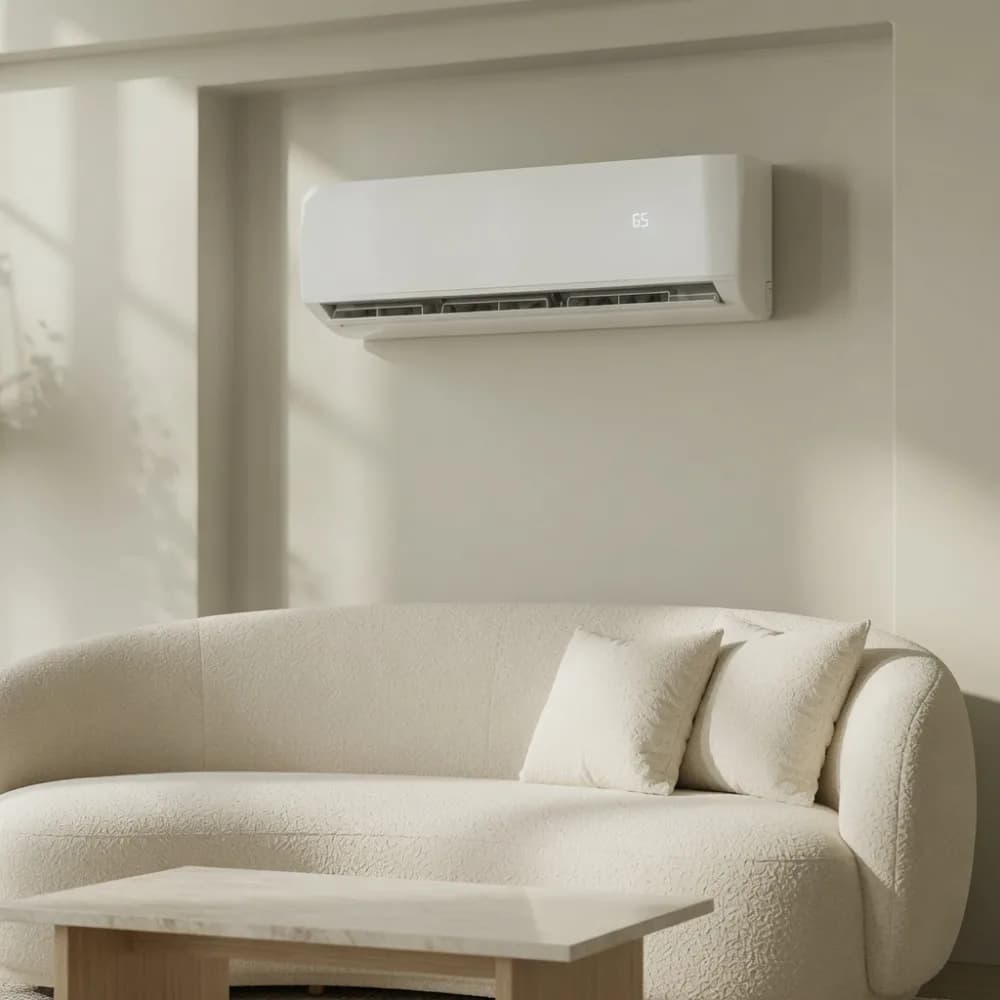
Quick Answer: Is a Mini Split Good for an Apartment?
Ductless mini splits are typically the most efficient, quiet, and flexible heating and cooling option for apartments and small spaces. A mini split AC system pairs an outdoor unit with one or more indoor units connected by refrigerant lines — no ductwork required.
- Energy bills drop significantly compared to window air conditioners and electric baseboard heating.
- Indoor noise levels sit around 19–25 dB in quiet mode, while window units push 38–56 dB.
- Zone Air DIY mini splits can save you $3,000–$5,000 in contractor labor since they ship with pre-charged line sets.
- Precise temperature control lets you condition individual rooms without wasting energy on your entire home.
How Does a Mini Split Work in an Apartment?
Ductless mini splits — or “heat pumps” — transfer warm air rather than generate it, which makes them highly efficient. In heating mode, the outdoor unit absorbs heat from outside air, even in cold weather near 0°F for modern cold-climate mini split models, and sends it indoors via refrigerant. In cooling mode, the indoor unit pulls hot air from the room and rejects it outdoors, functioning like a high-efficiency air conditioner without ducts.
The entire process requires only a 3-inch wall penetration for the pre-charged line set, condensate drain, and wiring. You control the system via remote, wall thermostat, or Wi-Fi app. Zone Air systems include smart scheduling so you can push temperature changes from your phone.
Different Types of Mini Splits for Apartments
Apartments may call for different types of mini splits depending on layout:
- Single zone: One outdoor unit paired with one indoor head. Best for a studio apartment or single room like a bedroom — easier installation and lower cost.
- Multi zone: One outdoor unit serving 2–5 indoor heads across multiple rooms. A multi-zone setup works well for larger spaces like 2–3 bedroom units of 700–1,200 sq ft.
- Indoor head styles: Wall-mounted heads are cheapest; DIY ceiling cassette mini splits offer better airflow and aesthetics when walls are full.
Zone Air offers DIY-friendly, pre-charged single-zone systems plus dual-zone bundles for multi-room apartments.
Sizing a Mini Split for Single Rooms and Small Apartments
Choosing the right size mini split by BTU capacity matters — oversizing causes short cycles, poor humidity control, and higher energy bills. General ranges:
| Space | Size | Suggested BTU |
|---|---|---|
| Single bedroom | 150–300 sq ft | 6,000–9,000 |
| Open-plan studio | 350–550 sq ft | 9,000–12,000 |
| 1-bedroom apartment | 600–800 sq ft | ~18,000 |
Increase capacity for top-floor units with heavy sun exposure, large west-facing windows, or kitchen-heavy layouts. Use Zone Air’s mini split sizing calculator with your room dimensions, ceiling height, and location for a precise recommendation. Smaller units with inverter compressors modulate output to match cooling needs efficiently at part-load, so a correctly sized system runs comfortably year-round. For the full method, read what size mini split do I need.
Advantages and Drawbacks
Advantages
- Energy efficiency up to 24 SEER2 — far cheaper to run than a window unit.
- Dual heating and cooling in one efficient system.
- No combustion indoors, improving indoor air quality and eliminating carbon monoxide risk.
- Independent zoning for individual rooms.
Drawbacks
- Higher upfront cost than a portable or window unit.
- Landlord or HOA approval needed for outdoor unit placement and wall penetration.
- Visible indoor heads may feel less discreet than hidden ducts.
DIY vs. Contractor Installation (and Why Zone Air Exists)
Traditional mini split installation requires a licensed technician to handle refrigerant charging and vacuum, driving the total cost to $3,000–$5,500 per zone. Zone Air’s DIY mini split systems use pre-charged, quick-connect line sets that let you complete the install over a weekend with basic tools — no refrigerant handling, no specialty equipment.
Equipment typically runs $1,500–$2,500, so you keep $3,000–$5,000 in your pocket. Zone Air backs every system with a 5-year warranty, 30-day returns on uninstalled systems (25% restocking fee applies), and cold-climate models with Energy Star certification that may qualify for local utility rebates.
Before you start, confirm with your landlord or HOA that you can place the condenser outside and route your line set outside. Then explore Zone Air’s apartment-ready mini split kits to find the right system for your space.
Find the right ductless system for your apartment, or size it first with the free calculator.