
220v DIY Mini Split: 220v Mini Split Systems You Can Install Yourself by Zone Air
Updated August 4, 2026
A 220v mini split is the right choice for any system above 12,000 BTU, for multi-zone setups, or for anyone who wants to get the maximum efficiency out of their unit — 220–240V systems can reach up to 24 SEER2. These systems can run on the same 220V split-phase circuit as your dryer or water heater. Every system ships with pre-charged units and line sets, ready for DIY install. Systems saved our customers over $3,000 on average in 2025.
Ready to save?
Not sure what size you need?
Use our free sizing calculator here →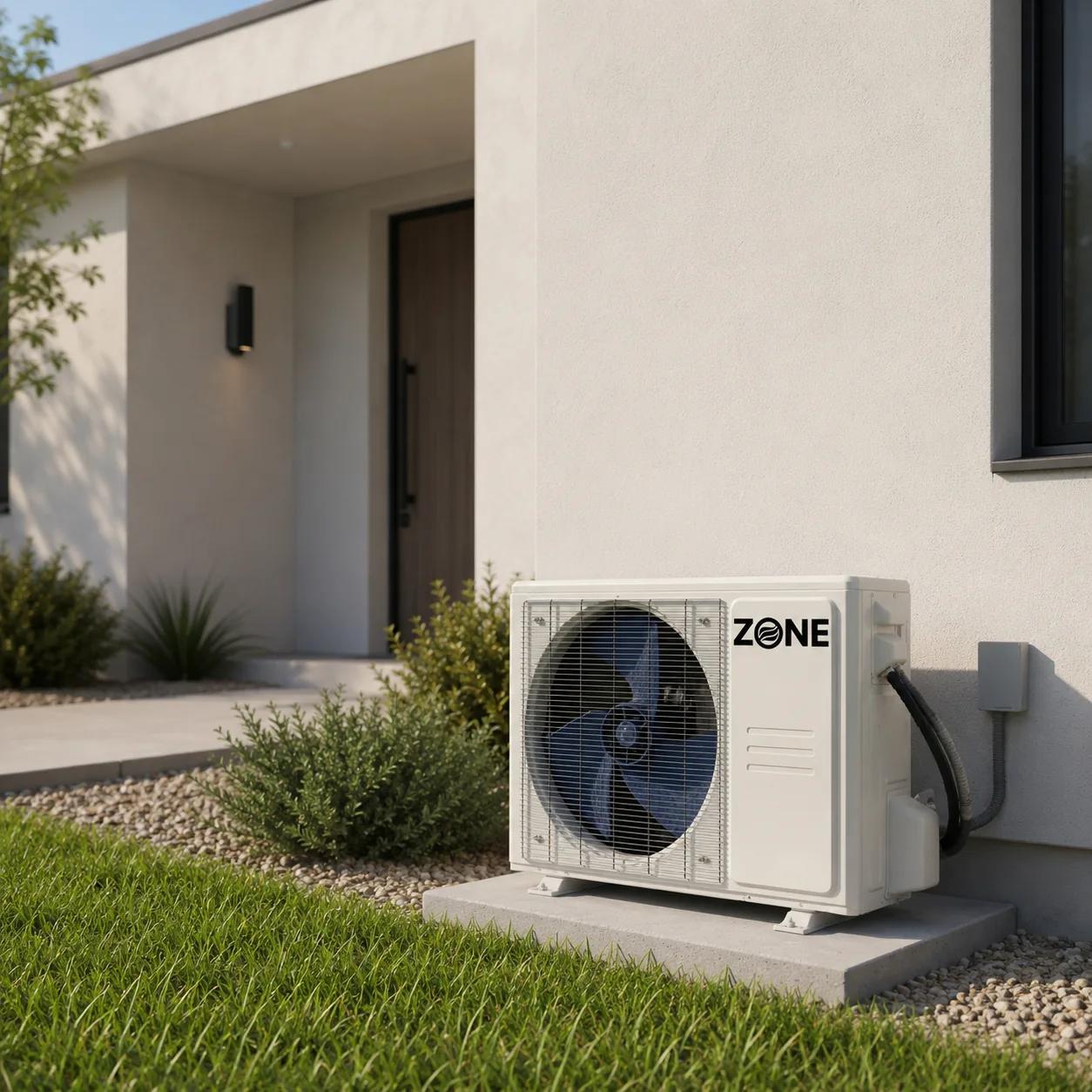
Shop All 220v DIY Mini Splits
Every 230V-rated Zone Air system — wall mount, ceiling cassette, concealed duct, and dual-zone bundles. Up to 24 SEER2, pre-charged quick-connect line sets, free shipping on every order.
Single-Zone Systems
One indoor unit, one outdoor unit — for a single room.
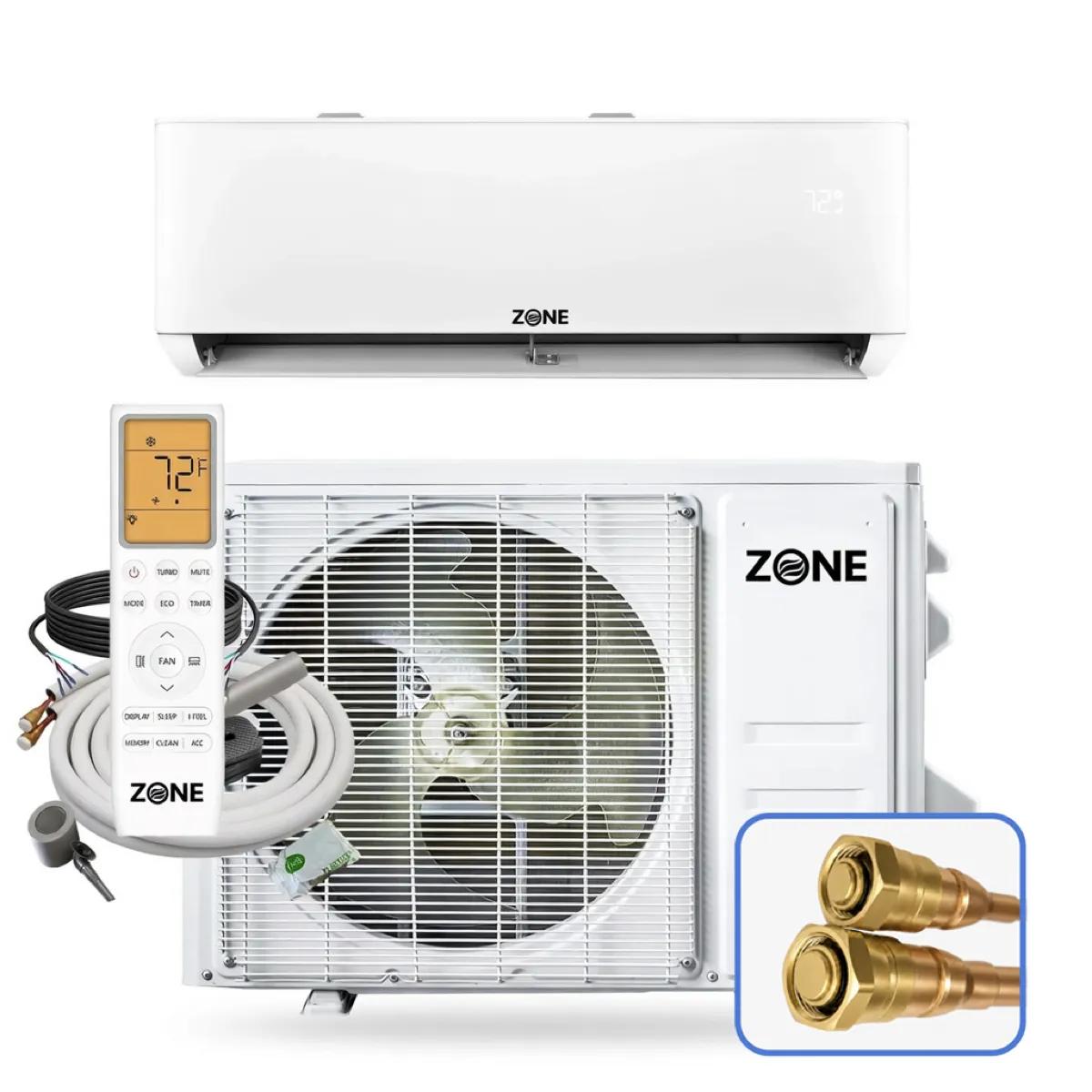
Zone Air® DIY 9,000 BTU 24 SEER2 230V Wall Mount Ductless Mini-Split Heat Pump AC & Heater with Pre-Charged Lineset - Up to 450 Sq Ft
Zone Air® DIY 12,000 BTU 24 SEER2 230V Wall Mount Ductless Mini-Split Heat Pump AC & Heater with Pre-Charged Lineset - Up to 600 Sq Ft
Zone Air® DIY 18,000 BTU 23.5 SEER2 230V Wall Mount Ductless Mini-Split Heat Pump AC & Heater with Pre-Charged Lineset - Up to 900 Sq Ft
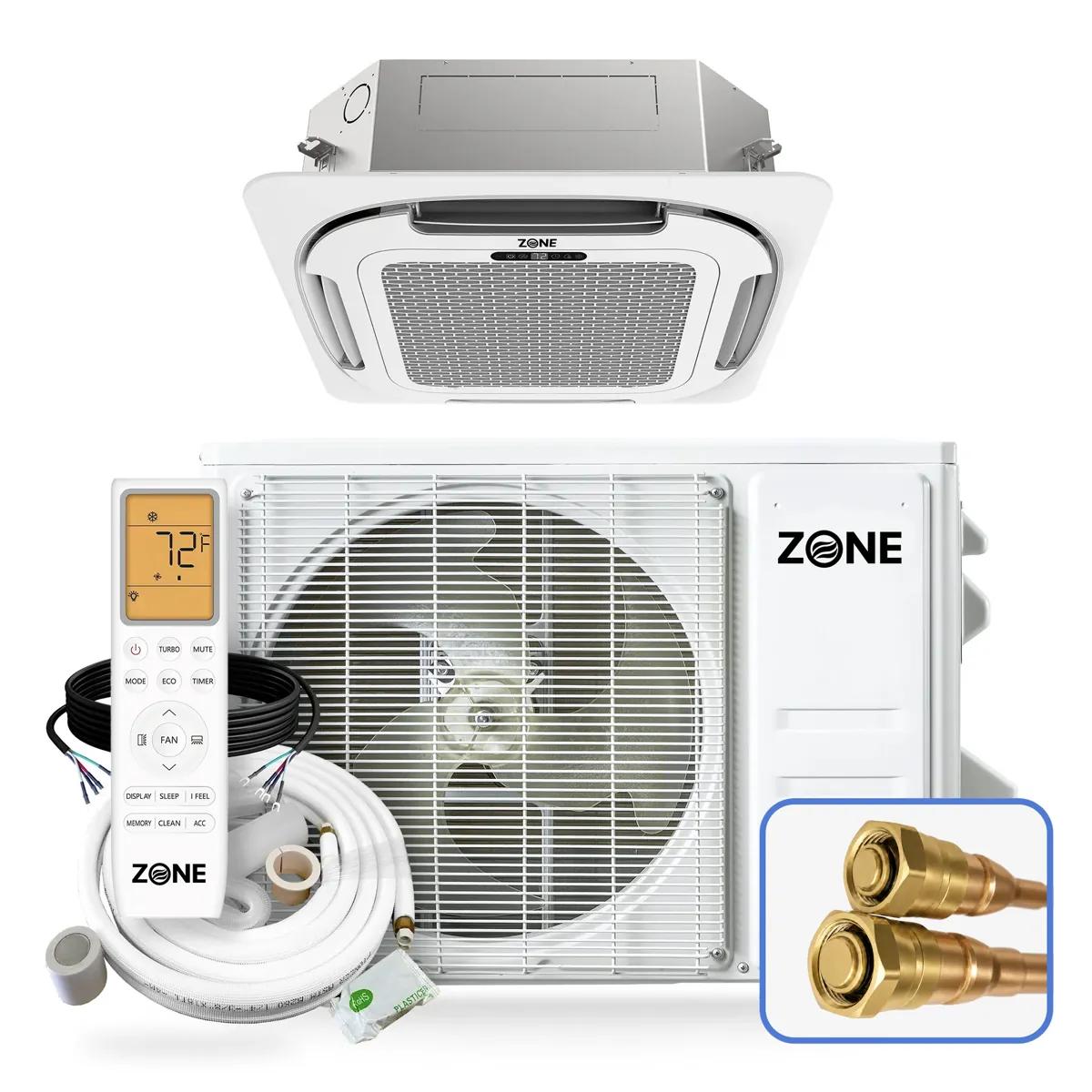
Zone Air® Airframe 9,500 BTU 21 SEER2 230V Ceiling Cassette Mini-Split Heat Pump AC with Pre-Charged Lineset - Up to 475 Sq Ft
Zone Air® Airframe 12,000 BTU 21 SEER2 230V Ceiling Cassette Mini-Split Heat Pump AC with Pre-Charged Lineset - Up to 600 Sq Ft
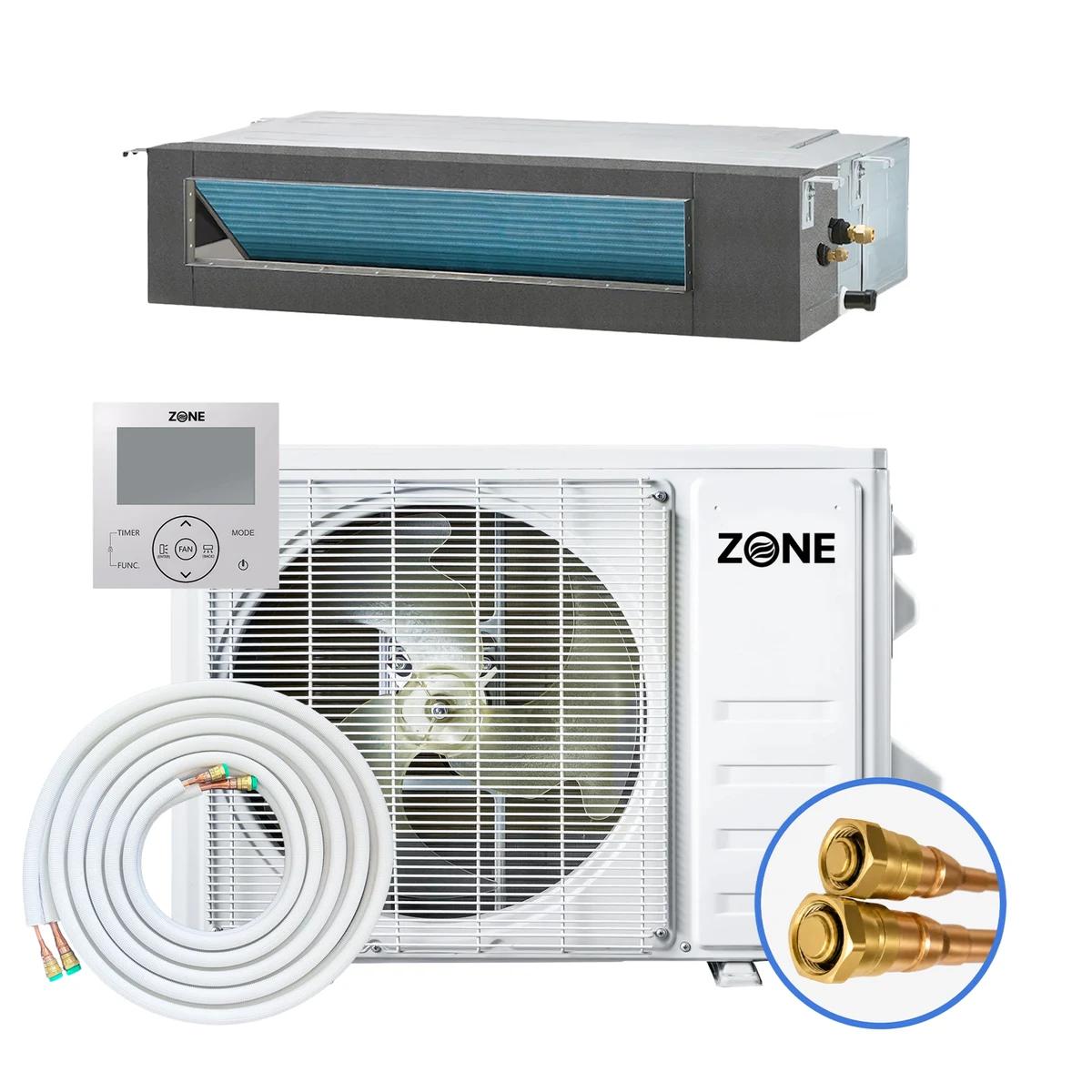
Zone Air® Thin-Air 9,500 BTU 19.6 SEER2 230V Concealed Mini-Split Heat Pump AC - Up to 475 Sq Ft
Zone Air® Thin-Air 11,000 BTU 19 SEER2 230V Concealed Mini-Split Heat Pump AC - Up to 550 Sq Ft
Dual-Zone Systems
Two indoor heads sharing one outdoor condenser — cool/heat two rooms with one system.
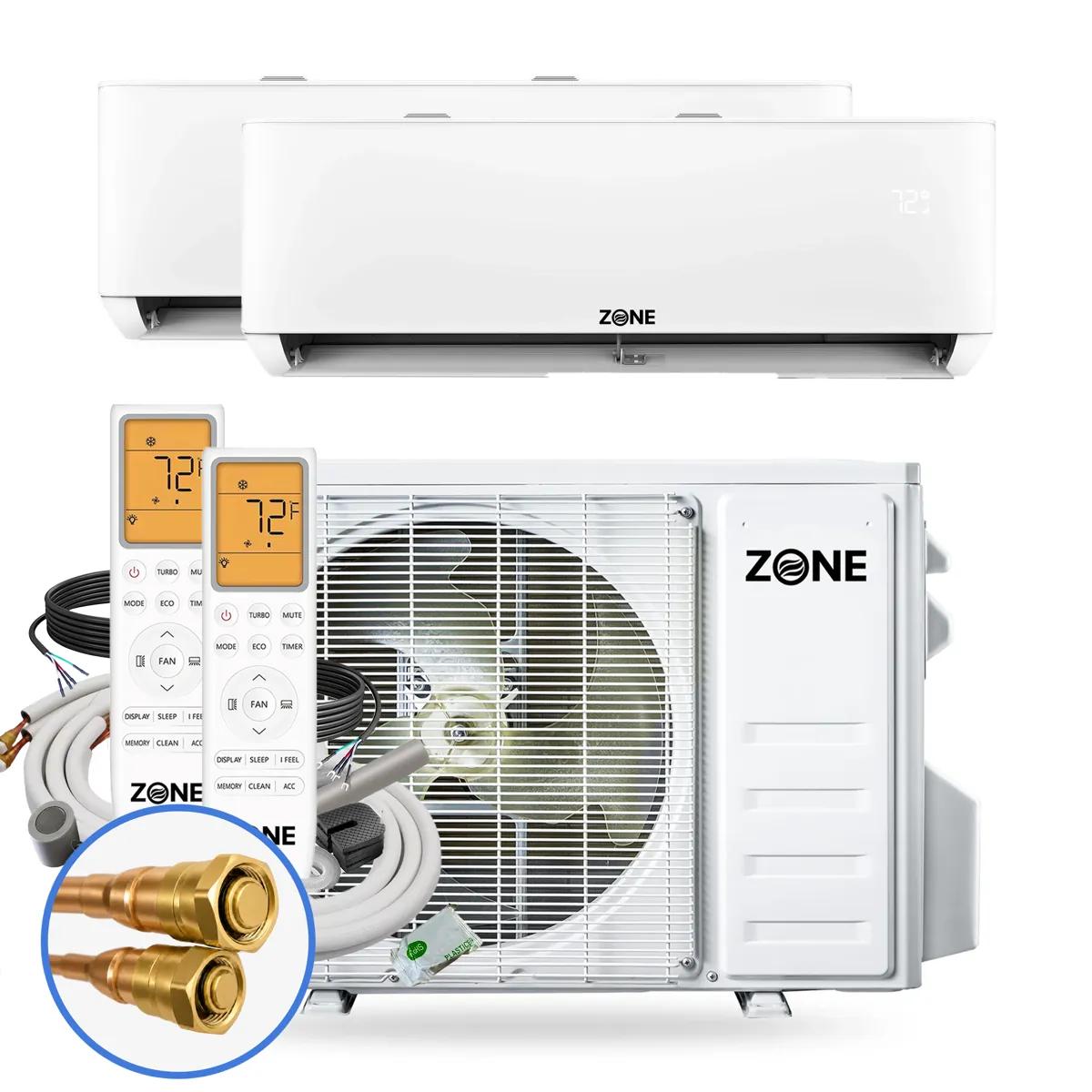
Zone Air® DIY DUAL ZONE 24,000 BTU (12K+12K) 24 SEER2 230V Wall Mount Ductless Mini-Split Heat Pump System with 2x Pre-Charged Linesets - Up to 1,200 Sq Ft
Zone Air® DIY DUAL ZONE 21,000 BTU (12K+9K) 24 SEER2 230V Wall Mount Ductless Mini-Split Heat Pump System with 2x Pre-Charged Linesets - Up to 1,050 Sq Ft
Zone Air® DIY DUAL ZONE 30,000 BTU (12K+18K) 24 SEER2 230V Wall Mount Ductless Mini-Split Heat Pump System with 2x Pre-Charged Linesets - Up to 1,500 Sq Ft
Zone Air® DIY DUAL ZONE 27,000 BTU (9K+18K) 24 SEER2 230V Wall Mount Ductless Mini-Split Heat Pump System with 2x Pre-Charged Linesets - Up to 1,350 Sq Ft
Zone Air® DIY DUAL ZONE 18,000 BTU (9K+9K) 24 SEER2 230V Wall Mount Ductless Mini-Split Heat Pump System with 2x Pre-Charged Linesets - Up to 900 Sq Ft
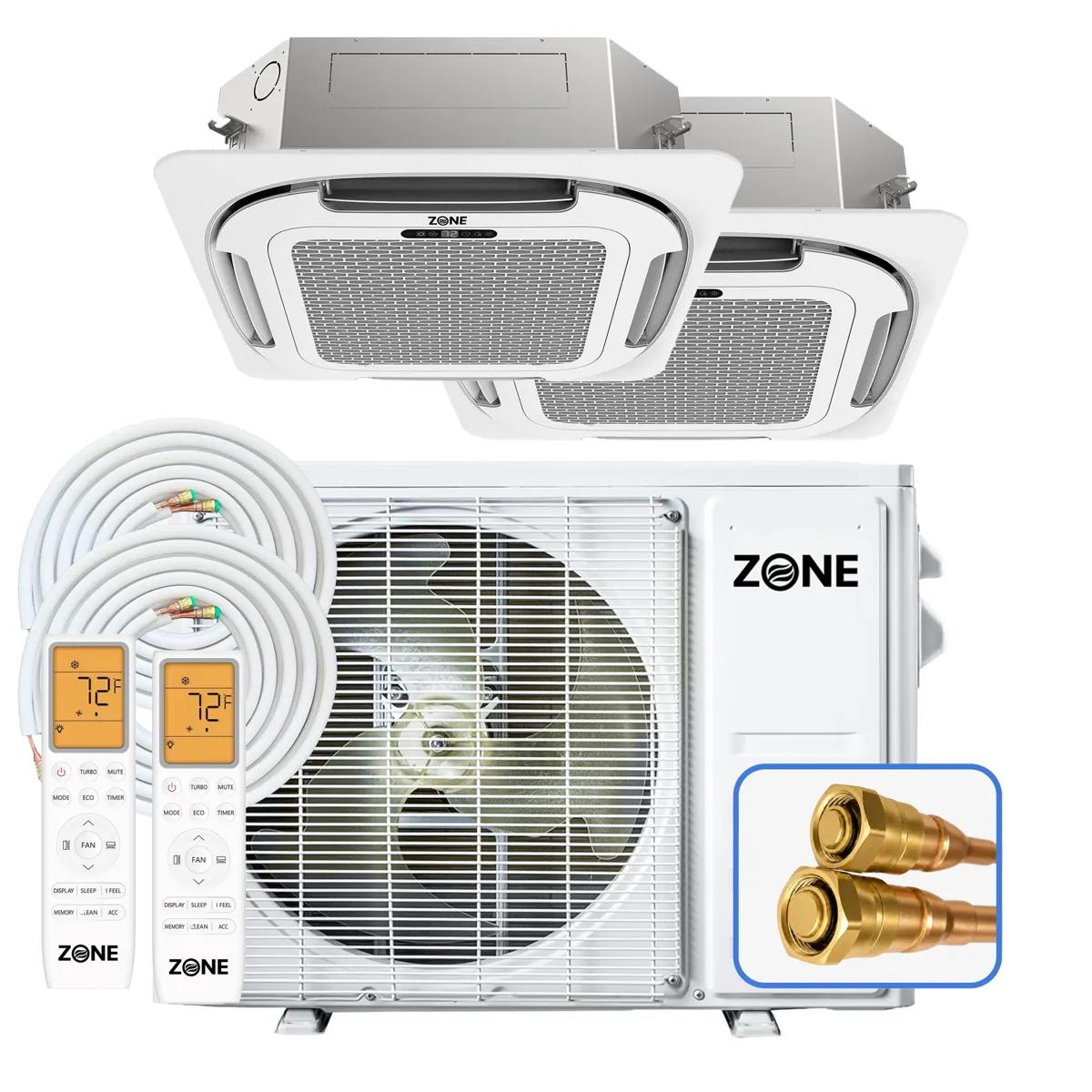
Zone Air® Airframe DUAL ZONE 24,000 BTU (12K+12K) 21 SEER2 230V Ceiling Cassette Mini-Split Heat Pump System with 2x Pre-Charged Linesets - Up to 1,200 Sq Ft
Zone Air® Airframe DUAL ZONE 19,000 BTU (9.5K+9.5K) 21 SEER2 230V Ceiling Cassette Mini-Split Heat Pump System with 2x Pre-Charged Linesets - Up to 950 Sq Ft
Zone Air® Airframe DUAL ZONE 21,500 BTU (12K+9.5K) 21 SEER2 230V Ceiling Cassette Mini-Split Heat Pump System with 2x Pre-Charged Linesets - Up to 1,075 Sq Ft
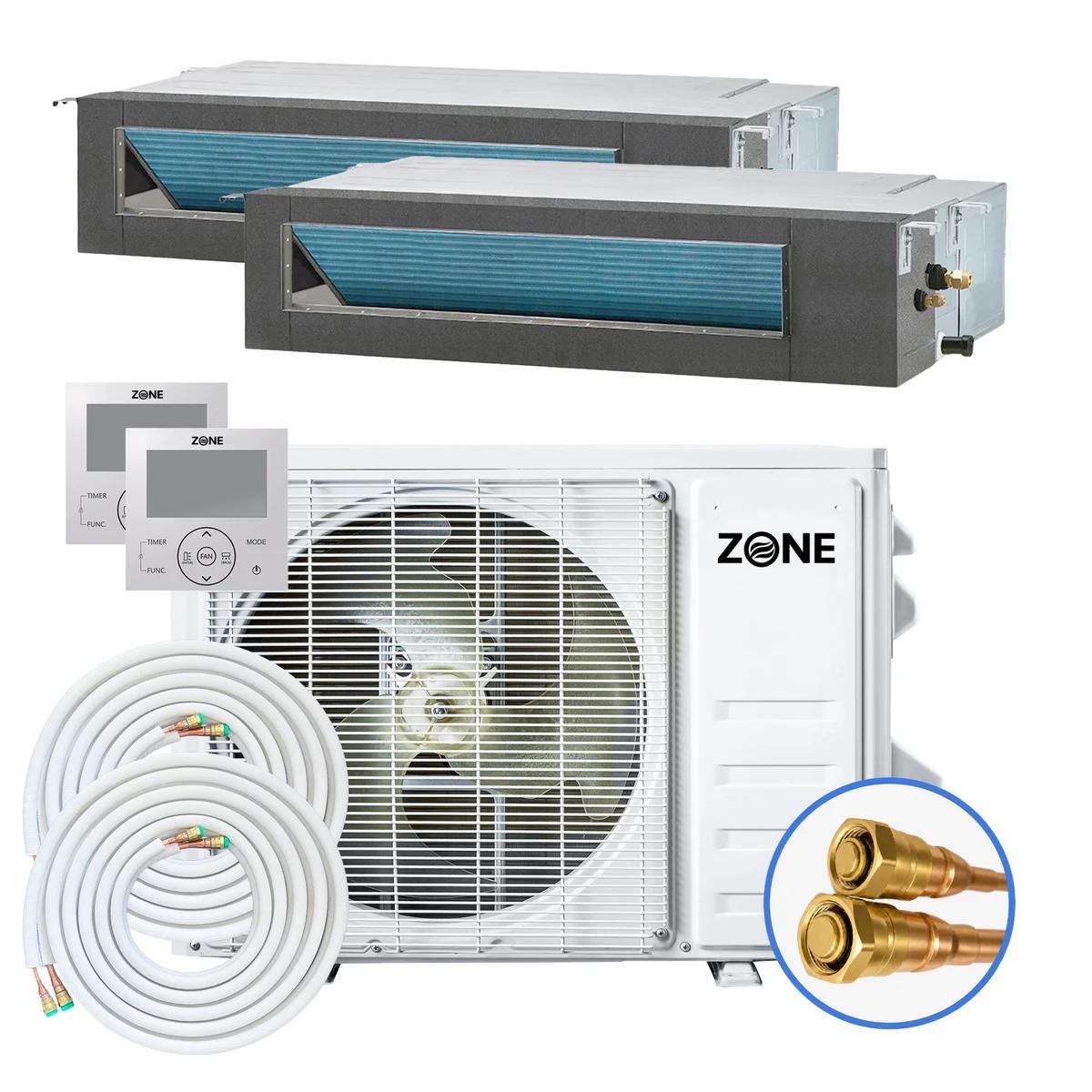
Zone Air® Thin-Air DUAL ZONE 22,000 BTU (11K+11K) 19 SEER2 230V Concealed Mini-Split Heat Pump System - Up to 1,100 Sq Ft
Zone Air® Thin-Air DUAL ZONE 19,000 BTU (9.5K+9.5K) 19 SEER2 230V Concealed Mini-Split Heat Pump System - Up to 950 Sq Ft
Zone Air® Thin-Air DUAL ZONE 20,500 BTU (11K+9.5K) 19 SEER2 230V Concealed Mini-Split Heat Pump System - Up to 1,025 Sq Ft
Three-Zone Systems
Three indoor heads sharing one outdoor condenser — independent comfort in three rooms.
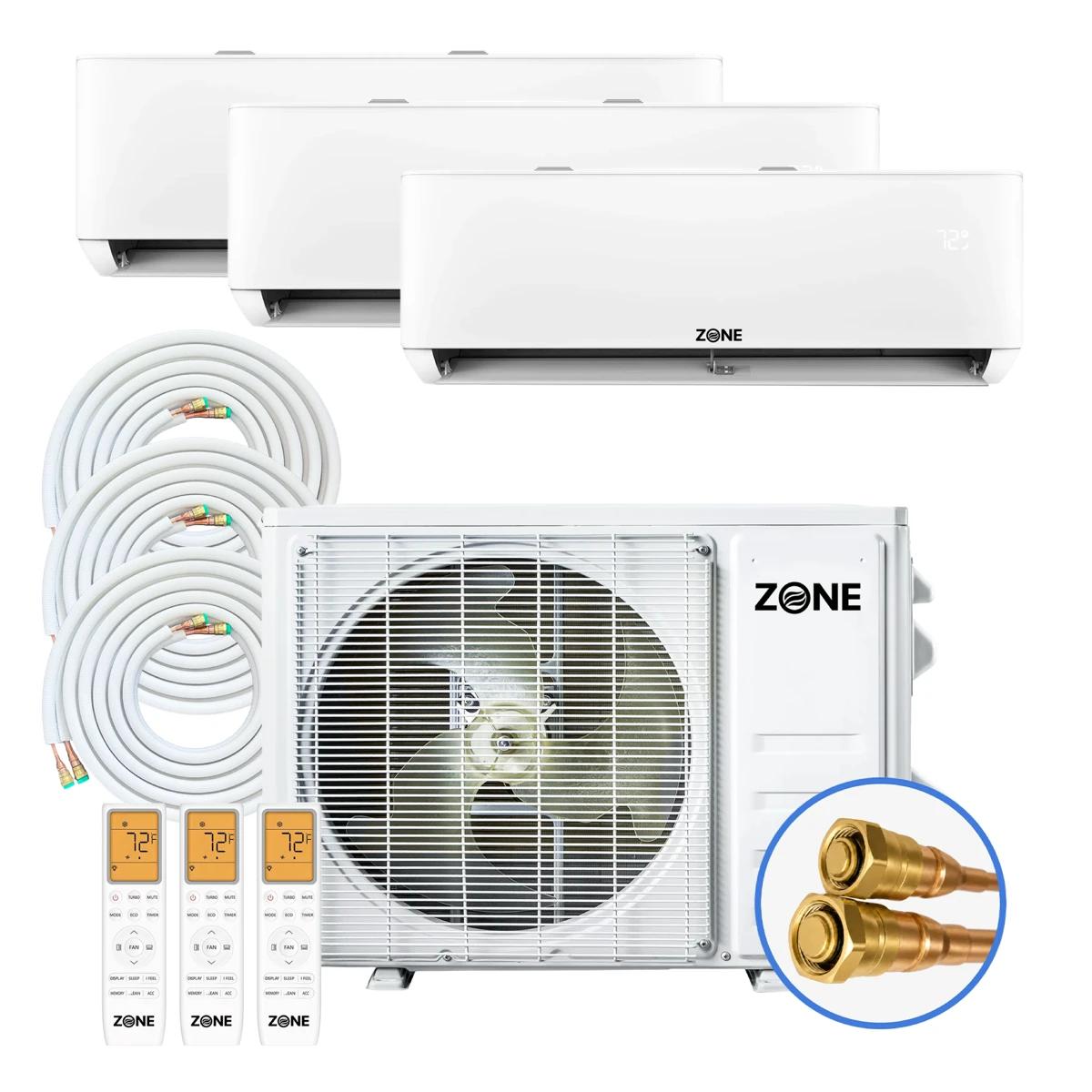
Zone Air® DIY 3 ZONE 36,000 BTU (12K+12K+12K) 24 SEER2 230V Wall Mount Ductless Mini-Split Heat Pump System with 3x Pre-Charged Linesets - Up to 1,800 Sq Ft
Zone Air® DIY 3 ZONE 27,000 BTU (9K+9K+9K) 24 SEER2 230V Wall Mount Ductless Mini-Split Heat Pump System with 3x Pre-Charged Linesets - Up to 1,350 Sq Ft
Zone Air® DIY 3 ZONE 36,000 BTU (9K+9K+18K) 24 SEER2 230V Wall Mount Ductless Mini-Split Heat Pump System with 3x Pre-Charged Linesets - Up to 1,800 Sq Ft
Zone Air® DIY 3 ZONE 30,000 BTU (9K+9K+12K) 24 SEER2 230V Wall Mount Ductless Mini-Split Heat Pump System with 3x Pre-Charged Linesets - Up to 1,500 Sq Ft
Zone Air® DIY 3 ZONE 33,000 BTU (9K+12K+12K) 24 SEER2 230V Wall Mount Ductless Mini-Split Heat Pump System with 3x Pre-Charged Linesets - Up to 1,650 Sq Ft
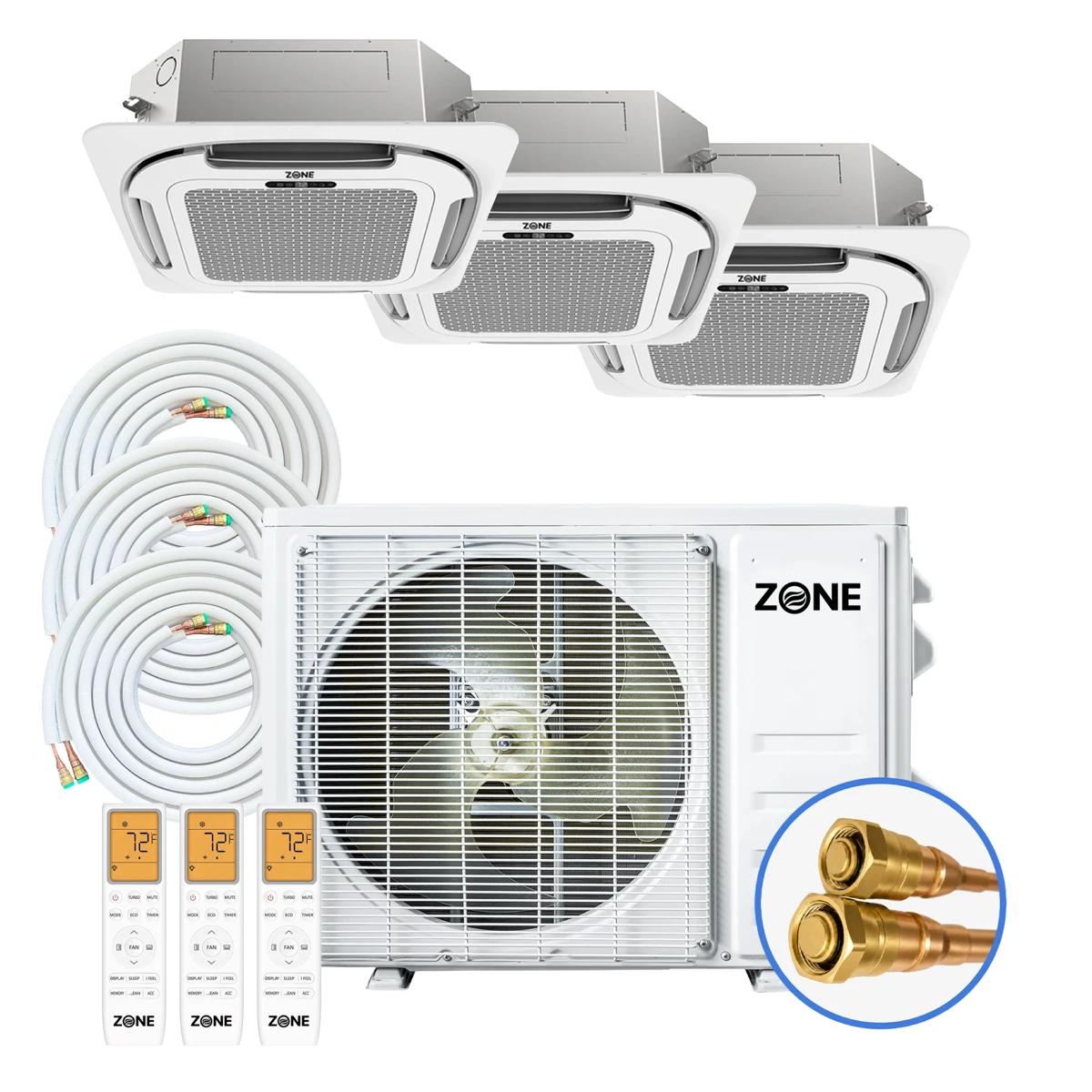
Zone Air® Airframe 3 ZONE 36,000 BTU (12K+12K+12K) 24 SEER2 230V Ceiling Cassette Mini-Split Heat Pump System with 3x Pre-Charged Linesets - Up to 1,800 Sq Ft
Zone Air® Airframe 3 ZONE 28,500 BTU (9.5K+9.5K+9.5K) 24 SEER2 230V Ceiling Cassette Mini-Split Heat Pump System with 3x Pre-Charged Linesets - Up to 1,425 Sq Ft
Zone Air® Airframe 3 ZONE 31,000 BTU (12K+9.5K+9.5K) 24 SEER2 230V Ceiling Cassette Mini-Split Heat Pump System with 3x Pre-Charged Linesets - Up to 1,550 Sq Ft
Zone Air® Airframe 3 ZONE 33,500 BTU (12K+12K+9.5K) 24 SEER2 230V Ceiling Cassette Mini-Split Heat Pump System with 3x Pre-Charged Linesets - Up to 1,675 Sq Ft
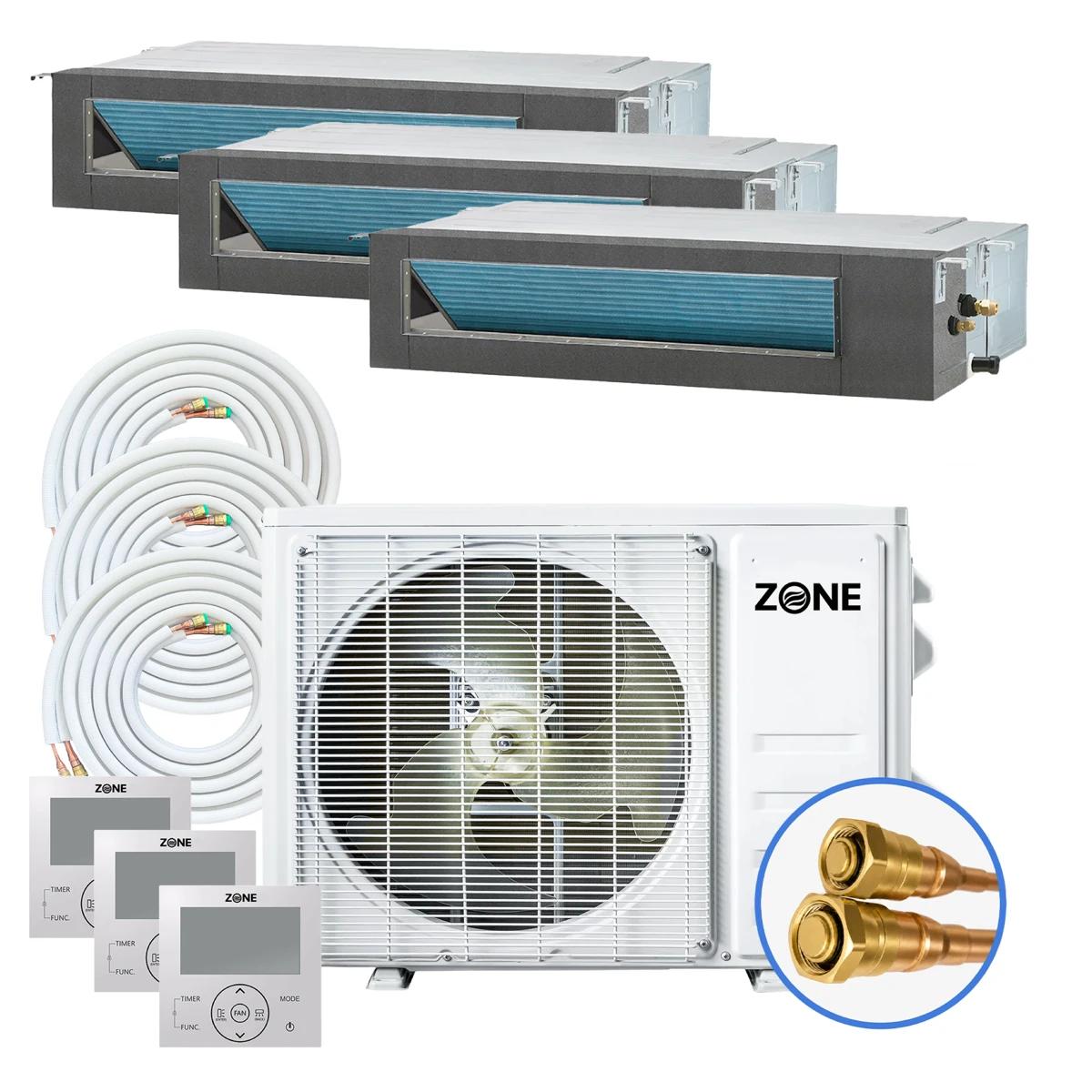
Zone Air® Thin-Air 3 ZONE 33,000 BTU (11K+11K+11K) 22 SEER2 230V Concealed Mini-Split Heat Pump System - Up to 1,650 Sq Ft
Zone Air® Thin-Air 3 ZONE 28,500 BTU (9.5K+9.5K+9.5K) 22 SEER2 230V Concealed Mini-Split Heat Pump System - Up to 1,425 Sq Ft
Zone Air® Thin-Air 3 ZONE 30,000 BTU (11K+9.5K+9.5K) 22 SEER2 230V Concealed Mini-Split Heat Pump System - Up to 1,500 Sq Ft
Zone Air® Thin-Air 3 ZONE 31,500 BTU (11K+11K+9.5K) 22 SEER2 230V Concealed Mini-Split Heat Pump System - Up to 1,575 Sq Ft
Want the 115V plug-in models too, or the full range side by side?
Shop 220v Mini Splits by Zones
One indoor head per room is one zone. Every multi-zone Zone Air system runs at 220v, powering all of its indoor heads through one shared circuit.
Single Zone (1 Zone)
One indoor unit, one outdoor condenser. The 230V single-zone systems run up to 24 SEER2 and scale to 18K BTU. From $1,949.
Shop single zone →Dual Zone (2 Zone)
One outdoor condenser powers two indoor heads with independent thermostats — 220v only. From $3,499.
Shop dual zone →Multi Zone (2–5 Zone)
How multi-zone systems are sized, and which bundles fit a 3+ room project. All 220v.
Shop and compare multi zone →What Makes Mini Splits DIY?
Zone Air’s 220v DIY mini splits ship pre-charged with R-454B; units also come with pre-charged quick-connect line sets for easy installation, and all necessary installation materials. Most homeowners can finish the job in just a few hours while still saving $3,000–$5,000 versus contractor install.
What makes Zone Air systems different?
Here at Zone Air, we do much of our own engineering and testing. Our components are evaluated via simulations as well as with real-world testing. Our exclusively engineered pre-charged quick-connect line sets have been scrutinized on all levels: drawings, prototypes, production, and real-world testing.
The refrigerant in our quick-connect line sets is contained by a custom valve system that automatically releases the refrigerant upon line-set connection. No need for a vacuum pump, no need for specialized tools, no need for an EPA 608 license, and no need for an HVAC technician.
Why Choose a 220v Mini Split Heat Pump
Zone Air’s 230V-rated lineup for 2026 includes the 9K at $1,949.99 and the 12K at $2,049.99 — both 24 SEER2 — plus an 18K at 23.5 SEER2 covering up to 900 sq ft and a dual-zone 18K bundle at $3,499.99. 220v — also labeled 230v or 240v — is the default voltage for any mini split larger than 12K BTU or any setup with more than one indoor head. The higher voltage halves the current draw at a given wattage, which means smaller wires, smaller breakers, and lower losses in the compressor’s variable-speed drive, while also supporting more consistent climate control in larger spaces and avoiding the higher current spikes that can stress electrical components. Three cases make 220v the clear choice:
You need 18,000 BTU or more — the 18K systems are 220v-only because they typically deliver higher BTU capacity than 110V systems, and the current draw would exceed a standard 15A circuit. You want a multi-zone system — every Zone Air dual-zone bundle runs at 220v, powering two indoor heads through one shared circuit. You want maximum efficiency — the 220v wall mounts hit 24 SEER2, about 4% more efficient than the 23 SEER2 110v models, with superior electrical efficiency and lower amp draw than 110V units. DIY mini splits can handle cooling or heating for an individual room, so the right voltage depends on the room’s size and the capacity needed for that space. If none of those apply and you want the fastest, lowest-friction install, 110v plug-and-play is the better call.
What 220v Installers Say
As of 2026, the Zone Air 220v DIY mini split range holds an average rating of 4.8 out of 5 across 95 verified customer reviews spanning 31 systems, with owners most often mentioning cooling performance, quiet operation, and energy savings.
Good. Easy to install.
on the Zone Air 12,000 BTU ceiling cassette mini split →Bought this unit over a month ago but just now installed the ceiling cassette.
on the Zone Air 9,000 BTU ceiling cassette mini split →We split this Zone Air DIY 12k concealed unit for two small bedrooms. Now the rooms stay within about a degree of the rest of the house, and the rest of the house is even cooler now without the extra load.
on the Zone Air 12,000 BTU concealed ducted mini split →This was my first time installing anything HVAC related. I had done basic remodeling and electrical work in the past, but this was not hard at all.
on the Zone Air 12,000 BTU mini split →I'm pretty handy and installed this myself (67 years old). Had no problem handling this myself. I only needed help moving the outdoor condenser around. Upstairs bedrooms were usually about five or six degrees warmer than downstairs. Now the grands can finally come stay over in the summer again.
on the Zone Air 3-zone mini split system →I put a Zone Air 9k DIY unit in my office. It's about 300 square feet, gets a lot of sun. The 9k unit has been cooled this room down great. I didn't expect to work so easily. Quiet too. I’ve had it turned on during every Zoom call the past few weeks and co workers said they can’t even here it!
on the Zone Air 9,000 BTU mini split →Read all 89 written reviews
I am glad I went with a DIY option. The install was manageable, and the room is finally comfortable.
on the Zone Air 2-zone ceiling cassette mini split →The finished install looks good. Shipping was a little slow.
on the Zone Air 9,000 BTU mini split →The performance has been great without making the install feel overwhelming. It was a practical fix for a room that needed comfort.
on the Zone Air 9,000 BTU ceiling cassette mini split →I installed this in my living room, and it has handled the space well. The room feels cooler and more comfortable.
on the Zone Air 18,000 BTU mini split →Summer was a lot easier with this installed. The room stayed comfortable even during the hottest part of the day.
on the Zone Air 2-zone mini split system →I have noticed that it does not need to work as hard as my old setup. The room stays comfortable without constant blasting.
on the Zone Air 12,000 BTU ceiling cassette mini split →The final install came out looking cleaner than I expected. It works well and does not look out of place.
on the Zone Air 18,000 BTU mini split →Overall, I had a really good experience with this. The install was manageable, and the system has worked great.
on the Zone Air 9,000 BTU mini split →The setup was simple, and the comfort improvement was immediate. I noticed the room feeling better the same day.
on the Zone Air 2-zone mini split system →For a ductless setup, this feels like a very good deal. It works well and looks much nicer than I expected.
on the Zone Air 12,000 BTU mini split →The installation was straightforward, and the result was exactly what I hoped for. The space is finally comfortable.
on the Zone Air 18,000 BTU mini split →This is a nice option for someone who wants to handle the install themselves. The system works well and feels very practical for a homeowner.
on the Zone Air 2-zone ceiling cassette mini split →For a system I could install myself, the performance has been excellent. It feels like a much more expensive setup than I expected.
on the Zone Air 2-zone ceiling cassette mini split →I was happy with how clean it looked after installation. It does not take over the room, and it works quietly in the background.
on the Zone Air 12,000 BTU mini split →The parts felt good out of the box, and the install was easier than I expected. After getting it running, the room cooled down fast and stayed comfortable.
on the Zone Air 18,000 BTU mini split →I did not expect it to feel this solid for a DIY setup. It has been smooth, quiet, and much stronger than I thought it would be.
on the Zone Air 9,000 BTU mini split →I was a little nervous before getting started, but the process was pretty straightforward. Once it was running, I was surprised at how quickly the room cooled down.
on the Zone Air 2-zone ceiling cassette mini split →I put this in a room that was always either too hot or too cold, and it honestly fixed the problem right away. It has been quiet, easy to use, and way better than the window unit I had before.
on the Zone Air 2-zone mini split system →I swapped a window unit out for this 230V one and it's got a way higher efficiency rating than the 115V version I was used to. The 24 SEER2 rating really shows on our electric bill. Installation was pretty straightforward - we already had a 230V outlet from an old window AC around. Extremely quiet and cools the room fast.
on the Zone Air 12,000 BTU mini split →We added a 1200 sq ft family room and didn't want to take our existing HVAC out of commission. This 18K unit was the perfect solution. Heating and cooling are both excellent. The smart sleep mode is great - gradually adjusts temperature overnight so we wake up comfortable every morning. Installation with a 208V connection was straightforward for our electrician.
on the Zone Air 18,000 BTU mini split →After researching extensively, I chose this unit for the 23.5 SEER2 rating and the cold climate certifications. Three months in and it's been flawless. The variable speed operation keeps temperatures rock solid without the on/off cycling of cheaper units. We got an Energy Star rebate from our utility that covered a good chunk of the installation. Highly recommend!
on the Zone Air 18,000 BTU mini split →As an HVAC contractor I've installed my fair share of dual-zone systems - and this one is an excellent value. The build quality is rock solid, the installation is pretty DIY-friendly with the pre-charged lines, and customers just love the independent zone control. The 24 SEER2 rating means real energy savings, not just some pie-in-the-sky promise.
on the Zone Air 2-zone mini split system →As a small business owner I needed something that looked professional but didnt break the bank. This ceiling cassette delivers on both counts. Installation was manageable with the pre-charged lineset. Our conference room stays comfy year-round.
on the Zone Air 9,000 BTU ceiling cassette mini split →We installed this in our small office with a drop ceiling - looks super professional. The airflow is all over the space, no hot or cold spots anywhere. Way quieter than I expected too. Our clients all comment on how comfy the office is now.
on the Zone Air 9,000 BTU ceiling cassette mini split →The unit works beautifully - super quiet and efficient. Just one thing to watch out for - you really do need a proper drop ceiling or be prepared to do some ceiling work - we had to do some ourselves which added to installation time, but the end result is worth it. The air distribution is noticeably better than wall units.
on the Zone Air 9,000 BTU ceiling cassette mini split →The unit itself is great - quiet efficient & the 360 airflow is noticeably better than wall units. My only advice is to plan your installation carefully. You need to have access to the ceiling for the unit and to get the lineset & condensate line in there. We had to do some drywall work, but the end result is well worth it.
on the Zone Air 12,000 BTU ceiling cassette mini split →We installed the 12K ceiling cassette in our 550 sq ft conference room & its like night & day - the 4 way air distribution means everyone is comfy, not just the people sitting near the old wall unit. Super quiet too - doesnt even register in meetings.
on the Zone Air 12,000 BTU ceiling cassette mini split →Installing two units in our open plan office - one for the main work area and one in the conference room. The 360° airflow keeps everyone comfortable no matter where they sit. Having independent control lets us cool down the conference room when the big meetings are happening. Plus the units look super professional.
on the Zone Air 2-zone ceiling cassette mini split →We were renovating an old brownstone and we really needed something that wouldn't mess with the original look of the place. This concealed unit is perfect - we installed it in a cramped closet with just two tiny grilles in the ceiling. It's totally invisible. And it's nice and quiet to boot.
on the Zone Air 9,000 BTU concealed ducted mini split →We installed over our master bedroom ceiling and ran supply/return to the bedroom and bathroom. It's super quiet - we can't even hear it running even at night. And it looks super clean too without any wall units around.
on the Zone Air 9,000 BTU concealed ducted mini split →The unit performs flawlessly - super quiet, super efficient, totally invisible. Just be aware that installation required a bit more planning than your average wall unit - you need space in the ceiling for ducts and access for service. We hired an HVAC consultant for the design which was money well spent.
on the Zone Air 12,000 BTU concealed ducted mini split →I installed one unit in the master suite (bedroom, bathroom, closet) and another in the main living areas (living room, dining room, kitchen). The only stuff you can see are some small linear vents - and that's it. You'd never even guess there's a mini-split system back there. Each zone stays exactly the right temperature on its own.
on the Zone Air 2-zone concealed ducted mini split →We needed some new heating and cooling for our 1890s Victorian, but we wanted to keep the place looking historic. These units got installed in the attic with little ducts going to these tiny ceiling vents - and the original plaster and trim are completely untouched. It operates super quietly and handles our crazy New England winters like a breeze.
on the Zone Air 2-zone concealed ducted mini split →The 9k cassette works really well so far.
on the Zone Air 9,000 BTU ceiling cassette mini split →Three zone system in an older house. Easy enough.
on the Zone Air 3-zone mini split system →The mini split itself works fine, but I wasn't impressed with the manual. The diagrams are small. Because of this I did the drain hose wrong the first time and water started to collect in the hose. Still happy with the purchase now that it’s finished.
on the Zone Air 9,000 BTU mini split →The system works great, was a bigger project than I anticipated.
on the Zone Air 2-zone mini split system →Put this in a workshop that’s 550 square feet. Works good.
on the Zone Air 12,000 BTU mini split →The indoor head is larger than I thought, glad we measured the wall first. So far, so good.
on the Zone Air 18,000 BTU mini split →Big thanks to Nate in customer service for helping me choose the 230 volt (power was already nearby) otherwise it would have been more work and more money. Overall it’s been great.
on the Zone Air 9,000 BTU mini split →We use them constantly, no more fighting over the thermostat.
on the Zone Air 2-zone mini split system →Great app control. Diagnostics are awesome. Seeing power draw and automated power/refrigerant leak issues is very good. And is not ugly like those wall units. 10/10
on the Zone Air 9,000 BTU concealed ducted mini split →Great customer service and support. Worked with me to help me order over the phone.
on the Zone Air 12,000 BTU mini split →This has been the right fit for my space. It cools well, heats well, and is easy to live with.
on the Zone Air 9,000 BTU ceiling cassette mini split →I am really happy with how quickly it cools. I can feel the room changing within a short time after turning it on.
on the Zone Air 2-zone mini split system →The heat has been really nice on cold mornings. It warms the space quickly and makes the room much easier to use.
on the Zone Air 2-zone mini split system →It keeps the room comfortable throughout the day. I do not have to keep adjusting it constantly.
on the Zone Air 18,000 BTU mini split →So far, it has been very reliable. It starts quickly, cools well, and has not given me any problems.
on the Zone Air 18,000 BTU mini split →This was a smart upgrade for my house. The comfort improvement was immediate, and it has been working well.
on the Zone Air 9,000 BTU mini split →The controls are easy, and the unit seems efficient. I do not have to mess with it much once it is set.
on the Zone Air 18,000 BTU mini split →The quality has been better than I expected. It feels solid, runs smoothly, and has been reliable.
on the Zone Air 2-zone mini split system →It looks good on the wall and works exactly like I wanted. The airflow is strong, and the room cools evenly.
on the Zone Air 9,000 BTU mini split →I like how simple it is. It does what it is supposed to do without being complicated.
on the Zone Air 18,000 BTU mini split →It is a compact unit, but it makes a big difference. The space feels much more comfortable now.
on the Zone Air 9,000 BTU ceiling cassette mini split →It has been running great since I put it in. Cooling, heating, and everyday use have all been solid.
on the Zone Air 2-zone mini split system →The room feels completely different now. It is more comfortable, more usable, and just feels nicer to spend time in.
on the Zone Air 2-zone mini split system →My office was almost unusable in the afternoon before this. Now I can work in there all day without getting overheated.
on the Zone Air 2-zone mini split system →I use this in my workout area, and it has been a big help. It keeps the space comfortable even when I am using the room a lot.
on the Zone Air 9,000 BTU concealed ducted mini split →This was a great solution for a room with no ductwork. I got heating and cooling without having to redo the whole space.
on the Zone Air 12,000 BTU ceiling cassette mini split →It cools better than I expected for the size. The room gets comfortable fast and stays that way.
on the Zone Air 12,000 BTU mini split →My basement used to feel chilly and uncomfortable. This helped make it feel like a real living space.
on the Zone Air 18,000 BTU mini split →The heating side has been very useful. It warms the room quickly and makes cold mornings a lot more comfortable.
on the Zone Air 2-zone mini split system →The unit has more than enough power for my space. It cools quickly but still runs smoothly and quietly.
on the Zone Air 12,000 BTU mini split →I honestly notice how quiet it is more than anything. It cools the room well without that constant background roar.
on the Zone Air 2-zone mini split system →The temperature in this room used to swing a lot. Now it stays much more consistent and comfortable.
on the Zone Air 2-zone mini split system →The finished look is clean, and the performance has been great. It cools the room quickly without being loud.
on the Zone Air 2-zone mini split system →I had a hard time keeping this room comfortable before. After putting this in, it finally feels like the rest of the house.
on the Zone Air 2-zone mini split system →It has plenty of power without being noisy. The room cools down quickly, but it does not sound like a big appliance running.
on the Zone Air 2-zone mini split system →So far, it has been very dependable. It runs quietly, keeps the temperature steady, and does not feel like it is using a ton of power.
on the Zone Air 18,000 BTU mini split →The room used to be the one place in the house nobody wanted to sit in. Now it is actually one of the more comfortable spots.
on the Zone Air 9,000 BTU mini split →The room stays cool at night without any loud fan noise. It has made sleeping a lot easier during warm weather.
on the Zone Air 9,000 BTU concealed ducted mini split →I added this to my workspace, and it made a huge difference. I can spend hours out there now without getting uncomfortable.
on the Zone Air 18,000 BTU mini split →I waited a bit before writing this because I wanted to see how it would hold up. So far, it has been reliable and definitely worth the money.
on the Zone Air 2-zone mini split system →It has done exactly what I needed it to do. The room is more comfortable, the controls are simple, and I have no complaints so far.
on the Zone Air 2-zone mini split system →The cooling is strong, but what really surprised me was the noise level. Most of the time I barely notice it running.
on the Zone Air 18,000 BTU mini split →My finished attic needed its own comfort solution, and this did the job. It keeps the space usable even when temperatures change outside.
on the Zone Air 2-zone mini split system →My office used to get stuffy by the afternoon, especially with the computer running. Now it stays comfortable all day, and I can actually focus.
on the Zone Air 2-zone concealed ducted mini split →The first thing I noticed was how quickly the temperature changed. I can turn it on and feel the difference within a few minutes.
on the Zone Air 9,000 BTU mini split →Everything about this has been simple in a good way. It looks clean, cools well, and has been one of those purchases I’m glad I didn’t overthink.
on the Zone Air 2-zone mini split system →Converted our garage to a home gym and this unit handles it perfectly. The 230V version was the way to go since we already had the wiring in place. The WiFi control is also a big plus - I can cool it down before my workout which is awesome.
on the Zone Air 12,000 BTU mini split →We've got one air handler over the dining area and one over the bar. Both zones stay perfectly comfortable thanks to independent control. What I really love is the super quiet operation - guests can have real conversations without the constant hum of the heating or air conditioning. Plus the ceiling mount is way more classy than wall units.
on the Zone Air 2-zone ceiling cassette mini split →Our architect specified these concealed units for our whole home renovation and it looks great. The only visible parts are tiny linear grilles that match our modern design. Worth every penny for the clean look.
on the Zone Air 9,000 BTU concealed ducted mini split →220v Mini Split FAQ
What is a 220v mini split?
Is 220v the same as 230v, 240v, or 208v?
When should I choose 220v over 110v?
What circuit does a 220v mini split need?
Can I DIY install a 220v mini split?
Are 220v mini splits more efficient than 110v?
Looking for a different setup? Explore our other system categories.
110v Mini Splits
Plug into a standard outlet — no electrician, no 220v circuit. Best for rooms under 600 sq ft.
Shop now →Single Zone Systems
One indoor unit, one outdoor condenser — the simplest setup for a single room.
Shop now →Dual Zone Systems
One outdoor unit powering two indoor heads with independent control, allowing independent temperature control in different zones within a home, with settings restored after outages — runs on 220v.
Shop now →