Plug In Mini Splits: 110v Plug and Play Systems Designed to Plug Into a 110v Outlet
Updated August 20, 2026
Our “plug in” mini split systems are designed to be compatible with dedicated 110v outlets. Engineered from the ground up to allow for “plug and play” installation while still delivering efficient cooling and heating performance.
Plug-in installation should only be done in jurisdictions where it does not violate building code or local law. Check your local requirements before installing.
Our “plug-in” mini-split heat pump systems are designed so you won’t need professional help to install a mini split air system. All of our systems include both an outside unit and an inside unit, meant for straightforward setup. Where a hard-wired system has to be landed on a branch circuit by an electrician, these units are built to accept an optional “pig tail” power cord kit that connects to an outdoor 110v outlet, simplifying the installation process. We keep plenty of stock on hand for quick delivery. That plug-in option is what makes these systems workable in places without a spare 230V circuit — a parked RV or park model on shore power being the clearest example.
Our plug in mini splits simplify your installation by including detailed instructions and reference materials on our website. You can create an account to track your orders and access support, and if you have questions or run into any issues, our customer service team is ready to help by email or phone.
Ready to save? Shop our selection of mini split heat pump systems, all designed for easy DIY installation.
Not sure what size you need? Use our free sizing calculator here to find the right system for your space and get detailed information about each model.
Mini Split Sizing Calculator →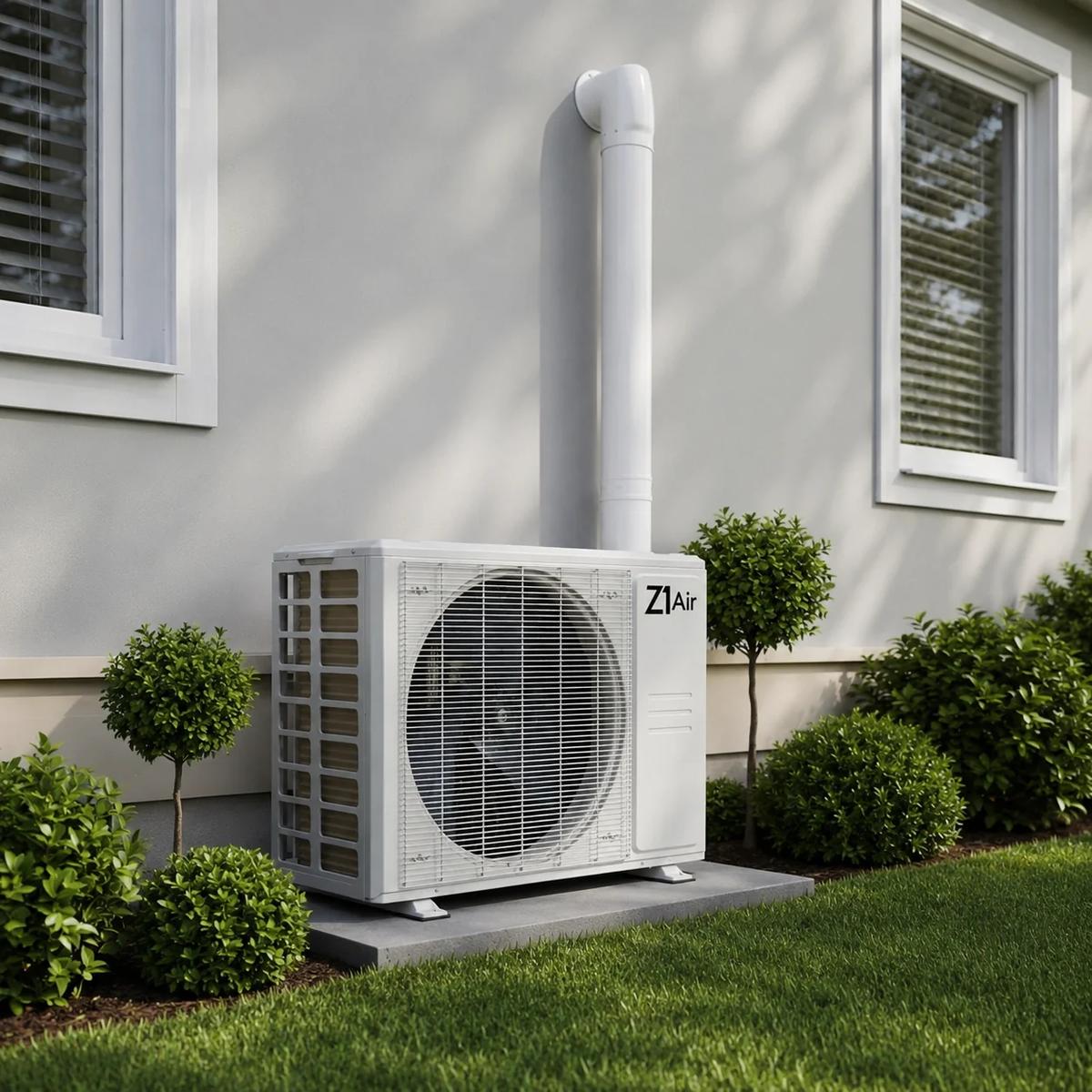
What Makes Zone Air Split System Air Conditioners “Plug and Play”?
Zone Air Plug In DIY mini split air systems simplify two aspects of the average HVAC system installation, the refrigerant handling and the electrical work. We simplify the refrigerant handling with our custom engineered pre-charged quick-connect line-set systems, which allow DIY installers to avoid handling or releasing any refrigerant. Refrigerant in our quick-connect line-sets is contained by a custom valve system that automatically releases the refrigerant upon line-set connection. No need for a vacuum pump, no need for an EPA 608 license, and no need for an HVAC technician.
Zone Air DIY Series, specifically 110v version systems are specifically designed to be easy to install from an electrical point of view. 110v units can use an optional “pig tail” power cord and can be plugged into a 110v outlet so long as the wiring and amperage requirements are met, but we advise customers to adhere to their local building codes and regulations and to make sure everything is done safely and legally. This means you don’t have to hard-wire your unit or run special cables, which is a big reason many people choose our systems.
A disconnect near the outdoor unit lets you cut power for safety during maintenance or testing. When you turn off the power at the disconnect, you can safely perform your test or service work. The disconnect and any electrical supplies for wiring the outdoor unit are not included with the system.
Unlike 220v systems, 110v systems provide an easier way to power your unit. They are especially convenient if you already have a close exterior outlet and want effective cooling without expensive electrical work.
Why Plug In Mini Split Heat Pump Systems Are Perfect For DIY
110v DIY mini splits from Zone Air come in 9,000 BTU (up to 450 sq ft) and 12,000 BTU (up to 600 sq ft) sizes for 2026.
Both rated a best in class 23 SEER2 with heating down to -13°F. These are heat pump systems, so that cold-weather performance also supports efficient winter heating. Ductless mini splits generally use 25–40% less energy than conventional ducted HVAC systems, and many ductless mini splits on the market carry ENERGY STAR certification. Across the wider Zone Air lineup, SEER2 ratings reach up to 24, which is where the biggest energy savings on cooling and heating show up.
Mini splits are ideal for smaller spaces like bedrooms, garages, offices, or even an RV, with no existing ductwork required. Because they are ductless, 110v mini splits avoid the energy lost through ducts and allow independent zoning and temperature control room by room, which saves more energy again. Many models also include WiFi control compatible with Alexa for convenient thermostat management.
When you shop with Zone Air, you can sort by size, capacity, or features to find the right system for your needs. We publish the details you need to understand the difference between models, including power requirements, coverage area, and installation instructions. Delivery options are flexible, and we bring your order right to your door.
110v Plug In Mini Split Heat Pump FAQ
What is a 110v mini split?
Can I really plug a mini split into a 110v outlet?
What size 110v mini split do I need?
110v vs 220v mini split, which should I choose?
Looking for a different setup? Explore our other system categories.
110v Mini Splits
Shop the systems made for 110-115v circuits and outlets — 9K and 12K BTU.
Shop now →Single Zone Systems
One indoor unit, one outdoor condenser — the simplest setup for a single room.
Shop now →Multi Zone Systems
One outdoor unit powering multiple indoor heads with independent control.
Shop now →DIY Mini Splits
Higher-capacity 230V systems for larger rooms and whole-floor coverage.
Shop now →