DIY Heat Pumps: Do It Yourself Heat Pump Mini Split Systems by Zone Air
Updated October 27, 2026
If you want to heat and cool a room without ripping open walls or waiting weeks for a contractor, looking through DIY heat pump brands is one of the most practical projects you can take on in 2026. This guide can cover everything you need to know, from sizing and components to installation steps, how the main brands differ, and why Zone Air has come up as a big option for you to start.
Ready to save?
Not sure what size you need? Try our sizing calculator here.
Use the Mini Split Sizing Calculator →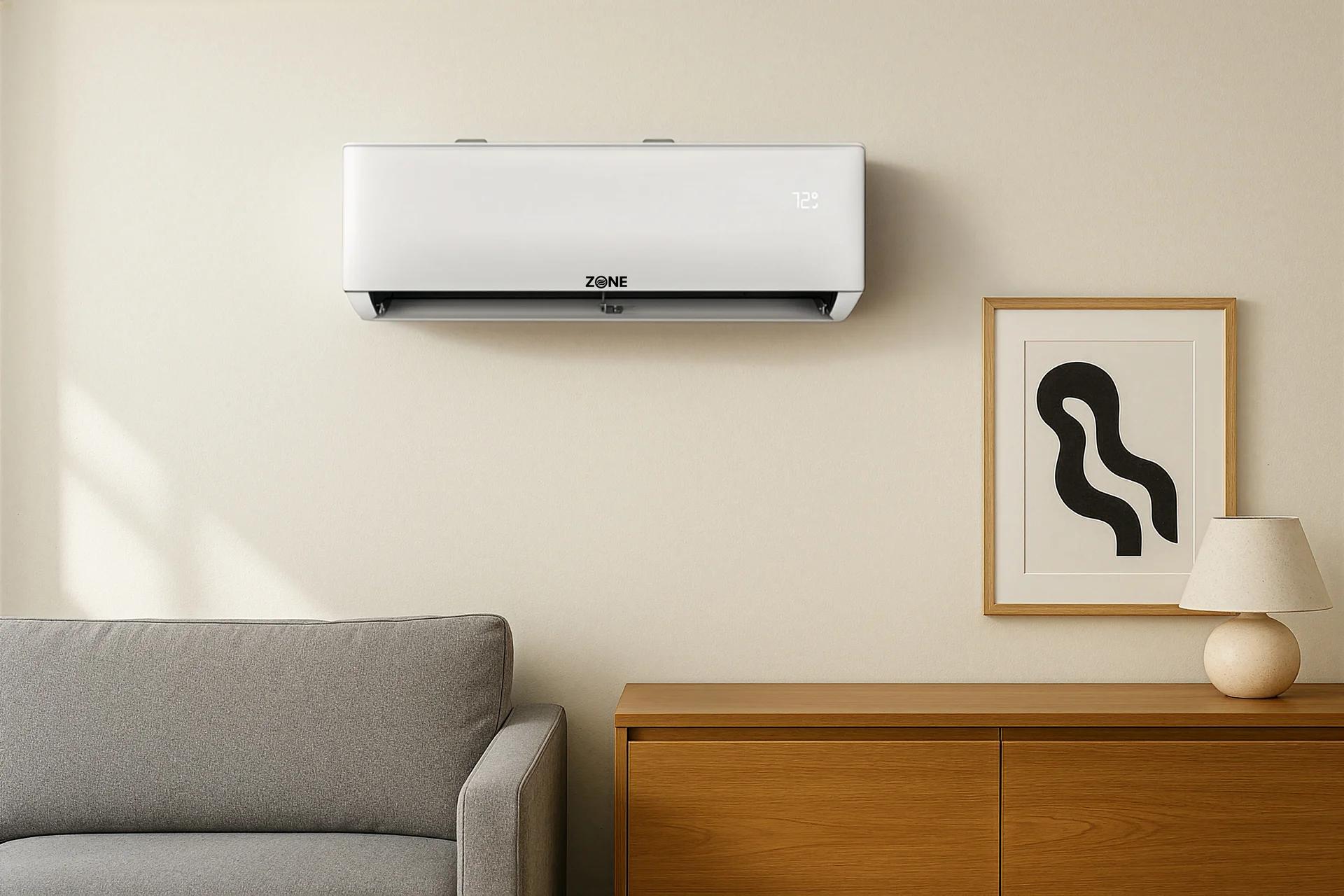
What Is a DIY Heat Pump?
A heat pump can move heat from one place to another instead of making it from scratch, so it can deliver both heating and cooling from one system. A mini split is basically the ductless kind, and it can have indoor and outdoor units that are separate from each other. Here is what you might notice about the DIY category.
- A DIY mini split can have an outdoor condenser and one or more indoor air handlers, and they are connected by insulated refrigerant lines. They do not need ductwork.
- The terms "DIY mini split" and "DIY heat pump" are basically the same thing. Both are air-source, ductless systems that can heat and cool your home.
- Modern DIY mini splits use inverter-driven compressors that ramp output up and down to match the load, so they can avoid the constant on and off cycling you get with older equipment.
- True DIY systems use pre-charged refrigerant lines with quick-connect fittings, so you never have to handle refrigerant or need a vacuum pump. The refrigerant stays sealed in the line set that the factory charged. It never opens to the atmosphere. That is why installing one does not need an EPA 608 certification. Opening a refrigerant circuit, as you would on a flare-fitting system, is where that certification comes in.
- They come in several models: single-zone units, multi-zone systems with two or more indoor heads, and a variety of head types including ceiling cassettes and concealed ducted units.
- Zone Air is one example of a DIY heat pump line engineered specifically for homeowner installation, with cold-climate and high-efficiency specs, final assembly, testing, and inspection in the USA from globally-sourced components.
Why Choose a DIY Heat Pump?
Here is why more homeowners in 2026 are choosing DIY over a traditional HVAC install.
- Cost savings. A DIY heat pump takes the labor portion out of the job, and that is often the biggest line on a contractor’s quote. You do not need as many specialized tools. The cost of the overall project drops a lot. To see how the numbers compare for your home, you can use Zone Air’s replacement cost calculator.
- Convenience. You can install on your own schedule instead of working around contractor availability during peak seasons.
- Flexibility. DIY mini splits work well for single rooms and areas that are hard to condition, like garages, basements, bonus rooms, home offices and additions that are difficult or impossible to connect to existing ductwork. Because they do not need ductwork, they are cost effective for updates to existing homes.
- Efficiency. DIY mini splits can provide energy-efficient heating and cooling. Modern units often reach SEER2 ratings in the low-20s, which can match or top many professionally installed systems. The equipment is the same class of inverter hardware. Only the installation method differs.
- Comfort. You get precise zone-by-zone temperature control, quiet operation and better dehumidification than window units.
- Even in northern states, Zone Air combines DIY-friendly installation with heating rated down to −13°F, so it is a true year-round system.
DIY mini split systems are easier to install than traditional systems. That is a major reason the category keeps growing. Zone Air’s FAQ puts a first-time single-zone wall install at 4 to 6 hours for two people, and about 3 hours once you have done one.
Parts of a DIY Heat Pump System
What will you physically open and mount? Heat pumps use high-pressure refrigeration components, so it helps to understand each part.
- Outdoor condenser. This is the weather-resistant unit that houses the inverter compressor and fan. You usually mount it on a concrete pad or wall bracket with proper clearance for airflow.
- Indoor air handlers. Wall-mounted heads are the most common, but ceiling cassettes and slim concealed ducted handlers are available if you want a different look or layout.
- Pre-charged line sets. These are insulated copper refrigerant lines that come pre-filled with refrigerant. Current Zone Air systems ship pre-charged with R-454B, the low-GWP refrigerant that replaced R-410A. They are sealed with quick-connect fittings so no field charging is needed. Every Zone Air single-zone wall system includes a 16 ft pre-charged line set in the box.
- Communication and power cables. These run between the indoor and outdoor units for power and control signals. With every unit, Zone Air includes the communication cable.
- Condensate drainage. Gravity drain tubing or an optional condensate pump moves water from indoor units to a safe discharge location. Included with Zone Air wall-mount systems are the drain hose and tape, and the Thin-Air concealed ducted unit has a built-in condensate pump.
- Accessories. Line set covers, mounting plates, remote controls and step-by-step manuals are usually included. Some accessories are optional add-ons you buy separately.
Planning Your DIY Heat Pump Project
Before you buy anything, you should spend time on planning. Heating and cooling requirements must be accurately determined for effective heat pump installation, and choosing the wrong size can lead to performance issues.
- Sizing by BTU. Sizing for DIY mini split systems is based on room square footage and insulation quality. Rough guide: 9,000 BTU for a well-insulated 300–450 sq ft room, 12,000 BTU for 450–600 sq ft, and 18,000 BTU for about 900 sq ft. For ceiling height, insulation, sun exposure and climate, you can use Zone Air’s free mini split sizing calculator.
- Climate zone. If you live in a colder region like Minnesota or upstate New York, look for a published heating range that reaches −13°F or lower, and check the manufacturer’s published heating COP at 5°F rather than the 47°F big number.
- Insulation and air sealing. Better insulation can let you use a smaller, more efficient system. A leaky envelope may force you to go bigger, or you can seal and insulate first.
- Single-zone vs multi-zone. The simplest, most efficient setup is a single outdoor condenser that sends refrigerant to one head. Multi-zone designs with one condenser and two or more heads can work well when you need coverage for several rooms. Zone Air’s 2-zone and 3-zone systems give each room its own thermostat and Wi-Fi control, and you can add a second or third head later on a spare port of the multi-zone condenser with a pre-charged line set.
- Indoor head placement. Mount high on an inside wall, away from direct sunlight, with clear return and supply air paths.
- Line set length. Most DIY kits come in fixed line-set lengths, so you either coil the excess behind the condenser or join two sets with a coupler. Zone Air cuts the pre-charged line set to any whole foot from 5 to 75 ft, and the 25, 33, 50 and 75 ft lengths are each one continuous factory-sealed run with no field joint, so you order the exact size instead of coiling excess copper behind the unit.
- Electrical planning. Check your panel capacity and plan a dedicated circuit. Zone Air’s 9,000 and 12,000 BTU 115V units run on a dedicated 15A circuit, and the optional 3-prong cord kit lets them plug into a dedicated GFCI outlet where local electrical code lets you, so there is no 230V line or panel upgrade. Never run one through an extension cord.
DIY Installation Steps, Tools and Safety
This section is an overview, not a replacement for the official installation manual or local code requirements. Many jurisdictions require permits for HVAC installations, so check before you start.
- Basic tools needed include a drill, a 3 in hole saw, a level, wrenches and a torque wrench for the quick-connect fittings. Also grab masonry bits if you need them, a stud finder, tape measure, screwdrivers and safety gear. No vacuum pump, gauge set, refrigerant tank or flaring tool.
- Mount the indoor unit. Locate studs, secure the mounting plate and drill the wall penetration with a slight downward slope for the condensate line.
- Set the outdoor condenser. Place it on a pad or bracket with vibration pads, and maintain clearance for airflow and service access.
- Route the line set, wiring and drain through the wall sleeve and along the exterior wall, ideally inside line hide covers.
- Quick-connect procedure. Attach the pre-charged line set’s connectors to the correct ports at the specified torque. The refrigerant circuit stays sealed. No vacuum pump, no gauges.
- Wiring connections. Follow labeled terminals between indoor and outdoor units exactly as shown in the manufacturer’s diagram. On Zone Air systems the electrical connection is made outdoors at the condenser.
- Electricity handling in HVAC installations can pose safety risks. Always shut off power at the breaker before making any connections, and call a licensed electrician if you are not comfortable with panel work.
Verify local permit requirements before you start. Most areas treat a pre-charged install as an electrical permit, but check locally. Improper installation can reduce performance and efficiency. Designed around this DIY process, Zone Air systems come with a written DIY manual, an install video library and step-by-step guides, labeled quick-connect fittings, and live technical support from 8 AM to 6 PM Mountain time.
Performance, Efficiency and Cold-Climate Heating
A common wrong idea is that DIY systems are "second-tier" equipment. In reality, the hardware is the same class of inverter heat pump that professionals install. Only the installation method differs.
- SEER2 measures cooling efficiency over a season, and anything above about 20 is excellent for 2026. HSPF2 is the heating equivalent, and higher is better. Posting HSPF2 ratings of 10.0 to 10.5 (Region IV), Zone Air’s wall-mount systems are AHRI Certified, as is every unit in the line.
- Inverter compressors ramp smoothly, which improves comfort and cuts energy waste compared to fixed-speed units.
- Cold-climate heating. Zone Air models are rated to heat at −13°F, with a published COP2 of 1.8 to 2.1 at 5°F depending on the model. How that output changes as the temperature falls is covered in how cold a DIY mini split can heat.
- Hot climates matter too. Rated to cool in outdoor temperatures up to 131°F, Zone Air systems cover desert garages and sun rooms that push other units past their published limits.
- Design life for a modern inverter mini split is 15 to 20 years as an industry-standard expectation, and the same hardware is in the box whoever installs it. If you follow the manual on line set length, torque and space around the unit, you will get the performance on the spec sheet.
- Improper installation can really reduce a heat pump’s efficiency, so correct line set length, tight connections and clear airflow matter a lot.
- Rebates. Some utility programs need a licensed installer, so verify your local utility’s rules before buying. A quick place to start is Zone Air’s rebate calculator. The federal 25C tax credit ended for equipment placed in service after December 31, 2025, so do not count on it for a 2026 buy.
How the DIY Heat Pump Brands Compare
There are two kinds of system that get sold as "DIY" in 2026, and the difference matters more than the brand name on the box.
Pre-charged quick-connect brands like Zone Air, MRCOOL DIY, Perfect Aire Quick Connect, Airspool and EG4 ship the refrigerant sealed inside the line set. You torque two fittings per line and the system is charged. Flare-fitting brands that get sold as DIY-friendly, such as Pioneer, Senville, Cooper & Hunter, and TOSOT, ship copper that you flare or connect, then pull a vacuum on with a pump and gauge set. The warranty terms often assume a professional did it. Senville’s warranty states that "DIY installation will void your warranty coverage", Cooper & Hunter’s applies only to products installed by a licensed HVAC technician, and Pioneer’s parts coverage is 1 year unless you register within one week after installation (5 years registered). With no registration cut-off, Zone Air’s 5-year parts and 7-year compressor warranty lets you install it yourself without voiding it.
For a ranked winter comparison of Zone Air, MRCOOL DIY, Senville and Pioneer, with heating floors and low-temperature output side by side, see the best DIY mini split for cold climate heating. For a point-by-point look at the line most buyers cross-shop, see MRCOOL DIY vs Zone Air.
Specs and warranty terms are manufacturer-published as of October 2026, subject to change; verify before purchase. MRCOOL® is a trademark of its owner; Zone Air is not affiliated with or endorsed by MRCOOL.
Why Zone Air Is a Top DIY Heat Pump in 2026
Built around DIY heat pump installation from the ground up, Zone Air was not changed from a contractor-only line. Here is what sets it apart from other brands that sell DIY kits.
- True DIY install. Pre-charged quick-connect line sets take away the need for vacuum pumps, gauge manifolds or refrigerant handling certifications.
- Custom-length line sets. Of the brands compared here, Zone Air is the only one (as of October 2026) that cuts your pre-charged line set to the exact length you measure, any whole foot from 5 to 75, and sends lengths up to 75 ft as a single factory-sealed run with no field joint. You do not have excess copper coiled behind the unit that could hurt refrigerant flow.
- 115V plug-in option. The 9,000 and 12,000 BTU wall-mount systems run on a dedicated 15A circuit, and with the optional cord kit they plug into a dedicated GFCI outlet where local code lets you. No 230V circuit or panel upgrade is needed.
- Great efficiency. At 24 SEER2 on 230V, Zone Air is the highest-efficiency pre-charged quick-connect DIY system of the brands compared here, and its wall-mount multi-zone systems hold 24 SEER2 as well.
- Cold-climate heating. Every system is rated to heat down to −13°F, with HSPF2 ratings in the 10.0–10.5 range on the wall-mount systems.
- Configuration flexibility. As of October 2026, Zone Air is the only DIY mini split that lets you mix wall-mount, ceiling cassette and concealed ducted units on one outdoor unit. One outdoor unit, the right indoor unit for every room. You can install it yourself. Its Thin-Air concealed ducted unit is the only DIY concealed ducted mini split system on the market as of October 2026: 7⅞ in tall, sends air to two or three rooms from one unit, and has a built-in condensate pump.
- Strong warranty. Five years on parts and seven years on the compressor, with no registration cut-off and installing it yourself does not void the coverage. That stands out against the flare brands above, whose warranties get smaller or go away without a licensed installer.
- Buying terms. Free shipping to the 48 contiguous states, 1 to 2 business days to process and 2 to 5 in transit, 30-day returns on uninstalled units, and Affirm financing when you check out. It is sold direct at zone-air.com, and you’ll get live technical support from the people who built it for you.
- Smart controls. Wi-Fi app control, Alexa and Google Home voice, Follow Me remote sensing and an IR remote with a 7-day schedule that works without Wi-Fi.
Bottom line: Zone Air makes high-efficiency, cold-climate-capable DIY mini splits accessible to homeowners who want pro-level performance without pro-level installation costs.
Are you ready to find the right system for your home? You can view the full product range, add your configuration to cart, and email the Zone Air team if you need sizing help at zone-air.com.
DIY Heat Pump FAQ
What is a DIY heat pump?
Do DIY heat pumps work in cold weather?
Do I need an HVAC license or vacuum pump to install a heat pump?
How much can I save installing a heat pump myself?
What size DIY heat pump do I need?
Does installing it myself void the warranty?
Ready to start? Pick the setup that fits your space.
Single Zone Systems
One indoor unit, one outdoor condenser — the simplest setup for a single room.
Shop now →Multi Zone Systems
One outdoor unit powering multiple indoor heads with independent control.
Shop now →Shop All Systems
Browse every Zone Air heat pump — wall mount, cassette, concealed, and bundles.
Shop now →