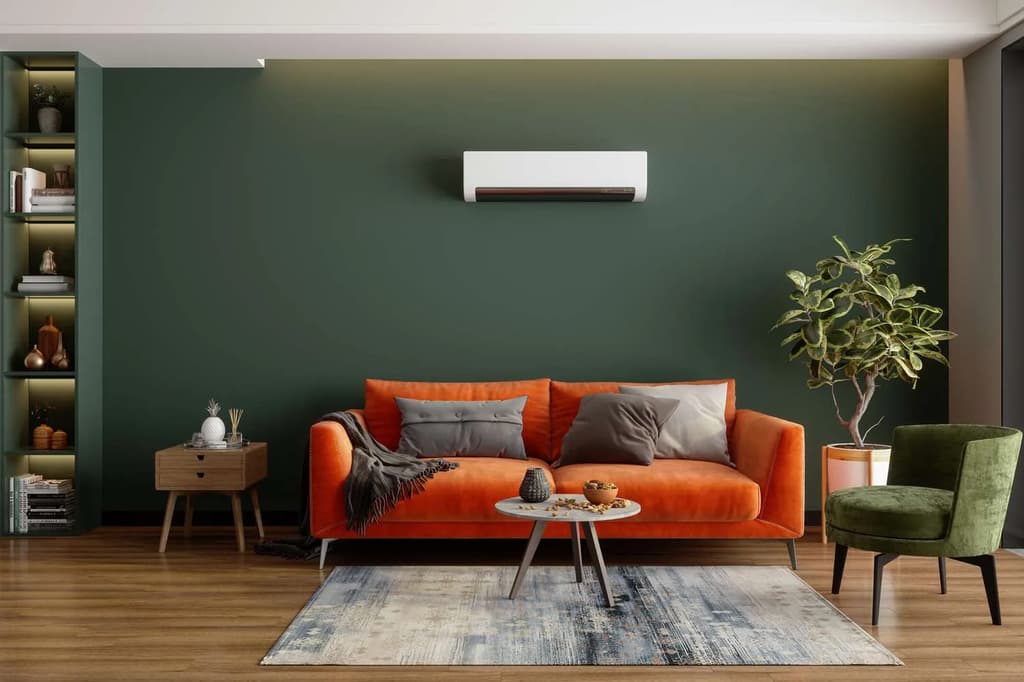
If you're shopping for the best precharged mini split for heating in 2026, you've got more options than ever. But more options can also mean more noise to cut through. This guide breaks down what actually matters for cold-weather heating performance, looks at the top DIY mini split systems side by side, and explains why Zone Air gets the top spot for homeowners who want reliable heat without paying for a full HVAC contractor.
Quick Answer: The Best Pre-Charged Mini Split for Heating in 2026
In 2026, Zone Air's DIY mini split systems are the best pre charged mini split for heating, especially for cold-climate garages, shops, finished basements and room additions. Here's how the top choices stack up:
- Zone Air DIY mini splits - best overall for heating. Cold-climate performance to −13 °F, pre-charged quick-connect linesets cut to any length from 5 to 75 ft, 24 SEER2 on 230V models, HSPF2 up to 10.0, and a warranty that stays valid when you install it yourself.
- MRCOOL DIY 5th Gen - strong cold-climate option: the standard DIY 5th Gen is rated to about −13 °F and higher-tier DIY models are rated to −22 °F, but line sets come in fixed lengths from 11.5 to 50 ft, with couplers for longer runs.
- Pioneer Diamante - decent efficiency (around 19–20 SEER2) and heating to −4 °F, but the refrigerant pre-charge only covers runs up to 25 ft and you need a vacuum pump for the flare connections.
- Senville LETO - easy on the budget, but the line sets are not factory pre-charged, and Senville's warranty page states that DIY installation will void your warranty coverage.
Zone Air stands out because it pairs serious heating credentials-operation down to −13 °F with a variable speed inverter compressor-with the installation flexibility of custom pre-charged linesets up to 75 ft. It provides both heating and cooling from one unit, supports wall-mounted, ceiling cassette and concealed ducted air handlers, and backs everything with a 5-year parts and 7-year compressor warranty that has no registration deadline and doesn't penalize you for installing it yourself.
What Is a Pre-Charged DIY Mini Split Heat Pump?
A pre-charged DIY mini split is a ductless mini split heat pump that comes with factory-sealed refrigerant lines, allowing a homeowner to install the system without handling refrigerant, using a vacuum pump or owning specialized HVAC tools.
The key distinction is how the refrigerant circuit stays sealed. In a true DIY system, the pre-charged quick-connect line sets are factory filled, sealed and fitted with valves that only open when you torque the fittings together during installation. Quick-connect precharged line sets completely eliminate the need to handle refrigerant during installation. That's different from many brands that offer factory precharged systems requiring vacuum evacuation for the line sets-those still need professional tools or EPA 608 certification to complete.
When people say "DIY mini split" in 2026, they're usually talking about these sealed-circuit systems. DIY mini split systems often have pre-charged refrigerant lines as the defining feature that separates them from standard ductless systems.
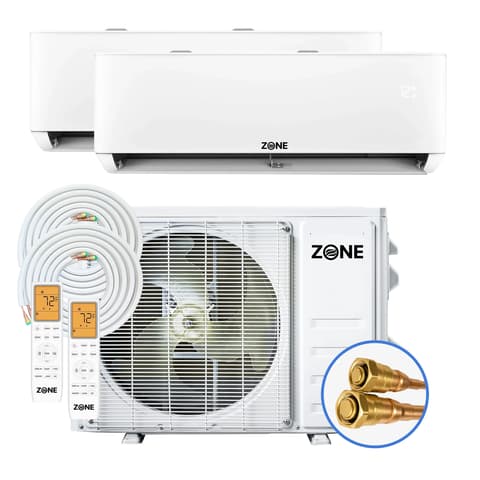
The core components include an outdoor condenser that houses the compressor and coil, an indoor air handler, the pre-charged refrigerant line set, a control cable, condensate drainage and mounting hardware. Most systems also come with a remote control and Wi-Fi connectivity. Because these are reversible heat pumps, they handle both heating and air conditioning-making them practical replacements or add-ons to central air conditioning in many homes.
Why Zone Air Is the Best Pre-Charged Mini Split for Heating in 2026
Zone Air is a good fit for homeowners who want a DIY mini split that takes heating as seriously as cooling. It pairs cold-climate capability and solid HSPF2 ratings with the line set flexibility that matters most in winter installations.
Here's what makes it stand out for heating:
- Heating to −13 °F: Zone Air systems can run in heating mode at outdoor temperatures down to −13 °F, so they'll work across much of the northern U.S. and the mid-Atlantic.
- High heating efficiency: The 230V wall-mounted models deliver 24 SEER2 cooling efficiency and 10.0 HSPF2 heating efficiency (10.5 on wall-mount multi-zone systems), which is competitive with other DIY options in this class.
- Inverter technology: Inverter technology allows variable-speed operation for energy efficiency, adjusting heating output to match the room's actual demand rather than cycling on and off.
- 115V and 230V options: Zone Air offers both voltage configurations, so it's flexible for garages, older homes and spaces where upgrading the panel doesn't make sense.
- Custom linesets from 5 to 75 ft: Pre-charged quick-connect linesets, cut to whatever length you measure, let you put the outdoor unit where it won't get buried in snow piles or block a walkway.
- DIY-friendly warranty: The 5-year parts and 7-year compressor warranty has no registration deadline, and installing it yourself won't void it as long as you follow the manual, use proper torque and meet code requirements.
With its current lineup, Zone Air runs on R-454B, which is the lower-GWP refrigerant that has replaced R-410A in new equipment.
Cold-Climate Heating Performance to Look For
Not every ductless mini split marketed as a heat pump is built for real winter use. If you live somewhere that regularly sees single-digit or sub-zero temperatures, heating performance at low ambient temperatures is the single most important spec on the sheet. Here's what to prioritize:
- Minimum operating temperature: Look for at least −5 °F. For northern U.S. and Canadian weather conditions, −13 °F or lower is preferred. Cold-climate mini split systems should provide heating performance at low temperatures below 5 °F to serve as more than shoulder-season backups.
- HSPF2 rating: Heating Seasonal Performance Factor 2 (HSPF2) measures heating efficiency of heat pumps across a typical heating season. A higher HSPF2 means the unit uses less electricity during long winters. You will want to target 9.0 or above for cold climates.
- Capacity retention: How much heating output does the system maintain as outdoor temps drop from 47 °F to 5 °F to its rated floor? Systems that lose 60–70% of capacity at low temps will struggle to keep rooms warm.
- Defrost cycle behavior: A well-designed defrost system in mini splits improves efficiency during cold weather by minimizing the time the system spends melting frost off the outdoor coil instead of heating your space.
With inverter technology that maintains useful capacity through the range, Zone Air fits right in the serious cold-climate category: designed for heating down to −13 °F. Mini splits can operate efficiently down to 5 °F on many standard models, but Zone Air pushes well beyond that threshold, making it suitable as primary or strong supplemental heat in cold climates. By contrast, many budget DIY models only heat efficiently down to about 5 °F and begin to struggle or shut off below freezing. Those are better for fall and spring or mild-winter regions rather than deep winter in places like Vermont, Minnesota or upstate New York.
Top Pre-Charged DIY Mini Splits for Heating in 2026
Most mini splits range from 9,000 to 24,000 BTU, and the best DIY models in 2026 cluster around a few key brand families. Here's how the leading options compare for heating-focused buyers:
- Zone Air DIY Single-Zone: Available in 9,000–18,000 BTU wall-mount configurations with pre-charged linesets up to 75 ft. Heating down to −13 °F. 24 SEER2 on the 230V 9K and 12K (23 on 115V and the 18K), HSPF2 10.0. Uses R-454B. Both 115V and 230V models. Warranty valid for DIY installs.
- Zone Air DIY Multi-Zone Systems: One 27,000 BTU outdoor unit supports two or three indoor units - wall-mounted, ceiling cassette and concealed ducted (Thin-Air) air handlers, mixed in any combination. The dual-zone Thin-Air 20,500 BTU system, for example, covers up to ~1,025 sq ft with 19 SEER2 and HSPF2 of 10.
- MRCOOL DIY 5th Gen (Standard and Hyper Heat): The Hyper Heat models are rated to −22 °F, tied for the lowest floor in the DIY category. MRCOOL's standard 5th Gen units heat to about −13 °F. Pre-charged lines are included (often 25 ft), and MRCOOL sells 11.5, 16, 25, 35 and 50 ft sets plus couplers to reach 75 ft. Efficiency is strong - up to 23.6 SEER2. That said, a single MRCOOL set tops out at 50 ft, and any extra length gets coiled behind the condenser instead of being cut to fit.
- Pioneer Diamante: Around 19–20 SEER2, with an operating temperature floor around −4 °F. The pre-charge covers runs up to 25 ft, but longer runs need additional refrigerant added by a pro, and the flare connections need a vacuum pump. There are fewer indoor unit style choices than Zone Air.
- Senville LETO: It's budget-priced, but the line sets are not factory pre-charged (the outdoor unit holds refrigerant only), and Senville requires a licensed HVAC professional to pressure test and evacuate the line set. The warranty states that DIY installation voids coverage.
For reference, the Fujitsu Altair 500 Series has SEER2 ratings up to 26, though it's positioned as a pro-install product rather than a true DIY system. Mitsubishi mini splits can carry a 12-year limited warranty, but only when a Diamond Contractor installs and registers the system.
Of the true DIY systems compared here, Zone Air offers the strongest combination of cold-climate heating, flexible installation and warranty protection for 2026 homeowners.
Single-Zone vs. Multi-Zone for Heating: Which Is Better?
The decision between single zone and multi zone is about how many rooms you need to heat and whether you want one outdoor compressor or several.
When a single-zone system makes sense:
A single-zone Zone Air DIY system is ideal when you're heating one room or space-a garage, workshop, finished attic, basement office or a 400–600 sq ft addition. A 12,000 BTU head handles most of these scenarios with no trouble. You run one line set, you wire one circuit and you're done. Mini splits give you individual room temperature control, and a single-zone system does this with the least complexity.
When a multi-zone system is worth the investment:
Multi-zone systems use one outdoor condenser with multiple indoor air handlers-wall, ceiling cassette or ducted-to serve different rooms from a shared compressor. This is practical for heating (and cooling) multiple rooms in a small to mid-size home, especially if you're adding to or replacing central air.
Pros of multi-zone for heating:
- Fewer outdoor compressors humming outside
- Cohesive control of several specific rooms
- Potential cost savings over buying 3–4 separate single-zone systems
- Each zone gets its own thermostat, and on Zone Air's 27,000 BTU outdoor unit you can add a second or third zone later on a spare port
Cons:
- More complex DIY installation with multiple line runs to route
- There is a higher upfront cost for the outdoor unit
- If the single outdoor unit fails, all zones will lose heat
For whole home heating in a smaller house (under ~1,500 sq ft), a multi-zone Zone Air system with mixed air handlers can work well. Single-zone is simpler, cheaper and faster to install if you're heating individual rooms or additions.
How to Size a Pre-Charged Mini Split for Heating
Getting the BTU capacity right is one of the most consequential decisions in this entire process. Oversizing a mini split causes short cycling and humidity issues because the system fires up, heats the room too fast, shuts off, then restarts minutes later. Undersizing leaves rooms cold during the worst weather. A mini split's capacity is measured in BTUs per hour, and sizing a mini split system for heating should consider increased BTUs for cold climates.
Rough sizing guidelines:
A 12,000 BTU mini split covers 300 to 550 square feet in a reasonably insulated space. For proper sizing of a garage or workshop, add 20–30% BTU capacity to account for minimal insulation, high ceilings and frequent door openings. In areas with high humidity, add 10–15% additional capacity to handle the moisture load.
Sizing depends on square footage and insulation levels. A drafty 500 sq ft garage may need 18,000 BTU, while a well-insulated 500 sq ft bedroom could get by on 12,000.
For multi-zone systems or when replacing central air conditioning and a gas furnace, a Manual J load calculation gives you the most accurate answer. Online sizing calculators can get you in the ballpark, but they don't account for every variable. Remember that heating loads in cold climates can exceed cooling loads significantly, so don't size your mini split based solely on summer conditions.
Mini splits are effective as primary or supplemental heating sources depending on insulation quality and climate severity.
Key Features That Make a Pre-Charged Mini Split Great for Heating
When you're evaluating DIY models specifically for heating performance, these features matter most:
- True pre-charged quick-connect lines: No vacuum pump, no refrigerant gauges, no EPA certification required. This is the foundation of any real DIY system. Precharged mini split systems are designed for easy installation without professional help.
- Inverter-driven compressor: The compressor modulates output smoothly instead of turning on and off at full blast. This is critical during long overnight heating runs when you want consistent warmth with better efficiency and lower energy consumption.
- Verified low-ambient heating: Look for tested performance ratings at −13 °F or lower, not just marketing claims. For every unit, Zone Air publishes a one-page spec sheet.
- Multiple indoor unit choices: You can choose from wall-mount, ceiling cassette or concealed ducted options to place heat where it's needed and to match the look of the room.
- Smart home integration: Wi-Fi, smartphone apps and voice control through Google Assistant or Alexa let you schedule heating and reduce wasted runtime. With Zone Air units, you get Wi-Fi app control plus Alexa and Google Home voice control.
- Continuous dehumidification: Mini splits can dehumidify air continuously during operation, which helps manage comfort in fall and spring and in basements.
On this list, Zone Air checks every box-especially when you look at the combination of long pre-charged linesets and strong low-temperature heating specs that many other manufacturers don't match in a single DIY package.
Zone Air DIY Heating Advantages vs. Other DIY Mini Split Brands
Zone Air is built for DIYers who want reliable heating as well as summer cooling. That shows up in the details.
Zone Air vs. MRCOOL DIY:
MRCOOL deserves credit here: its higher-tier DIY models are rated to −22 °F, lower than Zone Air's −13 °F, and its standard DIY 5th Gen matches Zone Air at about −13 °F. Both carry 5-year parts and 7-year compressor coverage with no registration required. Zone Air's advantage is installation flexibility. As of November 2026, of the brands compared here, Zone Air is the only one that cuts your pre-charged line set to the exact length you measure, any whole foot from 5 to 75, so you can place the outdoor condenser exactly where it makes sense-away from snow accumulation, bedroom windows or tight alleys-as a single factory-sealed run with no coupler or field joint. MRCOOL ships fixed 11.5, 16, 25, 35 and 50 ft sets, joins two sets with a coupler beyond 50 ft, and has you coil the excess.
Zone Air vs. budget "DIY" brands:
Many mini splits offer pre-charged outdoor units but still require a vacuum pump and refrigerant gauging during line set installation, so those aren't true DIY systems in the way most homeowners understand the term. Zone Air's sealed quick-connect fittings keep the entire circuit closed until final connection, and DIY mini split systems typically require no specialized HVAC tools when installed this way.
Other advantages:
- With Zone Air, you can choose between 115V (9,000 and 12,000 BTU) and 230V systems, so you don't have to upgrade your electrical system right away on smaller projects. The 115V models can plug into a dedicated 15A outlet with the optional cord kit where local electrical code allows a plug-in install (never an extension cord), while MRCOOL's 115V units are hardwired.
- Wall-mounted models run at around 30 dB-quiet enough for bedrooms.
- As of November 2026, Zone Air is the only DIY mini split that lets you mix wall-mount, ceiling cassette and concealed ducted units on one outdoor unit.
- The 230V models get 24 SEER2, which makes Zone Air the highest-efficiency pre-charged quick-connect DIY system out of the brands compared here (MRCOOL's best single-zone is 23.6).
- It's rated to cool in outdoor temperatures up to 131 °F (MRCOOL publishes 122 °F), so the same unit handles hot summers too.
- If you buy from Zone Air, you're buying direct, with free shipping to the lower 48, 30-day returns on uninstalled units, and live technical support 8 AM–6 PM MT from the people who built it.
- Final assembly, testing, and inspection happen in the USA, from globally-sourced components.
Indoor Unit Options for Heating: Wall, Ceiling Cassette and Ducted
The type of indoor air handler you choose directly affects how heating feels in the room because airflow patterns, noise levels and how visible the equipment is all change with the style you pick.
Wall-mounted air handlers:
These are the default for most diy mini split installations. You mount the indoor unit high on an exterior wall where it distributes warm air downward and across the room. They're a good fit for bedrooms, offices, garages and individual rooms where you just want something simple. Zone Air's wall units hit about 30 dB in quiet mode.
Ceiling cassette indoor units:
These mount flush in a ceiling and distribute heat in four directions for more even coverage. They're excellent for open-concept living areas or rooms where wall space is limited. Zone Air's cassette throws air in four directions from a 22-inch square chassis and runs at 30 dB in quiet mode. MRCOOL's OuttaSight is a 50-inch single-slot cassette that discharges one way. The tradeoff is that you need enough space above the ceiling for the unit.
Concealed ducted system (Thin-Air):
These hide in a soffit, closet or ceiling chase. They feed 2–3 rooms through short duct runs. This gives a more "central air" appearance because there's no visible wall unit, but it still uses a ductless mini split condenser outdoors. Zone Air's Thin-Air concealed units are 7⅞ inches tall and include built-in condensate pumps. As of November 2026 it's the only DIY concealed ducted mini split system, and MRCOOL does not sell a concealed-duct DIY unit.
You should choose based on your room layout, how visible you want the equipment, and whether you're heating one room or distributing heat across several. Zone Air lets you mix and match all three styles on one multi-zone outdoor unit.
DIY Installation Overview for Pre-Charged Mini Splits
A typical Zone Air DIY installation goes in this order: mount the indoor unit on the wall or in the ceiling, mount the outdoor unit on a pad or wall bracket, drill a pass-through hole for the line set, route the pre-charged lines between the two units, connect the quick-connect fittings at both ends with the specified torque, run the control cable and condensate drain, wire power to a dedicated circuit, and test the system.
Pre-charged quick-connect fittings mean you don't need vacuum pumps, refrigerant gauges or EPA 608 certification as long as you install it within the designed process. The sealed circuit stays closed until you make that final connection.
Basic tools and skills required:
- Drill with hole saw (usually 3" for the hole the lines pass through)
- Level, tape measure, stud finder
- Torque wrench (for the quick-connect fittings)
- Ladder and basic safety gear
- Comfort with electrical circuits, or being open to hiring an electrician for the final wiring
Timeline: Most DIY mini split installations can be finished in a weekend. According to Zone Air's FAQ, a single-zone wall unit takes 4–6 hours for two people the first time, and about 3 hours once you've done it before. Small multi-zone projects with more than one indoor unit might take a full weekend to get everything in place.
Installation usually requires a dedicated electrical circuit. It's a good idea to follow local codes carefully, especially for electrical work and to review the Zone Air installation manual before you drill any holes.
Electrical Considerations: 115V vs. 230V Heating Systems
Voltage and circuit capacity often determine which pre-charged mini split is easiest to install for your project. Getting this right from the start keeps you from dealing with tripped breakers, weak heating performance and code headaches later.
115V Zone Air models:
- Available in 9,000 and 12,000 BTU capacities
- Run on a dedicated 15-amp, 115V circuit
- Where local code allows, an optional plug-in cord kit lets the unit plug into a dedicated GFCI outlet, which makes the electrical work easier
- Best for smaller rooms, garages or spaces where you don't already have a 230V circuit available
230V Zone Air models:
- Cover single-zone units from 9,000 to 18,000 BTU plus the 27,000 BTU multi-zone outdoor unit
- Need dedicated double-pole breakers and wiring that is sized right
- May need a panel upgrade if no 230V spaces are available
- Better for larger heating applications or multi-zone configurations
Even if you handle the rest of the diy mini installation yourself, think about hiring a licensed electrician to put in new dedicated circuits. The electrical requirements for these systems are simple, but mistakes here can damage your equipment or create safety hazards. Check the labels on your panel and your local codes before you buy.
Pre-Charged Line Sets and Installation Flexibility
Pre-charged line sets arrive factory-filled with the correct refrigerant charge and sealed with quick-connect valves on both ends. When you connect them, the valves open and the sealed refrigerant line circuit is complete-no charging, no gauges, no certification needed.
Zone Air's standout advantage here is line set length flexibility. They offer custom pre-charged linesets cut to any whole foot from 5 ft up to 75 ft, with a 16 ft set included with single-zone wall systems and standard 25, 33, 50 and 75 ft sets available, each one continuous run. Vertical separation between indoor and outdoor units is permitted up to 33 ft on the 9K and 12K and 50 ft on the 18K.
Why long continuous runs matter:
A single factory-sealed line is always preferable to coupled extensions. Fewer connection points mean fewer potential leak sites and simpler DIY installation. This is where Zone Air pulls ahead of many manufacturers that cap pre-charged runs at 10–25 ft or rely on field couplers for anything longer.
Practical layout examples:
- Running a 50–75 ft line to a second-story bedroom from a ground-level condenser
- Reaching a detached garage from the main house
- Going around architectural obstacles like bay windows or decks
Sticking within the line set length and elevation limits that the manufacturer approves keeps your heating performance at the rated level and protects your warranty. If you go past those limits, you can get pressure drop, less capacity and voided coverage.
Energy Efficiency: SEER2, HSPF2 and Real-World Heating Costs
Two ratings matter for year-round comfort. SEER2 measures cooling efficiency. HSPF2 measures heating efficiency. For homeowners prioritizing heating, HSPF2 is the number to watch.
Zone Air's 230V wall-mounted diy mini splits reach 24 SEER2 and 10.0 HSPF2, placing them among the most energy efficient options in the DIY category; of the pre-charged quick-connect brands compared here, MRCOOL's best single-zone is 23.6 SEER2. Target a SEER2 rating of 18 or higher for efficiency as a minimum baseline-anything below that is leaving money on the table.
Practical guidance for heating-focused buyers:
- If your room sees heavy winter use, go with a higher HSPF2 model over small SEER2 differences
- Inverter-driven heat pumps deliver better efficiency by running at lower speeds all the time rather than cycling on and off, which is ideal for maintaining set temperatures overnight
- The energy costs of running an inverter mini split through winter are usually far lower than the cost of running electric baseboard or resistance heating
Mini splits provide two to four units of heating output for every unit of electricity they use-a dramatic improvement over resistance heaters that deliver about 1:1. Over a full heating season, this means you use a lot less energy.
To check for local utility rebates on high efficiency ductless mini splits and heat pumps, you can start with Zone Air's rebate calculator. Its units are AHRI Certified. Many programs now recognize HSPF2 and SEER2 ratings for rebates, and this can cut your upfront cost by hundreds of dollars.
Pre-Charged Mini Splits vs. Other Heating Options
How do pre-charged ductless mini split systems compare to the alternatives? Here's a straightforward breakdown.
vs. Central air conditioning with a gas furnace:
Central air systems are cheaper per square foot if ducts already exist. But if you're adding heating to spaces without ductwork-garages, additions, finished attics-installing new ductwork is expensive and often impractical. Mini splits avoid the duct losses (up to 30% of energy) that central systems typically suffer from. They let you heat only the rooms you're using rather than conditioning an entire house.
vs. Window units and portable heaters:
Window units are cheap to buy but expensive to run, noisy and they block natural light. Plug-in space heaters deliver about 1 unit of heat per unit of electricity. A mini split air conditioner operating in heat pump mode delivers 2–4 units of heat per unit of electricity, making mini splits offer dramatically better efficiency for sustained heating.
vs. Baseboard or electric resistance heat:
Same efficiency problem as space heaters-1:1 conversion. A split air conditioner in heat pump mode crushes this ratio.
The hybrid approach:
A lot of homeowners put in a Zone Air DIY mini split for their main living areas and keep the central ac, baseboard heat or gas furnace they already have for backup when it gets really cold. That way you get the efficiency of heat pump technology in the rooms you use most. You don't have to tear out what's already there.
Costs: DIY Pre-Charged Systems vs. Pro-Installed Mini Splits
The equipment itself often costs about the same whether you go DIY or hire a pro for a ductless system. Where you save is on labor.
Getting a mini split installed professionally usually runs $3,000 to $5,000 once you factor in the contractor's time for refrigerant handling, line flaring or brazing, vacuum testing and commissioning. If you install a pre-charged system like Zone Air yourself, you cut out most of that labor cost.
There are a few other things you'll need to budget for:
- Electrical work (new dedicated circuit): $150–$500 if you hire an electrician.
- Mounting bracket or condenser pad: $30–$100.
- Core drill bit or hole saw: $20–$50.
- Condensate drain line or pump: usually included.
- Basic tools (a torque wrench, a level and a drill): $50–$150 if you don't already own them.
Long-term savings:
Higher-efficiency inverter systems like Zone Air's (24 SEER2 on 230V, strong HSPF2) can cut your utility bills in both winter and summer compared to older equipment or equipment with lower efficiency. How fast the efficiency premium pays you back depends on your local electricity rates and how many months you rely on heating.
Some rebates may need proof of professional commissioning, so you'll want to confirm local rules if you're depending on rebates when you're deciding between DIY and professional installation.
Maintenance Tips to Keep Your DIY Mini Split Heating Efficiently
Even high-efficiency systems lose performance and use more energy if filters and coils are neglected. A few simple habits can keep your Zone Air running at peak efficiency for years.
- Clean the washable pre-filter every 2–4 weeks during heating and air conditioning seasons. If you have pets, run a dusty workshop or deal with high humidity, clean it more often.
- Inspect the outdoor coils and fan at least once or twice per year. Clear debris, leaves and spider webs that restrict the airflow to the outdoor condenser.
- Check for snow and ice buildup around the outdoor unit during winter. The unit has to have clear airflow on all sides to maintain heating performance. Elevate the condenser on a stand or pad if snow drifts are common in your area.
- Verify that the condensate drainage is clear, especially before the heating season starts. Blocked drains can cause water damage or trigger system shut-offs.
- Protect the compressor with surge protection where it is appropriate, and keep the line set connections tight and secure. These small steps help protect the compressor over its 15–20 year lifespan.
Why Zone Air Is the Best Pre-Charged Mini Split for Heating in 2026
Zone Air leads 2026's pre-charged DIY mini split options for heating. Its −13 °F cold-weather performance, 24 SEER2 on 230V and strong HSPF2 ratings, true DIY installation with pre-charged quick-connect linesets cut to any length up to 75 ft, wall, cassette and concealed ducted heads on one outdoor unit, and a robust 5-year parts / 7-year compressor warranty that DIY installation doesn't void make it the most complete package for homeowners who take winter heating seriously.
You can heat individual rooms, additions, garages or even small homes without installing or extending central air conditioning ductwork. Mini splits offer the flexibility to condition only the spaces you use, with far greater energy efficiency than resistance heating.
Size your system carefully-a 12,000 BTU unit for 400–600 sq ft of insulated space is a common starting point. Choose between 115V and 230V based on your electrical setup and the room size. Decide whether a single zone or multi zone configuration fits your heating needs.
Ready to get started? Explore the full Zone Air DIY lineup, pick the right BTU capacity and indoor unit style-wall-mounted, ceiling cassette or ducted-and plan a weekend DIY installation for reliable, energy efficient heating that you control.
Specs and warranty terms are manufacturer-published as of November 2026, subject to change. Verify before purchase. MRCOOL® is a trademark of its owner. Zone Air is not affiliated with or endorsed by MRCOOL.