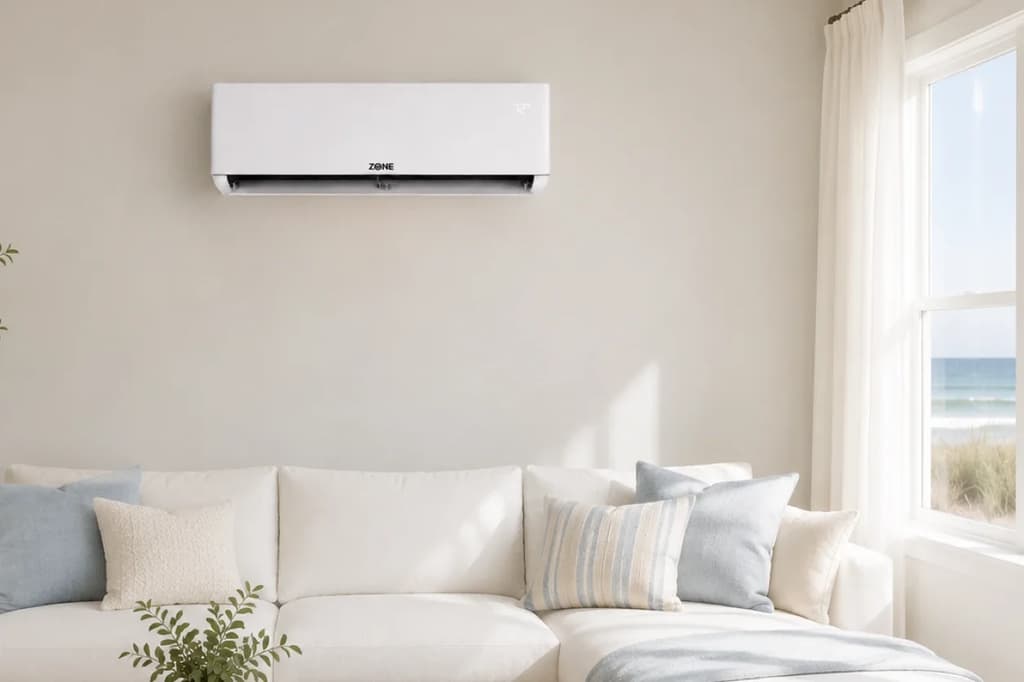
We put the best DIY mini splits head to head to find out which is really best in 2026. We address the most important factors and specify which will work best for scenarios that homeowners commonly find themselves in such as: best for garages and workshops, best value, best for cold climates, and best for remodels and additions.
Quick Answer: The Best DIY Mini Splits in 2026
If you're curious which DIY mini splits are even in the conversation for the top overall spot, here's a rundown before we get into the details.
Top DIY mini split systems for 2026:
Zone Air stands out as the strongest overall choice for most homeowners in 2026. It combines true DIY quick-connect installation, high energy efficiency, cold-climate performance, and a warranty that covers homeowner installs.
What Is a DIY Mini Split?
A DIY mini split system is a ductless split air conditioner that is designed for homeowner installation. Typical mini-split installation is time and labor intensive which raises costs dramatically above the actual value of the equipment. It's not uncommon for people to pay 2-3x more than the value of the equipment for installation in 2026. DIY systems aim eliminate all of the installation costs by making the install process so simple that anyone with basic tools can do it.
DIY systems come with pre charged line sets that connect the outdoor condenser to one or more indoor air handlers using quick-connect fittings. Most DIY mini-split systems utilize quick-connect fittings specifically to eliminate the need for flaring, brazing, pulling a vacuum and any other labor typically performed by an HVAC contractor.
Traditional mini split systems require an HVAC tech to flare copper lines, evacuate the system with a vacuum pump, charge refrigerant, and verify pressures with gauges. DIY mini splits skip all of that. Installation requires no specialized HVAC tools or refrigerant handling because the refrigerant circuit is factory-sealed. Critically, manufacturers of true DIY systems honor their warranty even when a homeowner does the install, which is not the case with other brands.
Every mini split shares the same core components: an outdoor unit (compressor/condenser), indoor air handler(s), refrigerant lines, communication and power cables, and a condensate drain. The difference is in how those components connect.
All modern DIY mini split systems discussed here are heat pumps by default, meaning they cool in summer and heat in winter.
Why Zone Air Is a Top DIY Mini Split Choice in 2026
Zone Air is one of the strongest DIY mini split options for 2026 because it removes the complications of traditional installation without sacrificing the features homeowners expect from a modern heat pump. It balances true DIY installation, high efficiency, and cold-weather heating in a way few competitors match.
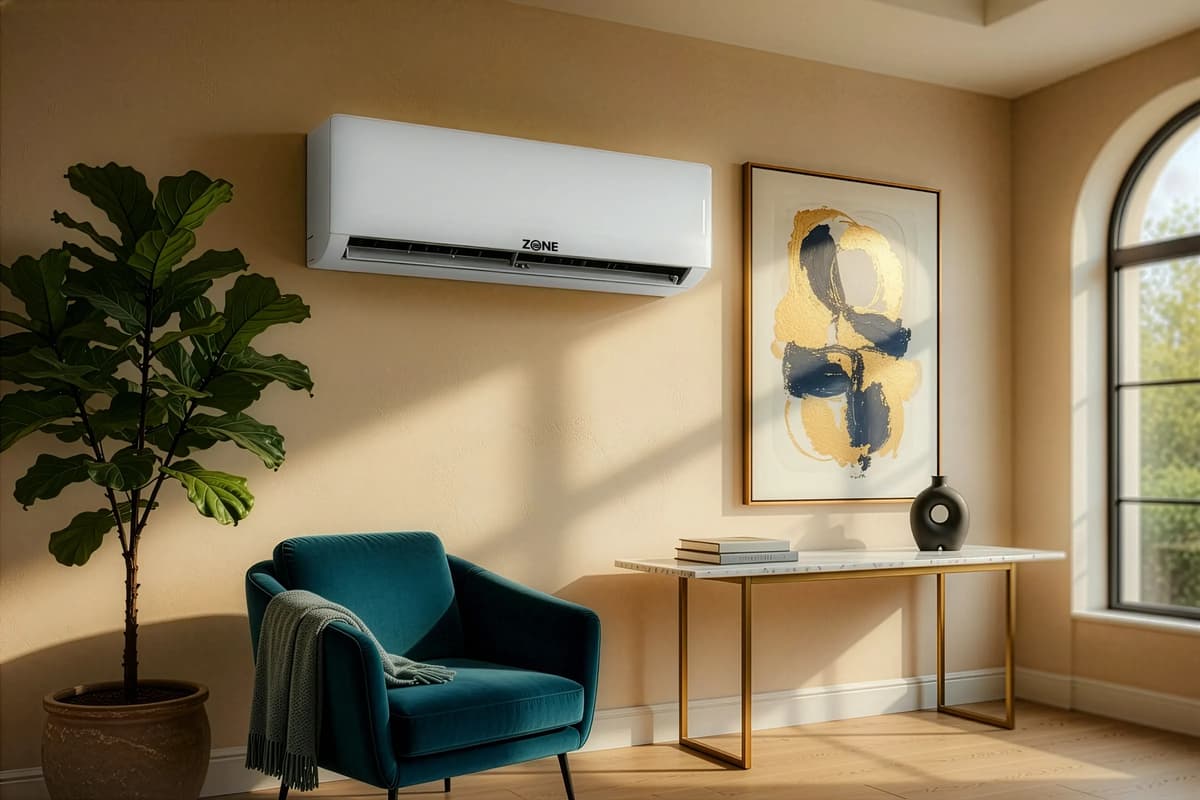
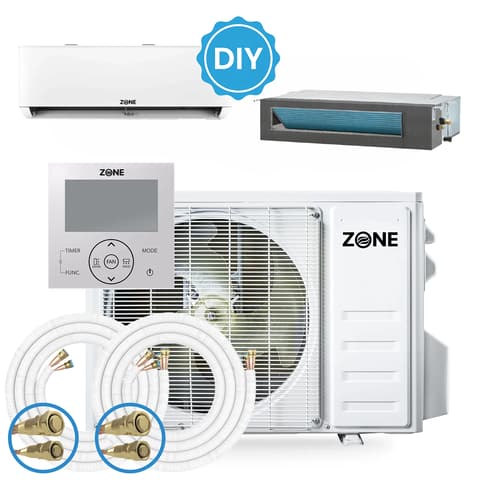
Pre-charged quick-connect line sets. Zone Air systems use factory-charged R-454B refrigerant lines with quick-connect fittings. Homeowners never need to pull a vacuum, flare copper, or handle refrigerant. You torque the fittings with basic tools and a torque wrench following the manual. Custom-length pre charged line sets extend up to about 75 feet, which reduces ugly coils of excess tubing on exterior walls and gives real flexibility for outdoor unit placement.
Up to 24 SEER2 efficiency. SEER2 ratings measure the energy efficiency of mini-split systems, and select Zone Air models hit 24 SEER2 with variable-speed inverter compressors. High SEER2 ratings can qualify systems for utility and state efficiency rebates, making the purchase even more attractive.
115V plug-in options. The 9,000 and 12,000 BTU 115V models are a convenient solution for garages, bedrooms, workshops, and home offices where a 230V circuit isn't available. Larger capacities (18K BTU and up) use 230V.
Cold-climate heating to −13 °F. Units designed for cold climates can maintain heating performance at low temperatures. Select Zone Air heat pump systems operate down to approximately −13 °F, covering most U.S. climate zones with real winters. Backup heat is only recommended for the coldest, rarest nights.
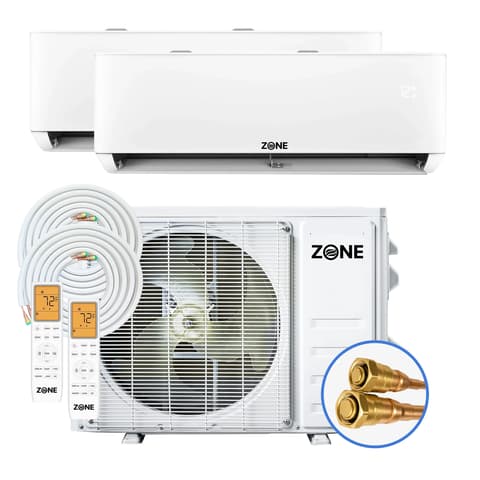
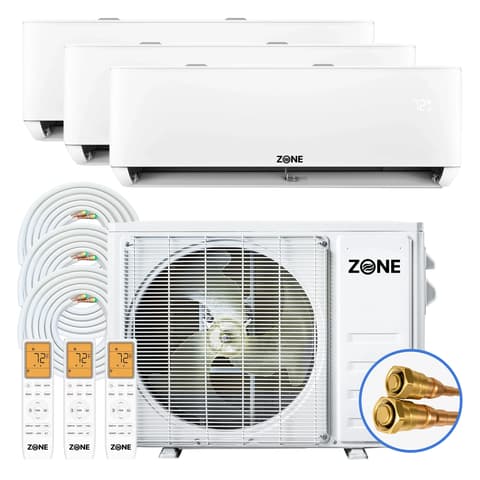
Flexible indoor units and multi zone configurations. Unlike brands limited to wall-mounted heads, Zone Air offers wall-mounted, ceiling cassette, and slim concealed-duct ("Thin-Air") indoor units across single-zone and multi zone kits for two to three rooms.
DIY-friendly warranty. Zone Air advertises a 5-year parts and 7-year compressor warranty that covers eligible homeowner installations. DIY systems should allow self-installation without voiding warranties, and Zone Air delivers on that promise. They also ship from Salt Lake City, Utah with U.S.-based customer support and the backing of an established HVAC business.
Other Leading DIY Mini Split Brands & Systems
While Zone Air is a standout in 2026, several other brands and systems are widely available and worth comparing.
MRCOOL DIY systems have been a leading name in the DIY space for years. MRCOOL DIY 5th Gen units use pre-charged line sets with R-454B refrigerant and quick-connect fittings. MRCOOL offers DIY mini-split systems for single to six zones, making them one of the broadest product lines available. MRCOOL systems can heat down to −22 °F efficiently on select Hyper Heat models, which operate efficiently down to −22 °F for extreme cold-climate applications. Cold-climate heat pumps operating efficiently down to −22 °F give MRCOOL a real edge in the harshest climates. MRCOOL systems can reduce energy costs significantly across most installations, and strong online availability plus a large community of installers and tutorials make Mr Cool an easy brand to shop for.
Beyond MRCOOL, VersaPro systems replace furnaces or AC at lower costs for homeowners looking at broader HVAC replacements. Monoblock heat pumps simplify installation with sealed refrigerant circuits and are worth a look for specific applications.
Pioneer offers some DIY-capable kits at cheaper price points, but its standard line sets use flare fittings that need a vacuum pump, and its full 5-year coverage requires registration within one week of installation. Senville is similar: strong value, fine efficiency numbers, but its warranty terms state that DIY installation voids coverage and that line set pressure testing and evacuation must be done by a licensed HVAC professional.
Where Zone Air offers advantages over MRCOOL DIY is in higher SEER2 on select models, more flexible indoor unit styles, and warranty language that is specifically clear about DIY coverage. When you shop, compare warranty terms, line-set length options, and minimum operating temperature rather than just brand name. Many manufacturers leave this information buried, so dig into the specs page before you purchase.
Single-Zone vs. Multi-Zone DIY Mini Splits
Choosing between a single zone and multi zone DIY mini split comes down to room count and layout. Zoning control enables heating or cooling individual rooms independently, which is one of the biggest advantages of mini splits over central ducted systems that provide whole-home heating and cooling from a single thermostat.
The downside of multi zone versus stacking independent single-zone units: more complex install, higher upfront cost, and more planning to avoid oversizing or undersizing specific rooms. If you have two completely separate spaces (say, a detached garage and a bedroom), independent single-zone systems are usually smarter than trying to run long line sets to a shared condenser.
How to Size a DIY Mini Split System Correctly
Getting the right BTU capacity is the most important decision before buying any DIY mini split. Oversizing leads to short cycling, humidity problems, and reduced efficiency. Undersizing means poor comfort on extreme days and higher wear as the heat pump runs at maximum output.
Proper sizing depends on square footage and insulation. Plan on 20–30 BTU per square foot as a starting point for average insulation and 8–9 ft ceilings. Key factors that shift sizing:
Select models based on local climate conditions. For a well-insulated 400–600 square footage bedroom or office, 12,000 BTU is typically sufficient. For an open living area of 600–1,000+ sq ft in a warm climate, step up to 18,000–24,000 BTU. For multi-zone projects, consider running a Manual J load calculation or using a manufacturer's sizing tool like our mini split sizing calculator.
Key Features to Look For in the Best DIY Mini Split
Not all mini split systems marketed as DIY are equal. Here's what to prioritize when you compare options:
- Efficiency ratings - aim for high SEER ratings in the 20–24 SEER2 range where budgets allow, and verify any model's certified numbers in the AHRI directory. Many homeowners see lower monthly energy costs after upgrading to inverter-driven systems.
- Cold-climate performance - minimum outdoor operating temperature matters if the mini split is your primary heat source. Look for −13 °F or lower.
- Variable-speed inverter compressor - delivers quiet operation, smoother temperature control, and lower operating cost versus fixed-speed units.
- Pre-charged quick-connect line sets - with custom length options, not just a fixed 16 or 25 ft set.
- Control features - Wi-Fi app control, smart-home integration, sleep modes, and dehumidification modes add real daily value.
- Warranty for DIY - confirm the manufacturer (like Zone Air) honors warranties for homeowner installs done according to the manual. Many brands are vague here.
- Maintenance - regular maintenance of filters is essential to ensure energy efficiency over the system's life. Look for units with easy-access, washable filters.
DIY Mini Split Installation Overview (What Homeowners Can Expect)
This is an overview, not a replacement for the official manual, but it gives a realistic picture of what the work involves.
Typical installation steps:
Unlike regular mini split systems, DIY units with pre-charged lines do not require homeowners to pull a vacuum or connect refrigerant gauges. That's what makes them "true DIY."
Tools and skills needed: drill and hole saw, comfort on a ladder, basic electrical knowledge, and willingness to follow torque specifications. Electrical requirements depend on the system's voltage specifications. A dedicated circuit and disconnect are recommended for installation, and many homeowners hire an electrician for just that portion.
Most customers finish a single zone installation in a weekend (see the full how to install a mini split walkthrough). Expect 4–8 hours for an experienced DIYer on a straightforward single-zone install, and a full weekend for first-timers or multi-zone setups. Always check local code requirements and pull permits where required.
Cost of DIY Mini Splits vs. Pro-Installed Systems
The difference is clear: DIY installation doesn't necessarily mean cheaper equipment, but skipping professional installation labor, refrigerant charging, and contractor overhead is where you save. Budget for electrical work, mounting hardware, and any tools you need to buy.
Higher SEER2 and efficient heat pump performance in shoulder seasons can pay back a premium price in a few years, especially in regions with high electricity costs. Research available rebates and tax credits for heat pump installations in your state - some programs require licensed installers, while others accept DIY as long as the equipment meets eligibility criteria.
FAQs About DIY Mini Splits in 2026
Is every mini split a heat pump? Most DIY-marketed units today are heat pumps that handle both heating and cooling, but always verify heating specs and minimum outdoor temperature ratings before you purchase.
Do I need an HVAC license to install a DIY mini split? For systems with pre-charged quick-connect lines, you typically don't need a license for the refrigerant work: EPA Section 608 certification applies to work that opens a refrigerant circuit, and a pre-charged quick-connect system keeps the circuit sealed. Electrical codes still apply, and some jurisdictions require permits or a licensed electrician for the dedicated circuit.
How long do DIY mini splits last? Expect 15–20 years with proper installation and maintenance. Clean filters regularly and schedule annual coil inspections to keep the system running efficiently.
How quiet are they? Indoor sound levels typically range from 20–40 dB on low fan speeds. Inverter heat pumps are much quieter than window units or traditional through-the-wall ACs - quiet operation is one of the biggest quality-of-life upgrades homeowners report.
Can a DIY system heat and cool my entire house? It depends on room size, layout, and climate. A single multi zone system can handle a small home or one floor. For larger homes, stacking multiple systems or pairing with an existing furnace is a smarter strategy.
What about refrigerant types? Many new DIY lines use R-454B, which has a lower global warming potential than legacy R-410A. R-454B is more future-proof under current environmental regulations, though it is mildly flammable (A2L classification), so check local codes.
Which brand should I choose? The best choice depends on your climate, number of rooms, budget, and willingness to install. Zone Air and MRCOOL DIY are the two strongest true-DIY options in 2026. Zone Air edges ahead on warranty clarity, indoor unit variety, and sale pricing for homeowners who want a straightforward, working great experience out of the box.
Conclusion
The best DIY mini split for your home comes down to your climate, how many rooms you need to condition, your budget, and how comfortable you are with the install. Zone Air offers the strongest combination of value, efficiency, cold-climate performance, and DIY-backed warranty coverage in 2026, making it the system most homeowners should look at first. MRCOOL DIY remains a strong stock option with the widest range of multi-zone configurations.
Whatever you choose, size carefully, verify warranty terms for homeowner installation, and don't skip the electrical permit. The companies making today's DIY mini splits have made the refrigerant side easy - the rest is just careful, methodical work that any motivated homeowner can handle in a weekend. If you're glad to save thousands in labor and take control of your home's comfort, 2026 is the best time ahead to go DIY.
Specs and warranty terms are manufacturer-published as of October 2026, subject to change. Verify before purchase. MRCOOL® is a trademark of its owner; Zone Air is not affiliated with or endorsed by MRCOOL, Pioneer, Senville or Della.