
Short Answer: The 10 best mini splits for garages in 2026 are led by DIY options such as Zone Air and MRCOOL. Other budget options like Pioneer and Senville are good alternatives, but would require an HVAC technician. Mitsubishi and Daikin are for those who want top-of-the-line quality for equally high prices — with Gree, Fujitsu, Cooper & Hunter, and Bosch rounding out the top 10. In this article we compare BTU range, cold climate heating capabilities, SEER2/HSPF2 efficiency, noise, warranty, and DIY install, plus how to size and choose the right one. If what you want is specifically a DIY mini split for your garage — pre-charged line set, no vacuum pump, no HVAC tech — Zone Air and MRCOOL are the two true self-install options in this ranking.
Ready to shop garage mini splits? Browse the full Zone Air lineup here →
Not sure what size you need? Mini Split Sizing Calculator →
Why a DIY Mini Split for a Garage Is Typically Best, and What Most People Are Choosing in 2026
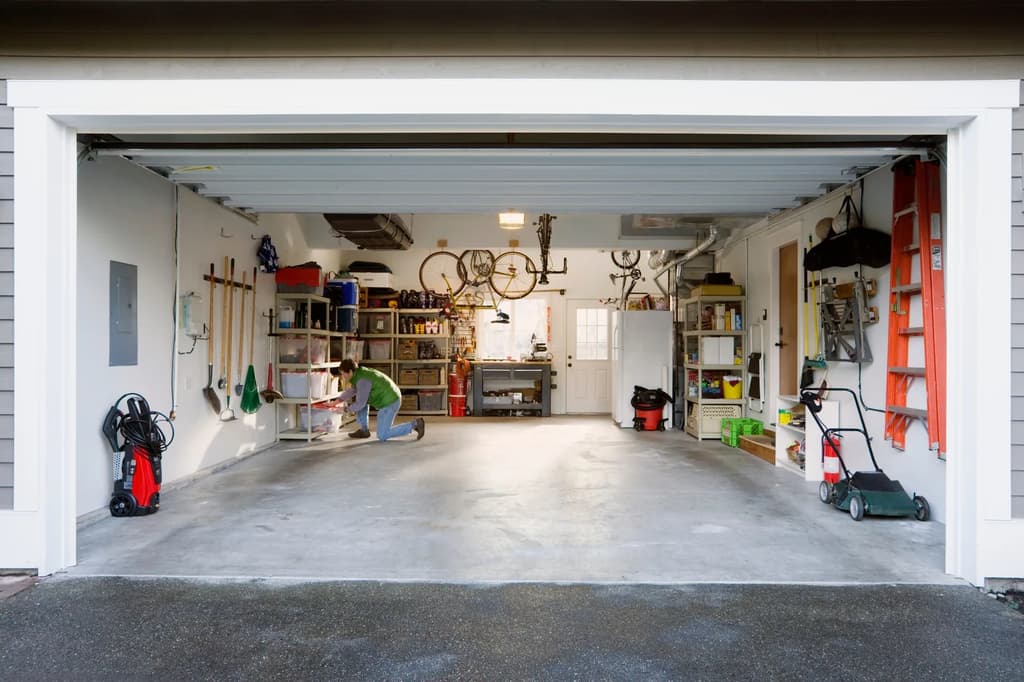
Garages are often the hardest space in a home to heat and cool. Many garages lack insulation or have gaps under the garage door which can account for energy loss. That means you need to be extra careful when sizing these rooms, being careful not to undersize. Make sure you take into account energy loss from things like bare concrete exposure, high ceilings, poor insulation, and garage door gaps.
In 2026 DIY mini splits are typically the most affordable options for handy homeowners. HVAC contractors are great when dealing with new construction or full renovation, but when you're trying to add cooling and heating to one room, $5,000–$10,000 is pretty steep. Now, HVAC contractors have their place, but if you want to save money, you might want to install it yourself. DIY install data from 2025 showed that Zone Air customers saved on average over $3,000 compared to contractor installation.
Shop Zone Air garage mini splits →
How We Chose the Best Garage Mini Splits
We compared each mini split system at the same BTU intervals, then we looked at things like: cold weather heating capacity, SEER2 and HSPF2 (cooling and heating efficiency) ratings, noise level, warranty, and install difficulty. SEER2 measures cooling efficiency and HSPF2 measures heating efficiency. Higher ratings generally mean better performance and long term savings. Higher SEER2 numbers translate into greater long-term energy savings, and the best garage units reach up to 24 SEER2.
Every system trades off efficiency against durability and cost. Garages are notorious for poor insulation, so plan to add BTU capacity for poorly insulated spaces or high ceilings. At the same time, oversized units waste energy, can't dehumidify properly, and cost more to run. So the right size matters as much as the brand. Our mini split sizing calculator dials it in for your space.
Mini Split Sizing Calculator →
Best 10 Mini Splits for Garage Heating and Cooling
1. Zone Air DIY Series Ductless Mini Split — best overall for DIY reliability
Zone Air is our top pick because it is built around a very common garage problem: homeowners want air conditioning and/or heating in their garage without paying thousands for a complicated installation. Zone Air DIY systems are assembled, inspected, and tested in the USA from globally-sourced components, and every DIY unit ships with pre-charged, easy-install refrigerant line sets.
Why it stands out: Pre-charged line sets remove the need for a professional HVAC technician's help. The indoor unit and outdoor unit connect through a single small hole in the wall, so you skip ductwork entirely and keep the install simple.
Best for: A homeowner who wants a ductless mini split for a garage shop, storage area, small workspace, or full workshop. Units have independent, precise temperature control so you won't need to expand any existing HVAC into your garage.
Shop the Zone Air DIY mini split lineup →
2. MRCOOL DIY 5th Generation — best Zone Air DIY alternative
MRCOOL remains a popular DIY option, built around quick-connect fittings and smart controls.
Why it stands out: DIY access, especially for homeowners who want a single unit or multi-zone flexibility.
Best for: A garage-plus-loft or connected room where multiple zones matter.
3. Pioneer WYS Series — best basic budget pick
Pioneer is a budget ductless option for basic garage comfort.
Why it stands out: Low upfront pricing and a simple high-wall unit.
Best for: A mild-climate garage where cooling matters more than deep-winter heat.
4. Senville SENL Series — best mid-range value
Senville offers strong value for homeowners who want capacity at a lower price.
Why it stands out: A mid-range cooling solution offered in several BTU sizes.
Best for: A budget-focused two-car-garage owner in a moderate climate.
5. Mitsubishi MZ-GL Series — best premium
Mitsubishi is a premium choice for buyers who want long-term performance.
Why it stands out: Quiet operation, durability, and strong cold-weather engineering.
Best for: Professional workshops and premium workspace applications.
6. Daikin 19 Series — best for professional installs
Daikin is another proven professional-grade option for garage climate control.
Why it stands out: Reliable operation and a strong contractor support network.
Best for: Homeowners who prefer contractor installation over DIY.
7. Gree Sapphire Series — best cold-climate pro install
Gree is one of the world's largest air conditioner manufacturers, and the Sapphire line is its cold-climate flagship.
Why it stands out: Manufacturer-rated heating operation down to -22°F on Sapphire models, paired with high SEER2 efficiency.
Best for: A northern-climate garage that needs dependable heat through deep winter and has a contractor-install budget.
8. Fujitsu Halcyon Series — best premium alternative
Fujitsu's Halcyon line is a long-running premium ductless family with a strong reliability reputation.
Why it stands out: Quiet operation, with low-ambient heating models available for cold regions.
Best for: A finished garage, studio, or workshop where premium build quality justifies contractor installation.
9. Cooper & Hunter Sophia Series — best budget size range
Cooper & Hunter sells value-priced ductless systems in a wide spread of capacities, which makes matching an odd-sized garage easier.
Why it stands out: Aggressive pricing across many BTU sizes, with line sets and install accessories included in the box.
Best for: A budget buyer comfortable hiring out the final vacuum-and-charge step of the install.
10. Bosch Climate 5000 — best value from a major brand
The Bosch Climate 5000 series brings a familiar global brand name to value-priced ductless systems.
Why it stands out: Straightforward, reliable operation backed by a recognizable brand.
Best for: A homeowner who wants contractor installation and a household brand name without paying premium-tier prices.
Quick Comparison of the Best Garage Mini Splits
Across the board, mini splits give a garage independent temperature control, install without ductwork, run efficiently in temperatures as low as -13°F, improve air quality with multi-stage filtration, and use less energy than extending your central HVAC system.
Climate and Heating Needs
If you live in a place like Minnesota or North Dakota, choose a cold climate mini split heat pump rated for low ambient temperatures. Inverter technology lets the compressor vary its speed for better efficiency through changing loads. But remember, in cold regions, holding a steady temperature depends on insulation and sealed doors as much as on the unit itself.
Which Garage Mini Split Is Best for You?
Choose Zone Air if you want DIY installation, the reliability of US final assembly and testing, quiet operation, and a high efficiency garage mini split. Choose Mitsubishi if you need premium performance and have a professional installation budget.
Final Thoughts
The best mini split for a garage isn't always an oversized expensive or cheap unit. The right unit should be the right size, the right installation type (DIY or professional), and the right efficiency level for your budget. For most homeowners, Zone Air is the top all around choice because it combines DIY savings, pre-charged line sets, cold-climate performance, and USA assembly, testing, and inspection.
Frequently Asked Questions
What size mini split do I need for my garage?
For a typical 1-car garage (200–300 sq ft, insulated walls, R-9 garage door), a 9,000 BTU mini split is likely the right size. That's roughly 30 BTU/sq ft. A 2-car garage (400–600 sq ft) almost always needs a 12,000 BTU unit, and a poorly insulated 2-car garage with a metal roof or uninsulated walls would need an 18,000 BTU unit. If the garage has 10-foot ceilings instead of 8-foot, add 10–20% to your BTU count. For an exact load calculation use our Manual J sizing calculator — it factors in insulation R-value, ceiling height, sun exposure, and climate zone. We also work through the two most common garage footprints in detail: a mini split for a 600 sq ft garage and a mini split for an 800 sq ft garage.
Can a mini split heat an uninsulated garage?
Yes, but it's cheaper to get a smaller mini split unit and properly insulate your garage. An uninsulated garage would use close to double the energy compared to the same garage when insulated. And insulating a garage can be done for as little as $500. You could get a smaller unit and insulate your garage for the same price as the bigger unit. And that would save you money in the long run on energy costs.
Do I need 230V for a garage mini split?
Not necessarily. For many 1 or 2 car garages a 115V wall-mounted mini split up to 12,000 BTU can plug into a standard 20-amp dedicated circuit and is the simplest install. No electrician required if you already have a free outlet on a 20-amp breaker. 230V is only needed for 18K BTU and larger systems serving 3-car garages or workshops. Steady state running watts: a 12K BTU 115V unit pulls 800–1,100 watts (7–10 amps) under typical load. Startup (compressor jump) hits 14–18 amps for under 0.5 seconds — well within a 20-amp breaker's tolerance.
How cold can a garage mini split heat?
Modern cold-climate heat pump mini splits like Zone Air's DIY series maintain 100% rated heating capacity down to 5°F outdoors and continue running with a reduced output of 80% down to -13°F.
Will a mini split work in a 2-car garage?
Yes. A 2-car garage is the most common Zone Air DIY Series install. Standard sizing: 400–500 sq ft × 22 BTU/sq ft (insulated) = 8,800–11,000 BTU, so a 12,000 BTU mini split covers it with margin. If the garage door is uninsulated or the space is wide-open with vaulted ceilings, you might need to step up to 18K BTU.
What is the best DIY mini split for a garage?
For a self-install, the field narrows to the two true DIY brands — Zone Air and MRCOOL — both of which ship factory pre-charged line sets, so there is no vacuum pump or refrigerant work. For an insulated 2-car garage, a 12,000 BTU unit is the usual pick; step up to 18,000 BTU for a 3-car garage or weak insulation. To see how the true DIY systems compare spec by spec, start with our best DIY mini splits guide.
Related Articles & Hubs:
- What Size Mini Split Do I Need?
- How Much Money Can a Mini Split Save Me?
- How to Install a Mini Split
- What is a SEER Rating?
- Can a Mini Split Cool a Whole House? — sq-ft sizing tables
- Best Mini Split Brands of 2026 — SEER2, warranty, and cold-climate ranked head-to-head
- Shop 9,000 BTU Mini Splits — 1-car garages, 200–350 sq ft
- Shop 12,000 BTU Mini Splits — 2-car garages, 350–550 sq ft
- Shop 18,000 BTU Mini Splits — 3-car garages, 600–850 sq ft
- Shop 115V Wall-Mounted Mini Splits — standard outlet, no electrician
- Shop Single Zone Systems — one indoor head, one outdoor unit
- Shop All Wall-Mounted Mini Splits — every BTU and voltage class
- Shop Dual Zone Mini Split Bundles — one outdoor unit, two zones, from $3,499
- Shop Concealed Duct Mini Splits — hide above a finished ceiling
- Mini Splits for Sheds — smaller detached outbuildings, sorted by available power
- Mini Split Sizing Calculator — adjust for insulation, ceiling height, and climate zone
- Run the savings math: How Much Money Can a Mini Split Save You? — up to $15,000+ in some states