
Mini Split Systems for Sheds
Updated August 13, 2026
115V — plugs into a standard outlet
The practical choice for most sheds. These run on ordinary 110–120V power off a 15A single-pole breaker, so if the shed already has a working outlet on its own circuit you are most of the way there — no subpanel, no trenching, and in many cases no electrician. See all 115V plug-in systems.
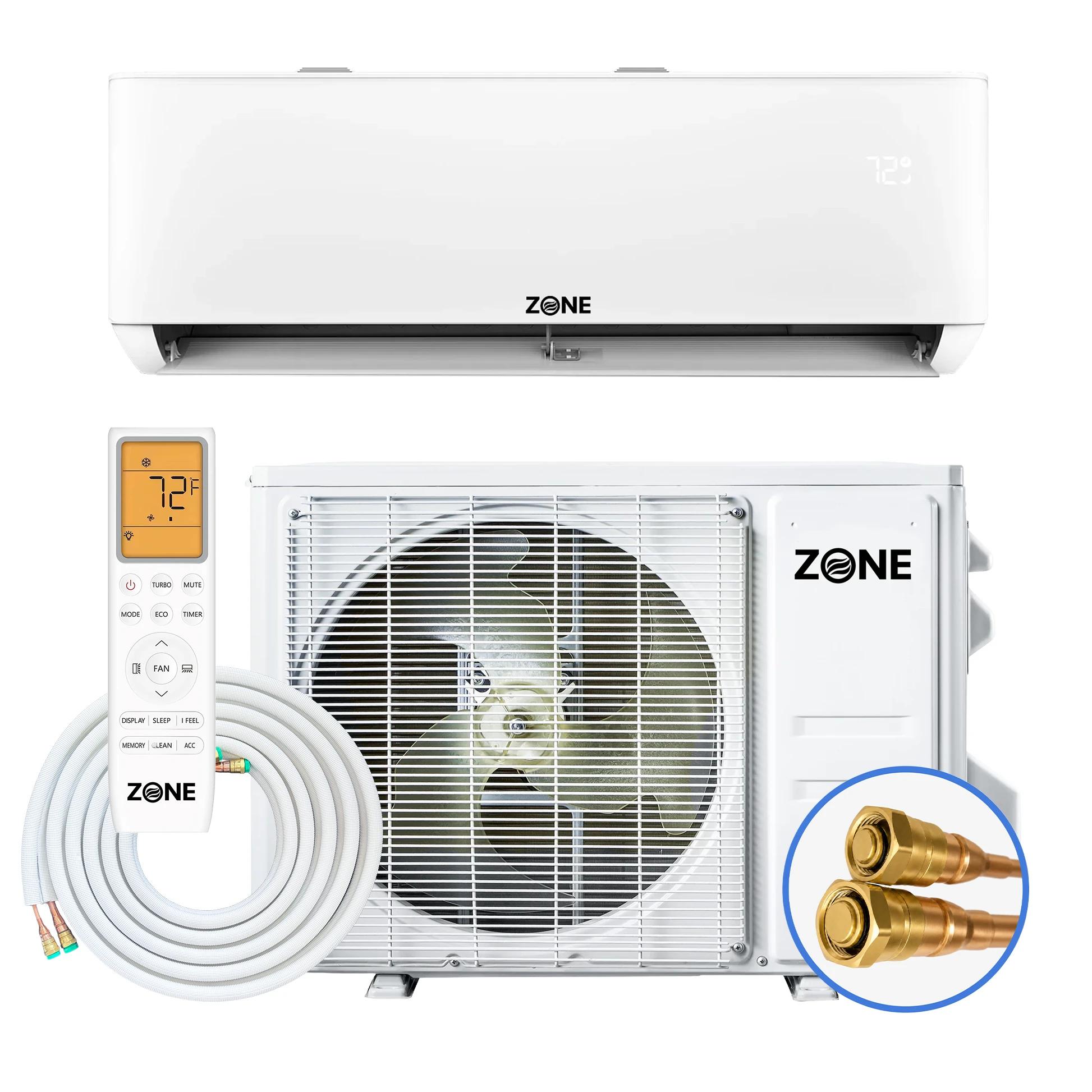
Zone Air® DIY 9,000 BTU 23 SEER2 115V Wall Mount Ductless Mini-Split Heat Pump AC & Heater with Pre-Charged Lineset - Up to 450 Sq Ft
Zone Air® DIY 12,000 BTU 23 SEER2 115V Wall Mount Ductless Mini-Split Heat Pump AC & Heater with Pre-Charged Lineset - Up to 600 Sq Ft
230V — for sheds with a subpanel
If the shed already has 230V run to it — common where a workshop, welder, or hot tub circuit was installed — these give you more form-factor choice, including a flush ceiling cassette that frees up every wall for shelving.
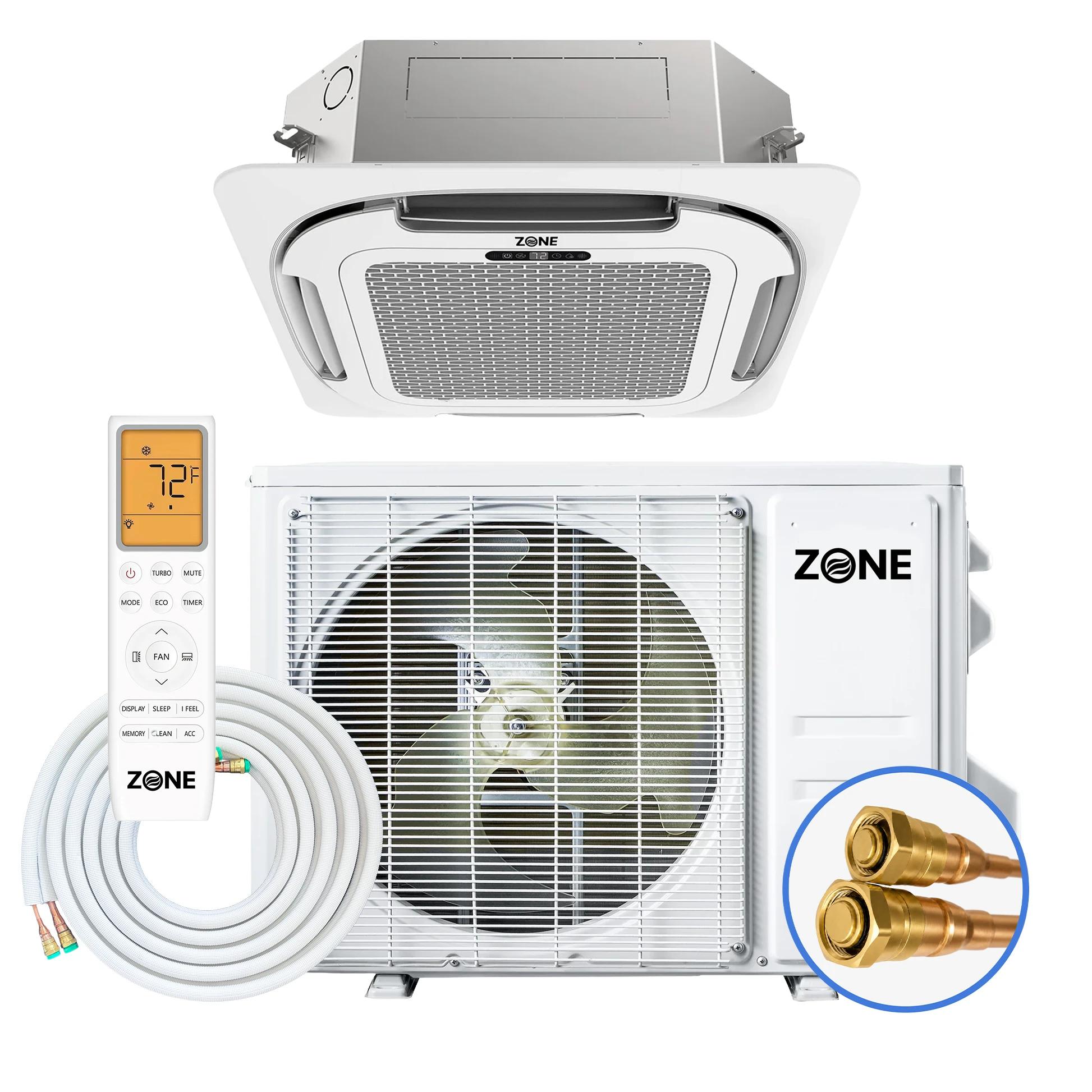
Zone Air® Airframe 9,500 BTU 21 SEER2 230V Ceiling Cassette Mini-Split Heat Pump AC - Up to 475 Sq Ft
Zone Air® Airframe 12,000 BTU 21 SEER2 230V Ceiling Cassette Mini-Split Heat Pump AC - Up to 600 Sq Ft
Zone Air® DIY 9,000 BTU 24 SEER2 230V Wall Mount Ductless Mini-Split Heat Pump AC & Heater with Pre-Charged Lineset - Up to 450 Sq Ft
Zone Air® DIY 12,000 BTU 24 SEER2 230V Wall Mount Ductless Mini-Split Heat Pump AC & Heater with Pre-Charged Lineset - Up to 600 Sq Ft
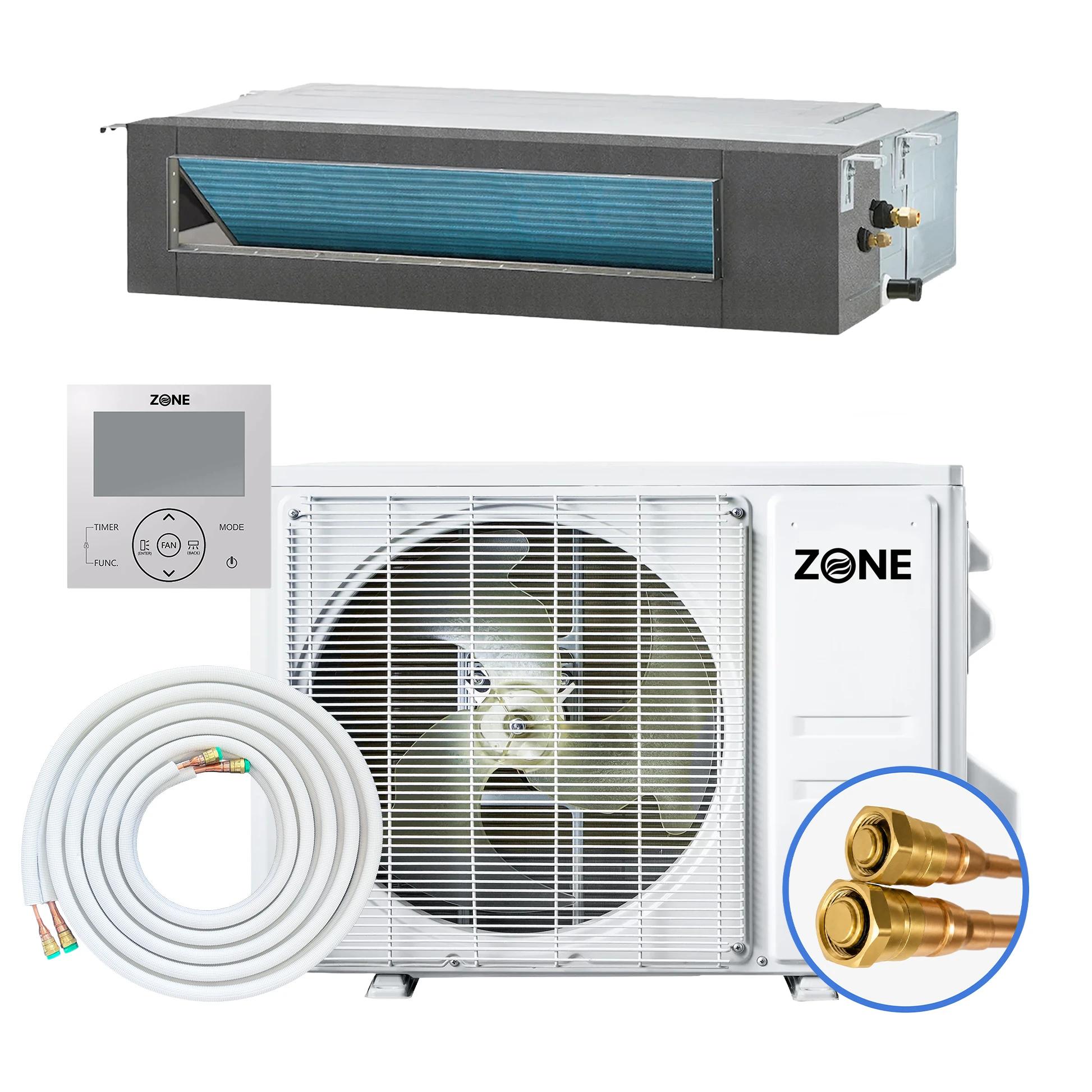
Zone Air® Thin-Air 9,500 BTU 19.6 SEER2 230V Concealed Mini-Split Heat Pump AC - Up to 475 Sq Ft
Zone Air® Thin-Air 11,000 BTU 19 SEER2 230V Concealed Mini-Split Heat Pump AC - Up to 550 Sq Ft
Shed size to system size
Sheds are sold by footprint, so here is where the common builds land. The short version: 9,000 BTU covers nearly all of them, and stepping up is about insulation and sun, not floor area.
| Shed size | Floor area | System |
|---|---|---|
| 8 × 10 | 80 sq ft | 9,000 BTU |
| 10 × 12 | 120 sq ft | 9,000 BTU |
| 10 × 16 | 160 sq ft | 9,000 BTU |
| 12 × 16 | 192 sq ft | 9,000 BTU |
| 12 × 20 | 240 sq ft | 9,000 BTU |
| 14 × 24 | 336 sq ft | 9,000 BTU |
| 16 × 24 | 384 sq ft | 9,000 BTU |
| 20 × 24 | 480 sq ft | 12,000 BTU |
An uninsulated shed with a metal roof and afternoon sun behaves like a space a size larger — run it through the sizing calculator before deciding. If the shed is really a workshop, the workshop lineup covers the larger footprints, and a backyard office build has different priorities again. At the small end, a mini split for 150 sq ft covers the 10x15 range most backyard sheds fall in, and a mini split for 300 sq ft covers the larger builds. The same 115V systems suit a parked RV or park model, where shore power is the deciding constraint rather than floor area.
Getting power to the shed
This is the part that decides most shed projects. A 115V system needs a dedicated 15A circuit — dedicated being the operative word, since sharing that run with lights, a fridge, and power tools is the usual reason a shed install trips a breaker. If the shed has no power at all, the feeder from the house is the real job and it is electrician work in most jurisdictions.
The equipment side stays simple either way. Every system here is a DIY mini split on a pre-charged line set, so there is no vacuum pump and no EPA license in the process — and because these are heat pumps, the same box that cools the shed in July heats it down to -13°F in January.
Shed mini split FAQ
What size mini split do I need for a shed?
For almost every shed, 9,000 BTU. A 9K system is rated to 450–475 sq ft, which covers everything from an 8x10 up to a 16x24 — larger than most backyard sheds ever get. Step up to 12,000 BTU only past about 475 sq ft, or if the shed is uninsulated with a metal roof and full afternoon sun, where the real load runs well above what the floor area suggests. Oversizing is a genuine mistake in a space this small: a unit too large for the room short-cycles, never runs long enough to pull humidity out, and leaves the shed cold and clammy rather than comfortable.
Can I run a mini split in a shed without adding a subpanel?
Often yes. The 9,000 and 12,000 BTU systems come in a 115V version that runs on ordinary household power off a 15A single-pole breaker. The important detail is that it needs that circuit to itself — a 115V mini split sharing a 15A run with shop lights, a fridge, and power tools is the most common reason a shed install trips a breaker. If the shed already has its own dedicated circuit from the house, you are usually set. If it has no power at all, that feeder is the real project, and it is electrician work.
Does my shed need to be insulated first?
It does not need to be, but the difference is dramatic. A bare-stud shed with a metal roof can lose heat as fast as the system makes it, so the unit runs constantly and your operating cost climbs. Insulating the walls and roof and sealing around the door is the cheapest comfort you can buy in a shed, and it usually costs less than the difference between two system sizes. If insulation is not happening, size up to the 12,000 BTU rather than expecting the 9K to keep up.
Will a mini split heat a shed through the winter?
Yes. These are heat pumps, not air conditioners, and they are rated to keep producing heat down to -13°F outdoor temperature — so a shed office, gym, or studio stays usable year round. In an uninsulated shed in a cold climate, expect the system to run close to continuously on the coldest days. See the cold climate lineup for HSPF2 ratings and how to size for a winter heating load rather than a summer cooling one.
How far can the shed be from the house?
The distance that matters is between the shed and the outdoor condenser, not between the shed and the house — the condenser mounts on the outside of the shed itself. Pre-charged line sets come in lengths from 16 up to 75 ft with custom lengths available, and you want the shortest run that reaches. What distance does affect is the electrical feeder from the house to the shed, which is where a detached build gets expensive, so price that before the equipment.
Ceiling cassette or wall mount in a shed?
Wall mount, in most sheds. A ceiling cassette recesses into the ceiling and needs roughly a foot of plenum depth above it, which a typical shed with an open or low-pitch roof simply does not have. Wall mounts also cost less and include the pre-charged line set, where cassette and concealed ducted systems price the line set separately per zone. Cassettes make sense only in a shed with a finished, framed ceiling and real space above it.
Can I install a shed mini split myself?
Yes, and a shed is one of the easier installs — the walls are thin, the condenser sits at ground level right outside, and the line run is short. The refrigerant arrives sealed inside a pre-charged quick-connect line set, so there is no vacuum pump, no gauges, and no EPA Section 608 certification involved. Budget four to eight hours. The part to be honest about is the electrical: connecting the unit is straightforward, but running a new circuit out to a detached shed is a job for an electrician in most jurisdictions.
Will it work in a metal or plastic resin shed?
It will, with two caveats. A metal shed picks up enormous solar gain, so treat the load as if the shed were a size larger than its floor area suggests. And both metal and resin walls need proper backing to carry the equipment — the indoor head needs to land on framing or a reinforced panel, and the outdoor condenser is better set on a ground pad or stand beside the shed than hung off a thin wall. Seal the wall penetration carefully; a metal shed will not forgive a sloppy hole the way sheathing and siding would.