
Mini Split for a Home Office
Updated August 13, 2026
Our quietest mini splits, perfect for home offices
Offices up to 475 sq ft
Nearly every home office lands here — a 10x12 spare bedroom is 120 sq ft, and even a generous 15x20 is 300. A 9,000 BTU system covers all of it. Resist sizing up: an oversized unit short-cycles, which is both louder and worse at pulling humidity than one that runs steadily.
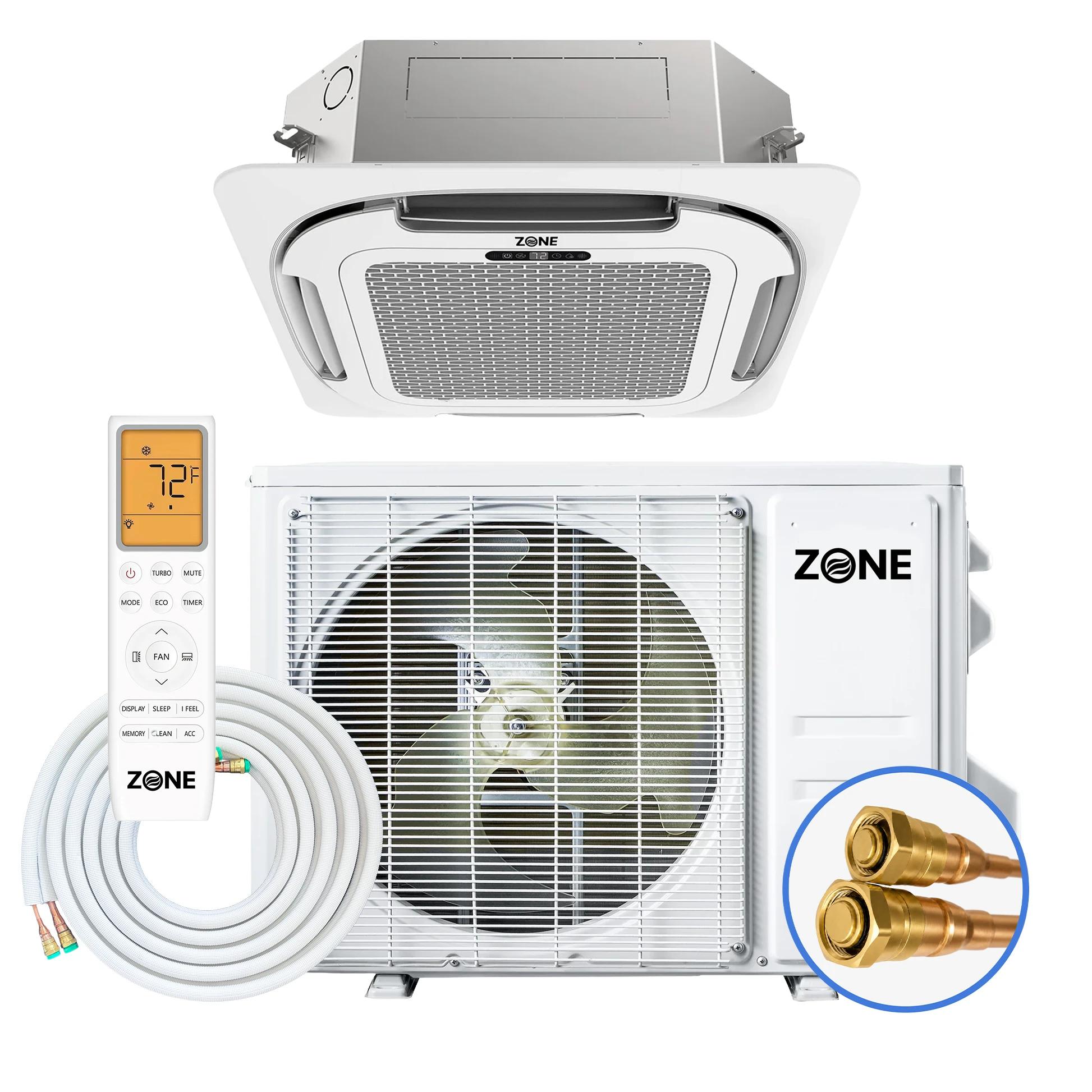
Zone Air® Airframe 9,500 BTU 21 SEER2 230V Ceiling Cassette Mini-Split Heat Pump AC - Up to 475 Sq Ft
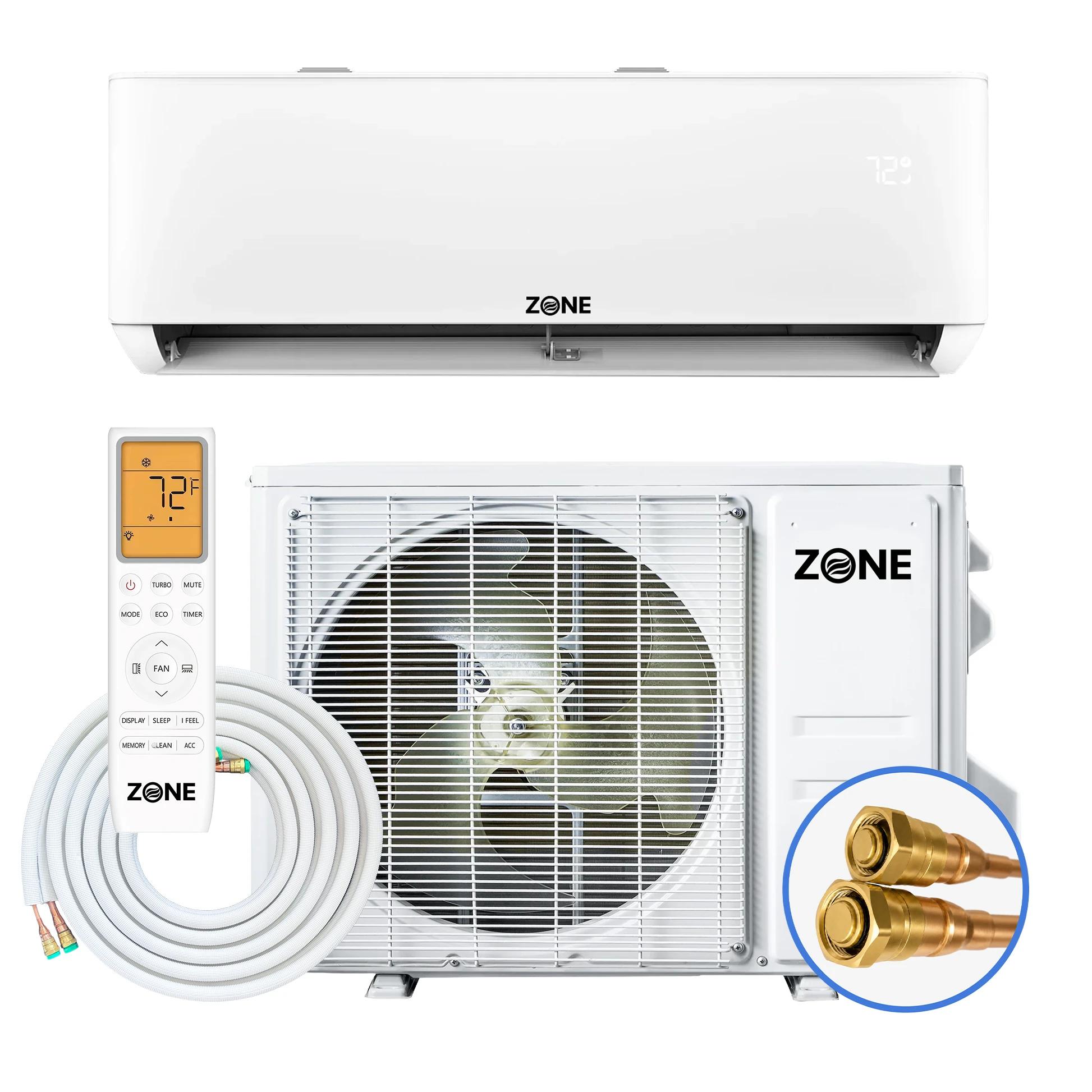
Zone Air® DIY 9,000 BTU 23 SEER2 115V Wall Mount Ductless Mini-Split Heat Pump AC & Heater with Pre-Charged Lineset - Up to 450 Sq Ft
Zone Air® DIY 9,000 BTU 24 SEER2 230V Wall Mount Ductless Mini-Split Heat Pump AC & Heater with Pre-Charged Lineset - Up to 450 Sq Ft
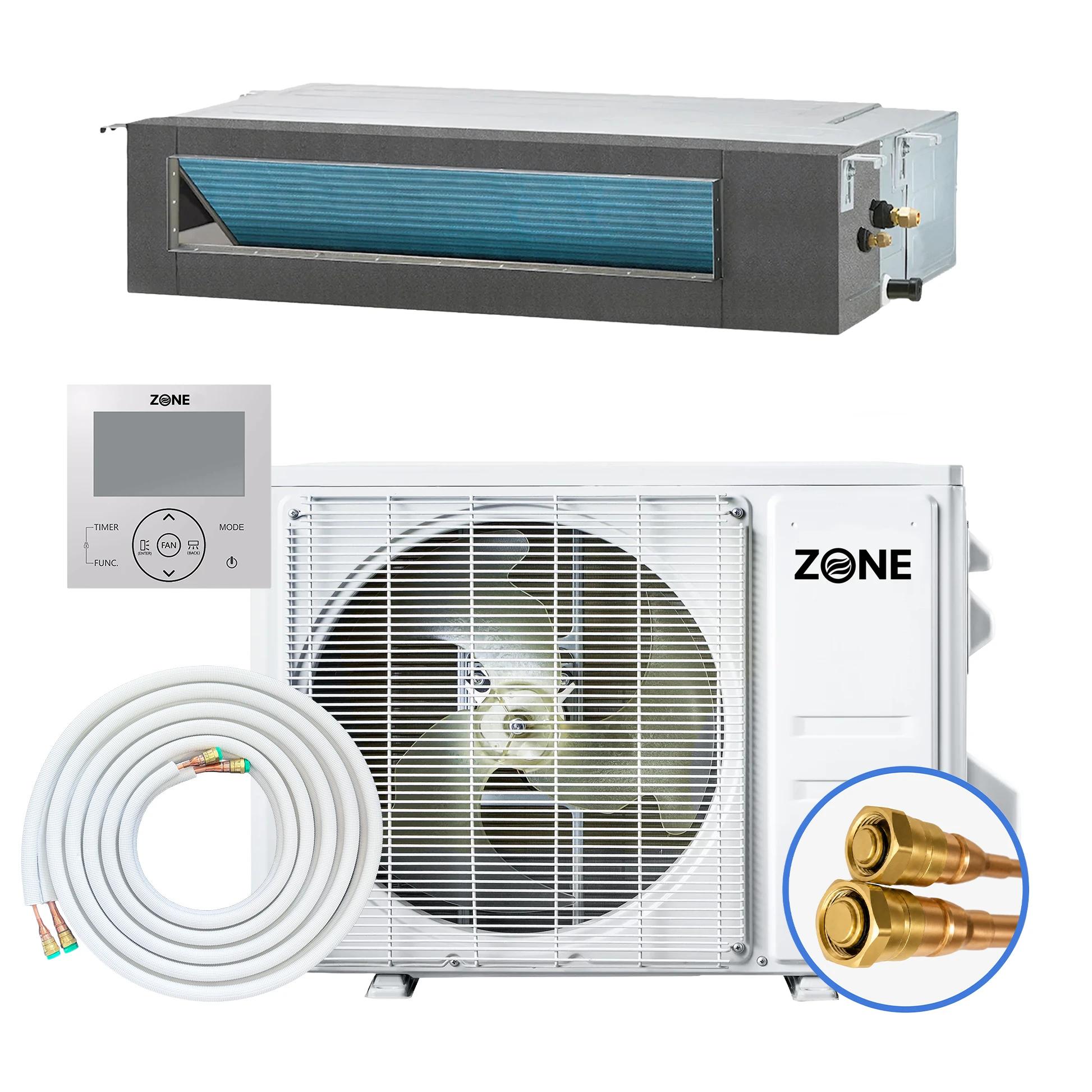
Zone Air® Thin-Air 9,500 BTU 19.6 SEER2 230V Concealed Mini-Split Heat Pump AC - Up to 475 Sq Ft
Offices 475 – 600 sq ft
For a converted garage bay, a large studio, or an office that opens into an adjoining room. 12,000 BTU is the ceiling for a single-zone system here — if you are conditioning the office plus a separate room, a two-zone system gives each its own thermostat.
Zone Air® Airframe 12,000 BTU 21 SEER2 230V Ceiling Cassette Mini-Split Heat Pump AC - Up to 600 Sq Ft
Zone Air® DIY 12,000 BTU 23 SEER2 115V Wall Mount Ductless Mini-Split Heat Pump AC & Heater with Pre-Charged Lineset - Up to 600 Sq Ft
Zone Air® DIY 12,000 BTU 24 SEER2 230V Wall Mount Ductless Mini-Split Heat Pump AC & Heater with Pre-Charged Lineset - Up to 600 Sq Ft
Zone Air® Thin-Air 11,000 BTU 19 SEER2 230V Concealed Mini-Split Heat Pump AC - Up to 550 Sq Ft
Office size to system size
The honest version of this table is that almost every home office is a 9,000 BTU room, and the temptation to buy bigger is worth resisting.
| Office size | Floor area | System |
|---|---|---|
| 10 × 10 | 100 sq ft | 9,000 BTU |
| 10 × 12 | 120 sq ft | 9,000 BTU |
| 11 × 13 | 143 sq ft | 9,000 BTU |
| 12 × 14 | 168 sq ft | 9,000 BTU |
| 12 × 16 | 192 sq ft | 9,000 BTU |
| 14 × 16 | 224 sq ft | 9,000 BTU |
| 15 × 20 | 300 sq ft | 9,000 BTU |
| 20 × 24 | 480 sq ft | 12,000 BTU |
Desktops and monitors add real heat load, which is why an office runs warm even in a house with central air — but that shows up as runtime, not as a bigger unit. Check the room with the sizing calculator, and if the office is a shop or backyard shed in disguise, those have different rules.
What 30 dB actually sounds like
A whisper is around 30 dB and a quiet library sits near 40. The wall mount and ceiling cassette units run at 30 dB in quiet mode, low enough that a laptop microphone treats them as room tone rather than as a fan. Concealed ducted units are rated 39 dB — still quiet, and completely invisible, but the wall mount and cassette are the picks if you record audio.
Sizing matters for noise too: an oversized unit reaches setpoint, shuts down, and restarts all day, and the cycling is what you actually hear. Every system here is a DIY mini split with no vacuum pump or EPA license required, and since it is a heat pump, the same unit heats the office in winter down to -13°F.
Home office mini split FAQ
What size mini split do I need for a home office?
A 9,000 BTU system for essentially any home office. The rule of thumb is roughly 20 BTU per square foot, so 9,000 BTU covers about 450 sq ft — far more than a typical 10x12 or 12x14 room needs. Going bigger is the classic mistake in a small room: an oversized unit satisfies the thermostat fast, shuts off, and repeats, which means it never runs long enough to dehumidify and you get the on-off whoosh all day instead of steady background air. Only step up to 12,000 BTU past about 475 sq ft, or for a converted garage bay with heavy sun and thin insulation.
How quiet is a mini split for video calls?
Zone Air wall mount and ceiling cassette units run at 30 dB in quiet mode, which sits between a whisper and a quiet library — below the level at which a laptop microphone picks it up as anything but room tone. That matters more in an office than anywhere else in the house, because you are sitting a few feet from the indoor head for hours at a stretch. Concealed ducted units are rated at 39 dB, still quiet, but the wall mount and cassette are the ones to pick if you record audio or take calls all day.
Where should I mount the indoor unit in an office?
On the wall behind or beside the desk rather than in front of it, so airflow crosses the room instead of blowing directly at you — a constant draft on the back of your neck is the single most common complaint after a small-room install. Keep the head high on the wall with the manufacturer clearance above it, and avoid mounting directly above a monitor or bookshelf that will block the discharge. A ceiling cassette sidesteps the problem entirely by throwing air in four directions from overhead, if you have the plenum depth for it.
Does a home office mini split need its own circuit?
The 9,000 and 12,000 BTU systems come in a 115V version that runs on standard household power off a 15A single-pole breaker, and it does need that circuit to itself rather than sharing with the rest of the room. That is usually easier in a house than in a shed or garage, since the panel is close by. The 230V versions need a dedicated 208-230V circuit, which is electrician work if one is not already there.
Will it help with humidity and equipment heat?
Yes on both. An office packed with a desktop, monitors, and a docking station generates real heat load, which is why offices often run warmer than the rest of the house even with central air — a dedicated head solves that without overcooling the whole floor. On humidity, running in cooling or dry mode pulls moisture out as it works, and because a correctly sized unit runs long and slow rather than in bursts, it dehumidifies far better than an oversized one would.
Can I put a mini split in a converted bedroom or garage office?
That is the most common home office install there is. A spare bedroom is straightforward — thin interior load, short line run, usually an exterior wall right there. A converted garage bay is the harder version, because an uninsulated garage door and a bare slab add load that the floor area does not reflect; treat it as a size larger, and see the workshop lineup if the space is doing double duty as a shop.
Wall mount, ceiling cassette, or concealed ducted for an office?
Wall mount is the default: cheapest, quietest at 30 dB, and it ships with the pre-charged line set included. A ceiling cassette is the choice when wall space is committed to shelving, a monitor arm, or artwork, and it distributes air evenly from overhead — it needs about a foot of plenum depth above the ceiling. Concealed ducted disappears entirely behind a soffit or into a closet, which suits a finished office where you want no visible equipment, at 39 dB and with the line set priced separately.
Can I install it myself?
Yes. Every system here ships with the refrigerant sealed inside a pre-charged quick-connect line set, so the circuit is never opened — no vacuum pump, no gauges, no EPA Section 608 certification. A single-zone office install typically runs four to eight hours, and because most offices sit on an exterior wall with the condenser going directly outside, the line run is usually short and simple. Hire an electrician if a new dedicated circuit is needed.