
Mini Split for an RV
A 9,000 BTU mini split is a real upgrade over a rooftop RV air conditioner for a rig that mostly stays put — quieter, far more efficient, and it heats in winter instead of just cooling. Before the sizing, though, there is a limitation worth stating plainly, because it decides whether this is the right product for you at all.
Systems that suit an RV or park model
9,000 BTU is the size for almost every rig. The 115V version is the one that matters here — it runs on ordinary shore power.
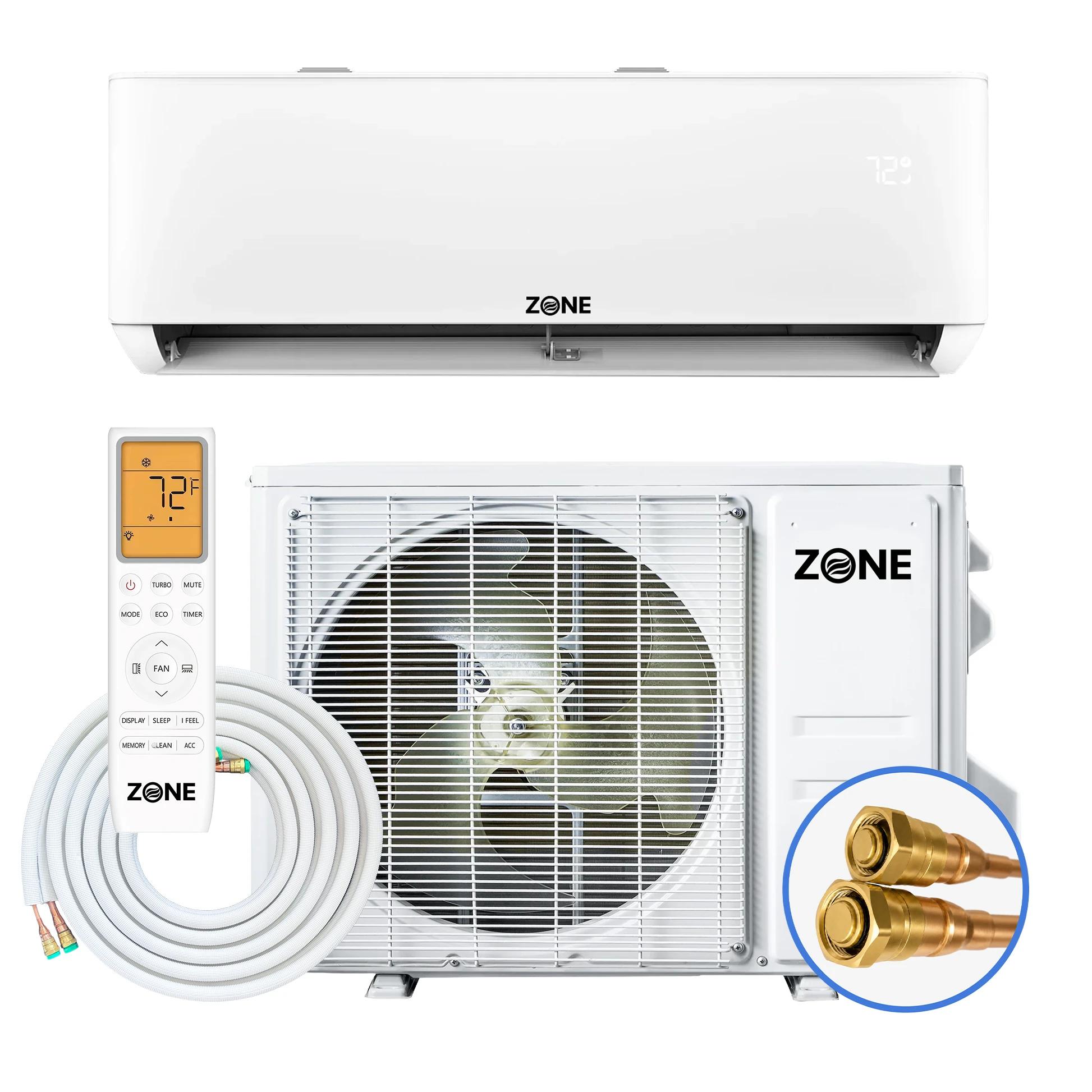
Zone Air™ DIY 9,000 BTU 23 SEER2 115V Wall Mount Ductless Mini-Split Heat Pump AC & Heater with Pre-Charged Lineset - Up to 450 Sq Ft
Zone Air™ DIY 9,000 BTU 24 SEER2 230V Wall Mount Ductless Mini-Split Heat Pump AC & Heater with Pre-Charged Lineset - Up to 450 Sq Ft
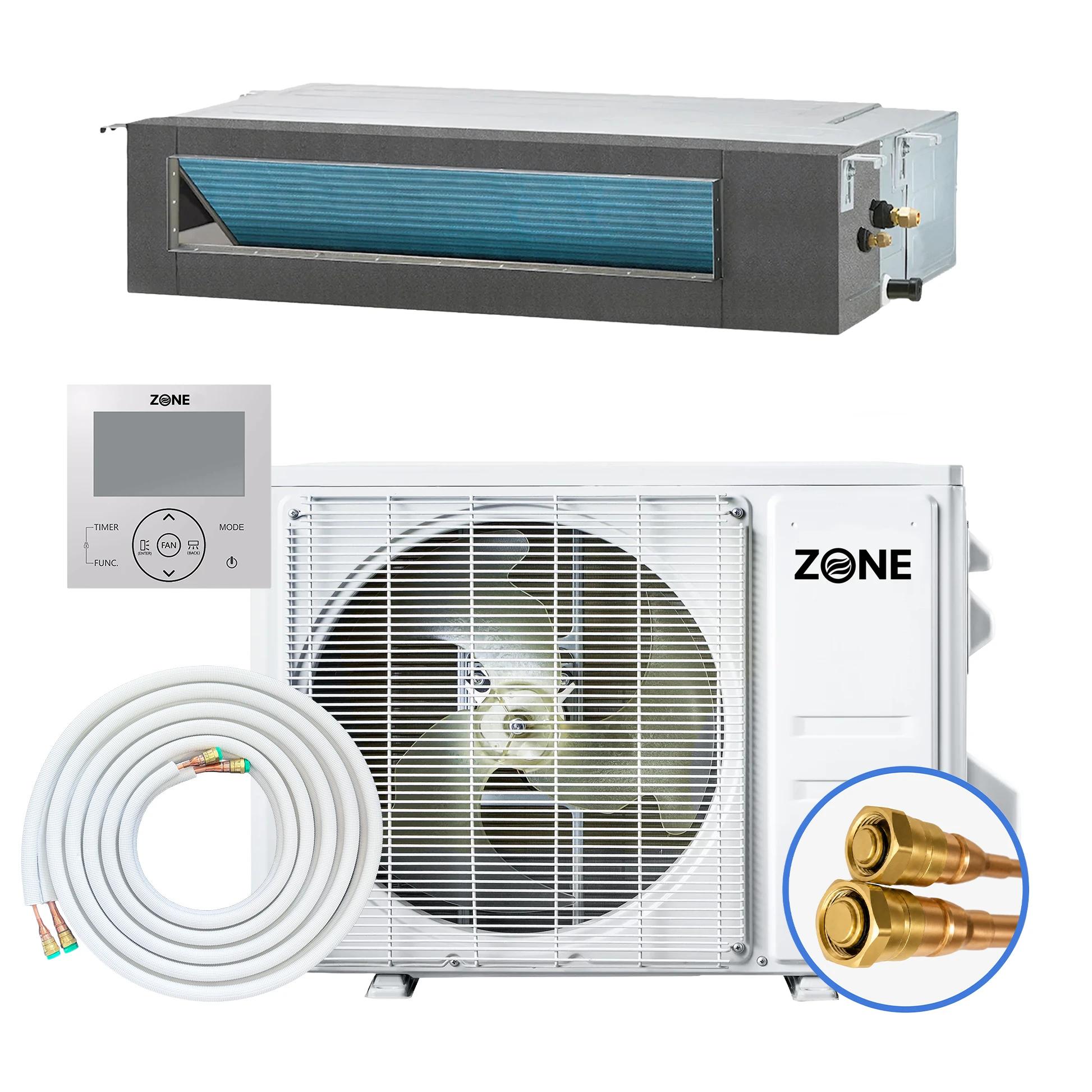
Zone Air™ Thin-Air 9,500 BTU 19.6 SEER2 230V Concealed Mini-Split Heat Pump AC - Up to 475 Sq Ft
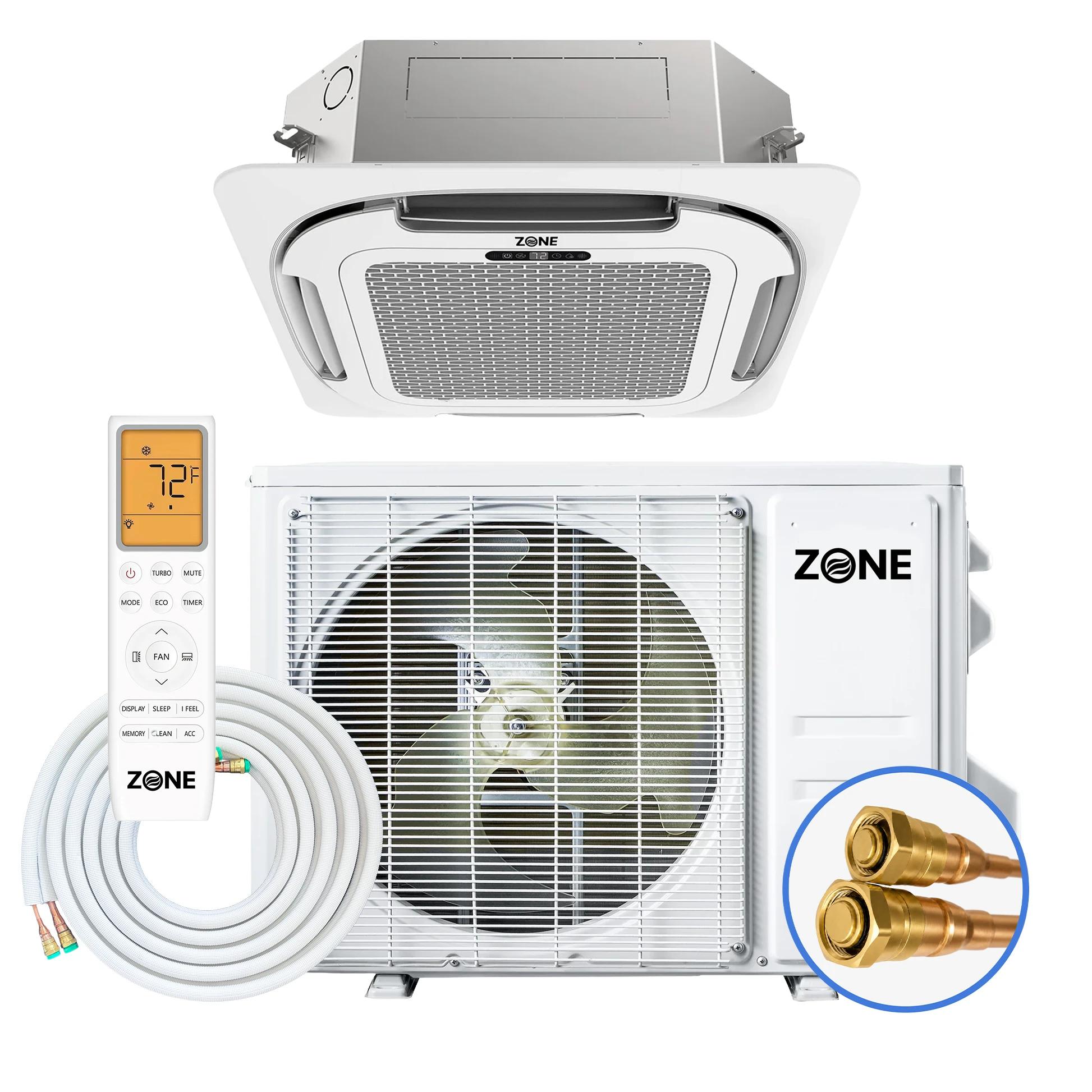
Zone Air™ Airframe 9,500 BTU 21 SEER2 230V Ceiling Cassette Mini-Split Heat Pump AC - Up to 475 Sq Ft
Read this first: these are residential systems
Zone Air systems are built and rated for buildings, not vehicles. They are not DOT-rated, the mounts and line set are not designed for road vibration, and the refrigerant connections are not intended to be shaken down a highway week after week. That does not make a mini split a bad choice for an RV — it makes it a good choice for some RVs and a poor one for others.
It suits a park model, a rig on a seasonal or permanent site, a skoolie or van conversion that is stationary most of the time, or a trailer used as an office or guest space. It is a poor fit for a rig that travels frequently, where a purpose-built rooftop or under-bench RV unit is engineered for the job and a mini split is not. If you tow every few weeks, buy the RV product.
What size for an RV
9,000 BTU, in nearly every case. It is the smallest size ductless is made in, and it is rated to roughly 450 sq ft — more than the interior of almost any travel trailer, fifth wheel, or bus conversion. A 400 sq ft park model is comfortably inside it. The inverter compressor means that headroom is not wasted: it runs at a low speed and holds the temperature rather than cycling hard.
The reason to go up to 12,000 BTU is not floor area, it is envelope. RV walls are thin, the roof takes full sun all day, and single-pane windows leak heat in both directions. A rig with poor insulation parked in a hot climate behaves like a larger space than its footprint suggests. Even then, 9,000 BTU handles most of them.
Shore power and what it will carry
This is usually the deciding constraint. A 115V 9,000 BTU system runs on ordinary household power off a 15A dedicated breaker, which fits a 30A shore power service with room for other loads — that is the pairing most people want. A 50A service has no difficulty at all.
Two honest warnings. The circuit needs to be dedicated: sharing it with a microwave, a fridge, and a converter is the most common reason an install trips a breaker. And running a mini split off a generator or an inverter is a different calculation — the compressor start-up draw is what matters, not the running watts, so check the generator surge rating rather than its continuous rating before assuming it will carry.
Why a mini split over a rooftop unit
Noise is the reason most people switch. A rooftop RV air conditioner sits directly above your head with the compressor in the same assembly; a mini split puts the compressor outside, and the indoor head is a fraction of the sound. In a space this small that difference is hard to overstate.
It also heats. A rooftop unit cools, and heating usually falls to propane or an electric strip heater. A mini split is a heat pump rated to keep producing heat down to -13°F, which turns a three-season rig into a year-round one without burning propane. And at 23 to 24 SEER2 the running cost is a long way below a rooftop unit, which matters when you are paying for site power.
Mounting it on a rig
The indoor head needs to land on structure. RV walls are thin laminate or panelling over light framing and will not carry the unit on their own — locate the framing, or add a backer panel spanning it. The same goes for the wall penetration: seal it thoroughly on both faces, since an RV wall assembly is far less forgiving of a leak than house sheathing.
The condenser should sit on a ground pad or a stand beside the rig rather than hung off the wall. That keeps weight off the sidewall, keeps the unit level for drainage, and makes it straightforward to disconnect if the rig ever does move. Keep the line set run short and protected where it crosses between the two.
What DIY Installers Say
As of 2026, the Zone Air 9,000 BTU range holds an average rating of 4.7 out of 5 across 50 verified customer reviews spanning 4 systems, with owners most often mentioning cooling performance, quiet operation, and value for the price.
Was hurrying to get this installed because our old ac unit went out and Zone Air expedited shipping for us at no additional cost. I would highly suggest purchasing from Zone Air!
on the Zone Air 9,000 BTU mini split →Bought this unit over a month ago but just now installed the ceiling cassette.
on the Zone Air 9,000 BTU ceiling cassette mini split →Installed our DIY unit in place of one of those portable AC units with the hose hanging out the window. This looks way better. Thanks!
on the Zone Air 9,000 BTU mini split →I put a Zone Air 9k DIY unit in my office. It's about 300 square feet, gets a lot of sun. The 9k unit has been cooled this room down great. I didn't expect to work so easily. Quiet too. I’ve had it turned on during every Zoom call the past few weeks and co workers said they can’t even here it!
on the Zone Air 9,000 BTU mini split →Read all 45 written reviews
The finished install looks good. Shipping was a little slow.
on the Zone Air 9,000 BTU mini split →The performance has been great without making the install feel overwhelming. It was a practical fix for a room that needed comfort.
on the Zone Air 9,000 BTU ceiling cassette mini split →For a DIY install, this was a good choice. It was manageable to set up, and the results have been excellent.
on the Zone Air 9,000 BTU mini split →For the money, this ductless system has been a strong purchase. It performs well and looks good installed.
on the Zone Air 9,000 BTU mini split →Overall, I had a really good experience with this. The install was manageable, and the system has worked great.
on the Zone Air 9,000 BTU mini split →I did not expect it to feel this solid for a DIY setup. It has been smooth, quiet, and much stronger than I thought it would be.
on the Zone Air 9,000 BTU mini split →Okay. I struggled installing it.
on the Zone Air 9,000 BTU mini split →This 9K unit has really surprised us - its been a great little unit. The customer support even helped us register the warranty. The high SEER rating has already saved us $80 over the past two months. My husband reckons the installation was easy enough with the pre-charged lineset. We're pretty impressed.
on the Zone Air 9,000 BTU mini split →We got a nice rebate from our utility because of the Energy Star certification. The unit has been running for 4 months now and our power bills have definitely gone down. The ECO mode is pretty effective and I love that I can control it from my phone. Installation with the included lineset was pretty straightforward.
on the Zone Air 9,000 BTU mini split →I installed this thing in my 400 sq ft garage workshop and its been a total game changer. The 115V plug-and-play was super convenient. Heats fine even below 0°F. The WIFI feature is a nice little touch and the quiet mode is actually quiet - without being annoying.
on the Zone Air 9,000 BTU mini split →We installed this in our home office and it keeps the room comfortable all year round. The heating surprised me - it worked fine even at 5°F outside. The only thing I'd say is that the remote could be a bit more intuitive - but once you get the hang of it, it's fine. Overall, it's a great value for what we paid.
on the Zone Air 9,000 BTU mini split →We were renovating an old brownstone and we really needed something that wouldn't mess with the original look of the place. This concealed unit is perfect - we installed it in a cramped closet with just two tiny grilles in the ceiling. It's totally invisible. And it's nice and quiet to boot.
on the Zone Air 9,000 BTU concealed ducted mini split →We installed over our master bedroom ceiling and ran supply/return to the bedroom and bathroom. It's super quiet - we can't even hear it running even at night. And it looks super clean too without any wall units around.
on the Zone Air 9,000 BTU concealed ducted mini split →As a small business owner I needed something that looked professional but didnt break the bank. This ceiling cassette delivers on both counts. Installation was manageable with the pre-charged lineset. Our conference room stays comfy year-round.
on the Zone Air 9,000 BTU ceiling cassette mini split →We installed this in our small office with a drop ceiling - looks super professional. The airflow is all over the space, no hot or cold spots anywhere. Way quieter than I expected too. Our clients all comment on how comfy the office is now.
on the Zone Air 9,000 BTU ceiling cassette mini split →The unit works beautifully - super quiet and efficient. Just one thing to watch out for - you really do need a proper drop ceiling or be prepared to do some ceiling work - we had to do some ourselves which added to installation time, but the end result is worth it. The air distribution is noticeably better than wall units.
on the Zone Air 9,000 BTU ceiling cassette mini split →The 9k cassette works really well so far.
on the Zone Air 9,000 BTU ceiling cassette mini split →The mini split itself works fine, but I wasn't impressed with the manual. The diagrams are small. Because of this I did the drain hose wrong the first time and water started to collect in the hose. Still happy with the purchase now that it’s finished.
on the Zone Air 9,000 BTU mini split →Zone Air was recommended to us by a contractor friend. Half the cost of other quoted units and works even better! So glad we took his advice. I am super impressed.
on the Zone Air 9,000 BTU mini split →Big thanks to Nate in customer service for helping me choose the 230 volt (power was already nearby) otherwise it would have been more work and more money. Overall it’s been great.
on the Zone Air 9,000 BTU mini split →Great app control. Diagnostics are awesome. Seeing power draw and automated power/refrigerant leak issues is very good. And is not ugly like those wall units. 10/10
on the Zone Air 9,000 BTU concealed ducted mini split →This has been the right fit for my space. It cools well, heats well, and is easy to live with.
on the Zone Air 9,000 BTU ceiling cassette mini split →For the price, it feels like a premium system. It runs smooth, looks clean, and performs really well.
on the Zone Air 9,000 BTU mini split →This has worked well for my smaller home. It provides steady comfort without taking up much space.
on the Zone Air 9,000 BTU mini split →This worked perfectly for my home addition. I did not want to add ductwork, and this solved the problem.
on the Zone Air 9,000 BTU mini split →This was a smart upgrade for my house. The comfort improvement was immediate, and it has been working well.
on the Zone Air 9,000 BTU mini split →It looks good on the wall and works exactly like I wanted. The airflow is strong, and the room cools evenly.
on the Zone Air 9,000 BTU mini split →I put this in a guest room, and it has been perfect. Guests can set the temperature how they like it, and the room stays comfortable.
on the Zone Air 9,000 BTU mini split →The air feels more even throughout the room now. I do not get the same hot spots I used to have.
on the Zone Air 9,000 BTU mini split →It is a compact unit, but it makes a big difference. The space feels much more comfortable now.
on the Zone Air 9,000 BTU ceiling cassette mini split →For its size, it puts out a lot of cooling. I was impressed by how quickly it handled the room.
on the Zone Air 9,000 BTU mini split →I am very satisfied with it so far. It made the room more comfortable and has been simple to operate.
on the Zone Air 9,000 BTU mini split →I use this in my workout area, and it has been a big help. It keeps the space comfortable even when I am using the room a lot.
on the Zone Air 9,000 BTU concealed ducted mini split →My upstairs bedroom used to be uncomfortable by the end of the day. This made it much easier to sleep and relax up there.
on the Zone Air 9,000 BTU mini split →Compared to my old AC, this is a big improvement. It is quieter, cools more evenly, and looks much better.
on the Zone Air 9,000 BTU mini split →This was one of those upgrades where I noticed the difference immediately. I wish I had done it sooner.
on the Zone Air 9,000 BTU mini split →The room used to be the one place in the house nobody wanted to sit in. Now it is actually one of the more comfortable spots.
on the Zone Air 9,000 BTU mini split →I was surprised by how much cooling power it has. The space gets comfortable quickly and stays that way.
on the Zone Air 9,000 BTU mini split →The room stays cool at night without any loud fan noise. It has made sleeping a lot easier during warm weather.
on the Zone Air 9,000 BTU concealed ducted mini split →The first thing I noticed was how quickly the temperature changed. I can turn it on and feel the difference within a few minutes.
on the Zone Air 9,000 BTU mini split →Our architect specified these concealed units for our whole home renovation and it looks great. The only visible parts are tiny linear grilles that match our modern design. Worth every penny for the clean look.
on the Zone Air 9,000 BTU concealed ducted mini split →RV mini split FAQ
What size mini split do I need for an RV?
9,000 BTU covers nearly every rig. It is the smallest size made in ductless and is rated to about 450 sq ft, which is larger than the interior of most travel trailers, fifth wheels, bus conversions, and park models. Step up to 12,000 BTU only when the envelope is the problem rather than the floor area — thin walls, a sun-soaked roof, and single-pane glass in a hot climate.
Can I run a mini split on 30 amp shore power?
Yes, with the 115V system on a dedicated 15A breaker. That leaves headroom on a 30A service for normal loads, and a 50A service is not close to strained. The important word is dedicated — sharing the circuit with a microwave, converter, and fridge is the usual reason an RV install trips a breaker. Note that 18,000 BTU and every multi-zone system need 208-230V, which most rigs do not have.
Will a mini split run off a generator?
Sometimes, and the number to check is the surge rating rather than the continuous one. What decides it is the compressor start-up draw, which is briefly much higher than the running watts a spec sheet leads with. Compare your generator surge capacity against the system start-up current before assuming it will carry, and be aware that an inverter generator handles the load more gracefully than a conventional one.
Is a mini split better than a rooftop RV air conditioner?
For a stationary rig, usually yes — it is far quieter because the compressor sits outside instead of directly overhead, it is much more efficient at 23 to 24 SEER2, and being a heat pump it heats down to -13°F rather than leaving winter to propane. For a rig that travels regularly, no: a rooftop or under-bench RV unit is engineered for road vibration and a residential mini split is not.
Can I install a mini split in a moving RV?
We would not recommend it. These are residential systems — not DOT-rated, with mounts and line sets that were never designed for sustained road vibration. They are a good fit for a park model, a seasonal or permanent site, or a stationary skoolie or van conversion. If the rig is towed or driven frequently, a purpose-built RV air conditioner is the right product and a mini split is not.
Can I install this mini split myself?
Yes. Every Zone Air system ships with the refrigerant sealed inside a pre-charged quick-connect line set, so the refrigerant circuit is never opened during installation — no vacuum pump, no manifold gauges, and no EPA Section 608 certification. A single-zone install typically runs four to eight hours: mount the indoor head, set the outdoor condenser, route and hand-tighten the line set, run the condensate drain, and make the electrical connection. Check local building codes, and hire an electrician if the job needs a new circuit.
Is the line set included?
Single-zone wall mount systems ship with a 16 ft pre-charged line set in the box. Ceiling cassette systems, concealed ducted systems, and every multi-zone system are priced without the line set, which is bought per zone — from $229.99 for a 16 ft run, or $279.99 on the 18K line — so you only pay for the run lengths your layout actually needs. Longer runs are available at a length upcharge.
What warranty comes with the system?
Zone Air systems carry a 5-year parts warranty and a 7-year compressor warranty, with live technical support if you get stuck partway through an install. Installing the system yourself does not void the warranty — the pre-charged line set is designed for exactly that.