
DIY Mini Splits, R-32 vs R-454B: A Mini Split Refrigerant Guide
Updated July 5, 2026
In January 2025, the HVAC industry moved to lower global-warming-potential refrigerants — R-32 and R-454B are in, R-410A and R-22 are out. DIY mini splits have never been more accessible, so here’s what you need to know about installing pre-charged, quick-connect systems that run on R-32 and R-454B.
Ready to install pre-charged R-454B yourself?
Want the sealed line-set details?
Comparing wall-mount models?
Compare Wall-Mount Models →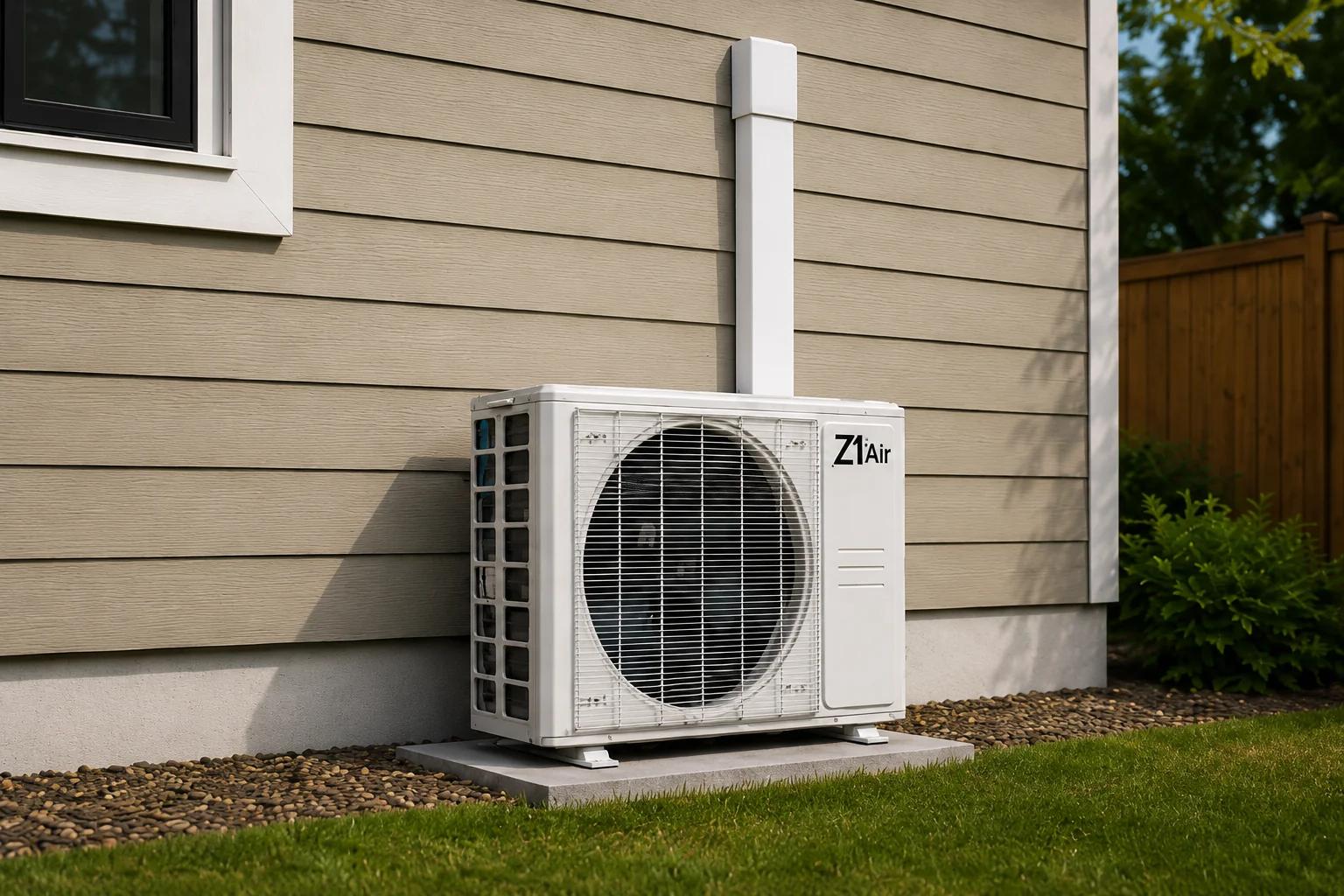
Quick Answer: Can You DIY a Mini Split with R-32 or R-454B?
A pre-charged Zone Air DIY mini split ships with R-454B factory-sealed in the quick-connect line set, so a 2026 homeowner installs it with no refrigerant handling, no vacuum pump, and no EPA 608 license. Yes — you can install certain R-32 and R-454B mini splits yourself, as long as the system uses pre-charged, quick-connect line sets.
- R-32 and R-454B are the primary eco-friendly replacements for R-410A, and a growing number of DIY-ready systems now ship with them.
- A true DIY mini split never asks you to handle loose refrigerant, pull a vacuum, or attach gauges — the refrigerant comes sealed in the outdoor unit and line set.
- Pre-charged line sets remove the need for professional installation. Zone Air systems are designed so a homeowner with basic tools can install without an HVAC license — though local permits and electrical codes still apply.
- Doing it yourself avoids $3,000–$5,000 in contractor fees — the typical savings Zone Air customers report versus traditional heating-and-cooling quotes.
R-32 vs R-454B: Why New DIY Mini Splits Are Changing Refrigerants
In 2026, DIY mini splits ship with R-454B (GWP ~466) or R-32 (GWP ~675), the two A2L refrigerants replacing R-410A (GWP ~2,088). Global regulations under the AIM Act are phasing down high-GWP refrigerants. Both R-32 and R-454B are A2L refrigerants with zero ozone-depletion potential, and both are a big step down in global-warming impact from the R-410A they replace.
| Property | R-32 | R-454B | R-410A (legacy) |
|---|---|---|---|
| Composition | Single component | Blend: 68.9% R-32 / 31.1% R-1234yf | Blend: 50% R-32 / 50% R-125 |
| GWP (approx.) | ~675 | ~466 | ~2,088 |
| Safety class | A2L (mildly flammable) | A2L (mildly flammable) | A1 (non-flammable) |
| Ozone depletion | Zero | Zero | Zero |
| DIY servicing | Simpler — single component, can top off | Blend — recover & recharge on a leak | Being phased out |
- R-32 is a single-component refrigerant with a GWP of about 675. It transfers heat well, needs less charge than a blend, and its simple chemistry gives it a slight efficiency edge.
- R-454B is a blend (68.9% R-32 and 31.1% R-1234yf) with a GWP of roughly 466 — noticeably lower than R-32 — and its operating characteristics sit close to R-410A, which makes for a smoother transition from legacy equipment.
- Both refrigerants support SEER2 ratings in the 20–24 range, and today’s high-efficiency mini splits — Zone Air’s included — run up to 24 SEER2.
- Modern A2L systems meet the UL 60335-2-40 and ASHRAE 15 safety standards, with built-in charge limits and leak-detection logic.
How a DIY Mini Split with R-32 or R-454B Saves You Money
A Zone Air R-454B DIY mini split saves $3,000–$5,000 versus 2026 contractor quotes, with single-zone systems from $1,899.99 and efficiency up to 24 SEER2. Contractor quotes for a single-zone system often land between $4,500 and $8,000, with labor making up a big share of that. Going DIY cuts most of it out.
- Zone Air single-zone hardware runs roughly $1,500–$2,500, so most homeowners save $3,000–$5,000 overall versus a fully contractor-installed system.
- You skip buying a vacuum pump ($150–$500), manifold gauges, and nitrogen-purge equipment you’d otherwise need for a conventional install.
- Efficiency pays you back over time: a Zone Air unit at 24 SEER2 can trim annual heating-and-cooling bills by 25–40% versus older equipment, depending on your climate, usage, and the system you replace.
- The federal 25C tax credit ended for systems placed in service after December 31, 2025, but state and utility rebates — and income-qualified programs like HEEHRA — can still offset part of the cost. Check what your ZIP code qualifies for with the AC rebate calculator.
What “DIY Pre-Charged” Really Means for Mini Splits
Every 2026 Zone Air DIY mini split arrives with its R-454B charge factory-loaded and sealed behind quick-connect valves, so the refrigerant circuit is never opened during installation. “precharged mini splits” means the factory fills, evacuates, and seals the refrigerant circuit before it ever reaches your home. You never open the sealed system yourself.
- Traditional install: the condenser arrives charged, but the copper lines are empty. A technician has to braze the joints, evacuate the lines with special tools, and charge refrigerant on site.
- DIY pre-charged install: the outdoor unit and line set arrive factory-sealed. Your job is mounting the air handler, setting the outdoor unit, and tightening the quick-connect fittings that keep refrigerant from escaping during installation.
- Pre-charged line sets also let you disconnect the system cleanly for maintenance or relocation — no brazing required.
- Buying a complete pre-charged system also saves you the cost of sourcing separate components and hiring partial labor to tie them together.
How Pre-Charged, Quick-Connect Line Sets Actually Work
Quick-connect technology keeps the R-454B or R-32 refrigerant sealed until the connections are fully tightened.
- Each end of the pre-charged line set has spring-loaded valves that open internally when you torque the fitting to spec — no copper piercing or brazing involved.
- Because the lines are pre-evacuated at the factory, there’s no vacuum pump, micron gauge, or recovery machine needed during the install.
- Hitting the correct torque with the supplied wrench is critical to avoid slow leaks — especially with A2L refrigerants.
Why You Don’t Need to Vacuum or Charge the System
In a professional install, vacuuming removes air and moisture from the lines. In a true DIY pre-charged mini split, that step is handled at the factory instead.
- Zone Air deep-evacuates and pressure-tests every line set before sealing it behind quick-connect valves.
- When you make the final connections, you’re joining two already-sealed systems to each other — not exposing them to ambient air.
- Skipping the vacuum step on a non-pre-charged system is dangerous and voids warranties — but Zone Air products are engineered so you never need that equipment in the first place.
Choosing Between R-32 and R-454B DIY Mini Splits
Shoppers in 2026 will see both refrigerants on the market and reasonably wonder which is right for their home.
- R-32 can be more forgiving for DIYers thanks to its simpler chemistry — as a single component, it’s easier to service and can be topped off.
- R-454B is a blend, so if it ever leaks, best practice is to recover and recharge the full charge rather than top it off.
- Competing DIY brands are making the same shift — some MRCOOL DIY models now ship with R-454B, though you should confirm the refrigerant on any specific unit’s current spec sheet, since lineups are still transitioning. Zone Air uses R-454B across its current lineup.
- Don’t try to retrofit an existing R-410A system. Buy a matching pre-charged DIY unit as a complete replacement instead.
Competitor refrigerant and warranty details reflect manufacturers’ published information as of July 2026 and may change — verify current listings before purchasing. Installation requirements vary by location; check local permit and electrical-code rules before you begin.
How Zone Air Supports Your R-32 & R-454B DIY Mini Split Project
Zone Air backs every R-454B DIY mini split with 30-day returns on uninstalled systems (25% restocking fee applies), a 5-year parts / 7-year compressor warranty, and a 4.8/5 average across 141 verified reviews as of 2026. Zone Air is a DIY-focused mini split manufacturer and direct-to-consumer brand, specializing in pre-charged, quick-connect systems built for homeowners — not just HVAC pros.
- Support resources include detailed manuals, step-by-step video guides, and live U.S.-based help by phone, email, or chat during extended business hours.
- A 30-day return window on uninstalled systems (25% restocking fee applies) lowers the risk for first-time installers weighing a ductless upgrade.
- Zone Air continuously tests and updates its R-454B product lines to keep pace with evolving SEER2 standards and A2L regulations.
Ready to Save Thousands?
Explore Zone Air’s lineup of R-454B DIY mini splits, compare wall-mount models, and start planning your install — pre-charged, quick-connect, and no refrigerant handling.
Secure checkout. Fast shipping. 30-Day Returns. 5-yr parts / 7-yr compressor warranty.