
2 Zone DIY Mini Splits
18–30k BTU DIY 2 Zone Mini Split Systems Designed for Easy Installation. Shop all Zone Air 2 zone DIY mini splits.
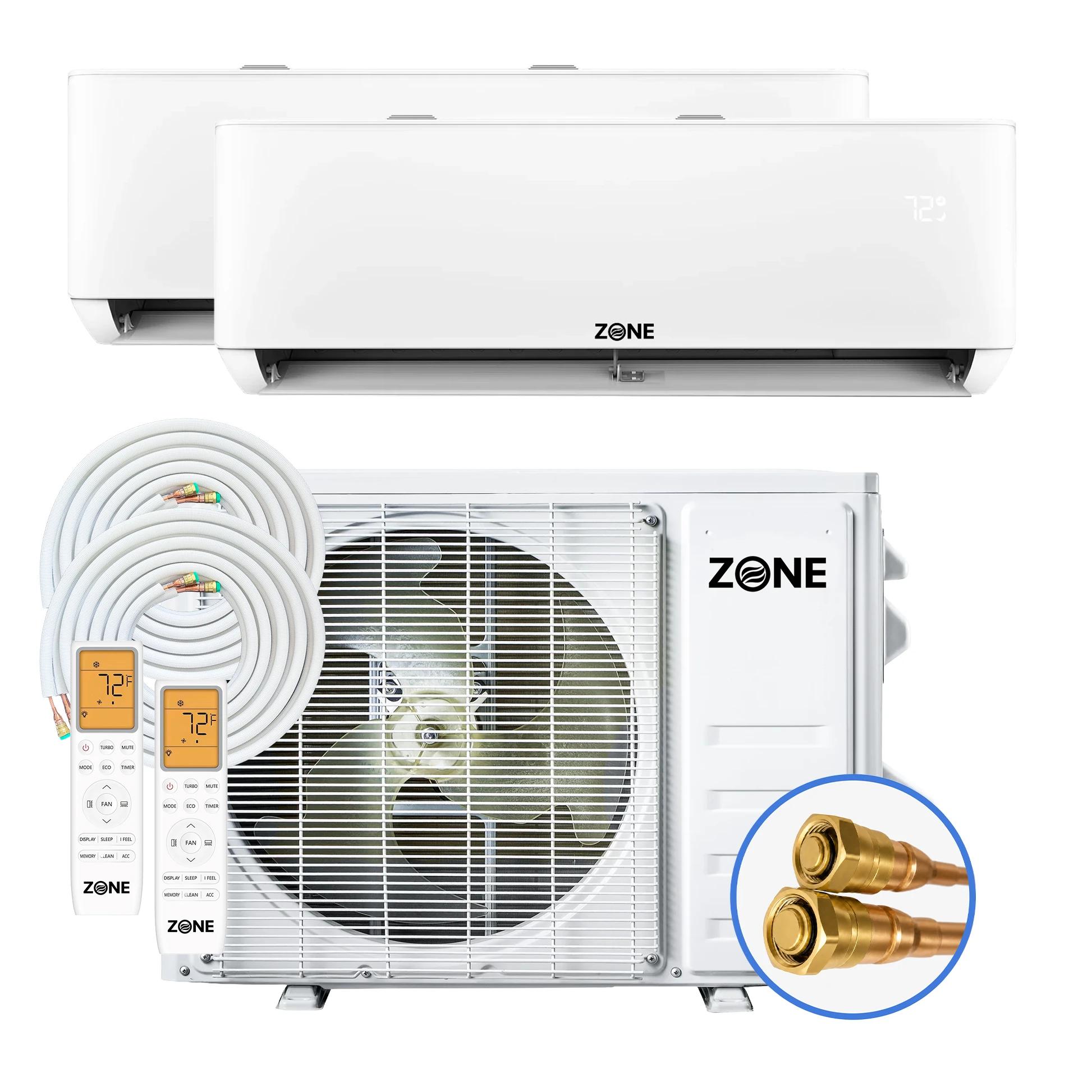
Zone Air® DIY DUAL ZONE 24,000 BTU (12K+12K) 24 SEER2 230V Wall Mount Ductless Mini-Split Heat Pump System - Up to 1,200 Sq Ft
Zone Air® DIY DUAL ZONE 21,000 BTU (12K+9K) 24 SEER2 230V Wall Mount Ductless Mini-Split Heat Pump System - Up to 1,050 Sq Ft
Zone Air® DIY DUAL ZONE 30,000 BTU (12K+18K) 24 SEER2 230V Wall Mount Ductless Mini-Split Heat Pump System - Up to 1,500 Sq Ft
Zone Air® DIY DUAL ZONE 27,000 BTU (9K+18K) 24 SEER2 230V Wall Mount Ductless Mini-Split Heat Pump System - Up to 1,350 Sq Ft
Zone Air® DIY DUAL ZONE 18,000 BTU (9K+9K) 24 SEER2 230V Wall Mount Ductless Mini-Split Heat Pump System - Up to 900 Sq Ft
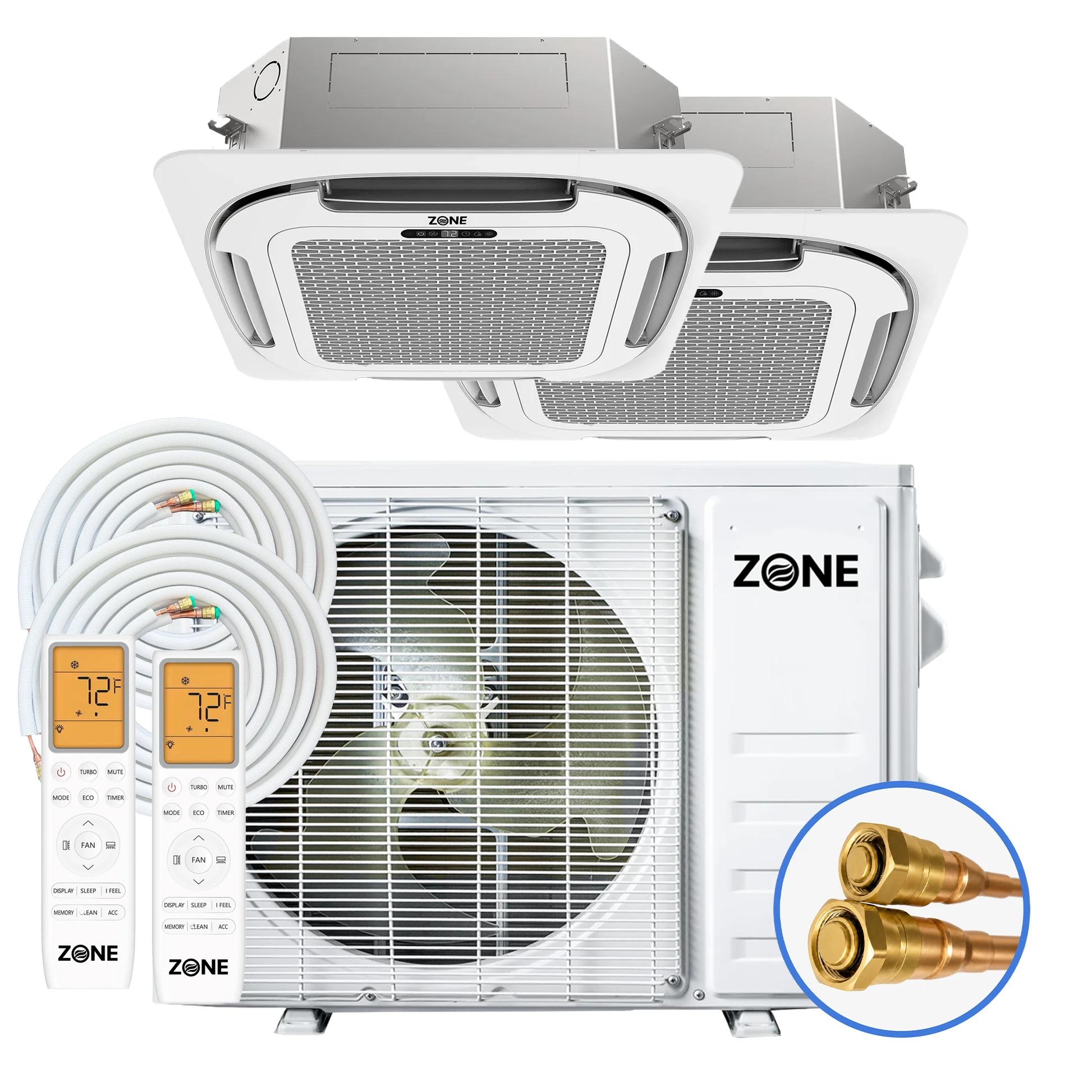
Zone Air® Airframe DUAL ZONE 24,000 BTU (12K+12K) 21 SEER2 230V Ceiling Cassette Mini-Split Heat Pump System - Up to 1,200 Sq Ft
Zone Air® Airframe DUAL ZONE 19,000 BTU (9.5K+9.5K) 21 SEER2 230V Ceiling Cassette Mini-Split Heat Pump System - Up to 950 Sq Ft
Zone Air® Airframe DUAL ZONE 21,500 BTU (12K+9.5K) 21 SEER2 230V Ceiling Cassette Mini-Split Heat Pump System - Up to 1,075 Sq Ft
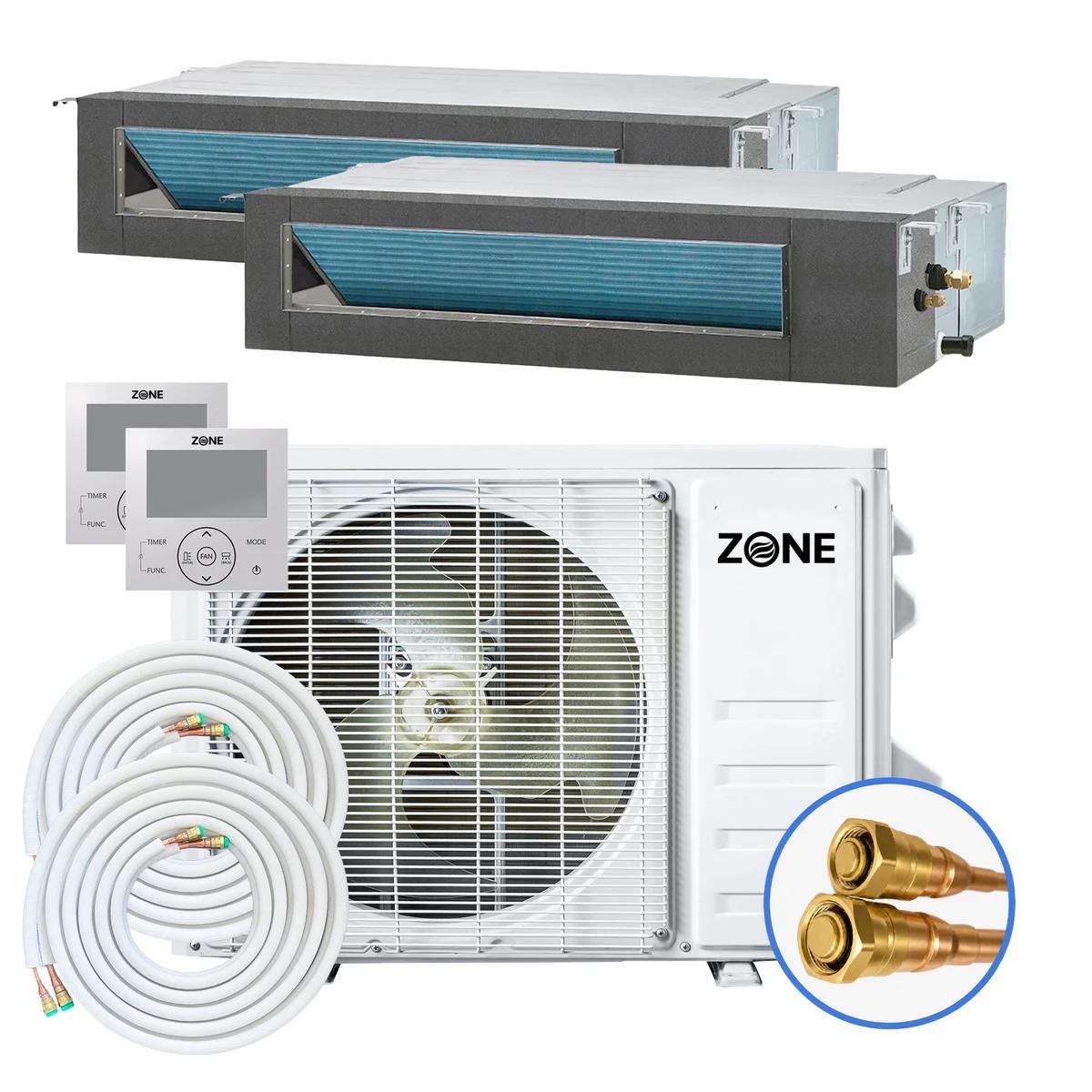
Zone Air® Thin-Air DUAL ZONE 22,000 BTU (11K+11K) 19 SEER2 230V Concealed Mini-Split Heat Pump System - Up to 1,100 Sq Ft
Zone Air® Thin-Air DUAL ZONE 19,000 BTU (9.5K+9.5K) 19 SEER2 230V Concealed Mini-Split Heat Pump System - Up to 950 Sq Ft
Zone Air® Thin-Air DUAL ZONE 20,500 BTU (11K+9.5K) 19 SEER2 230V Concealed Mini-Split Heat Pump System - Up to 1,025 Sq Ft
Not sure what size you need?
Try the Mini Split Sizing Calculator →Want the full range — every BTU size, form factor, and zone count?
Browse All DIY Mini Splits →What 2 Zone Owners Say
As of 2026, the Zone Air 2 zone mini split range holds an average rating of 4.8 out of 5 across 32 verified customer reviews spanning 11 systems, with owners most often mentioning cooling performance, heating performance, and quiet operation.
I am glad I went with a DIY option. The install was manageable, and the room is finally comfortable.
on the Zone Air 2-zone ceiling cassette mini split →Summer was a lot easier with this installed. The room stayed comfortable even during the hottest part of the day.
on the Zone Air 2-zone mini split system →The setup was simple, and the comfort improvement was immediate. I noticed the room feeling better the same day.
on the Zone Air 2-zone mini split system →This is a nice option for someone who wants to handle the install themselves. The system works well and feels very practical for a homeowner.
on the Zone Air 2-zone ceiling cassette mini split →For a system I could install myself, the performance has been excellent. It feels like a much more expensive setup than I expected.
on the Zone Air 2-zone ceiling cassette mini split →I was a little nervous before getting started, but the process was pretty straightforward. Once it was running, I was surprised at how quickly the room cooled down.
on the Zone Air 2-zone ceiling cassette mini split →Read all 31 written reviews
I put this in a room that was always either too hot or too cold, and it honestly fixed the problem right away. It has been quiet, easy to use, and way better than the window unit I had before.
on the Zone Air 2-zone mini split system →As an HVAC contractor I've installed my fair share of dual-zone systems - and this one is an excellent value. The build quality is rock solid, the installation is pretty DIY-friendly with the pre-charged lines, and customers just love the independent zone control. The 24 SEER2 rating means real energy savings, not just some pie-in-the-sky promise.
on the Zone Air 2-zone mini split system →Installing two units in our open plan office - one for the main work area and one in the conference room. The 360° airflow keeps everyone comfortable no matter where they sit. Having independent control lets us cool down the conference room when the big meetings are happening. Plus the units look super professional.
on the Zone Air 2-zone ceiling cassette mini split →I installed one unit in the master suite (bedroom, bathroom, closet) and another in the main living areas (living room, dining room, kitchen). The only stuff you can see are some small linear vents - and that's it. You'd never even guess there's a mini-split system back there. Each zone stays exactly the right temperature on its own.
on the Zone Air 2-zone concealed ducted mini split →We needed some new heating and cooling for our 1890s Victorian, but we wanted to keep the place looking historic. These units got installed in the attic with little ducts going to these tiny ceiling vents - and the original plaster and trim are completely untouched. It operates super quietly and handles our crazy New England winters like a breeze.
on the Zone Air 2-zone concealed ducted mini split →The system works great, was a bigger project than I anticipated.
on the Zone Air 2-zone mini split system →We use them constantly, no more fighting over the thermostat.
on the Zone Air 2-zone mini split system →I am really happy with how quickly it cools. I can feel the room changing within a short time after turning it on.
on the Zone Air 2-zone mini split system →The heat has been really nice on cold mornings. It warms the space quickly and makes the room much easier to use.
on the Zone Air 2-zone mini split system →The quality has been better than I expected. It feels solid, runs smoothly, and has been reliable.
on the Zone Air 2-zone mini split system →It has been running great since I put it in. Cooling, heating, and everyday use have all been solid.
on the Zone Air 2-zone mini split system →The room feels completely different now. It is more comfortable, more usable, and just feels nicer to spend time in.
on the Zone Air 2-zone mini split system →My office was almost unusable in the afternoon before this. Now I can work in there all day without getting overheated.
on the Zone Air 2-zone mini split system →The heating side has been very useful. It warms the room quickly and makes cold mornings a lot more comfortable.
on the Zone Air 2-zone mini split system →I honestly notice how quiet it is more than anything. It cools the room well without that constant background roar.
on the Zone Air 2-zone mini split system →The temperature in this room used to swing a lot. Now it stays much more consistent and comfortable.
on the Zone Air 2-zone mini split system →The finished look is clean, and the performance has been great. It cools the room quickly without being loud.
on the Zone Air 2-zone mini split system →I had a hard time keeping this room comfortable before. After putting this in, it finally feels like the rest of the house.
on the Zone Air 2-zone mini split system →It has plenty of power without being noisy. The room cools down quickly, but it does not sound like a big appliance running.
on the Zone Air 2-zone mini split system →I waited a bit before writing this because I wanted to see how it would hold up. So far, it has been reliable and definitely worth the money.
on the Zone Air 2-zone mini split system →It has done exactly what I needed it to do. The room is more comfortable, the controls are simple, and I have no complaints so far.
on the Zone Air 2-zone mini split system →My finished attic needed its own comfort solution, and this did the job. It keeps the space usable even when temperatures change outside.
on the Zone Air 2-zone mini split system →My office used to get stuffy by the afternoon, especially with the computer running. Now it stays comfortable all day, and I can actually focus.
on the Zone Air 2-zone concealed ducted mini split →Everything about this has been simple in a good way. It looks clean, cools well, and has been one of those purchases I’m glad I didn’t overthink.
on the Zone Air 2-zone mini split system →We've got one air handler over the dining area and one over the bar. Both zones stay perfectly comfortable thanks to independent control. What I really love is the super quiet operation - guests can have real conversations without the constant hum of the heating or air conditioning. Plus the ceiling mount is way more classy than wall units.
on the Zone Air 2-zone ceiling cassette mini split →2 Zone DIY Mini Split FAQ
The questions two-room buyers ask most.