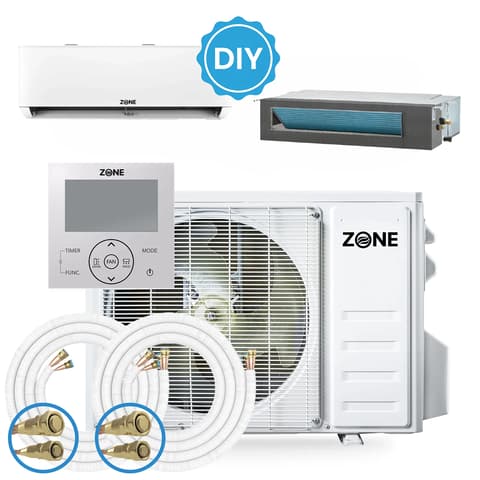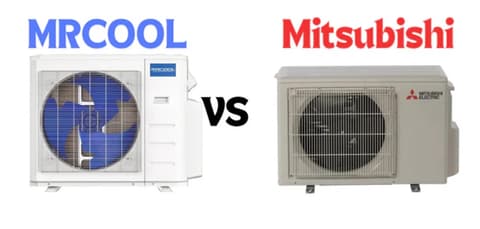
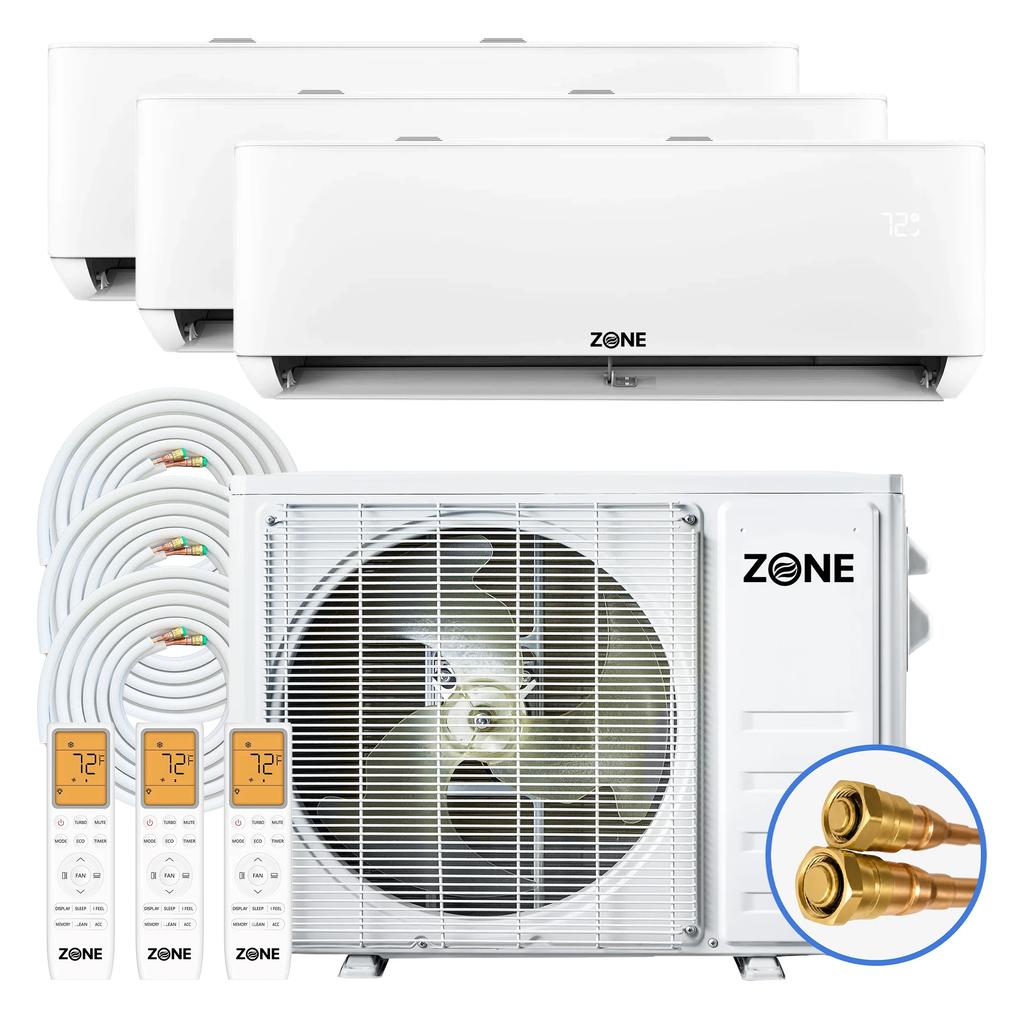
For most DIY homeowners who are shopping for the best 3 zone DIY mini split in 2026, Zone Air is the top choice. It gives you true DIY installation with line sets that are already charged with refrigerant, three styles of indoor units that can all run off one outdoor unit, and line sets that are cut to the length you need for each zone. MRCOOL DIY is a strong runner-up because you can find it at a lot of stores and it has solid performance specs, but Zone Air has more flexibility at the system level and that gives it the edge for 3-zone projects. If you already know you want three wall-mount heads, you can go to the 3 zone DIY mini split systems page to see a list of every Zone Air kit. This guide is the comparison.
Zone Air vs MRCOOL: Which 3-Zone DIY Mini Split Is Best in 2026?
Using pre charged line sets with quick connect fittings, R-454B refrigerant, and inverter compressors, both Zone Air and MRCOOL DIY mini split systems keep the install simple. Both are rated for heating down to about -13°F (Zone Air, MRCOOL DIY multi-zone). The core difference is that Zone Air offers custom-cut line set lengths from 5 to 75 feet, three indoor unit styles (wall-mount, 4-way ceiling cassette, concealed ducted) that mix on one outdoor unit, and a warranty that stays in force when you install it yourself. MRCOOL's DIY multi-zone line uses wall-mount and OuttaSight cassette heads (plus a central Hybrid Air Handler) and sends out fixed-length line sets.
Zone Air's units get final assembly, testing and inspection in the USA from globally-sourced components. Both brands offer app control with Alexa and Google voice (Zone Air has Wi-Fi built into each indoor unit. For MRCOOL's 5th Gen, you use a plug-in Wi-Fi adapter). Neither install opens the refrigerant circuit, so you don't need a vacuum pump, a gauge set or any refrigerant handling on either brand. Zone Air states that no EPA 608 certification is involved in its install. MRCOOL's text is "no special tools or training are necessary."
How 3-Zone DIY Mini Splits Work
A 3-zone DIY mini split system is one outdoor condenser that is connected to three indoor air handlers. Each indoor air handler has its own thermostat or remote, so three separate rooms can keep their own temperature setpoints. A family can cool a home office to 70°F while keeping a bedroom at 74°F and a living room at 72°F, all from a single outdoor unit.
The outdoor unit runs efficiently with an inverter compressor that adjusts output based on demand from each zone. Pre charged refrigerant line sets and communication cables run from the outdoor condenser through wall sleeves to each indoor unit. Indoor units can include wall-mounted units, ceiling cassettes or concealed ducted options.
Compared to a single-zone or 2-zone mini split, a 3-zone system needs a condenser with three refrigerant ports and enough total BTU capacity to serve all connected air handlers. Every Zone Air 2-zone and 3-zone system uses the same 27,000 BTU outdoor unit (rated cooling 27,000 BTU/h, range 4,500 to 31,000), even when the combined connected indoor capacity reaches 36,000 BTU. This extra size is normal in multi zone mini split design because the inverter compressor hands out output to whichever zones are actively calling for heating or cooling. MRCOOL is sized differently: its 18K multi-zone condenser runs up to 3 zones, and the 27K runs up to 4.
Why Zone Air Is the Top 3-Zone DIY Pick in 2026
For homeowners who want to handle the entire install without a licensed HVAC technician, Zone Air has built its 3-zone DIY mini split systems. The system comes with pre charged line sets and quick connect fittings, so you don't need vacuum pumps, flaring tools or on-site refrigerant charging.
Here is what separates Zone Air from other brands in a 3-zone configuration:
Installation and simplicity. Pre-charged quick-connect refrigerant lines connect each indoor unit to the outdoor condenser. There's no vacuum pump, no flaring and no EPA 608 certification in the install. Of the brands compared here, Zone Air is the only one (as of October 2026) that cuts the pre-charged line set to the exact length you measure, any whole foot from 5 to 75, so you don't have excess tubing and no coil behind the condenser. With a written DIY manual, install guides, an install video library and live technical support 8 AM to 6 PM Mountain time, the system is designed for homeowner installation.
Indoor unit flexibility. You can choose wall-mounted air handler units, the 4-way ceiling cassette (Airframe line), or concealed ducted indoor units (Thin-Air line). As of October 2026, Zone Air is the only DIY mini split that lets you mix wall-mount, ceiling cassette and concealed ducted units on one outdoor unit, so you can run a cassette in a great room, a wall unit in a bedroom, and a concealed ducted unit serving a hallway. Its Thin-Air units are also the only DIY concealed ducted mini split system on the market as of October 2026. MRCOOL does not sell a concealed-duct DIY unit.
Performance and efficiency. Wall-mount 3-zone kits are rated 24 SEER2, 12.0 EER2 and 10.5 HSPF2 (Region IV). Heating is rated down to -13°F and cooling up to 131°F outdoors on every system. The system uses R-454B refrigerant, and this refrigerant has a lower global warming potential than the R-410A it replaced. Flexible BTU combinations let you match different capacities to each room.
Warranty and support. With no registration deadline, Zone Air covers 5 years on parts and 7 years on the compressor, and installing it yourself does not void the coverage. Labor, shipping and refrigerant are not covered, and that is the norm for this category. Returns are accepted for 30 days from delivery on uninstalled units with a 25% restocking fee and an RMA. Once a system is connected or run it is a warranty matter instead. Shipping is free to the 48 contiguous states.
Environmental impact. R-454B refrigerant, inverter operation that runs at partial load most of the time, and a ductless design with no duct leakage all cut electricity use compared with an older ducted central system.
Two honest tradeoffs: Zone Air multi-zone systems come without line sets (you buy one per zone, from $229.99 for a 16 ft set), and the 25% restocking fee on returns is real money on a $3,500 system.
MRCOOL DIY 3-Zone Strengths and Limitations
MRCOOL DIY mini split systems are the most widely stocked DIY brand at big-box retailers. MrCool DIY systems are available at Home Depot and Lowe's, so you can walk into a store, inspect the product and bring it home the same day.
MRCOOL's DIY 5th Generation multi-zone condensers support 2 to 6 zones depending on condenser size. The 18K BTU condenser is able to run up to 3 zones at 23.9 SEER2. The 27K is able to run up to 4 zones at 23 SEER2. MrCool systems use pre-charged lines and need no vacuum pump. Indoor head options on the DIY multi-zone line are wall-mount and the one-way OuttaSight ceiling cassette, plus the DIY Hybrid Air Handler, a central ducted furnace-style unit in 24K and 36K sizes. There is no concealed-duct room unit in MRCOOL's DIY line.
Where MRCOOL falls short for 3-zone buyers: line sets come in fixed lengths (11.5, 16, 25, 35 and 50 ft), so excess copper line is coiled behind the outdoor unit or hidden with a line-hide kit, and runs past 50 ft need a coupler kit that connects two sets. MrCool's DIY 5th Gen warranty is 5 years on parts and 7 years on the compressor with no registration needed. The longer "Care Program" compressor coverage is a paid monthly subscription, separate from the standard warranty. MRCOOL does not put out a manufacturer return policy, so returns depend on the seller.
MRCOOL is the right choice if you prioritize retail availability, if you need four or more zones on one condenser, or if you prefer a brand you already know. For maximum system customization in a 3-zone setup, Zone Air offers more options.
What Is Actually DIY on Each Brand
Installation is where both brands beat the rest of the field. Both systems use pre charged line sets that eliminate the two hardest steps in traditional mini split installation: pulling a vacuum and charging refrigerant. The refrigerant stays sealed inside the line set from the factory until the quick-connect fitting is torqued at each end.
On both brands for a 3-zone system, the electrical side is the same: a 230V hardwired connection at the outdoor unit on a dedicated double-pole circuit. Zone Air's 27K condenser needs a 30A double-pole breaker. MRCOOL's 18K multi-zone lists a 20A max fuse and the 27K a 25A fuse in the catalog. For its 115V single-zone units only, Zone Air has a plug-in cord kit, so don't plan on it for a 3-zone install. If you don't already have the circuit, that is the one part of the job most people hand to an electrician.
For context, Pioneer's Quantum Ultra 3-zone ships with a pre-flared copper line set, so that means flare connections and a vacuum pump at install, and Senville states that DIY installation will void your warranty. Because their quick-connect, pre charged systems keep the refrigerant sealed from factory to final connection, Zone Air and MRCOOL both sit on the opposite end of that spectrum.
Tasks that stay DIY-friendly on both platforms:
- Mounting multiple indoor air handlers on walls or ceilings
- You are drilling wall sleeves for line set runs
- Placing and leveling the outdoor condenser
- You are connecting quick connect fittings and communication cables
- You are running a leak check per the manual
Tasks where a pro may still be needed: you might need to run a new 240V circuit to the panel, you might need to do structural drilling through masonry or fire-rated walls. You might need to pull local code permits for electrical work. Zone Air's FAQ puts a first-time single-zone wall install at 4 to 6 hours for two people, a cassette at 4 to 6 hours in drywall, and a concealed duct unit at 6 to 8 hours, so budget a full weekend for three zones.
Line Sets and Layout Flexibility
Line sets are the pre charged refrigerant lines that connect each indoor unit to the outdoor condenser. On a 3-zone layout, you are running three separate copper line pairs plus communication cables, often through different walls and floors. Layout complexity is higher than any single-zone install.
Selling pre-charged line sets in standard 16, 25, 33, 50 and 75 ft lengths, Zone Air will also cut one to any whole foot from 5 to 75 for a $50 custom-cut fee on top of the next standard length. If Zone 1 needs 15 feet, Zone 2 needs 35 feet, and Zone 3 needs 50 feet, Zone Air is able to send three different lengths. Each set is one continuous factory-sealed run, so a 75 ft run has no field joint. Both systems feature factory pre-charged line sets, but Zone Air's length customization is a practical advantage for complex floor plans.
MRCOOL's line sets come in fixed lengths of 11.5, 16, 25, 35 and 50 ft. Any excess refrigerant line is coiled behind the outdoor unit or concealed with accessories, and a run longer than 50 ft uses a line set coupler to join two sets, up to 75 ft per indoor unit. On a 3-zone system where runs vary by 20+ feet between zones, this creates more coil management and can add visual clutter.
Proper line set routing also affects performance. Tight bends reduce refrigerant flow. Both systems protect the pre-charge during routing, but maintaining the manufacturer's minimum bend radius and supporting lines every 3 to 4 feet is a basic hand tools skill that every DIY installer should master.
Indoor Unit Styles Include Wall-Mount, Ceiling Cassette and Concealed Ducted
On one outdoor condenser, Zone Air's 3-zone DIY systems support all three major indoor unit styles. MRCOOL's 3-zone configurations are available with wall-mount and OuttaSight cassette heads, and these also mix on one condenser. The Hybrid Air Handler can share a multi-zone condenser with them.
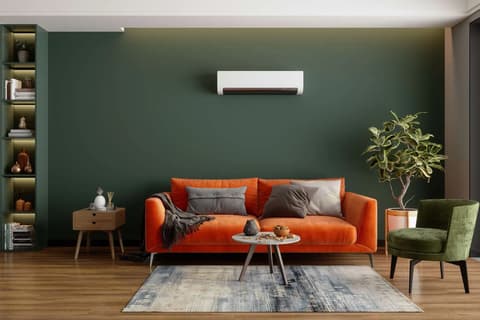
Wall-mounted air handler. This is the easiest to install: mount a bracket, drill a 3-inch wall sleeve, connect the line set. It works well for bedrooms, offices and small living rooms. Common BTU sizes for 3-zone mixes: 9K, 12K or 18K per head. Both Zone Air and MRCOOL offer wall mounts.
4-way ceiling cassette. Sending air in four directions from a 22-1/2 inch square chassis, Zone Air's Airframe cassette is effective for open-plan living rooms, kitchens or commercial spaces. MRCOOL's OuttaSight is a 57-inch single-slot cassette that blows one way, built to fit between 16-inch ceiling joists. Installation needs access above the ceiling, cutting a ceiling opening and running a condensate drain. DIY difficulty is moderate. You should budget extra time for ceiling work.
Concealed ducted indoor units. Hiding above a ceiling or in a closet, Zone Air's Thin-Air concealed ducted units distribute conditioned air through short duct runs. The unit is 7-7/8 inches tall, takes a rear or bottom return, has adjustable static pressure, a built-in condensate pump and can feed two or three rooms from one unit. This creates a "semi-ducted" zone where no visible equipment hangs on the wall. You get quieter operation and cleaner aesthetics, but installation complexity can vary based on indoor unit configurations and layout.
A practical 3-zone Zone Air configuration for a 1,500 sq ft home: a 12K ceiling cassette in the great room, a 12K wall-mounted air handler in the primary bedroom, and an 11K concealed ducted unit serving a hallway and guest room. (Cassettes come in 9.5K and 12K. Concealed units in 9.5K and 11K. Wall units in 9K, 12K and 18K.) This combination covers individual rooms with distinct comfort needs from one outdoor condenser, and you can price it in the build-your-own bundle tool.
Performance and Efficiency (SEER2, HSPF2 and Real-World Energy Savings)
Efficiency ratings are measured in SEER2, EER2 and HSPF2 under the DOE test procedure that took effect in 2023. SEER2 testing uses higher external static pressure than the old SEER test, so the numbers sit closer to real installed conditions. HSPF2 measures heating seasonal efficiency.
Zone Air's 3-zone wall-mount kits are rated 24 SEER2. MRCOOL's 18K multi-zone condenser rates 23.9 SEER2 and its 27K rates 23. That makes Zone Air the most efficient 3-zone option at 230V of the pre-charged quick-connect DIY brands compared here. For reference, Pioneer's Quantum Ultra 3-zone also lists 24 SEER2, but it comes with flared line sets that need a vacuum pump at install. Zone Air's concealed ducted 3-zone kits are rated 22 SEER2, a little below the wall kits. That is normal for ducted heads.
Both brands use R-454B, and this refrigerant carries a lower global warming potential than the R-410A it replaces.
Real-world savings depend on what you are replacing, your climate zone, insulation quality and usage patterns. See how much money a mini split can save for the math. Both brands use variable-speed inverter compressors that change output across multiple zones, reducing short-cycling and maintaining tighter temperature control. Savings also depend on correct system sizing, airtight line set penetrations and proper maintenance of filters and coils.
Cold-Climate Performance and 4-Season Comfort
Cold-climate heating performance matters for you if you are a DIY homeowner in northern states or high-elevation regions and you want ductless mini splits as primary or backup heat. Both Zone Air and MRCOOL's standard DIY 5th Gen rate their 3-zone systems for heating down to about -13°F. That covers most of the contiguous US. That is the same floor on both, so neither brand wins here. For the record, MRCOOL's budget Easy Pro single-zone line is rated to 5°F, and its largest 55K multi-zone condenser is rated to -22°F.
Multi-zone operation in winter differs from summer. Most of you will prioritize the main living zone and set bedrooms to lower temps overnight. As outdoor temperatures fall toward the rated floor, inverter compressors lose capacity, meaning heating capacity drops as it gets colder. Planning for this is essential.
In cold climates where temps regularly drop below -15°F, a backup heat source (electric baseboards, gas furnace or pellet stove) is a practical supplement even with a cold-climate mini split system.
On the hot end, Zone Air's systems are rated to cool in outdoor temperatures up to 131°F. MRCOOL lists 122°F. That only matters in desert garages and sunrooms, but it is one spec line where Zone Air is ahead outright.
Warranty, Support and DIY Homeowner Protections
Warranty protection matters more on a multi zone mini split than a single-zone system. Three indoor units, three line sets and one condenser create more potential failure points over 10 to 15 years.
Neither brand makes you register to keep the standard warranty. Zone Air covers 5 years on parts and 7 years on the compressor for the original buyer, with no registration deadline and a homeowner installation does not void it. MrCool's DIY 5th Gen carries a 5-year parts and 7-year compressor warranty with no registration needed. The extended "Care Program" compressor replacement is a paid monthly subscription on top of that. Both leave out labor, refrigerant and freight. Note that MRCOOL's DIY Select line carries only 1 year on parts and 2 on the compressor, so check which line you are buying.
How do other brands compare?
- Pioneer gives 1 year on parts if you don't register, or 5 years on parts and compressor if you register within one week of installation
- Senville offers 5 years on parts and 10 on the compressor, but states that DIY installation will void the coverage
- Daikin ductless covers all parts for 12 years when registered within 60 days of install, 5 years if not
- Mitsubishi starts at 5 years parts and 7 years compressor with a licensed-contractor install, 10 years with registration within 90 days, and 12 years only through a Diamond Contractor
Daikin and Mitsubishi offer longer coverage, but it comes through contractor installation. That adds the labor cost a DIY system avoids.
Best practices to protect full warranty coverage on any DIY mini split: follow the manufacturer's manual step by step, document the installation with photos that have timestamps, keep all receipts and comply with local code requirements for electrical work. With a written manual, install guides, video library and live phone support from the people who sell it, Zone Air's DIY-oriented support approach makes it easier for first-time installers.
Total Cost of a 3-Zone DIY System
As of October 2026, a Zone Air 3-zone wall-mount kit (12K+12K+12K) is $3,509.99, and the 9K+9K+9K, 9K+9K+12K and 9K+12K+12K wall kits are the same price. A 9K+9K+18K wall kit is $4,009.99. The 3-zone ceiling cassette kits are $4,909.99 and the 3-zone concealed ducted kits are $4,809.99. Add three pre-charged line sets, and these start at $229.99 each for a 16 ft set on a 9K or 12K head. Shipping to the lower 48 is free.
A contractor-installed 3-zone system costs more because you are paying for labor on three indoor units plus the refrigerant work. The mini split install cost guide breaks down what pros charge. Pre charged systems like Zone Air and MRCOOL eliminate the cost of renting or buying a vacuum pump and manifold gauges, and of hiring a licensed HVAC technician to handle refrigerant.
Tools and permits add to the total cost of DIY mini splits. Budget for a drill with a 3-inch hole saw, a level, a stud finder, a torque wrench, basic hand tools and possibly a dedicated 230V circuit if one doesn't exist. Electrical permit fees vary by municipality.
With custom-cut line set lengths, Zone Air means you pay for the copper you actually run and you skip the coil management. Fixed-length line sets from MRCOOL may need extra line-hide kits and brackets to manage excess tubing in some layouts.
Choosing BTU Sizes and Room Layout
Sizing each zone correctly is the foundation of comfort and energy efficiency. Match each indoor unit's BTU rating to room square footage, insulation quality, ceiling height and sun exposure rather than picking equal sizes across all three zones.
With flexible BTU combinations, Zone Air lets you pair a 9K head in a 250 sq ft bedroom, a 12K head in a 400 sq ft office, and an 18K head in a 600 sq ft living room. This flexibility keeps you from oversizing smaller rooms (which causes short-cycling and humidity problems) and undersizing large spaces.
Before buying, use the mini split sizing calculator or a simplified Manual J worksheet. Oversizing the outdoor condenser wastes money. Undersizing a key zone leaves one room uncomfortable.
Three example 3-zone layouts:
A ceiling cassette or concealed ducted zone usually serves the largest or most central space, while wall-mounted units handle medium or smaller rooms at lower equipment cost. One more planning point: a Zone Air 27K multi-zone condenser can be bought with two heads and have a third added later on the spare port with a pre-charged line set, per the FAQ. A single-zone condenser cannot be converted, so start with the multi-zone outdoor unit if you expect to add a room.
Best Uses for a 3-Zone DIY Mini Split
A 3-zone DIY mini split works well in homes where running new ductwork is too hard or costs too much:
- Finished basements that need year-round climate control
- Second floors in older homes without existing ductwork
- Garage conversions and ADUs (accessory dwelling units)
- Sunrooms, additions or bonus rooms added after original construction
- Homes replacing aging window units or portable AC
A Zone Air 3-zone system provides heating and cooling for three separate rooms with independent setpoints, so an entire home under ~1,500 sq ft can often run on one system in moderate climates, reducing or eliminating the need for central air conditioning.
When is a 3-zone system better than three separate single-zone units? When outdoor space is limited (one outdoor unit instead of three), when electrical panel capacity is tight (one 30A breaker vs three circuits), and when exterior aesthetics matter (a single outdoor condenser instead of three). You get control over unit placement, line routes and project timing with DIY installation, and that is valuable for renovations you do in stages.
MRCOOL vs Zone Air 3-Zone Comparison
This comparison focuses on 3-zone DIY mini split systems only, not single-zone or central ducted products.
MRCOOL wins on retail presence and on zone count if you need more than three. Zone Air wins on system customization, custom line sets, indoor unit variety and efficiency at 230V.
Homeowners who want the simplest path to a highly tailored, mixed-head 3-zone setup with concealed ducted indoor units or a ceiling cassette will usually be better served by Zone Air. Both brands share the core DIY advantage over traditional flare-type mini split systems and professionally installed systems: pre-charged quick-connect technology that avoids vacuum pumps and on-site refrigerant charging.
Step-by-Step Overview of a 3-Zone DIY Installation
You can find the full walkthrough in how to install a mini split yourself. This overview is framed around Zone Air but applies to MRCOOL DIY as well for most steps.
- Plan zones and BTU sizes. Measure each room's square footage, note insulation and window exposure, and pick indoor unit capacities. Measure each line set run and order custom-cut lengths to match.
- Mount the indoor air handlers. Secure mounting brackets to wall studs (wall units) or ceiling joists (cassettes/ducted units). Use a level. Drill a 3-inch wall sleeve for the refrigerant line, drain hose and communication cable.
- Place and level the outdoor condenser. It is set on a concrete pad or mounting brackets off the ground, with the clearances the manual calls for on the sides and in front.
- Route and support line sets. You run each pre-charged line set from the outdoor condenser to its corresponding indoor unit. Lines are supported every 3 to 4 feet. Minimum bend radius is maintained to avoid kinks.
- Connect quick-connect fittings. Follow manufacturer torque specs. No flaring tools needed. Once every fitting is torqued, you open the service valves per the manual. The refrigerant was sealed in at the factory.
- Wire power. Connect 230V power to the outdoor unit on a dedicated double-pole breaker, using the wire gauge the manual specifies (usually 10 AWG for a 30A circuit). The indoor units are powered from the outdoor unit through the communication cable.
- Leak check and commissioning. Leak detection solution is applied to all connections. Power on the system, run each zone in cooling and heating mode, and verify airflow and temperature at each indoor unit.
Zone Air provides a written DIY manual, install guides, and a video library to walk homeowners through each step for a 3-zone installation.
Frequently Asked Questions About 3-Zone DIY Mini Splits in 2026
Is a 3-zone DIY mini split really DIY, or do I still need a pro? Zone Air and MRCOOL pre charged systems handle the refrigerant side without professional help. The most common reason to call a pro is electrical: running a new 240V dedicated circuit to your panel. If that circuit already exists, you can complete the install with basic hand tools and a torque wrench.
Can a 3-zone mini split heat my entire home in a cold climate? In homes under ~1,500 sq ft with decent insulation, a 27K BTU 3-zone system can serve as primary heat in climates where outdoor temps stay above -13°F most of the winter. Below that, add backup heat.
What's the difference between MRCOOL and Zone Air for ceiling cassette zones? Zone Air's Airframe is a 4-way cassette in a 22-1/2 inch square chassis that distributes air in four directions. MRCOOL's OuttaSight is a 57-inch single-slot cassette that blows one way and fits between 16-inch ceiling joists. A 4-way unit sits in the middle of a room and covers it evenly. A one-way slot works like a ceiling-mounted wall unit and is best along one wall.
Do pre-charged line sets ever need a vacuum pump? No. Both Zone Air and MRCOOL send refrigerant sealed inside the line sets. The quick-connect fitting seals the joint, and the service valves release the charge into the system. Pioneer's standard line sets, by contrast, are flared and need evacuation with a vacuum pump at install.
Are R-454B systems future-proof for new regulations? R-454B is the current replacement for R-410A under the EPA's AIM Act technology transitions rule. Both brands already use it in their current systems.
How long do DIY mini splits usually last? With proper maintenance (cleaning filters monthly, checking drain lines, annual coil cleaning), the industry-standard expectation is 15 to 20 years from the compressor. That is a design-life expectation, not a warranty term.
Do I need to register my warranty? Zone Air has no registration deadline on its 5-year parts / 7-year compressor warranty, and MRCOOL's DIY 5th Gen warranty says "no registration needed" for the same terms. Keep your proof of purchase. Senville's warranty is voided by DIY installation, and Pioneer's drops to 1 year unless you register within one week of install. Keep your receipts regardless.
Where can I verify SEER2 and HSPF2 numbers? The AHRI directory lists certified ratings for matched indoor and outdoor pairs, and the ENERGY STAR product finder lists certified ductless models. Zone Air posts a one-page spec sheet for every system, plus the manual and EnergyGuide label.
When to Choose Zone Air vs MRCOOL for Your 3-Zone System
In 2026, Zone Air is the best DIY mini split for a 3-zone setup when you want maximum flexibility: three indoor unit styles on one outdoor unit, custom-cut line sets, flexible BTU mixes, 24 SEER2 on the 230V wall kits (the highest of the pre-charged quick-connect brands compared here), and a warranty that stays in force when you do the install yourself. Final assembly, testing and inspection in the USA from globally-sourced components, 30-day returns on uninstalled units, and free shipping to the lower 48 round it out.
MRCOOL 3-zone DIY systems make sense when big-box retail availability matters, when you need more than three zones on one condenser, or when you prefer a brand you already know. Both systems are energy efficient, ductless and capable of providing year-round comfort with independent control across multiple zones.
Gather your room dimensions, ceiling heights and climate zone details. Explore Zone Air's 3-zone DIY mini split configurations, compare them against MRCOOL options, and use the sizing calculator before buying. Easy installation starts with the right plan.
Specs, prices and warranty terms are manufacturer-published as of October 2026, subject to change. Verify before you buy. MRCOOL® is a trademark of its owner. Zone Air is not affiliated with or endorsed by MRCOOL.