If you are thinking about getting a DIY mini split for a cold climate, the first question on your mind is probably a simple one: how cold can a DIY mini split heat? Depending on the system you choose, how you install it and how well your home holds heat, the answer can vary. This guide will break down the real numbers, the trade-offs and what you can expect when the temperature starts to drop.
Quick Answer: How Cold Will a DIY Mini Split Actually Heat?
Most DIY ductless mini split heat pumps can provide heat down to about 5°F to 0°F. True cold climate models - like Zone Air cold-climate systems - are built to work down to −13°F, and some high-end professionally installed units go as far as −22°F.
So what is the critical distinction you might miss? A unit's minimum operating temperature is not the same as the temperature where it delivers full heating capacity. A cold climate mini split rated to −13°F will still run at that point, but it won't be putting out the same BTUs it puts out at 47°F or even 5°F. When the outdoor temperature drops, both the capacity and the efficiency go down.
That said, properly sized cold-climate mini splits can serve as the primary heat source for about 90–95% of winter hours in most US cold climates. You'd usually want backup heat only during rare deep cold spells that drop below the system's rated floor.
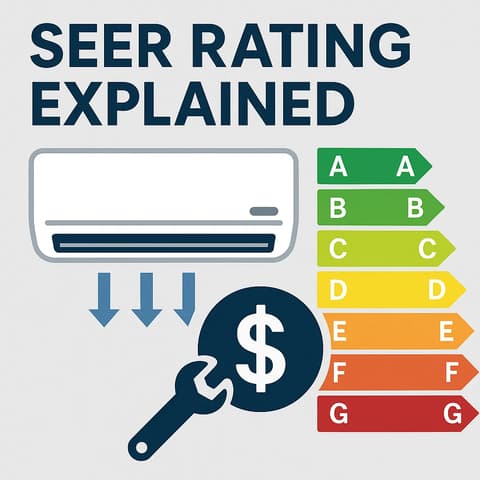
Zone Air DIY systems are specifically designed as cold-climate heat pumps, with rated heating operation to −13°F, up to 24 SEER2 efficiency on the 230V models (the 115V units are 23 SEER2), and true quick-connect installation - making them one of the best DIY options available in 2026.
How a DIY Ductless Mini Split Heat Pump Works in Cold Weather
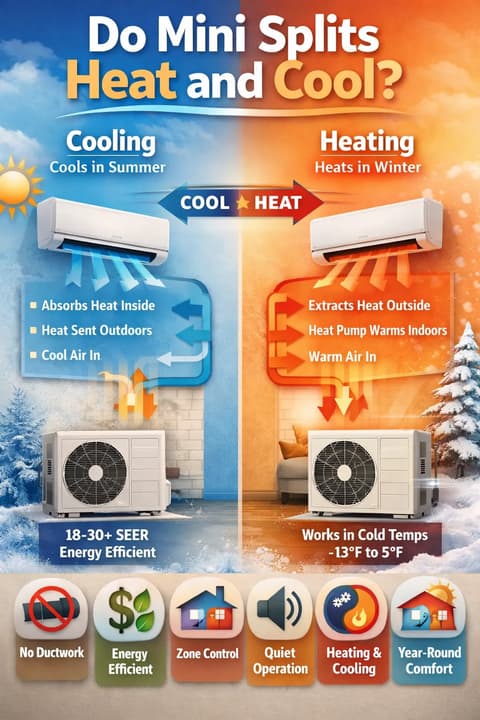
DIY mini splits are heat pumps, not electric space heaters. They don't generate heat by burning fuel or running current through a resistance element. Understanding the basics explains why they have low ambient limits in the first place.
Every system has two main components: one outdoor unit containing the compressor and condenser, and one or more indoor units (wall-mounted heads, ceiling cassettes or concealed duct units) that distribute warm air into the room. These are connected by pre-charged refrigerant lines. In DIY systems, the line set comes factory-sealed so you never have to handle refrigerant yourself.
The refrigerant cycle works like this: the outdoor unit pulls heat energy from cold outdoor air, compresses the refrigerant to raise its temperature, and sends it through the line set to the indoor coil, where a fan pushes warm air flow into your space. Even in extreme cold, there is still usable heat energy in the air well below 0°F - the challenge is getting it out efficiently.
Modern systems have inverter-driven compressors that can change speed rather than cycling on and off. This lets the compressor ramp up when demand is high (cold nights) and ease back in warmer weather, improving comfort and efficiency across the heating season. Many current cold-climate units also use R-454B, which is the lower-GWP refrigerant that has replaced R-410A in new equipment.
Understanding "Low Ambient" Heating Ratings
Low ambient limits are the coldest outdoor temperature where a heat pump can still heat your space effectively. That's different from cooling mode low ambient ratings, which tell you how cold it can be outside when you're running the air conditioning.
On a spec sheet you'll usually see three numbers that have to do with heating:
- Rated heating capacity at 47°F - this is the number most manufacturers show. It has capacity that is close to full and a COP that is high.
- Rated capacity at 17°F - this is a middle point that shows how the performance holds up when the weather is pretty cold.
- Minimum heating operating temperature - this is the coldest outdoor temperature at which the unit will still run in heating mode, though the output is reduced.
DIY mini split heat pumps have minimum operating temperatures that vary, and it depends on what design tier they are. Standard DIY mini splits are generally rated to operate down to about 5°F, though their capacity drops a lot before they reach that floor. Enhanced low-ambient units push to about 0°F or −5°F because they have a better coil design and better defrost control. True cold climate models - including Zone Air's line - still deliver useful heat at 5°F and continue operating down to −13°F (outdoor heating range −13°F to 86°F on every current Zone Air system), putting them among the best cold-weather DIY options in 2026.
These ratings assume proper installation: the filters are clean, the line set length is correct, there is enough air flow around both the indoor unit and the outdoor unit, and the outdoor unit is free of snow and ice blockage. If you move away from those conditions, the real-world performance will fall short of the specs that were published.
Standard vs. Cold-Climate DIY Mini Splits
Not all mini split systems are equal below freezing. Standard models and cold climate models behave very differently when the thermometer drops, and choosing wrong is a big deal if you live where winters are serious.
Standard DIY heat pumps are optimized for cooling mode and mild winter heating. They lose efficiency below 30°F, and standard DIY mini split models typically operate down to somewhere between 5°F and 25°F, depending on the model, with heavily reduced capacity. By 20°F, a standard unit might deliver only 50–60% of its nameplate BTUs - often not enough heat to keep a room comfortable.
Cold climate mini splits are a different animal. They've got inverter compressors designed for wide speed ranges, larger outdoor coils for better heat extraction, advanced defrost strategies and base pan heaters that can prevent freezing issues at the base of the outdoor unit. Cold-climate mini-splits operate effectively down to −13°F to −22°F depending on the brand and model.
Some concrete numbers. MRCOOL's standard DIY 5th Gen is rated to run in heat mode at outdoor temperatures as low as −13°F (manual section 2.7), the same floor as Zone Air, and MRCOOL's higher-tier DIY models are rated lower. MRCOOL's catalog does not publish a low-temperature capacity figure for the 5th Gen, so treat any retention percentage you see for it as a third-party estimate. MiniSplitsHQ's figures put the Senville Aura 12,000 BTU at roughly 96% of capacity at 5°F. It specs to −22°F. Cold-climate mini-splits do cost more than standard models, but for homeowners in northern New England, the Upper Midwest or interior mountain regions, that premium pays for itself in comfort and reduced backup heating costs.
If you live in a cold climate, look for systems specifically labeled "cold climate" with published heating performance data at 5°F and below. Mitsubishi Hyper Heat on the pro-install side and Zone Air on the DIY side both publish it.
What Happens to Capacity and COP as It Gets Colder
Two numbers are far more important in cold weather than in the cooling season: the heating capacity (BTU/h) and the Coefficient of Performance (COP). When outdoor temperatures drop, a mini-split's heating capacity drops a lot. The COP drops along with it.
Here's why. When outdoor air gets colder, there's less heat energy in the air for the refrigerant cycle to get. When humidity is present, frost can build up on the outdoor coil, and this forces the system into defrost cycles that temporarily stop useful heat delivery. These defrost periods are using energy and reducing the net output. The colder it gets, the more often they occur.
Approximate real-world numbers are showing the decline:
- At 47°F: 100% of the rated capacity, with a COP of 3–4
- At 17°F: roughly 70–90% capacity, COP of 2–3
- At 5°F: roughly 50–80% capacity, COP around 1.5–2.5
- At −13°F: roughly 50–60% capacity, COP closer to 1.5–2
Field studies in the Northeast have confirmed these general trends, showing COPs of 3–4 at around 45°F and about 2–2.5 near 0–10°F. Zone Air publishes a COP of 2.1 at 5°F (3.81 at 47°F) for its 9,000 and 12,000 BTU wall units - still more than twice as efficient as electric resistance heating at the same unit of electricity consumed. Mini-splits may shut down or struggle to maintain adequate output below their rated minimum temperature, so homeowners in very cold climates should still plan for supplemental heat during extended subzero periods.
How Low Ambient Limits Affect Homes in Cold Climates
Lab ratings are one thing, but what happens in a real home in Minneapolis, Burlington or an interior mountain valley is another. Every climate zone has a design temperature - the coldest temperature expected during the vast majority of winter hours. Minneapolis sits around −10°F, Boston around 7–12°F, and Portland, ME around 0°F. If your cold climate mini split's operating floor is −13°F, it covers the design temperature in most populated US regions. The number of hours below −13°F in even the coldest US cities is very small. That means a cold-climate system handles the overwhelming share of the seasonal heating load. At 20–30°F, the indoor unit delivers plenty of warm air and the system cycles normally. Near 0°F, discharge air from the indoor coil remains hot, but the outdoor unit runs nearly continuously and defrost cycles become more frequent. Below −10°F, homeowners may notice longer runtimes, lower discharge temperatures and higher electricity draw. In poorly insulated houses or drafty older buildings - especially those with leaky exterior walls and single-pane windows - even the best cold-climate heat pump may struggle to keep up near its low ambient limit, regardless of maximum capacity. Building envelope improvements remain one of the most cost-effective developments in green building for cold-climate homeowners, and states like New York support this through programs like NYSERDA's Clean Heat program, which offers heat pump incentives that can offset upgrade costs.
DIY vs. Pro-Install Cold-Climate Systems: What's Different?
Traditional mini split installation requires vacuum pumps, refrigerant gauges and EPA Section-608 certification. DIY mini split systems like Zone Air eliminate all of that with factory pre-charged, quick-connect line sets. You torque the quick-connect fittings with a wrench, the refrigerant is already sealed inside and never opens to atmosphere. You're done. A single-zone wall-mount installation typically takes two people most of a full day the first time.
The core low-ambient behaviors - capacity curves, defrost cycles, COP decline - are fundamentally the same between DIY and pro units when they use comparable compressor and coil technology. The same unit installed by a homeowner performs identically to one installed by a technician, assuming correct sizing and placement.
What matters for hitting published low ambient limits is getting the details right: the refrigerant line set passes through a roughly 3-inch hole in the wall and must stay within the manufacturer's length limits. Of the brands compared here, Zone Air is the only one that cuts your pre-charged line set to the exact length you measure, any whole foot from 5 to 75 (as of October 2026), and each length is one continuous factory-sealed run with no field coupler (MRCOOL ships fixed 11.5, 16, 25, 35 and 50 ft sets and joins two with a coupler kit past 50 ft). That gives real flexibility to site the outdoor unit above snow level or away from problem areas. Most mini split systems require a dedicated 240V electrical circuit, but Zone Air's 115V models (9,000 and 12,000 BTU) run on a dedicated 15A circuit, and the optional cord kit makes them a plug-in install into a dedicated GFCI outlet where local code allows (MRCOOL's 115V units are hardwired). That simplifies electrical work considerably - especially in older homes where adding 230V service might be cost prohibitive.
DIY cold-climate systems with strong warranties give homeowners confidence comparable to pro-only brands. Zone Air backs every system with a 5-year parts and 7-year compressor warranty with no registration deadline, and installing it yourself does not void it.
Sizing a DIY Mini Split for Cold Climates
Sizing for cold weather is different from sizing for cooling. Your heating load is often larger than your cooling load, especially in older buildings or ones that aren't well insulated. Manufacturers recommend that you check the unit's heating output at low temperatures against how much heat the building needs at the design temperature, so you'll need to get a proper load calculation done.
A simple approach:
- You'll start with room or house square footage.
- You'll need to adjust for insulation quality, air sealing, window area and your local design temperature.
- You can use a heat load calculator from a reputable site online, or look up building research and reports about your climate zone.
- Match the result to the capacity the unit is rated for at 5°F (not at 47°F).
Going a little larger for heating-dominant climates gets you enough heat on the coldest days, but if you go too far it'll short cycle in warmer weather and kill your efficiency.
Single-zone systems have one outdoor unit and one indoor unit, so they're simpler and cheaper to install. A single-zone mini split that a pro installs usually costs $3,000–$5,000, and it's a good fit for a bonus room, a single space or a specific heating problem. When you go DIY you take the labor out of that number: Zone Air's 12,000 BTU 230V wall system is $2,199.99 as of October 2026 and it comes with a 16 ft pre-charged line set in the box. Multi-zone systems connect one outdoor unit to 2–5 indoor units, and each indoor unit runs on its own so you can control the temperature in different rooms. Multi-zone systems range from $6,000–$12,000+ depending on how complex the job is, and you've got to size the outdoor unit to meet the combined heating load.
Here's how this plays out: a tight, well-insulated 400 sq ft room in a moderate cold climate may do fine with a 9,000 BTU Zone Air unit (it's rated for up to 450 sq ft). That same room in a −10°F design climate or with poor insulation might need 12,000–15,000 BTU to keep you comfortable when temperatures stay near the bottom of what the system can handle.
Where to Place the Indoor and Outdoor Units for Cold-Weather Performance
Where you put your equipment can make or break cold weather performance - sometimes more than the specs themselves.
Indoor unit best practices:
- It's best to mount it high on an interior wall, away from the exterior walls where the cold comes in.
- There should be free air flow across the room. Don't block return air paths with furniture.
- Don't place it directly above a thermostat or a seating area where a direct draft could make people uncomfortable.
- In multi-zone setups with more than one indoor unit, you'll want to put the most critical rooms first. You should think about bedrooms and the main living spaces, so you stay comfortable even on the coldest days.
Outdoor unit best practices:
- Raise it up above the depth that snow usually gets to, so it doesn't get buried and air can still flow through it.
- Don't put it under roof edges where snow or ice can slide off and fall on the unit.
- The outdoor unit has to allow enough airflow and access for service on all sides.
- Make sure the best spot has good drainage so defrost water doesn't pool and freeze again. Enhanced base pan heaters do help, but where you put the unit matters more.
Poorly placed outdoor units, like ones in snow bowls, under roof dumps or blocked by shrubs, may hit their low ambient limit earlier in practice, long before the outdoor temperature actually reaches the published minimum. A unit that specs to −13°F but sits in a wind tunnel or snow trap may perform like one that is rated to 0°F.
Backup Heat and Hybrid Setups for Colder Climates
Even the best cold climate heat pump can benefit from backup heat when temperatures drop below its rated floor or when power costs stay high for a long time. You may need backup heating sources for mini-splits when it gets really cold, but that doesn't mean the heat pump isn't doing the heavy lifting.
Common backup strategies include:
- Electric resistance baseboards are easy to install, but they cost a lot for each BTU you get
- Gas or propane furnaces, especially if you already have ducts in the house
- High-efficiency wood or pellet stoves
- Radiant floor heating as a supplement in certain zones that need extra help
A hybrid system works like this in practice: the mini split stays your main heat source down to 0°F or −5°F. On the handful of nights that are colder than that, backup comes on, either by hand or through a smart thermostat that switches based on the outdoor temp. Most homeowners will find they need backup for fewer than 50–100 hours each winter.
Even when backup does run, the mini split still puts out more heat for each watt you use than resistance heat. Mini-splits use less electricity than electric resistance heating to make the same amount of heat at every temperature above where they shut off, so the same unit saves you money across almost the whole heating season. The federal 25C tax credit ended for equipment placed in service after December 31, 2025, so you'll want to look at state and utility rebates instead. Zone Air's rebate tool can show you what your zip code can get.
Zone Air Is One of the Best Cold-Climate DIY Mini Splits in 2026
Zone Air stands out because it combines extreme cold-weather heating performance with high efficiency and installation that is genuinely DIY-friendly.
Cold-climate performance: every current Zone Air cold climate mini split heat pump is rated to keep on heating down to −13°F. That covers the design temperatures of many US cold-climate regions. This is the same lower limit as the standard DIY 5th Gen from MRCOOL, and the higher-tier DIY models from MRCOOL are rated to go lower.
At 5°F, the 9K and 12K wall units publish a COP of 2.1. This is well above the threshold where electric heat pumps stay cost-effective.
Efficiency: the 230V single-zone and wall multi-zone systems run up to 24 SEER2, so Zone Air is the highest-efficiency pre-charged quick-connect DIY system of the brands compared here (MRCOOL's best single-zone is 23.6 SEER2). The 115V units are 23 SEER2, and the Region IV HSPF2 runs from 8.4 to 10.5 depending on the style of the indoor unit. You can see the full table on the spec sheets page. This will keep operating costs low even when the system runs as the primary heating system through long winters.
True DIY installation: the line sets come from the factory pre-charged with quick-connect fittings, so you don't need vacuum pumps, refrigerant gauges or HVAC certification. You can get custom line set lengths up to 75 feet, so the outdoor unit can go above snow lines, away from roof water or wherever the best location happens to be.
115V plug-in options: the 9,000 and 12,000 BTU models run on a dedicated 15A 115V circuit, so you don't have to run a new 230V line. If you get the optional cord kit, they plug into a dedicated GFCI outlet where local code lets you do that (never an extension cord). For you, this alone can be what makes it a weekend project instead of a big multi-trade job.
Warranty: every system has a 5-year parts warranty and a 7-year compressor warranty, even when you install it yourself. There is no voided coverage for going DIY, and no registration deadline.
Multi-zone flexibility: Zone Air is the only DIY mini split that lets you mix wall-mount, ceiling cassette and concealed ducted units on one outdoor unit (as of October 2026). That means the bedrooms, the main living space and a finished basement can each get the indoor unit that fits the room. On the multi-zone condenser, the cassette and concealed heads rate 19–21 SEER2, which is lower than the wall heads.
Buying direct: Zone Air sells direct with free shipping to the lower 48 and 30-day returns on uninstalled units (RMA required), plus live technical support 8 AM–6 PM MT from the people who built it.
Zone Air is a strong choice for the best cold-climate DIY ductless mini split in 2026 if you want low ambient heating capability without giving up the simplicity of self-installation.
Expectations, Maintenance and Learning Communities
Even the best heat pumps have limits. If you live in a cold climate, you should set realistic expectations: indoor temperature may lag during deep cold, defrost cycles will temporarily reduce output, and electricity use rises as outdoor temperature drops. None of this means the system is broken - it's just physics.
Maintenance that directly affects cold-weather performance:
- Clean the indoor unit filters every 4–6 weeks while you're heating, because that keeps the air flow up and the indoor coil working efficiently.
- Make sure snow, ice and debris are kept off of the outdoor coil.
- It's a good idea to check the insulation on the lines and the condensate drainage before each winter. In very cold climates, if the condensate line freezes up it can throw an error code and shut the system down.
Document your first winter: track outdoor temperature, indoor comfort, energy usage and any times you run backup. This data lets you fine-tune setpoints and backup strategies for subsequent years. Most systems perform better once you understand your home's specific behavior at different temperature ranges.
If you have mini split questions or want to dig deeper into capacity data, the building science community is a good place to look. Organizations like NEEP publish cold-climate heat pump specifications, and building science forums share real-world performance data, building research and reports and new developments in green building that can help you get more from your system.
As cold-climate heat pump technology continues advancing - better compressors, lower-GWP refrigerants, deeper operating floors - DIY-friendly systems like Zone Air will make it increasingly practical for homeowners to rely on electric heat pumps as their primary source of winter comfort. Interest in the broader electrification movement keeps growing, and cold-climate mini splits are at its center.
Specs and warranty terms are manufacturer-published as of October 2026, subject to change; verify before purchase. MRCOOL® is a trademark of its owner; Zone Air is not affiliated with or endorsed by MRCOOL.