Short answer: Yes. In the United States a homeowner can legally install their own ductless mini split system, but only under one of two conditions: you use a DIY-friendly system built around pre-charged line sets, or you hold an EPA Section 608 certification. Here is everything to know — or, if you would rather skip straight to the hardware, the best DIY mini splits to install yourself.
Legal Restrictions and How DIY-Friendly Systems Work
In the U.S., you can install your own mini split air conditioning system as long as you never open the refrigerant circuit. Handling refrigerant without EPA Section 608 certification is illegal, and that is what separates DIY projects from contractor jobs.
DIY mini split installation becomes realistic when you use a system built around pre-charged refrigerant line sets, like the Zone Air DIY mini split kits. These ship factory-sealed with the correct refrigerant charge already inside, so you only connect quick-connect couplings and torque them to spec. No vacuum pump, no gauge set, no refrigerant handling.
Traditional mini split installation without pre-charged lines requires evacuation, brazing, and charging — tasks that demand an EPA 608–certified technician and specialized tools costing $400–$1,800. For the full reason a sealed, pre-charged line skips the vacuum step, see do you need to vacuum a pre-charged mini split.
Done yourself, a DIY install can save $3,000–$5,000 in labor versus a full-service contractor install, which typically runs $3,800–$7,000 per zone. The mini split installation cost breakdown shows where that money goes line by line.
DIY vs Professional Mini Split Installation: How to Decide
Both DIY and professional installation can be valid paths. The right choice depends on your comfort level, the system you buy, and how complex the job is.
Zone Air DIY systems are designed explicitly for homeowner install. Many standard HVAC systems from big-box stores still assume a licensed contractor. If your project spans multiple indoor and outdoor units across floors, or involves unusual structural constraints, hiring a pro is often the safer route — here is how to find a good mini split installer.
EPA 608, Refrigerants, and DIY Mini Split Kits
EPA Section 608 certification is a federal requirement for anyone who maintains, services, or disposes of equipment using refrigerants like R-410A, R-32, or R-454B. Handling refrigerant without certification is illegal, with penalties reaching tens of thousands of dollars per day.
Traditional mini split installation requires vacuum pumps and charging stations. DIY kits — including Zone Air's pre-charged line sets — are factory-sealed and shipped with the correct refrigerant charge. The homeowner connects the indoor and outdoor units via quick-connect fittings without opening the refrigerant circuit. As long as you follow the manufacturer instructions and do not modify the refrigerant lines, you are not "handling" refrigerant under the EPA definition.
If a leak develops later or repairs are needed, an EPA 608–certified technician must handle recovery and recharge, even on DIY units.
Permits, Inspections, and Code Compliance
Local laws may require permits for mini split installation. Cities like Denver and Portland require mechanical permits for new exterior equipment and electrical permits when adding a 240V circuit.
When DIY Mini Split Installation Makes Sense
DIY installs work best for straightforward, single-zone systems with accessible wall space and simple electrical runs. Mini splits can retrofit older homes without ducts, making them ideal for spaces that central air cannot reach.
Ideal scenarios: finished garages, bonus rooms, single bedrooms, home offices, small ADUs, and workshops where one indoor unit and one outdoor unit will suffice. Mini split systems are highly efficient compared with traditional systems, and they run quieter than window units — a smart choice for bedrooms and offices.
Skills, Tools, and Safety Requirements for DIY Installation
Installing a mini split takes a mix of electrical, mechanical, and basic HVAC skills. Here is what you need:
Types of Mini Splits That Are Most DIY-Friendly
Wall-mounted, single-zone ductless mini split systems with pre-charged line sets are the most DIY-friendly option. Choose a mini split with an adequate BTU rating for your room size — the mini split sizing calculator makes that quick.
Systems engineered as true DIY kits — like Zone Air DIY units — let homeowners connect the indoor and outdoor units without specialized HVAC gauges. Some competitors such as MrCool also offer DIY models. Avoid concealed-duct air handlers and ceiling cassettes for a first-time project, due to their structural and drainage complexity.
When You Should Hire a Professional Installer Instead
Some mini split projects are legally or practically better suited to licensed professionals. Hiring a pro makes sense when the job exceeds typical DIY skill levels.
Risks of Improper Mini Split Installation
Improper installation can lead to refrigerant leaks, system malfunctions, and costly mistakes that far exceed what you saved on labor.
Warranty, Insurance, and Resale Considerations
Improper DIY installation can void the manufacturer's warranty on many traditional brands that require proof of licensed installation — and even on systems that otherwise support DIY, a bad install can void coverage.
Zone Air designs its DIY systems and warranty — 7-year compressor and 5-year parts — to support homeowner installation when the instructions are followed. Proper installation protects both your equipment and its long-term efficiency.
Keep your documentation: permits, inspection approvals, the installation manual, and photos of every step. Insurance carriers and home inspectors will question unpermitted work during claims or resale, so this paperwork protects you years down the road.
Step-by-Step Overview of a DIY Mini Split Installation
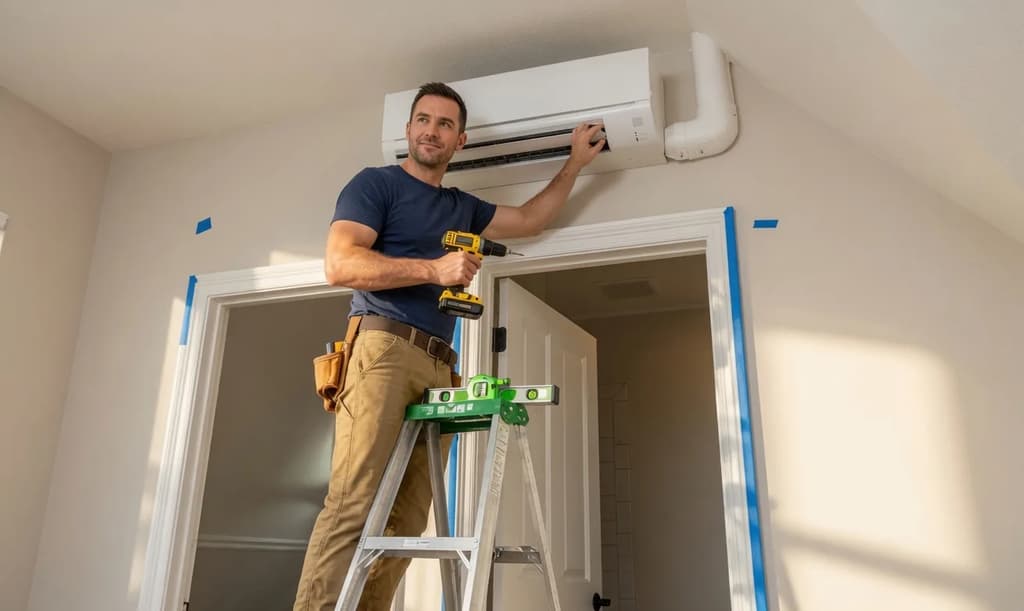
This is a high-level overview for a typical single-zone Zone Air DIY mini split with pre-charged line sets — not a replacement for the official manual. No vacuum pump or refrigerant gauges are needed, but correct tightening of electrical connections and leak checks per the manufacturer are critical. For the full walkthrough, see our DIY mini split installation guide.
Zone Air DIY Mini Split Systems: Designed for Homeowners
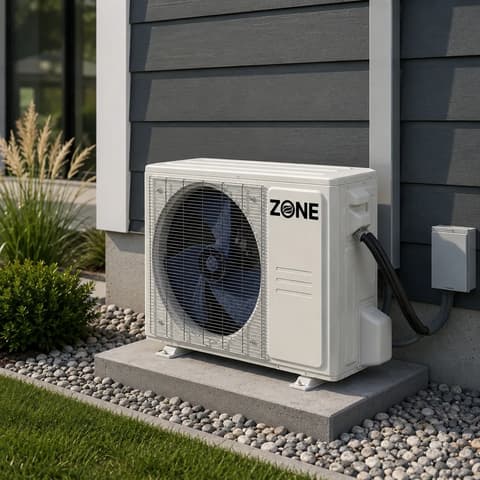
Zone Air is a DIY-oriented HVAC manufacturer selling ductless mini split heat pump systems directly to homeowners. Key features include pre-charged line sets that avoid EPA 608 handling, high SEER2 ratings (up to 24 SEER2), quiet operation, WiFi app control, and cold-climate performance down to -13°F.
Zone Air systems are built for DIY installs, with detailed manuals, labeled wiring, and support resources aimed at non-professionals. Installing it yourself can save $3,000–$5,000 versus a full contractor install, and each system is backed by a 7-year compressor / 5-year parts warranty and a 30-day return policy.
Choosing the Right Zone Air DIY Kit for Your Home
When you are ready, you can explore Zone Air's single-zone DIY lineup to match a system to your space.
Frequently Asked Questions
Can I install a mini split myself without an HVAC license?
Yes, if you use a pre-charged system like Zone Air that does not require you to open the refrigerant circuit. Otherwise, you need EPA 608 certification — handling refrigerant without it is illegal.
Do I still need an electrician for a DIY mini split?
Many homeowners handle the mechanical side but hire a licensed electrician for the panel work, breaker installation, and code compliance on the dedicated circuit. Zone Air 9K and 12K 115V models plug into a standard outlet and often skip this step entirely.
Will a DIY mini split installation affect my warranty?
With most traditional brands, yes — improper installation can void the manufacturer's warranty. Zone Air structures its warranty to support homeowner installs when you follow the instructions and local codes.
How long does a DIY mini split installation take?
A single-zone system typically takes one long weekend for a first-time installer, including the electrical work if you are handling it yourself.
Long-Term Maintenance
Basic maintenance tasks:
A well-installed DIY mini split, maintained correctly, can provide 10–15+ years of efficient comfort. If you are ready to take on the project, size your space with the mini split sizing calculator and browse the single-zone DIY lineup to find the right system.