Installing your own heat pump used to mean hiring an expensive contractor, renting special tools, and crossing your fingers on the warranty. That's no longer the case. This guide walks you through everything you need to know about a do it yourself heat pump project in 2026 — from sizing and efficiency to installation and cost savings.
Quick Answer: Can You Really DIY a Heat Pump in 2026?
Yes, you absolutely can. Modern diy mini split heat pumps with pre charged lines are specifically engineered for homeowners who want to skip the contractor and do the job themselves. Zone Air systems, launched across 2024–2026 models, ship with factory-sealed refrigerant circuits and quick-connect fittings that eliminate the need for vacuum pumps, manifold gauges, or EPA Section 608 certification.
When people search "do it yourself heat pump," they're almost always talking about a ductless heat pump — a mini split system with an outdoor unit and one or more indoor air handlers — not a traditional central system tied into existing ductwork. That distinction matters because ductless systems eliminate the need for expensive ductwork installation and the complex sizing that comes with it. Our pre-charged DIY mini splits guide covers how the format works in depth.
A homeowner with moderate diy skills, a drill, and basic hand tools can typically install a single-zone system in 4–8 hours without ever touching refrigerant. Zone Air DIY systems are designed to save homeowners $3,000–$5,000 compared to professional HVAC installation, which can cost thousands of dollars, while maintaining efficiency up to 24 SEER2 and a full warranty when installed following the included instructions.
"The biggest shift since 2023 has been factory-sealed, pre-charged line sets. Now you can install the refrigerant side without ever touching it — no vacuum pump, no EPA licensure, no refrigerant leaks during install." — Zone Air Senior Technician
How a DIY Heat Pump (Mini Split) Actually Works
A heat pump doesn't generate heat. It moves it. In cooling mode, the system extracts heat from your indoor air and pushes it outside. In heating mode, the reversing valve flips the refrigerant cycle to pull heat from outdoor air and deliver it indoors — even when temperatures drop to 30°F or below.
The key components of a diy mini split system include:
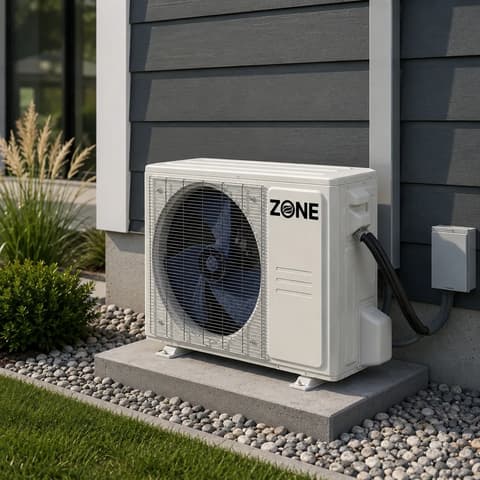
- Outdoor condenser: houses the compressor, fan, and heat exchanger
- Indoor air handler: wall-mounted unit that circulates conditioned air across the room
- Pre-charged line set: factory-filled refrigerant lines with quick-connect fittings (many manufacturers recommend using pre-charged lines to simplify DIY installations)
- Communication cable: connects the indoor unit to the outdoor unit for control signals
- Condensate drain: removes moisture collected during cooling
Because there's no ductwork involved, you avoid the 20–30% efficiency losses common in older homes with leaky ducts. Ductless systems deliver conditioned air directly to the space, making the whole setup more efficient from day one.
Cold-climate insight: Modern mini split systems from brands like Zone Air can still deliver strong heat output at 5°F and below, maintaining 70–80% of nominal heating capacity. Some mini split models are designed for extreme cold climates, operating down to −13°F. Mini split systems can operate efficiently in temperatures as low as −5°F.
Choosing the Right DIY Mini Split Size and Zones
Sizing and zoning are the most important decisions before you purchase any diy mini split heat pump. Ensuring proper sizing of the heat pump is crucial for efficiency — get it wrong and you'll either freeze in winter or waste money on an oversized unit that short-cycles.
Here's a general BTU-to-room guide adapted to Zone Air's lineup:
Concrete examples: a 2026 home office retrofit in Minnesota might use a single 12,000 BTU Zone Air unit, while a 1960s ranch in Ohio could use a 3-zone 27,000 BTU system to condition the living room and two bedrooms. Several factors affect your BTU estimate — insulation quality, ceiling height, window exposure, and regional climate (a house in Maine needs more capacity than one in Georgia).
A simple rule of thumb is 20–30 BTU per square foot, adjusted upward for poor insulation or cold climates. For precision, use Zone Air's mini split sizing calculator or their free photo-based consultation to determine your ideal setup.
Popular DIY sizes homeowners start with:
"Oversizing is one of the most common errors I see in DIY installs. It causes short-cycling, poor humidity control, and higher cost. Right-sizing based on heat loss and local design temps is far more important than buying the biggest unit you can get." — Zone Air Design Engineer
Single-Zone vs Multi-Zone for Multiple Rooms
Choosing between single-zone and multi-zone depends on your layout and goals. A single-zone system (one condenser plus one air handler) is the simplest install — ideal for a garage, bonus room, or home office. Multi-zone systems let one outdoor unit feed multiple rooms, with fewer components cluttering your exterior.
A two-zone system uses two air handlers and one condenser, while a five-zone system allows individual temperature control for five areas. Multi-zone systems can heat and cool up to 6 rooms. Three-zone systems are ideal for open-concept living areas, and four zones maximize comfort in larger homes with diverse needs. Zoned heating and cooling reduces energy waste in homes because you're not paying to condition empty rooms.
Every indoor air handler has its own thermostat and remote, giving you independent temperature control in each zone. Zone Air currently focuses on DIY-friendly single-zone and 2–4 zone configurations to keep installation simple.
Understanding SEER2, HSPF2, and Real-World Efficiency
In 2023, U.S. efficiency standards shifted to SEER2 and HSPF2. All 2024–2026 Zone Air units use these newer metrics. SEER2 measures cooling efficiency of heat pumps — a higher SEER2 rating indicates better energy efficiency. HSPF2 measures heating performance over a full winter season.
A mini split with a SEER2 of 20 is more efficient than one with 13. For a 1,500 sq ft home in North Carolina, upgrading from a 13 SEER2 baseline system to a 22–24 SEER2 Zone Air unit could cut cooling electricity consumption by 30–50%, saving several hundred dollars annually. A mini split with a SEER rating of 20 is highly efficient, and mini splits can achieve up to 24 SEER2 efficiency.
Many Zone Air models are Energy Star certified systems that provide better energy efficiency and qualify for 2024–2032 federal tax credits — up to 30% of project cost, capped at $2,000/year for heat pumps under current U.S. legislation. Federal tax credits and local utility rebates are available for heat pumps, and you can check state-specific rebates to see what's available in your area.
"When stepping from a budget 16 SEER2 unit to a 22–24 SEER2 cold-climate DIY mini split, many homeowners see payback in 4–7 heating seasons, especially in regions with cold winters and high electricity rates." — Zone Air Energy Analyst
Step-by-Step Overview: DIY Heat Pump Installation
Safety first: Heat pumps often require a dedicated 220V/230V circuit and an exterior-mounted disconnect box. High-voltage electrical connections must be handled with caution, and electrical work must comply with local building codes and safety regulations. If you're not comfortable with panel work, hire a licensed electrician for that portion. This overview supplements — not replaces — the manufacturer's manual.
Zone Air kits are designed for easy installation with pre-charged line sets. Here's the workflow:
- Choose locations for indoor unit and outdoor unit (ensure clearance and level surfaces)
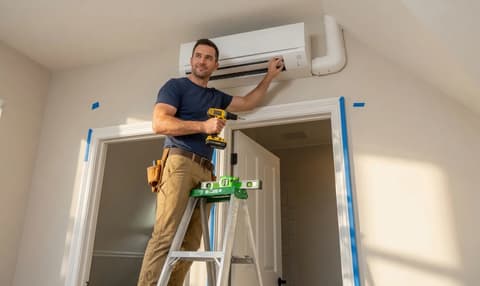
- Mount indoor unit bracket to studs or masonry — mounting brackets must be installed to secure the indoor unit
- Drill wall penetration (3–3.5 inch hole) for line set, drain, and cable
- Route pre-charged line set and condensate drain with proper slope
- Set outdoor unit on concrete pads or wall brackets (recommended to elevate outdoor units)
- Connect pre-charged lines via quick-connect fittings, torqued to spec
- Complete electrical connections — communication cable, power wiring, disconnect
- Commission system — leak check with soapy water, test cooling and heating modes
- First test run — monitor airflow, temperature, noise, and WiFi control
One person plus a helper can complete a single-zone wall mount install in 4–8 hours. DIY mini split systems can be installed in just a few hours with the right preparation. Zone Air systems ship with templates, labeled connections, and color-coded cable to reduce wiring errors. Unlike traditional installs requiring a vacuum pump, micron gauge, and refrigerant scale, these units arrive sealed — improper handling of refrigerant can be dangerous and damage the compressor, which is exactly why the pre-charged design matters.
Real example: A homeowner in Denver installed an 18,000 BTU unit in a garage workshop over a Saturday, saving substantially versus a $4,200 contractor quote. Choosing a DIY heat pump saves money on labor costs — and DIY installation saves $3,000 to $5,000 compared to professionals.
Tools, Skills, and When to Call a Pro
DIY mini splits require basic tools like a drill and wrenches. Your full toolkit includes a drill with hole saw or step bit, screwdrivers, socket set, level, torque wrench, ladder, safety glasses, and gloves — no special tools or hvac equipment beyond that. A shop vac helps with drywall dust cleanup.
Moderate diy skills are sufficient. If you're familiar with projects like installing ceiling fans or running new outlets, you can handle this job. Many Zone Air customers are first-time HVAC DIYers.
Call a licensed electrician if you're unable to safely work with your electrical panel or need a new dedicated circuit. In some municipalities, a simple electrical permit is required even for DIY mini splits — check local code before you start.
"The most common installation mistakes we see are improper condensate drain slope and kinked line sets. Both are easy to prevent if you read the line set guide before starting and take your time routing." — Zone Air Technical Support Lead
Comfort in Multiple Rooms: Whole-Home DIY Heat Pumps
DIY mini split heat pumps aren't just for single bonus spaces. With the right plan, they can condition an entire house. Mini split systems provide zoned heating for individual rooms, giving each space its own temperature setpoint.
Three common strategies for multiple rooms:
- Multi-zone system: several air handlers on one condenser for a clean exterior look
- Multiple single-zone units: maximum flexibility when rooms are far apart
- Hybrid setup: supplement an existing furnace with ductless zones in key rooms
Case study: A 1,900 sq ft two-story home in Pennsylvania used a 4-zone Zone Air system — 9,000 BTU for each bedroom, 18,000 BTU for the open-concept living area. The homeowners installed it over a weekend and achieved comfortable heating in each zone even at 0–5°F outdoors.
The advantages of ductless zoning include shutting off unused rooms on each floor, managing different comfort needs (cooler bedrooms, warmer offices), and eliminating duct losses entirely. Air handlers are sized for specific rooms and mounted high on the wall to provide good circulation without bulky ductwork. Extremely large or complex homes may benefit from a mixed strategy that a Zone Air advisor can help design.
Smart Controls, WiFi Apps, and Voice Assistants
Modern DIY heat pumps from Zone Air include built-in WiFi modules connecting to a smartphone app for control from anywhere — temperature changes, scheduling, and mode switches. As of 2025–2026, Zone Air systems integrate with Amazon Alexa and Google Assistant for voice control.
Example daily schedule: pre-heat your office to 70°F by 7:30 AM in winter, then set eco-mode when the room is empty during work hours. Fine degree temperature control and real-time energy monitoring help you optimize every dollar. Smart controls can also help qualify units for utility demand-response or time-of-use programs in certain regions.
Costs, Savings, Rebates, and Warranty for DIY Heat Pumps
Zone Air single-zone kits in 2026 range from roughly $1,200–$3,000 depending on BTU and efficiency, compared to $4,000–$8,000 for comparable contractor-installed systems. Here's a sample budget breakdown for a 12,000 BTU unit:
DIY mini splits offer significant energy savings compared to traditional systems. Replacing electric baseboard heat or an older system with a cold-climate mini split can yield $600–$1,200 in annual savings in regions like upstate New York. DIY heat pumps are beneficial for homeowners looking for energy savings and independence in climate control, and they make sense as a long-term investment since DIY mini splits can last 15–20 years with proper maintenance.
Zone Air offers a 7-year compressor warranty, 5-year parts coverage, and a 30-day return policy. Many DIY mini splits come with a 7-year warranty, but what sets Zone Air apart is that DIY installation does not void coverage when instructions are followed. With many traditional HVAC brands, DIY projects can void manufacturer warranties for heat pumps if not installed by certified professionals. Professional installation guarantees warranty protection for those other systems — but Zone Air was engineered from day one with diy customers in mind.
"We designed pre-charged connections and robust electronics specifically to keep DIY failure rates low and warranties meaningful. When the installer is the homeowner, the system has to be forgiving of small mistakes." — Zone Air Product Manager
Real DIY Customer Stories and Lessons Learned
A retiree couple in Oregon installed a 9,000 BTU Zone Air unit in their sunroom — "The hardest part was lifting the outdoor unit onto the pad. Everything else clicked together." A car hobbyist in Texas conditioned a 600 sq ft detached garage, noting that the brand's color-coded wiring made the setup straightforward even as a first-timer. A remote worker in Vermont added heating to a 400 sq ft office above a garage, saving over $4,000 versus contractor quotes.
Key lessons: plan your condensate drain route before drilling, allow enough slack in line sets, and check for wall obstructions with a stud finder. A Zone Air technician summarized the most common first-season support calls: clogged condensate drains, thermostat miswiring, and exposed copper lines getting bent. All preventable with 10 minutes of prep reading.
DIY Heat Pump vs. Hiring a Pro: When Each Makes Sense
DIY is not the right choice for everyone, and that's fine. Here's an honest breakdown.
DIY makes sense when:
- Single or double-zone install with straightforward wall access
- Serviceable electrical panel with spare capacity
- You're comfortable with a drill, wrenches, and following a wiring diagram
- You want to pay less and control the project timeline
Consider a professional when:
- Very old electrical systems needing panel upgrades
- Multi-story line runs beyond 50–75 ft
- Commercial or rental applications with strict code requirements
- You're not comfortable working at height or reading electrical diagrams
Even DIY-focused customers often hire an electrician for the circuit work and then handle the rest themselves — keeping most of the money savings while ensuring code compliance. Zone Air technical support is available by phone, chat, and email during installation to bridge the gap between full diy and traditional contractor installs.
Looking to the future, do it yourself heat pump projects are reshaping the HVAC industry in 2026. More competition, better factory-sealed technology, and improved cold-climate performance are giving homeowners more power over their comfort, energy use, and project costs.
Next Steps: Planning Your DIY Heat Pump Project
Your five-step action plan:
- Measure rooms and evaluate insulation, ceiling height, and window exposure
- Check electrical panel capacity — determine whether you need a new 115V or 230V dedicated circuit
- Choose single vs multi-zone based on room count and layout
- Estimate BTU and efficiency level — target SEER2 ≥20 for the best balance of budget and long-term savings
- Schedule a free online consult with Zone Air to validate your plan with photos of indoor and outdoor locations
Gather photos of where you want to mount each unit, order your full kit 1–2 weeks in advance, and read the installation manual before the pallet arrives. Create a weekend project schedule so the word "rushed" never enters the phrase describing your install.
Do it yourself heat pump projects are now mainstream thanks to systems specifically engineered for homeowners. Start with a single zone, learn the process, and expand over time to multiple rooms. The investment pays for itself — in comfort, savings, and the satisfaction of knowing you did it yourself.