
What Is the 5,000 HVAC Rule? When to Upgrade Your System
Updated July 5, 2026
Quick Answer: The 5,000 rule for HVAC is a quick way for homeowners to decide whether to repair or replace an aging system. Here’s how it works, where it falls short, and when a smarter choice might be skipping the repair entirely. Also: make sure if you have a warranty to utilize it — oftentimes the warranty will cover most if not all of the repair cost.
To apply the $5,000 rule, multiply the age of the HVAC system by the estimated repair cost. If the resulting number exceeds $5,000, replacement is typically recommended. If the result is less than $5,000, repairing the system is usually the better option.
Need a new system? Save money with a DIY mini split from Zone Air.
Not sure what size you need?
Try the Mini Split Sizing Calculator →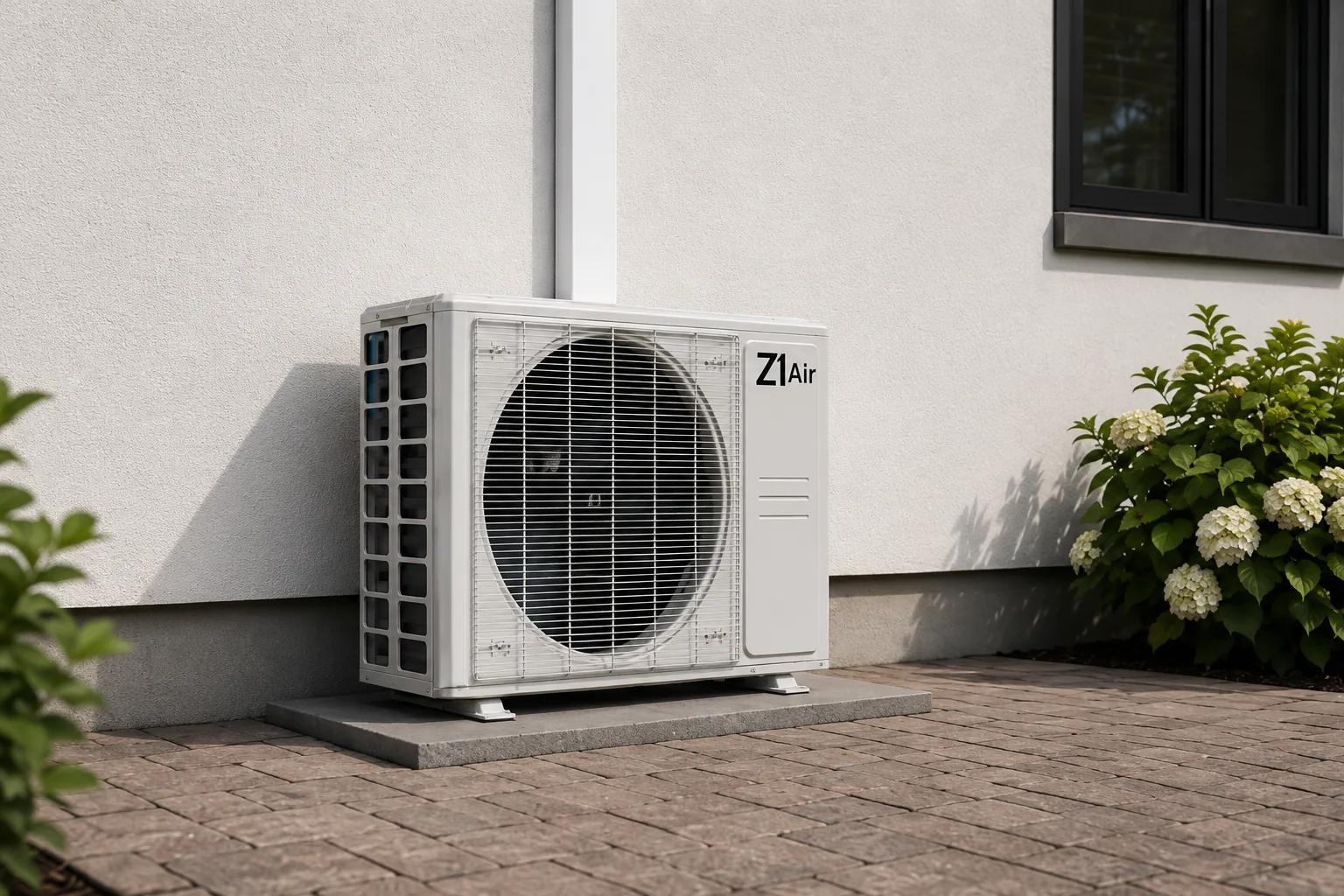
$5,000 Rule Formula for HVAC Systems
The 5,000 HVAC rule in 2026 works like this: multiply the system’s age in years by the repair quote in dollars — over $5,000 means replace, under $5,000 means repair. The 5,000 rule is a simple formula:
System age (years) × Estimated repair cost ($)
Compare that number with the $5,000 threshold. It’s most often used with central air conditioners, furnaces, and split HVAC systems, though it works for heat pumps too.
Many HVAC contractors use it as a quick reference when a homeowner faces a major repair on an old system. The $5,000 rule aims to keep homeowners from making poor investments on aging systems likely to fail soon.
Two quick examples
| Scenario | Age | Repair Quote | Calculation | Verdict |
|---|---|---|---|---|
| 12-year-old air conditioner, failed compressor | 12 yrs | $600 | $7,200 | Replace |
| 4-year-old heat pump, blower motor | 4 yrs | $400 | $1,600 | Repair |
This is a helpful calculation, created when typical HVAC replacements ran $4,000–$7,000, so the strict $5,000 cutoff is now a great starting point rather than a final verdict. You should still weigh comfort, reliability, and energy bills before committing either way.
If replacement makes sense for your situation, Zone Air offers DIY-friendly ductless mini-split heat pumps that can save $3,000–$5,000 compared to contractor-installed systems.
How to find your HVAC system’s age
The manufacturer’s data plate will have a date and so should your installation records. If not, you can contact an HVAC technician to help find the system age and also to give you a repair quote.
HVAC quote and $5,000 rule examples
| System | Repair Needed | Calculation | Verdict |
|---|---|---|---|
| 10-year-old AC unit | $350 blower motor | 10 × $350 = $3,500 | Repair |
| 15-year-old cooling system | $1,200 evaporator coil | 15 × $1,200 = $18,000 | Replace |
| 12-year-old system | $500 repair | 12 × $500 = $6,000 | Replace |
Repairing a system under 10 years old is often preferred if it’s under warranty, despite what the calculation might say. And remember: the rule is just math. Ask yourself whether the needed repairs are a one time thing or part of a pattern before you commit. Get multiple quotes from different contractors and always do your own research.
Why the $5,000 Rule Was Created
The rule stems from a time when a full replacement of a furnace plus air conditioner ran roughly $4,000–$7,000 for most homes. At that price level, $5,000 represented a logical tipping point between pouring money into a dying unit and investing in new equipment.
Traditional HVAC systems commonly last 12–15 years with regular maintenance, and the rule attempts to merge system age, repair cost, and remaining useful life into one calculation. The rule helps avoid excessive spending on aging systems. Despite price inflation and tighter energy efficiency standards, the underlying logic — don’t overspend on an older system that’s burning more energy than it should — still mostly holds.
Where the 5,000 Rule Breaks Down in Today’s Market
The $5,000 threshold behind the HVAC rule is dated in 2026, when a standalone central air conditioner often runs $6,500–$12,500 installed and full replacement packages can exceed $20,000. Equipment, labor, and refrigerant costs have climbed sharply. HVAC replacement costs can exceed $20,000 today for full furnace and AC or heat pump packages with ductwork modifications, and even a standalone central air conditioner often runs $6,500–$12,500 installed. Meanwhile, repair costs can reach upwards of $5,000 for older systems needing compressor or coil work.
Because the $5,000 threshold is outdated due to rising costs, some industry professionals suggest increasing the threshold to $6,000 or $7,000. The fixed number also doesn’t account for rebates, tax credits, financing, or DIY options that lower the total cost of replacement.
Key Factors Beyond the 5,000 Rule
The 5,000 HVAC rule leaves out four factors that matter in 2026 — repair history, warranty coverage, climate stress, and comfort. The 5,000 rule is one input. Homeowners should layer in several real-world key factors:
- Repair history: Older systems often require multiple repairs over time. If you’ve logged repeated repairs and multiple repairs over the past few years, the pattern matters more than any single calculation.
- Warranty coverage: A system’s age affects warranty coverage and parts availability. Outdated refrigerants like R-22 and even R-410A face phase-downs, raising future recharge costs.
- Climate stress: Systems in very hot or cold climates run more hours annually and tend to wear faster, shortening useful life.
- Comfort: Hot or cold spots, uneven temperatures, and noise all signal a reliable system is no longer delivering.
A modern high-SEER2 heat pump can lower operating costs dramatically compared with a 15–20-year-old air conditioner paired with electric resistance or oil heat, providing both heating and cooling from one unit.
How System Age, Efficiency, and Energy Bills Fit Into the Rule
Most air conditioners last around 10–15 years, gas furnaces 15–20 years, and conventional heat pumps roughly 12–15 years. Once an HVAC unit passes about 10–12 years, even successful HVAC repairs don’t restore factory energy efficiency. Older HVAC systems consume more energy than newer models, and you’ll notice steadily rising utility bills, longer run times, and difficulty keeping rooms comfortable.
| Equipment | Typical Lifespan |
|---|---|
| Air conditioners | 10–15 years |
| Gas furnaces | 15–20 years |
| Conventional heat pumps | 12–15 years |
Energy efficiency standards for HVAC systems were updated in 2023 with the shift to SEER2 testing. New HVAC systems are often significantly more efficient than older models — and replacing an aging unit carries the long-term benefit of decreasing energy bills. Modern HVAC systems can reduce energy costs significantly: a 20+ SEER2 ductless mini-split can cut energy consumption by 30–50% compared with older central units. New HVAC systems can save hundreds annually on energy bills, and older systems may cost more to operate than modern units.
If a system is both old and expensive to run, the 5,000 rule number understates the real total cost of keeping it alive because it ignores rising energy use.
Major Repairs vs. Minor Repairs: When the Rule Misleads
| Repair Type | Typical Examples | Typical Cost |
|---|---|---|
| Major repair | Compressor replacement, evaporator or condenser coil replacement, control board failure on older systems | $1,000–$2,500+ |
| Minor repair | Capacitors, contactors, sensors, or a fan motor on a younger unit | $150–$400 |
Under the 5,000 HVAC rule, a $1,000–$2,500 major repair like a compressor or coil on a 10-year-old system computes to $10,000–$25,000 — far past the replace line — while a $150–$400 minor repair rarely crosses the threshold in 2026. The $5,000 rule can push towards replacement for a single large repair bill on a well-maintained 5-year-old system where repair is still probably the best choice. It might also suggest repair for a small component on a very old, unreliable unit that’s already had costly repairs across multiple seasons, where full replacement is more rational.
Expensive repair scenarios for older systems can mean it’s time for a replacement. Pattern recognition matters most: if the unit has had 3–4 service calls in two seasons, that history weighs more than one calculation. Older systems are more likely to need frequent repairs, and those repair costs compound quickly.
Comparing Traditional Replacement vs. DIY-Friendly Options
When the 5,000 rule points to replace, Zone Air’s pre-charged DIY mini splits — from $1,899.99 for a 9,000 BTU 115V unit at 23 SEER2 in 2026 — save $3,000–$5,000 versus a contractor-installed system. Contractor installed central HVAC systems bundle equipment, labor, ductwork modifications, permits, and markups. On average, this can add $3,000–$5,000 over the bare equipment price, pushing a new HVAC system well beyond what many homeowners budget for.
Zone Air’s DIY pre-charged ductless mini-split heat pumps bypass nearly all of that cost. No HVAC license is required thanks to pre-charged quick connect line sets. Key specs include a top efficiency rating of up to 24 SEER2, Energy Star and cold climate certifications, WiFi control, a 5-year parts warranty (7-year compressor coverage), and 30-day returns on uninstalled systems (25% restocking fee applies).
Homeowners may qualify for tax credits on new HVAC systems — check our AC Rebate Calculator to estimate your savings. High-efficiency systems may cost more upfront but save money long-term through lower energy bills and fewer breakdowns.
Putting It All Together: Using the 5,000 Rule the Smart Way
The 5,000 rule is useful as a starting tool, but it works better if you combine it with other factors like system age, energy bills, and reliability.
Paying for repeated repairs on a very old inefficient system rarely makes sense. Older units run up energy consumption and leave homeowners dealing with expensive energy bills and oftentimes poor performance.
If the numbers do point towards replacement, you can explore Zone Air’s DIY-ready ductless mini-split heat pumps as a way to upgrade your home’s HVAC system without breaking the bank. The right choice is the one that aligns with your budget, your long-term plans for the home, and your desire for lower energy bills and a reliable system you don’t have to worry about every season.
Did the Math Point to Replace?
Skip the contractor markup. Zone Air’s pre-charged DIY mini splits install in an afternoon and save $3,000–$5,000 versus a contractor-installed system.
Secure checkout. Fast shipping. 30-Day Returns. 5-yr parts / 7-yr compressor warranty.