
Best DIY Mini Split Air Conditioners: Air Conditioners Built for DIY
If you’re a homeowner looking to save money on heating and cooling without hiring an HVAC professional, a DIY mini split is one of the smartest upgrades you can make yourself.
Summary: USA-based assembly, testing, and inspection of globally sourced components has propelled Zone Air DIY units to the top of the DIY mini split category in 2026.
Not sure what size you need? Size your unit here.
Know what size you need already? Ready to buy?
Shop Now →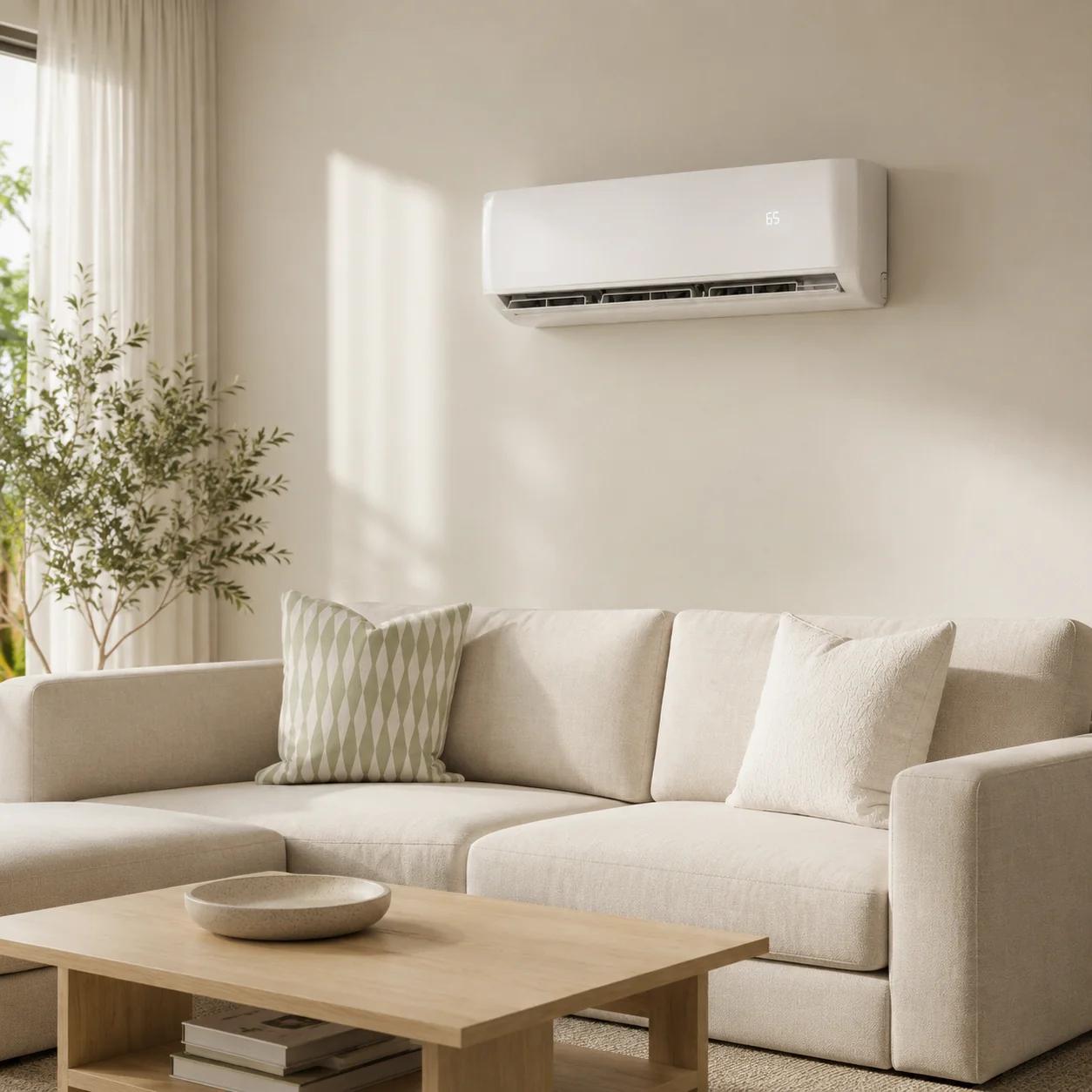
Quick Picks: Best DIY Mini Splits for Common Room Sizes
The best DIY mini split for your space depends on square footage. Every Zone Air system below is a true ductless heat pump — it heats and cools — and ships with factory pre-charged lines, so no EPA refrigerant license is needed. Common capacities for mini splits range from 9,000 to 48,000 BTU, but these four cover most projects:
- Zone Air 9,000 BTU — ideal for 250–400 sq ft bedrooms and offices, up to 24 SEER2, single zone
- Zone Air 12,000 BTU — fits 350–550 sq ft living rooms or studios, up to 24 SEER2, single zone
- Zone Air 18,000 BTU — handles 550–900 sq ft bonus rooms, garages, and workshops, 23.5 SEER2
- Zone Air 24,000 BTU dual zone (12K + 12K) — two indoor heads covering up to 1,200 sq ft total for open-plan spaces, or a garage plus bonus room, 24 SEER2
DIY mini splits often have a satisfaction guarantee and warranty options — Zone Air includes both. Mini split systems can reach 24 SEER2 ratings on flagship models. The sections below help you choose the right unit for your house, climate, and DIY skill level.
What Is a DIY Mini Split (and How It Compares to Other AC Options)
A mini split system pairs an outdoor condenser with an indoor air handler, connected by a refrigerant line set — no ductwork required. Inverter-driven heat pump technology lets the compressor modulate output instead of cycling on and off, so DIY mini splits fit spaces that have no ductwork at all.
What makes a DIY mini split different is that the line set comes pre-charged with refrigerant and uses quick-connect fittings. You skip the vacuum pump, gauges, and brazing entirely — here’s how true no-vacuum systems work. Zone Air’s lineup is designed specifically for homeowner DIY install.
DIY mini split vs window/portable AC unit
- Far quieter indoor unit; no rattling compressor in the window
- Higher energy efficiency (20–24 SEER2 vs ~12–15 for window units)
- Permanent wall mount looks cleaner; no blocked window
- Heats and cools — most portable AC units are cooling-only or have weak heat strips
- Single-zone systems cover up to 900 sq ft, and dual zone bundles cool up to 1,500 sq ft
More detail in mini split vs window AC.
DIY mini split vs central air
- Lower install cost — no ducts to run through your house
- Room-by-room temperature control instead of one thermostat
- Duct losses account for about 30% of central air’s energy consumption in poorly insulated attics and crawlspaces; mini splits eliminate that
- If you already have well-designed ductwork, upgrading central air may still make sense
See the full breakdown in mini split vs central air.
How to Size a DIY Mini Split: 9,000 vs 12,000 vs 18,000 vs 24,000 BTU
Correct sizing is the most important decision after choosing DIY installation vs professional installation. Use Zone Air’s mini split sizing calculator or start with this baseline for a well-insulated room with an 8 ft ceiling:
- 9,000 BTU: ~250–400 sq ft (bedrooms, small offices)
- 12,000 BTU: ~350–550 sq ft (living rooms, large bedrooms)
- 18,000 BTU: ~550–900 sq ft (big family rooms, large garages)
- 24,000 BTU dual zone (12K + 12K): ~800–1,200 sq ft across two zones (open-plan floor areas, garage plus bonus room)
Adjust upward if your ceiling height exceeds 9 feet, insulation is poor, sun exposure is heavy, or a kitchen generates extra heat. In colder climates, upsizing slightly helps maintain heat output when temperatures drop. For a deeper breakdown, see our complete mini split sizing guide.
Example: a 450 sq ft bonus room in a northern climate is worth comparing between the 12,000 BTU and 18K models — the 18K provides more heating margin below 0°F. A 900 sq ft 2-car garage with minimal insulation calls for the 18K at minimum, or a 24,000 BTU dual zone (two 12K heads) for even coverage year-round. Single-zone systems heat or cool one room efficiently, which makes them ideal for garages and workshops.
Best DIY Mini Split Picks From Zone Air (by Use Case)
We recommend these Zone Air DIY mini split heat pump systems for the most common projects:
- Zone Air DIY 9,000 BTU — quiet indoor air handler (down to 30 dB) for a bedroom or home office; up to 24 SEER2; WiFi control with app and remote; wall mount design
- Zone Air DIY 12,000 BTU — our most popular single zone unit for living rooms and studio apartments; a higher SEER2 rating means lower energy bills; dry mode for humidity control
- Zone Air DIY 18,000 BTU — covers large bonus rooms and workshop spaces; compressor modulation prevents short cycling
- Zone Air DIY 24,000 BTU dual zone (12K + 12K) — two indoor heads for open-plan main floors or a garage-plus-bonus-room combo; handles heavy cooling and heating loads
Indoor units mount on the wall. Higher-efficiency units usually carry SEER2 ratings of 20 or above — every Zone Air pick qualifies. All models ship with pre-charged line sets and DIY-friendly documentation; a moderately handy homeowner can install one in an afternoon. Unlike some brands that require licensed HVAC installation for warranty validation, Zone Air’s 5-year parts warranty, 7-year compressor coverage, and 45-day satisfaction guarantee remain valid with self-install. No extra refrigerant is needed — the factory charge covers standard line set lengths.
DIY vs Professional Installation: When You Should DIY (and When You Shouldn’t)
Many mini split systems traditionally require professional installation by HVAC pros, but Zone Air’s DIY line eliminates the hardest steps. You skip refrigerant charging, vacuum pumps, flaring, and brazing. You still need to mount the air handler, set the outdoor unit, run pre-charged lines, handle wiring, and route the condensate drain. On electrical: 115V models plug into a standard household outlet, while 230V models need a dedicated circuit. Traditional HVAC installation can cost thousands of dollars; DIY mini split systems save $3,000 to $5,000 on installation based on current labor rates. See the full walkthrough in how to install a mini split.
DIY is appropriate when:
- You’re comfortable with basic electrical work and drilling through an exterior wall
- It’s a straightforward single zone run within 25 ft — Zone Air’s pre-charged line sets run 16 ft standard, extendable to 25 ft total
- Standard wall-mount indoor unit, not a complex ceiling cassette
Consider professional installation when:
- You need multi zone systems with multiple indoor units and long line runs serving multiple rooms
- Unusual construction or strict HOA rules apply
- You need a new electrical subpanel or service upgrade
- Complex repair or retrofit situations
No specialized HVAC equipment is needed for a Zone Air install — basic tools plus a torque wrench cover the whole job.
Efficiency, Cold-Climate Performance, and Operating Costs
SEER2 measures cooling efficiency; HSPF2 measures heating efficiency — here’s what a SEER rating means. Higher ratings mean less electricity for the same comfort. Older central air systems run at 13–15 SEER; Zone Air’s flagship ductless heat pump models reach 24 SEER2, which means noticeably lower energy bills.
- Inverter-driven heat pump technology lets mini splits modulate output continuously, preventing the energy-wasting short cycling that plagues older AC systems
- Ductless mini splits skip duct losses entirely — losses that account for about 30% of central air’s energy consumption in poorly insulated attics and crawlspaces
- Mini splits often consume less electricity than central HVAC systems conditioning the same space
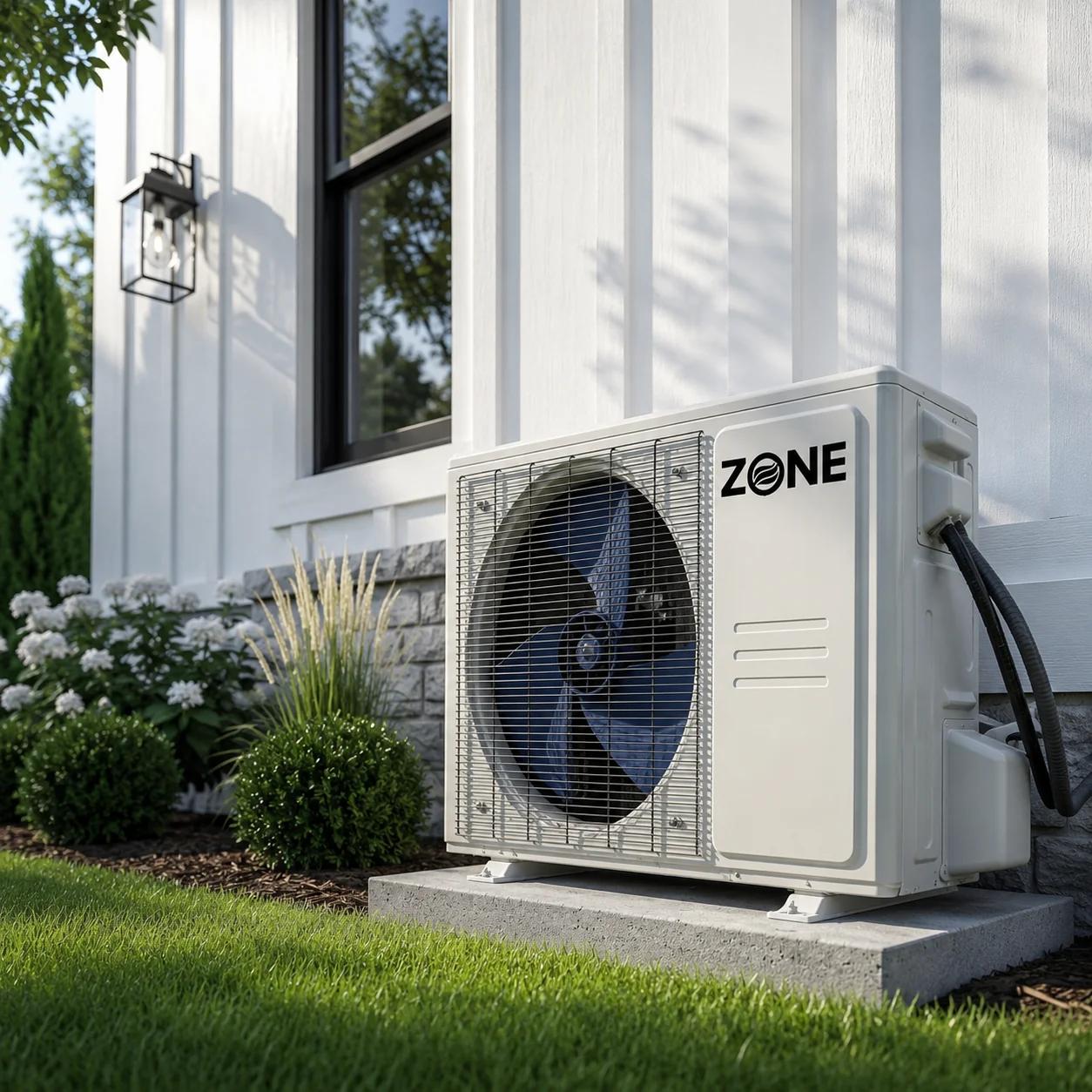
Cold-climate performance matters. Standard heat pumps lose efficiency as outdoor temperatures drop, so a cold-climate rating is important if the system is your heat source. Zone Air’s DIY mini splits maintain full heating capacity down to 5°F and keep heating down to -13°F. Some specialized hyper-heat systems are rated even lower, but Zone Air covers -13°F across its whole lineup — enough for most US climates — and delivers 2–4× the heat output per watt compared to electric baseboard. More in do mini splits work in cold weather.
On the incentive side, federal 25C/25D tax credits expired December 31, 2025, but IRA-funded state and utility rebate programs remain active — some states offer up to $8,000 for qualifying heat pump installations. Check your local programs with the AC rebate calculator before you purchase.
Ready to Pick Your System?
Zone Air’s support team can help you confirm sizing and model selection via chat or phone, cutting the guesswork that comes with a generic purchase from a big-box site.
If you’ve been researching mini splits for a bedroom, garage, or open floor plan, Zone Air’s DIY lineup is built to get you from box to cool air in a single afternoon — with room-by-room control and no contractor markup.
Secure checkout. Fast shipping. 45-day satisfaction guarantee. 5-yr parts / 7-yr compressor warranty.