
DIY HVAC Systems: Do-It-Yourself AC & Heat Pump Systems by Zone Air
Updated July 5, 2026
A DIY HVAC system gives you whole-home heating and cooling you install yourself — no contractor and no $3,000–$5,000 labor bill. Zone Air builds do-it-yourself AC systems around pre-charged, quick-connect ductless mini splits: the refrigerant lines ship sealed, the fittings hand-torque to spec, and a handy homeowner finishes a single-zone install in 4–8 hours with basic tools. No vacuum pump, no EPA 608 license, no HVAC tech.
Ready to install your own system?
Not sure what size you need?
Mini Split Sizing Calculator →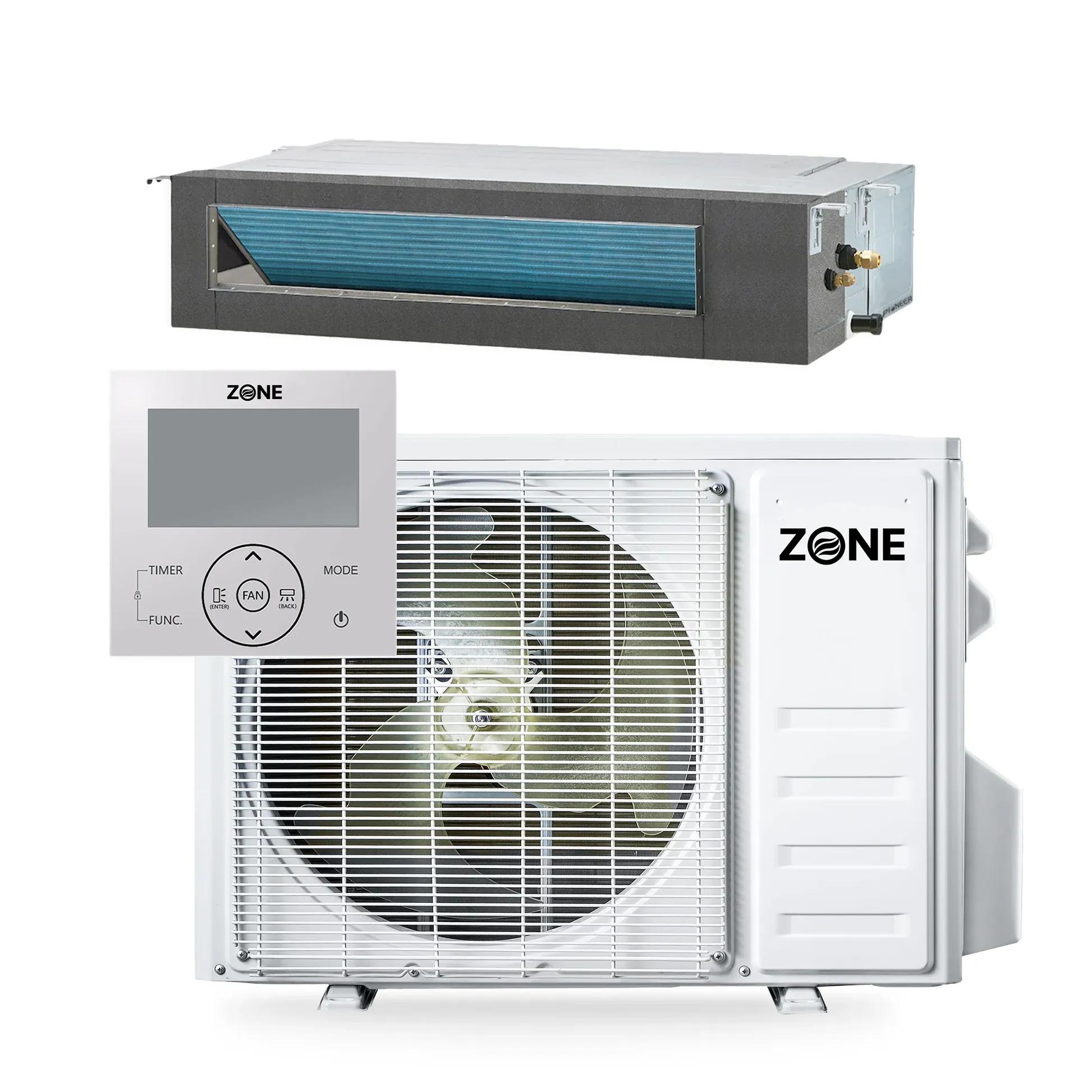
What Counts as a DIY HVAC System?
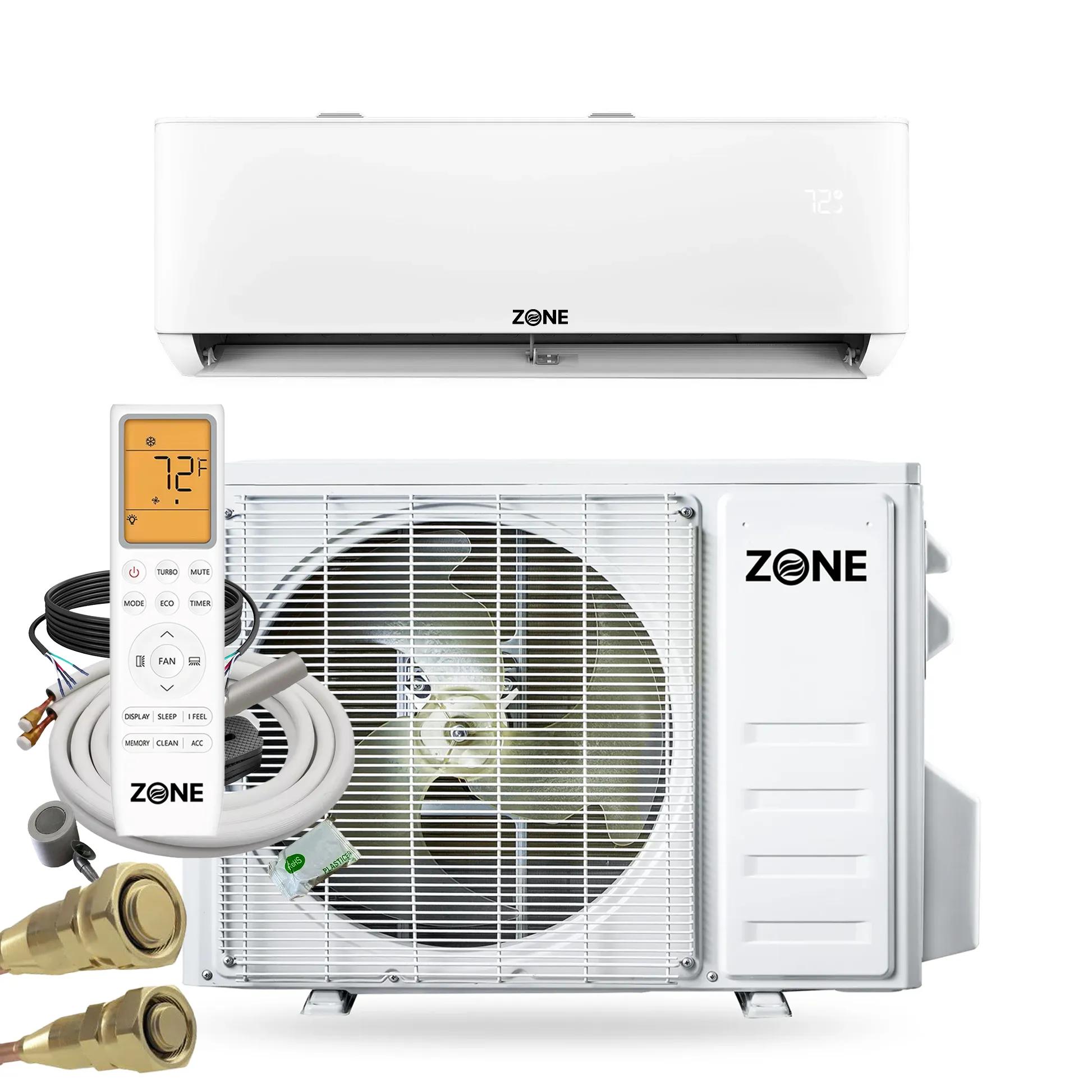
A DIY HVAC system built on a Zone Air pre-charged ductless mini split reaches up to 24 SEER2 in 2026 and installs in 4–8 hours with no vacuum pump and no EPA 608 license. A traditional central HVAC system — furnace, condenser, and ducting — is not a homeowner job: it needs sheet-metal duct runs, brazed refrigerant lines, a vacuum pump, and a licensed tech to charge it. A DIY HVAC system swaps all of that for a ductless mini split heat pump. One outdoor condenser pairs with one or more indoor air handlers, the pre-charged line set hand-couples between them, and ducting disappears entirely. That matters for efficiency too: ducted systems lose 20–30% of conditioned air to leaks and attic heat, while a ductless run loses almost none. Zone Air systems reach up to 24 SEER2 cooling and keep heating down to -13°F, so one box covers both jobs year-round — see the full lineup of DIY heat pumps.
Size the system to the space, not the house. A 9,000 BTU head covers a 200–350 sq ft bedroom or office; 12,000 BTU handles most 350–500 sq ft living rooms; multi-zone setups run several heads off one condenser and hold different temperatures room to room. The 115V models (9K and 12K BTU) plug into a standard 15A outlet, so there’s no electrician for those; 230V units need a dedicated circuit ($300–$600 if you don’t already have one). Start with a 9,000 BTU system for a single room, or run the mini split sizing calculator before you buy.
DIY HVAC vs Hiring a Contractor
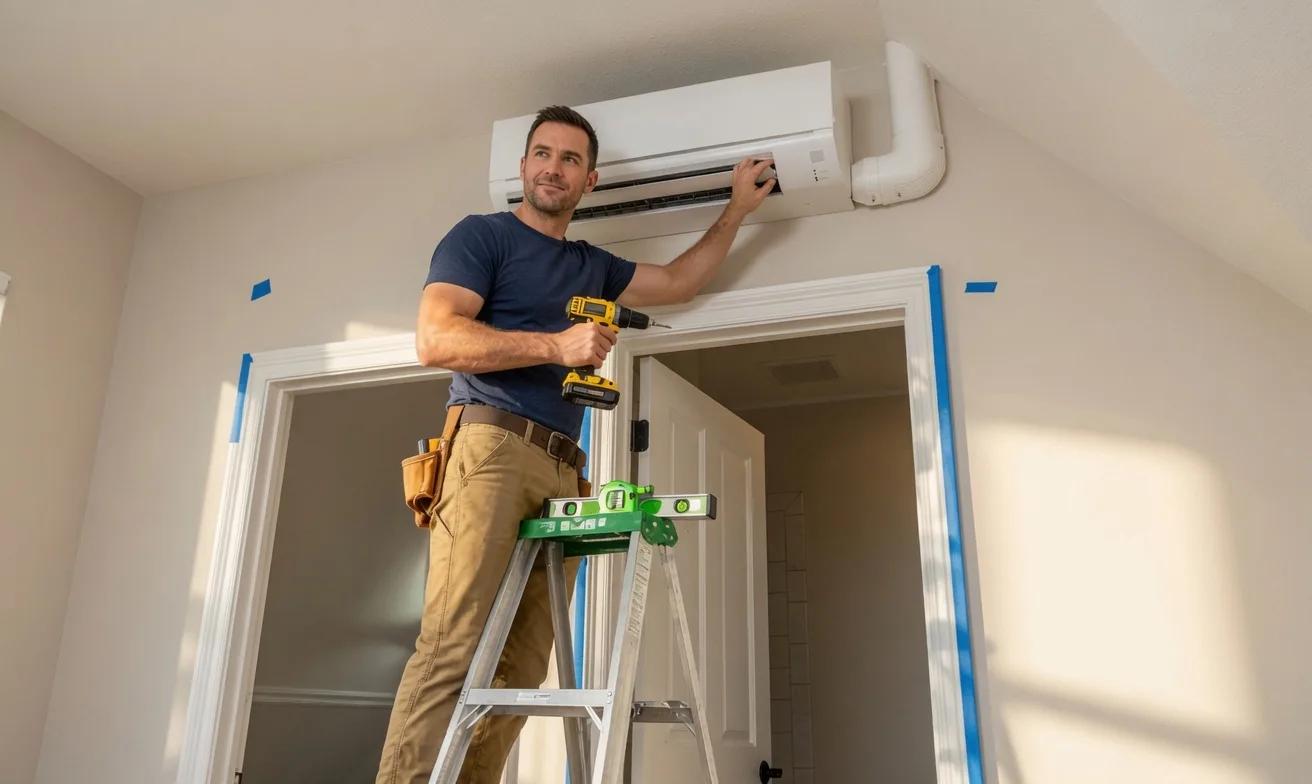
Installing a Zone Air DIY HVAC system yourself saves $3,000–$5,000 in 2026 by keeping the $1,500–$3,000 contractor labor charge in your pocket. The whole reason a mini split install cost $4,500–$6,000 installed was the refrigerant work and labor. Remove the vacuum-and-charge step with a pre-charged line set and the homeowner keeps the $1,500–$3,000 labor charge. You still do real work: mounting the indoor head and outdoor condenser, routing the line set and condensate drain, sealing the wall penetration, and connecting power — leave 4–6 inches of clearance around each unit and keep the line run under ~30 ft for rated performance. It’s an advanced DIY project, not a no-skill one; a bad flare or kinked line still causes leaks and lost warranty. If you want to see the actual steps first, read are mini splits easy to install yourself.
Browse systems, or see how DIY install works.