
How Quick Connect Mini Split Systems Work: MRCOOL and Zone Air Systems Explained 2026
Updated October 1, 2026
What does “quick connect” mean when it comes to mini split systems? It refers to how the refrigerant lines connect to the indoor unit (air handler) and the outdoor unit (condenser).
To understand quick connect mini splits, we first need to understand how traditional systems connect.
Want a system that connects this way?
Not sure what size you need?
Mini Split Sizing Calculator →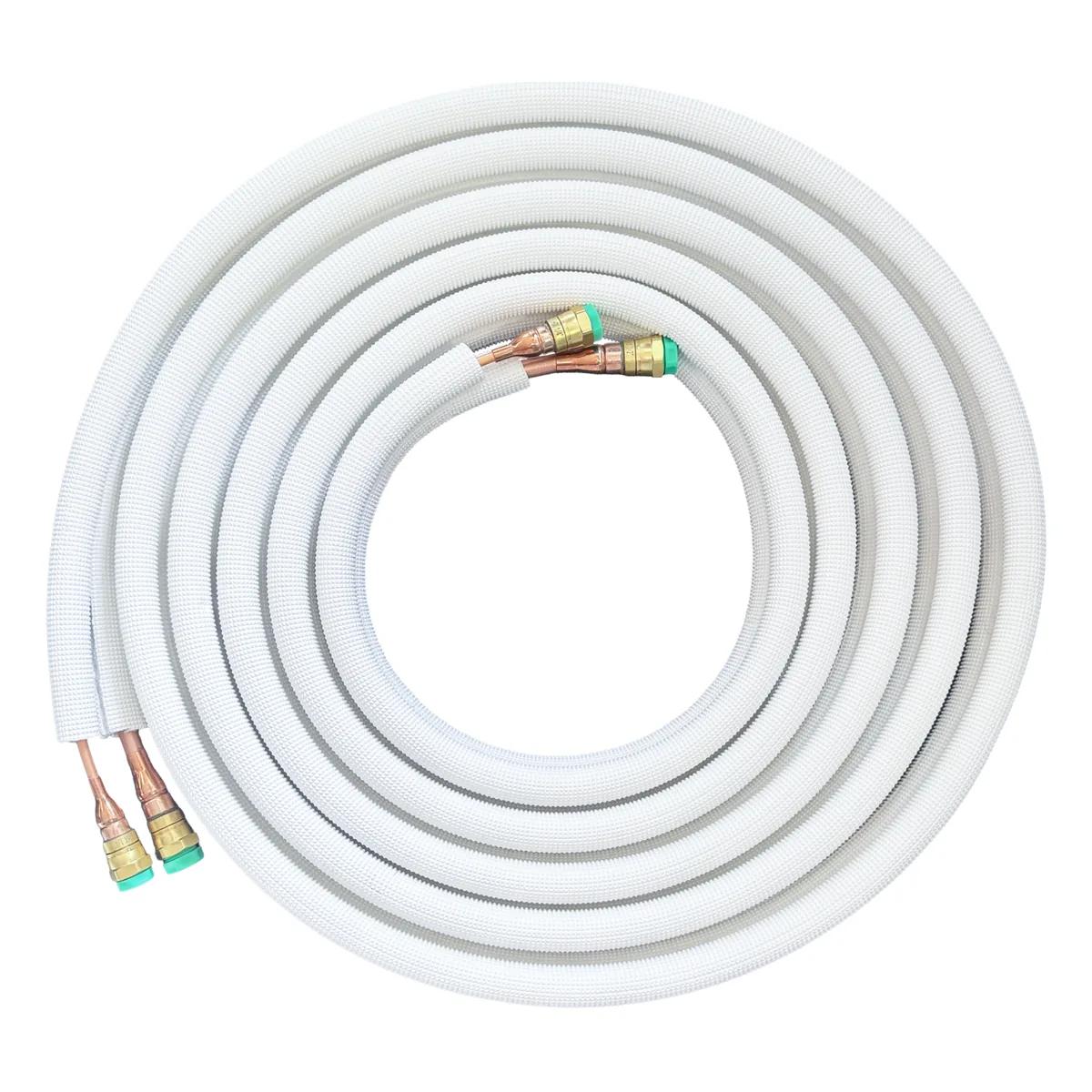
How Traditional Flare Connections Work
Traditional mini split systems use flare nuts. When tightened, a flare nut presses the female flare on the end of the lineset tightly against the male flare on the indoor or outdoor unit. This slightly deforms the female flare and mates the two copper faces, with the flare nut holding them together. Each zone has two flare connections at the indoor unit and two at the outdoor unit.
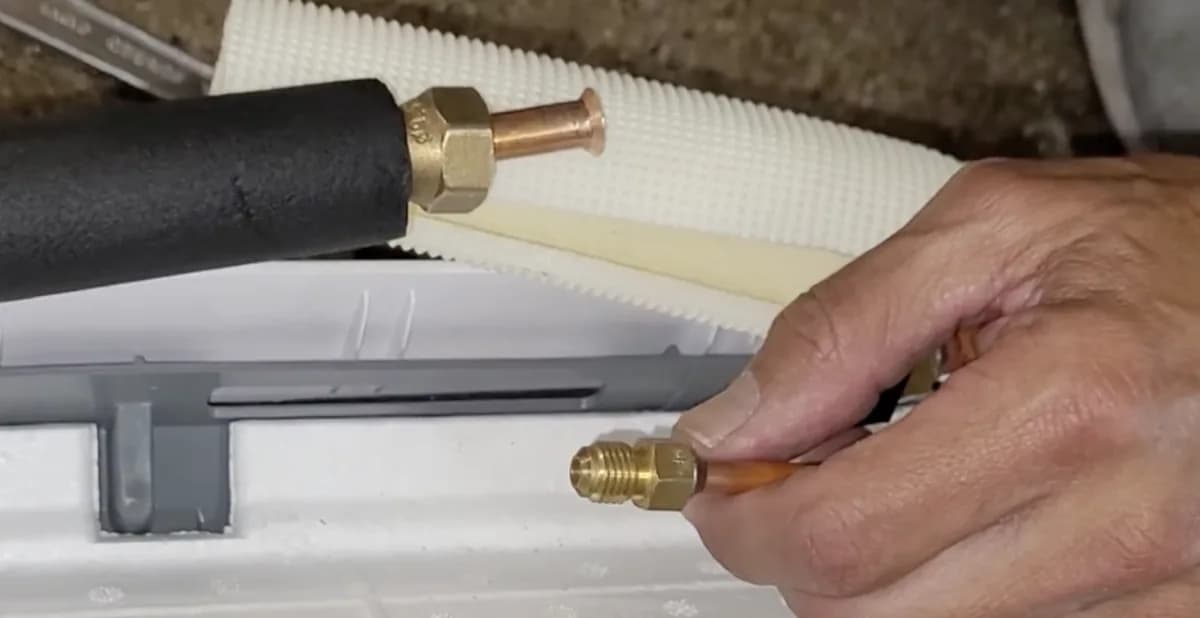
These traditional flare joints work well when they’re installed properly. Without years of experience, though, they can be extremely difficult to get right. If you cut the lineset to length, you’ll need to reflare it, which is even harder to do correctly without training.
You’ll also need to pressure test the flare joints with nitrogen, which takes an HVAC manifold gauge set and a nitrogen tank. Once you’ve confirmed the system holds pressure, you’ll need a vacuum pump and a micron gauge to evacuate the system and verify that nothing is left in the linesets. Only then can you release the refrigerant charge into the linesets.
As if that weren’t hard enough, you also legally need EPA 608 certification to open the valves and release the refrigerant.
Why You Need to Pressure Test and Vacuum a Traditional Mini Split
Pressure testing confirms that the system can hold a refrigerant charge without leaking. If refrigerant escapes and the system keeps running, it will eventually cause irreversible damage to the compressor.
Evacuation matters because air and moisture left in the lines don’t belong in a refrigerant circuit. Air raises operating pressures and makes the compressor work harder, and moisture reacts with the oil to form acids that break down the compressor over time. Either way, the system will run less efficiently, be more likely to have problems, and have a shorter life.
How Quick Connect Mini Split Systems Solve These Problems
Quick connect mini splits come with quick connect valves already attached to the ends of the refrigerant linesets and to the indoor and outdoor units. The units and linesets are evacuated and charged at the factory, and these valves are what let them hold that factory-sealed refrigerant charge. Instead of going through the whole process above, you thread the quick connect fittings together to attach the linesets to the units. No vacuum pump, no gauges, no nitrogen, and no hassle.
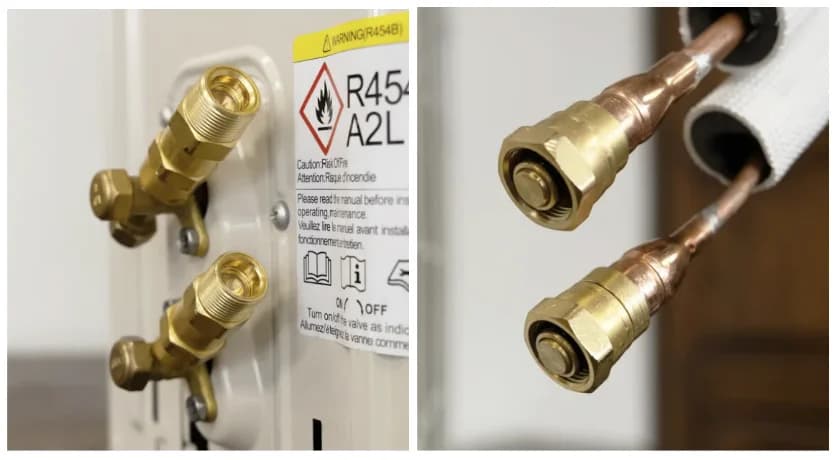
Browse pre-charged, quick connect systems you can install yourself.