9,000 BTU DIY Mini Split: Complete Guide to Zone Air's 3/4 Ton Ductless System
A 9,000 BTU DIY mini split is one of the most practical ways to add year-round heating and cooling to a single room — without tearing into walls for ductwork or writing a large check to an HVAC contractor. This guide covers sizing, installation, efficiency ratings, and rebates so you can decide if Zone Air's 3/4 ton ductless system is right for your home.
Shop 9,000 BTU Systems ↓Quick Answer: Is a 9,000 BTU DIY Mini Split Right for You?
A 9,000 BTU (3/4 ton) ductless mini split is a compact heat pump that both heats and cools a single room year-round. Zone Air designs these systems specifically for homeowners who want to skip the contractor and install themselves. Here is the system at a glance:
| At a glance | Detail |
|---|---|
| Ideal room size | 200–400 sq ft with standard 8–9 ft ceilings and reasonable insulation |
| Best-fit spaces | Bedrooms, home offices, small living rooms, insulated garages, finished basements, and in-law suites |
| System type | Inverter-driven heat pump that modulates output instead of cycling on and off, for steady temperature with less energy waste |
| Installation | Ships with pre-charged line sets — no HVAC license, no vacuum pump, and no specialized tools |
| DIY savings | $3,000–$5,000 versus hiring a contractor |
| Size up when | The room exceeds ~450 sq ft or gets heavy sun — step up to a 12K or 18K instead |
Choosing the right size up front matters: incorrect sizing or mismatched paperwork can lead to failed inspections and rejected rebate claims, costing you time and money. When in doubt, run your room through the sizing calculator before you order.
What Is a 9,000 BTU DIY Mini Split (3/4 Ton) and How Does It Work?
A 9,000 BTU ductless mini split heat pump moves heat between an outdoor unit and an indoor air handler using refrigerant lines, rather than generating heat through combustion or resistance. The "9,000 BTU" figure measures the system's heating and cooling capacity per hour, which corresponds to roughly 3/4 ton in HVAC terms.
In winter, the outdoor condenser absorbs heat from outside air and moves it indoors; in summer, the cycle reverses to pull heat out of your room. Refrigerant circulates through insulated copper lines connecting the two units. Unlike central air paired with a furnace, a ductless system needs no ductwork — eliminating the energy losses associated with leaky or poorly insulated ducts and giving you independent temperature control in the room you actually use.
Zone Air systems ship with pre-charged line sets and quick-connect fittings, so the refrigerant circuit never has to be opened during installation. Current models target SEER2 ratings up to ~24 for select sizes — a significant jump over the 16 SEER products that were standard in the early 2020s.
Is 9,000 BTU Enough? Sizing Your DIY Mini Split Correctly
Getting the size right protects your comfort, your energy bills, and your compressor's lifespan. An oversized unit short-cycles and fails to dehumidify; an undersized one runs constantly and still can't keep up. Use this as a starting point, then adjust for climate, insulation, window area, ceiling height, and sun exposure:
| Room size | Recommendation |
|---|---|
| Under 200 sq ft | A 9,000 BTU unit is usually oversized |
| 200–300 sq ft | 9,000 BTU runs at low speed — quieter, more efficient, and longer-lived |
| 300–400 sq ft | 9,000 BTU is a balanced match with average insulation |
| Over 400 sq ft, sun-soaked, or poorly insulated | Step up to a 12,000 or 18,000 BTU system |
A couple of real-world examples show how much the room itself matters:
| Example room | Verdict |
|---|---|
| 250 sq ft north-facing home office in Vermont, double-pane windows, good insulation | 9,000 BTU is more than enough for both heating and cooling |
| 350 sq ft sunroom in Arizona with large glass walls and heavy solar gain | 9,000 BTU may struggle in peak summer — consider a 12,000 or 18,000 BTU system |
Zone Air offers multiple capacities so you can match the unit to the room rather than forcing a one-size-fits-all approach. For a precise recommendation, use the mini split sizing calculator or contact support with your room dimensions and location before you order.
Indoor Unit Options: Wall Mount, Ceiling Cassette, and More
The indoor unit — the air handler — is the part you see and hear inside the room. It delivers conditioned air and houses the evaporator coil, blower fan, and filters.
| Indoor unit | Best for |
|---|---|
| Wall-mounted air handler | The most common and easiest DIY option. Mounts high on an interior wall near an exterior wall for the shortest line-set run and the fastest first-time install. |
| Ceiling cassette | A discreet, flush look that distributes air evenly where wall space is limited — but it requires more carpentry and planning. See the ceiling cassette system for reference. |
| Floor console / slim ducted | Specialty layouts; for most 9,000 BTU DIY projects a wall mount or compact cassette is the ideal choice. |
Zone Air's indoor units include clear mounting templates, condensate-drain guidance, and WiFi-ready controls built in. Some building codes treat concealed units like a ceiling cassette differently, so always check local rules before cutting into joists or fire-rated assemblies.
Zone Air vs. Traditional Mini Splits: What Makes Our DIY Systems Different?
Zone Air is a direct-to-consumer brand built around one idea: homeowners shouldn't need a contractor or an HVAC license to install a high-performance split system. That's what separates our approach from legacy brands that require professional installation.
| Zone Air DIY | Traditional / contractor-only |
|---|---|
| Pre-charged line sets — no brazing, vacuuming, or refrigerant handling | Requires an HVAC tech to vacuum, pressure-test, and charge the system |
| Warranty designed around DIY installation from the start | Some brands void coverage unless a certified pro installs |
| Up to 24 SEER2 on our highest-efficiency single-zone systems | Varies; many legacy units sit closer to 16 SEER |
| Cold-climate models hold ~85% capacity at 5°F and heat to ~−13°F | Cold-climate capability varies by product line |
| WiFi, smartphone app, and Alexa / Google Assistant voice control built in | Smart features often cost extra |
For comparison, MRCOOL DIY units are a well-known competitor in this space; Zone Air competes by pairing similar DIY ease with aggressive efficiency specs and a warranty structure designed for homeowner installs. For the full freezing-weather breakdown, see do mini splits work in cold weather.
Step-by-Step: Installing a 9,000 BTU DIY Mini Split
This is a high-level overview — always read the full Zone Air installation guide for your specific model before you start any work.
| Step | What happens |
|---|---|
| 1. Pre-install checks | Confirm your electrical service (the 115V wall mount uses a standard outlet; other models need a dedicated 208/230V 20A circuit), choose the indoor-unit wall location, verify clearances, and plan a safe condensate-drain route |
| 2. Mount the indoor bracket | Secure the mounting plate with the included template, then drill a 2.5–3 inch hole through the exterior wall for the refrigerant lines |
| 3. Place the outdoor unit | Set it on a level pad with vibration dampeners and adequate clearance; in cold climates, elevate it above the expected snow line |
| 4. Connect the pre-charged line set | Route the line set through the wall and tighten the quick-connects to torque spec, avoiding sharp bends or kinks |
| 5. Electrical | Run a dedicated circuit with a disconnect switch following NEC and local codes — many homeowners hire a licensed electrician for this portion |
| 6. Power up and test | Run cooling and heating modes, then register the unit with Zone Air for warranty and rebate documentation |
DIY mini splits can be installed in just a few hours, and no specialized tools are needed beyond what most homeowners already own.
Operating Costs, Efficiency, and Potential Rebates
A modern inverter mini split uses dramatically less energy than a window unit or electric baseboard heater because it moves heat rather than creating it. Higher SEER2 ratings translate directly into lower running costs over the system's 15–20 year lifespan.
| Efficiency factor | What it means for your bill |
|---|---|
| SEER2 up to ~23.6 | A higher SEER2 rating means lower energy bills, year after year |
| No duct losses | Avoids the 20–30% of conditioned air that leaky ducts lose in poorly sealed homes |
| Federal tax credit | Qualifying heat pump installs can earn a 30% credit, up to $2,000 |
Check the rebates page and the ENERGY STAR rebate finder for current eligibility. Incorrect paperwork or model mismatches can stall a utility rebate claim, so confirm eligibility with Zone Air support before purchase — and keep your invoices, AHRI certificates, and installation photos on hand for any rebate audit or tax-credit claim.
Single-Zone vs. Multi-Zone: When a 9,000 BTU Unit Is Only the First Step
A single-zone system pairs one outdoor unit with one indoor air handler to condition one specific area. A multi-zone system connects multiple indoor heads to a single outdoor condenser, allowing different temperatures across the home.
| Single-zone | Multi-zone | |
|---|---|---|
| Setup | One outdoor unit + one indoor head | One condenser + up to ~6 indoor heads |
| Best for | A detached garage, bonus room, small apartment, or one problem room | Whole-house retrofits, upstairs/downstairs splits, or 3–6 zones |
| Upside | Lowest cost and complexity, easiest DIY | Different room temperatures from one outdoor unit |
| Zone Air lineup | Primary focus | Select multi-zone and dual-zone bundles |
When combining heads, make sure total connected BTU doesn't exceed the condenser's rating. If you're weighing 3–6 rooms, talk with Zone Air about whether several single-zone units or one multi-zone system makes more sense for efficiency, cost, and redundancy.
Why Choose Zone Air for Your 9,000 BTU DIY Mini Split Project?
Zone Air's mission is simple: make high-efficiency, cold-climate-ready ductless mini splits accessible and affordable for homeowners who want to do the work themselves. DIY installs can save $3,000–$5,000 versus a contractor-installed system of similar capacity, and our pre-charged line sets, detailed manuals, video library, and US-based technical support make a first-time install approachable.
Modern features — WiFi, app and voice control, quiet operation, and smart defrost — keep the system running efficiently through every season, and direct-to-consumer pricing means no dealer markup. Orders ship from US stock with tracking and clear delivery scheduling. Confirm your size with the sizing calculator, then choose the model, line-set length, and accessories that fit your space.
9,000 BTU Mini Split Systems
A 9,000 BTU mini split is the right capacity for rooms 200–400 sq ft — bedrooms, home offices, garages, and small additions. The 9K is the only Zone Air size that ships in a 115V plug-and-play wall mount, which means no electrician, no breaker work, and no permit in most jurisdictions — install in a weekend with basic tools. 230V models, ceiling cassettes, and concealed-duct options are also available for higher efficiency or hidden installs. Every system includes a pre-charged R-454B quick connect lineset, free shipping, and a 5-year parts / 7-year compressor warranty.
Single-Zone Systems
One indoor unit, one outdoor unit — for a single room.

Zone Air® DIY 9,000 BTU 23 SEER2 115V Wall Mount Ductless Mini-Split Heat Pump AC & Heater with Pre-Charged Lineset - Up to 450 Sq Ft
Zone Air® DIY 9,000 BTU 24 SEER2 230V Wall Mount Ductless Mini-Split Heat Pump AC & Heater with Pre-Charged Lineset - Up to 450 Sq Ft
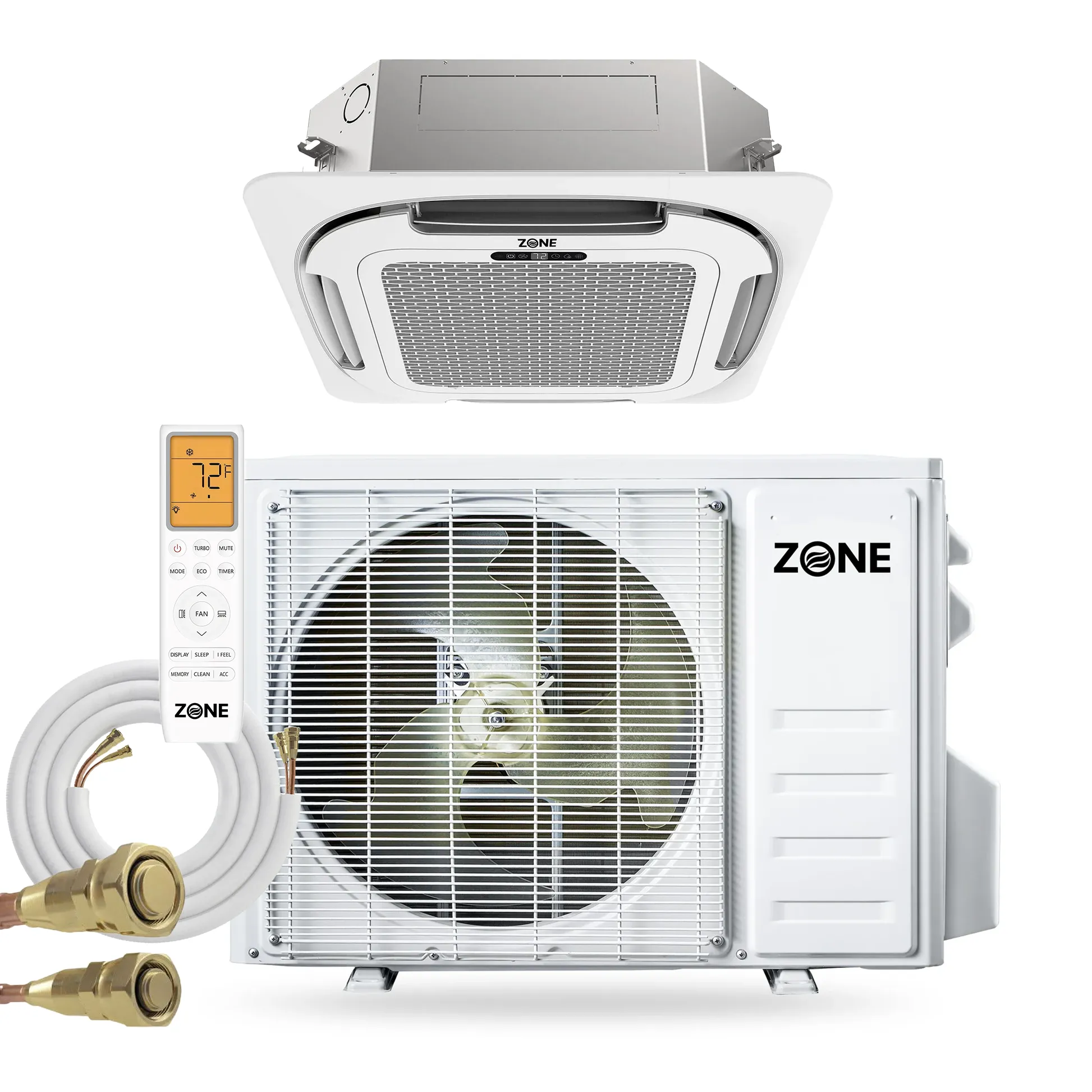
Zone Air® Airframe 9,500 BTU 21 SEER2 230V Ceiling Cassette Mini-Split Heat Pump AC with Pre-Charged Lineset - Up to 475 Sq Ft
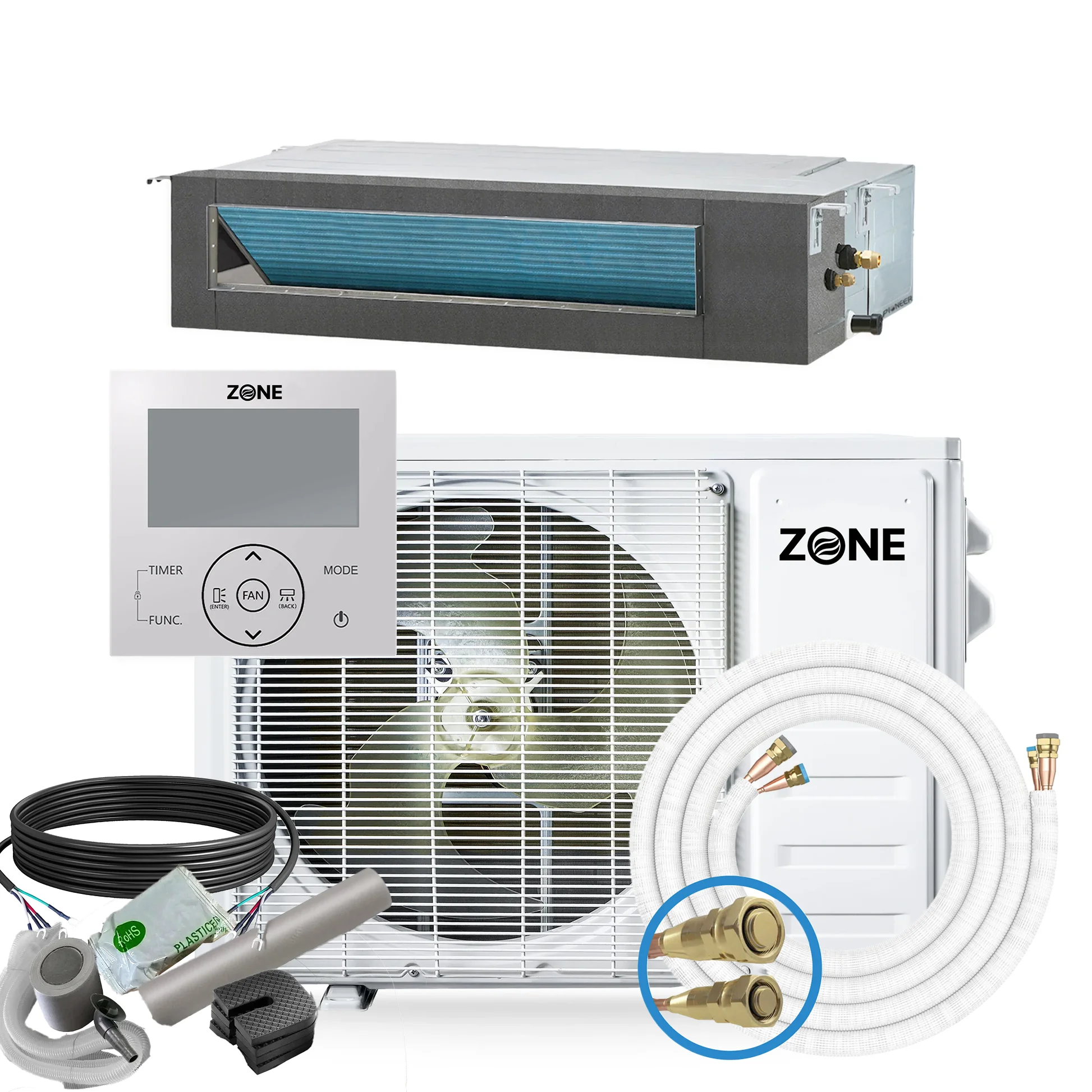
Zone Air® Thin-Air 9,500 BTU 19.6 SEER2 230V Concealed Mini-Split Heat Pump AC - Up to 475 Sq Ft
Multi-Zone Bundles
Two indoor heads sharing one outdoor condenser — cool/heat two rooms with one system.
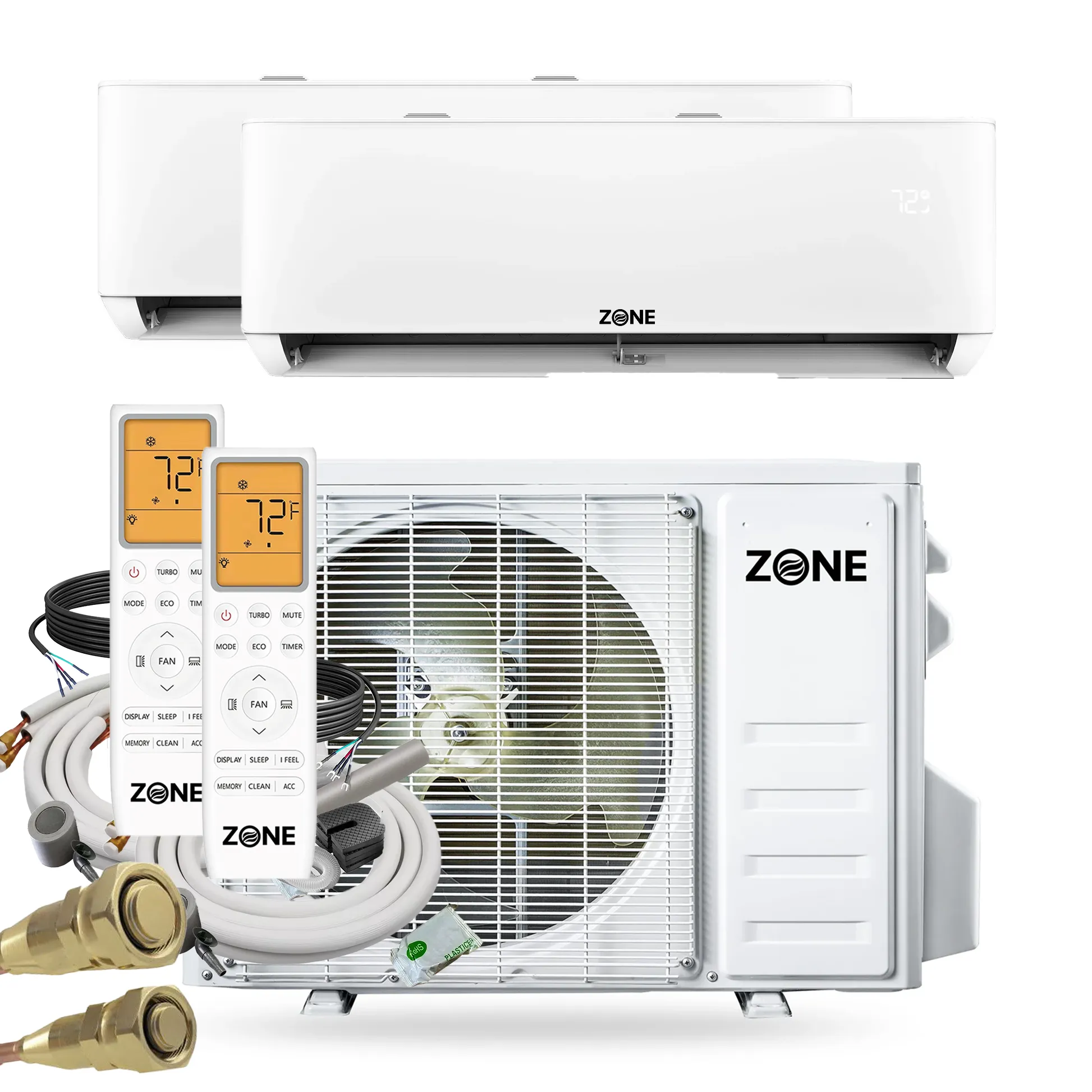
Zone Air® DIY DUAL ZONE 21,000 BTU (12K+9K) 24 SEER2 230V Wall Mount Ductless Mini-Split Heat Pump System with 2x Pre-Charged Linesets - Up to 1,050 Sq Ft
Zone Air® DIY DUAL ZONE 18,000 BTU (9K+9K) 24 SEER2 230V Wall Mount Ductless Mini-Split Heat Pump System with 2x Pre-Charged Linesets - Up to 900 Sq Ft
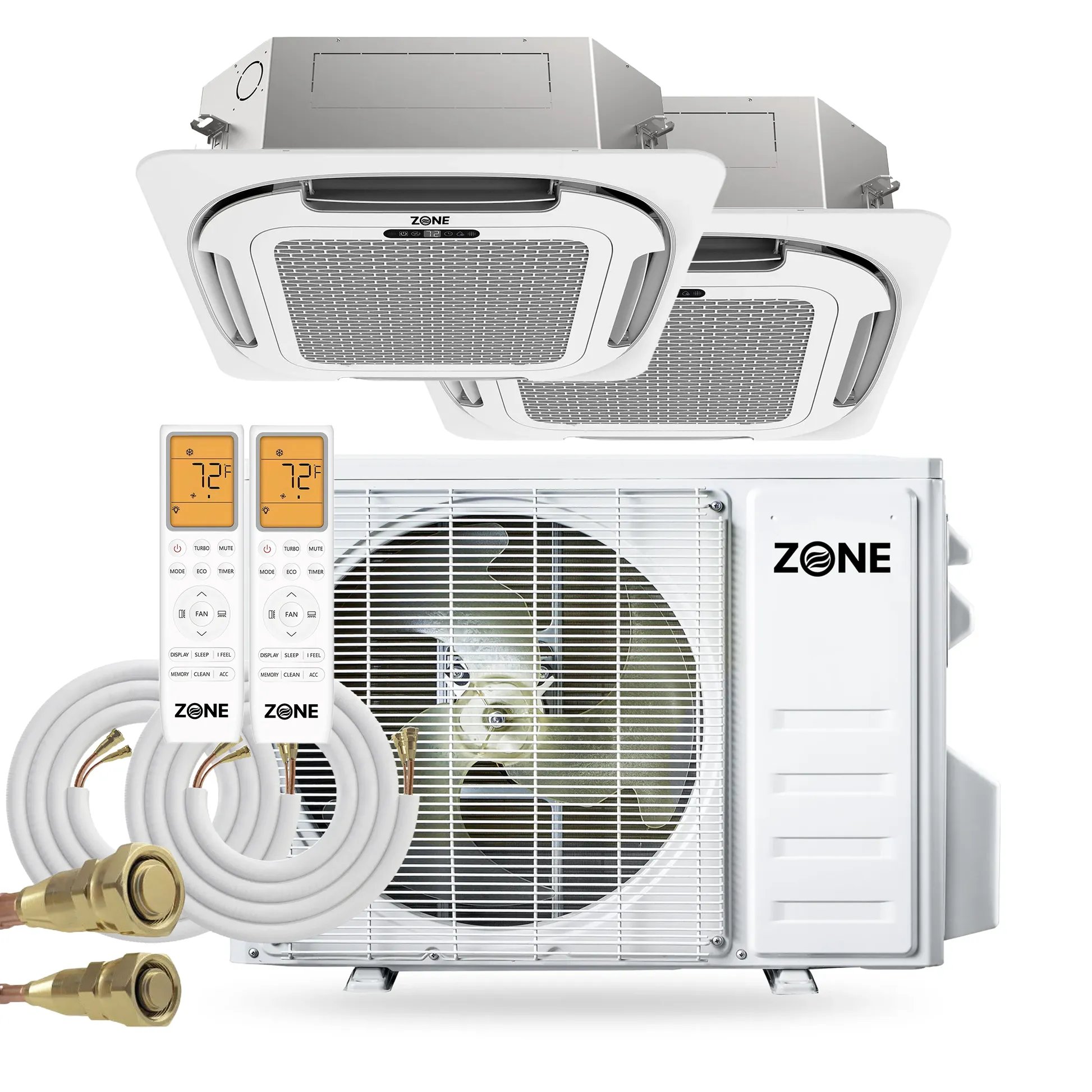
Zone Air® Airframe DUAL ZONE 19,000 BTU (9.5K+9.5K) 21 SEER2 230V Ceiling Cassette Mini-Split Heat Pump System with 2x Pre-Charged Linesets - Up to 950 Sq Ft
Zone Air® Airframe DUAL ZONE 21,500 BTU (12K+9.5K) 21 SEER2 230V Ceiling Cassette Mini-Split Heat Pump System with 2x Pre-Charged Linesets - Up to 1,075 Sq Ft
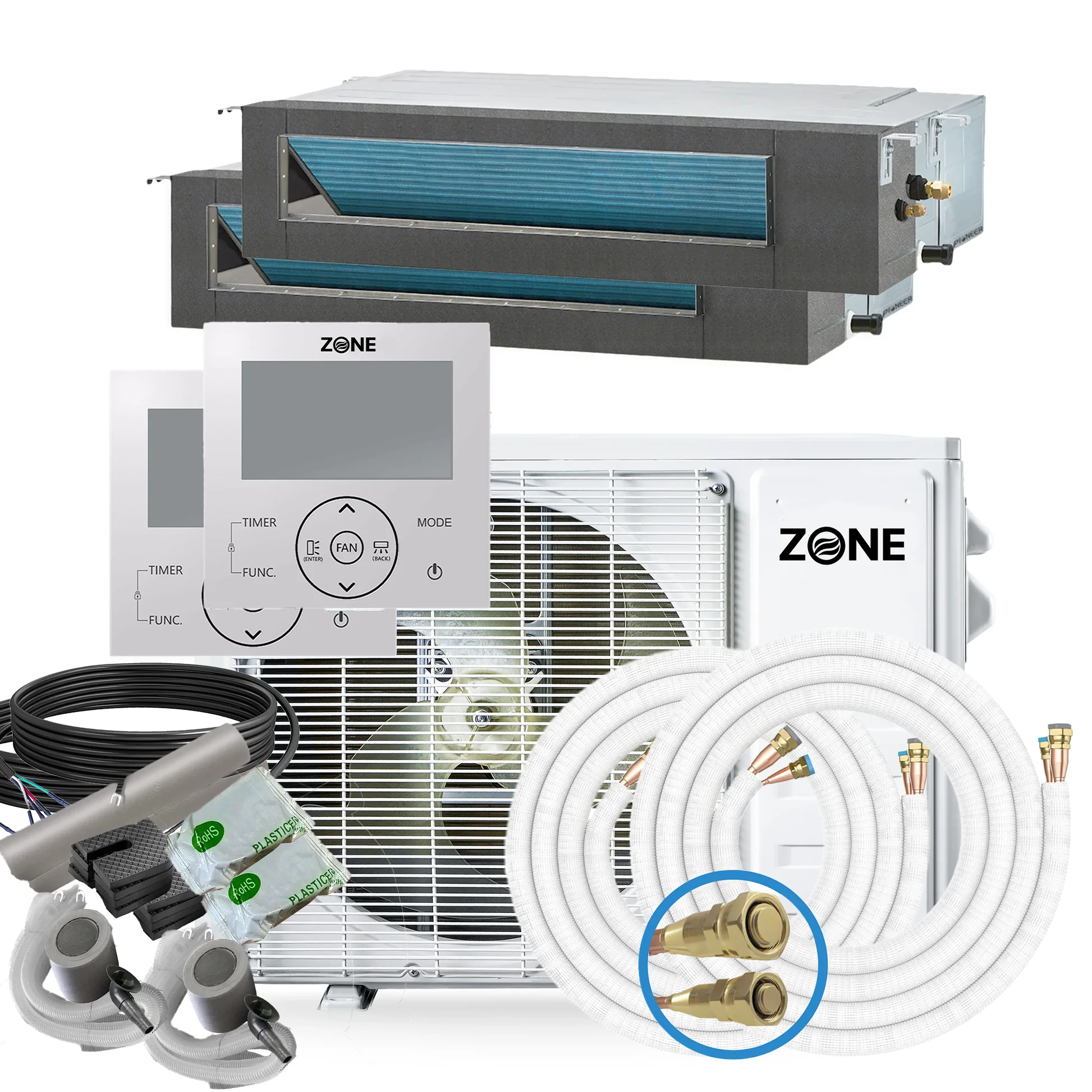
Zone Air® Thin-Air DUAL ZONE 19,000 BTU (9.5K+9.5K) 19 SEER2 230V Concealed Mini-Split Heat Pump System - Up to 950 Sq Ft
Zone Air® Thin-Air DUAL ZONE 20,500 BTU (11K+9.5K) 19 SEER2 230V Concealed Mini-Split Heat Pump System - Up to 1,025 Sq Ft
Frequently Asked Questions About 9,000 BTU Mini Splits
Sizing, run cost, and form factor questions for 9K mini split buyers.
What size room does a 9,000 BTU mini split cool?
Is 9,000 BTU enough for a bedroom?
What is the difference between 9,000 BTU and 12,000 BTU mini splits?
Can I plug a 9,000 BTU mini split into a regular outlet?
How much does a 9,000 BTU mini split cost to run?
How loud is a 9,000 BTU Zone Air mini split?
Can a 9,000 BTU heat pump be my only heat source?
Can I install the entire 9,000 BTU system myself?
What maintenance does a 9,000 BTU mini split need?
Ceiling cassette or wall unit for a 9,000 BTU mini split?
What does Zone Air's warranty cover on a 9,000 BTU system?
Find Your 9,000 BTU Mini Split
Plug-and-play 115V or high-efficiency 230V — wall, cassette, or concealed. The right size for bedrooms, offices, and rooms up to 350 sq ft.
Open the Sizing Calculator