
Whole Home Mini Splits
Updated August 28, 2026
A multi-zone mini split can fully heat and cool an entire house — one outdoor condenser driving several indoor heads, each on its own thermostat, with no ductwork required. 24 systems below, 2 to 3 zones in stock and 4 and 5-zone builds custom-quoted, all pre-charged for DIY install and rated to keep heating at -13°F.
Not sure what sizes you need?
Open the Mini Split Sizing Calculator →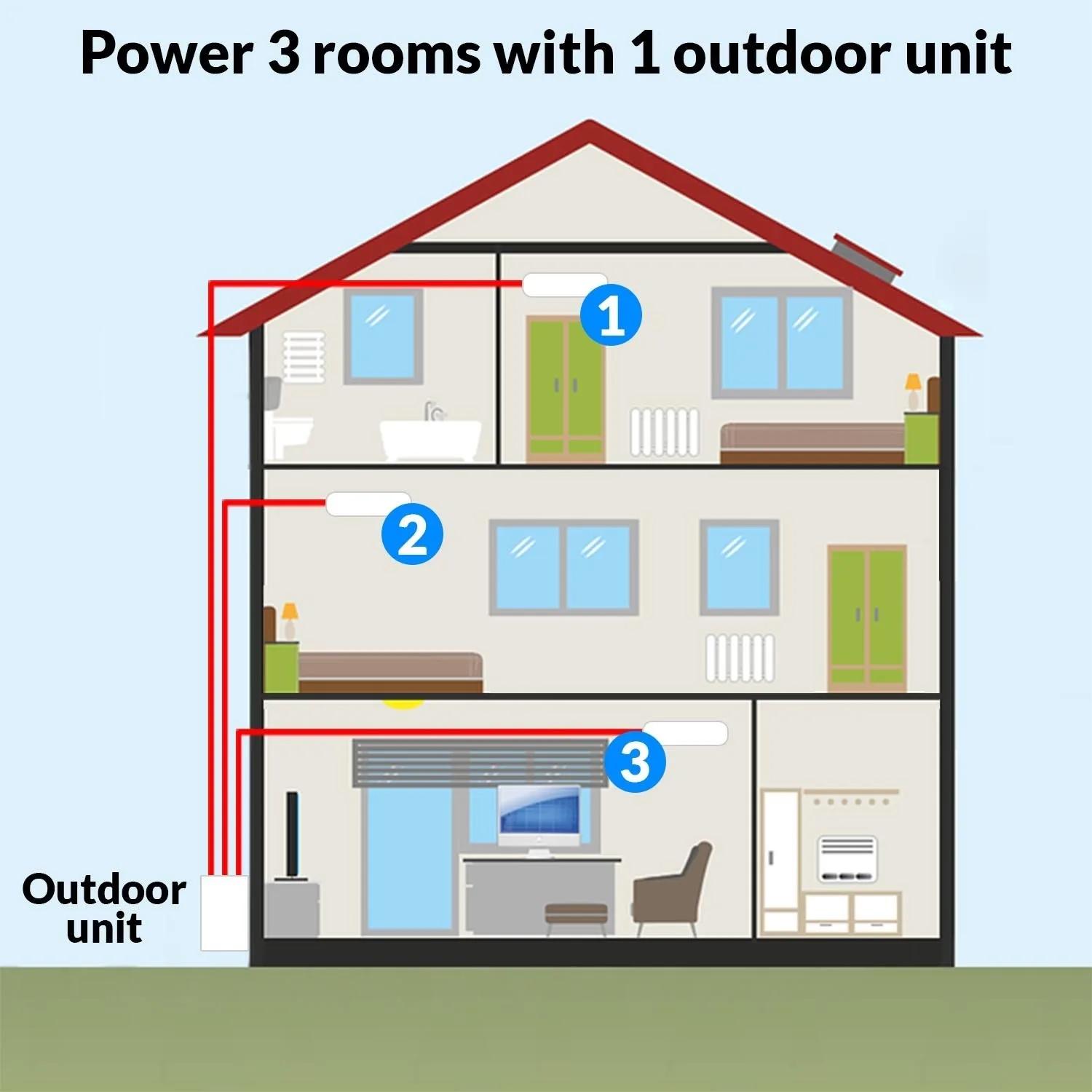
2 Zone Whole Home Mini Splits
Two rooms on one outdoor unit — the building block of a whole-house layout.
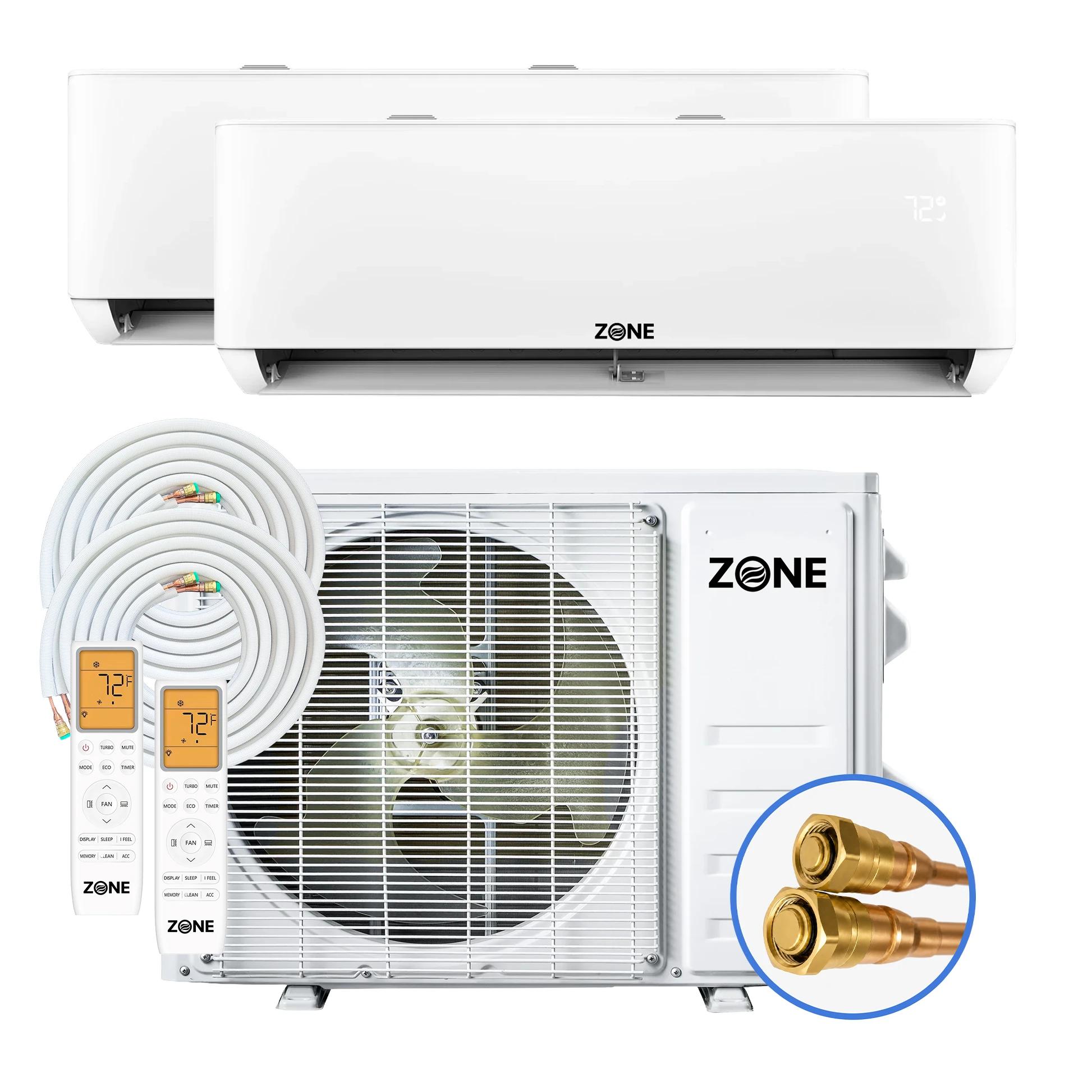
Zone Air® DIY DUAL ZONE 24,000 BTU (12K+12K) 24 SEER2 230V Wall Mount Ductless Mini-Split Heat Pump System - Up to 1,200 Sq Ft
Zone Air® DIY DUAL ZONE 21,000 BTU (12K+9K) 24 SEER2 230V Wall Mount Ductless Mini-Split Heat Pump System - Up to 1,050 Sq Ft
Zone Air® DIY DUAL ZONE 30,000 BTU (12K+18K) 24 SEER2 230V Wall Mount Ductless Mini-Split Heat Pump System - Up to 1,500 Sq Ft
Zone Air® DIY DUAL ZONE 27,000 BTU (9K+18K) 24 SEER2 230V Wall Mount Ductless Mini-Split Heat Pump System - Up to 1,350 Sq Ft
Zone Air® DIY DUAL ZONE 18,000 BTU (9K+9K) 24 SEER2 230V Wall Mount Ductless Mini-Split Heat Pump System - Up to 900 Sq Ft
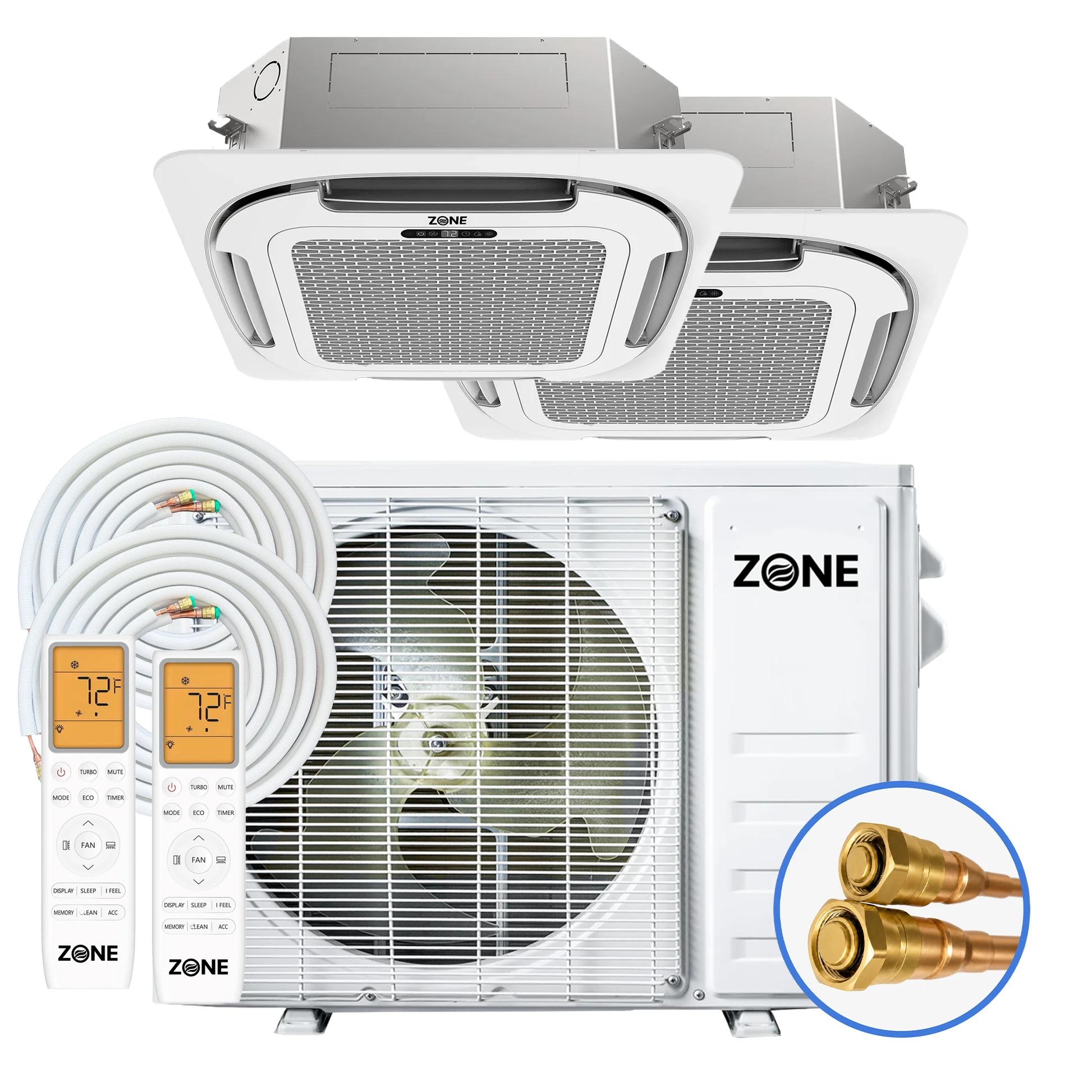
Zone Air® Airframe DUAL ZONE 24,000 BTU (12K+12K) 21 SEER2 230V Ceiling Cassette Mini-Split Heat Pump System - Up to 1,200 Sq Ft
Zone Air® Airframe DUAL ZONE 19,000 BTU (9.5K+9.5K) 21 SEER2 230V Ceiling Cassette Mini-Split Heat Pump System - Up to 950 Sq Ft
Zone Air® Airframe DUAL ZONE 21,500 BTU (12K+9.5K) 21 SEER2 230V Ceiling Cassette Mini-Split Heat Pump System - Up to 1,075 Sq Ft
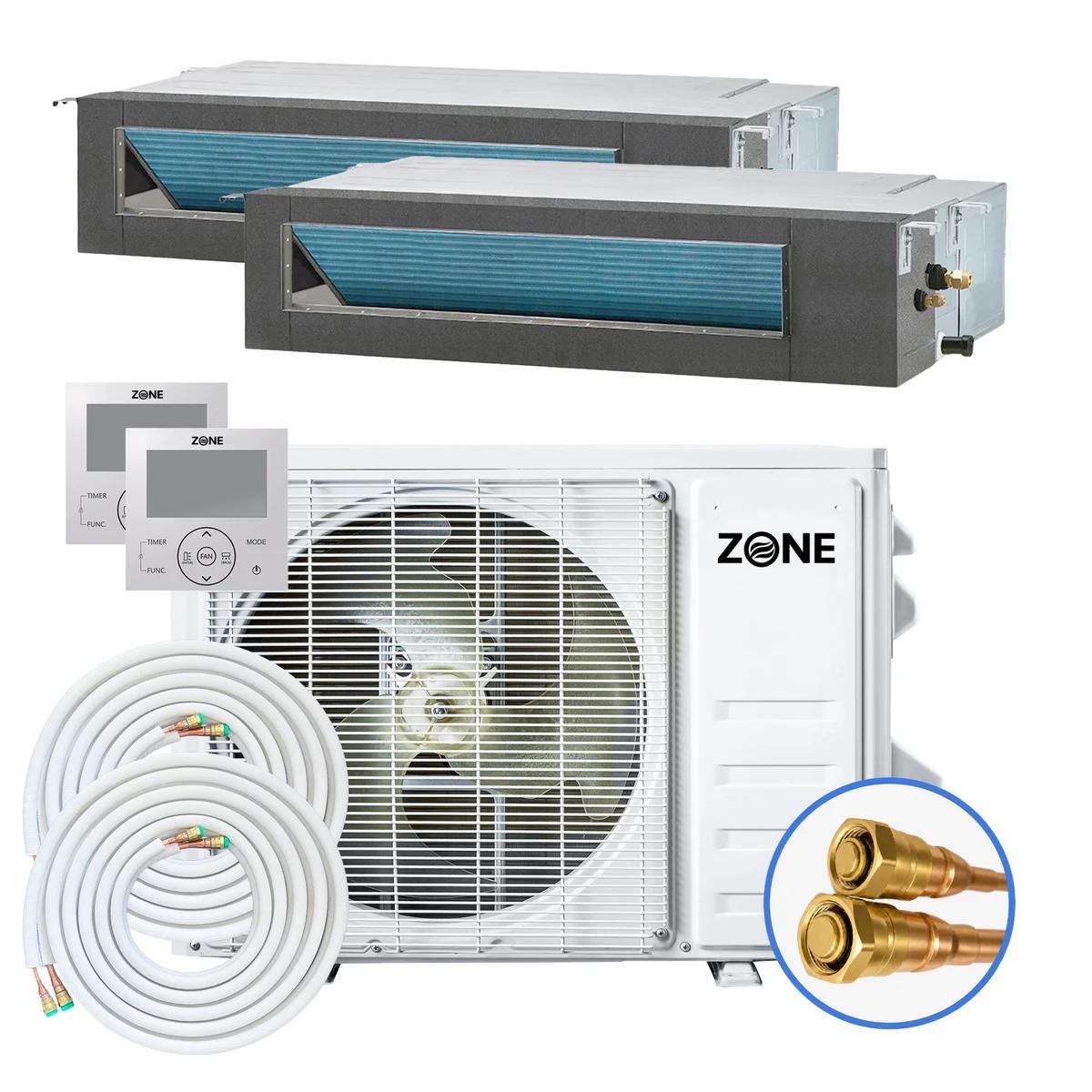
Zone Air® Thin-Air DUAL ZONE 22,000 BTU (11K+11K) 19 SEER2 230V Concealed Mini-Split Heat Pump System - Up to 1,100 Sq Ft
Zone Air® Thin-Air DUAL ZONE 19,000 BTU (9.5K+9.5K) 19 SEER2 230V Concealed Mini-Split Heat Pump System - Up to 950 Sq Ft
Zone Air® Thin-Air DUAL ZONE 20,500 BTU (11K+9.5K) 19 SEER2 230V Concealed Mini-Split Heat Pump System - Up to 1,025 Sq Ft
3 Zone Whole Home Mini Splits
Three rooms on one outdoor unit. A living area plus two bedrooms, or a floor plus a finished basement.
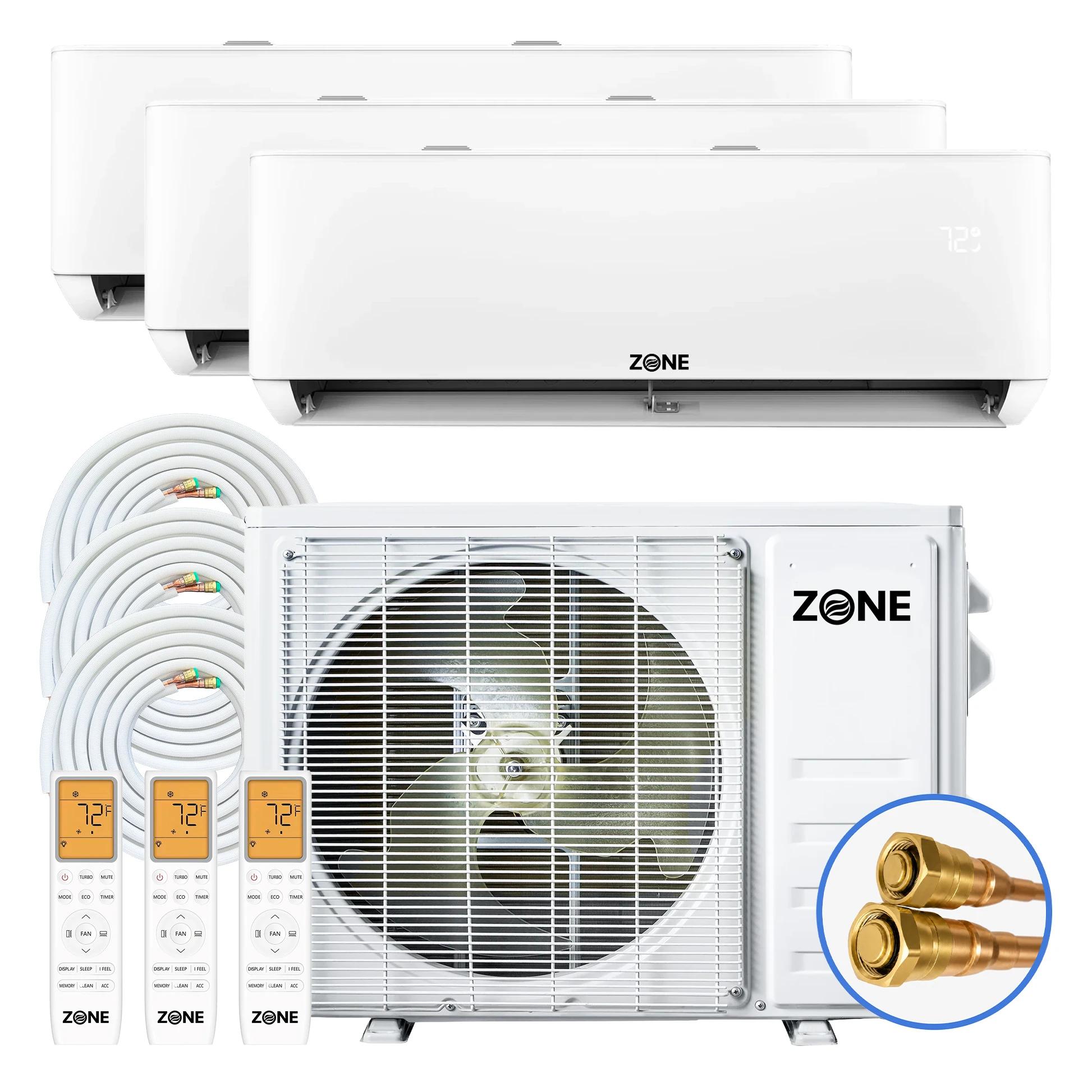
Zone Air® DIY 3 ZONE 36,000 BTU (12K+12K+12K) 24 SEER2 230V Wall Mount Ductless Mini-Split Heat Pump System - Up to 1,800 Sq Ft
Zone Air® DIY 3 ZONE 27,000 BTU (9K+9K+9K) 24 SEER2 230V Wall Mount Ductless Mini-Split Heat Pump System - Up to 1,350 Sq Ft
Zone Air® DIY 3 ZONE 36,000 BTU (9K+9K+18K) 24 SEER2 230V Wall Mount Ductless Mini-Split Heat Pump System - Up to 1,800 Sq Ft
Zone Air® DIY 3 ZONE 30,000 BTU (9K+9K+12K) 24 SEER2 230V Wall Mount Ductless Mini-Split Heat Pump System - Up to 1,500 Sq Ft
Zone Air® DIY 3 ZONE 33,000 BTU (9K+12K+12K) 24 SEER2 230V Wall Mount Ductless Mini-Split Heat Pump System - Up to 1,650 Sq Ft
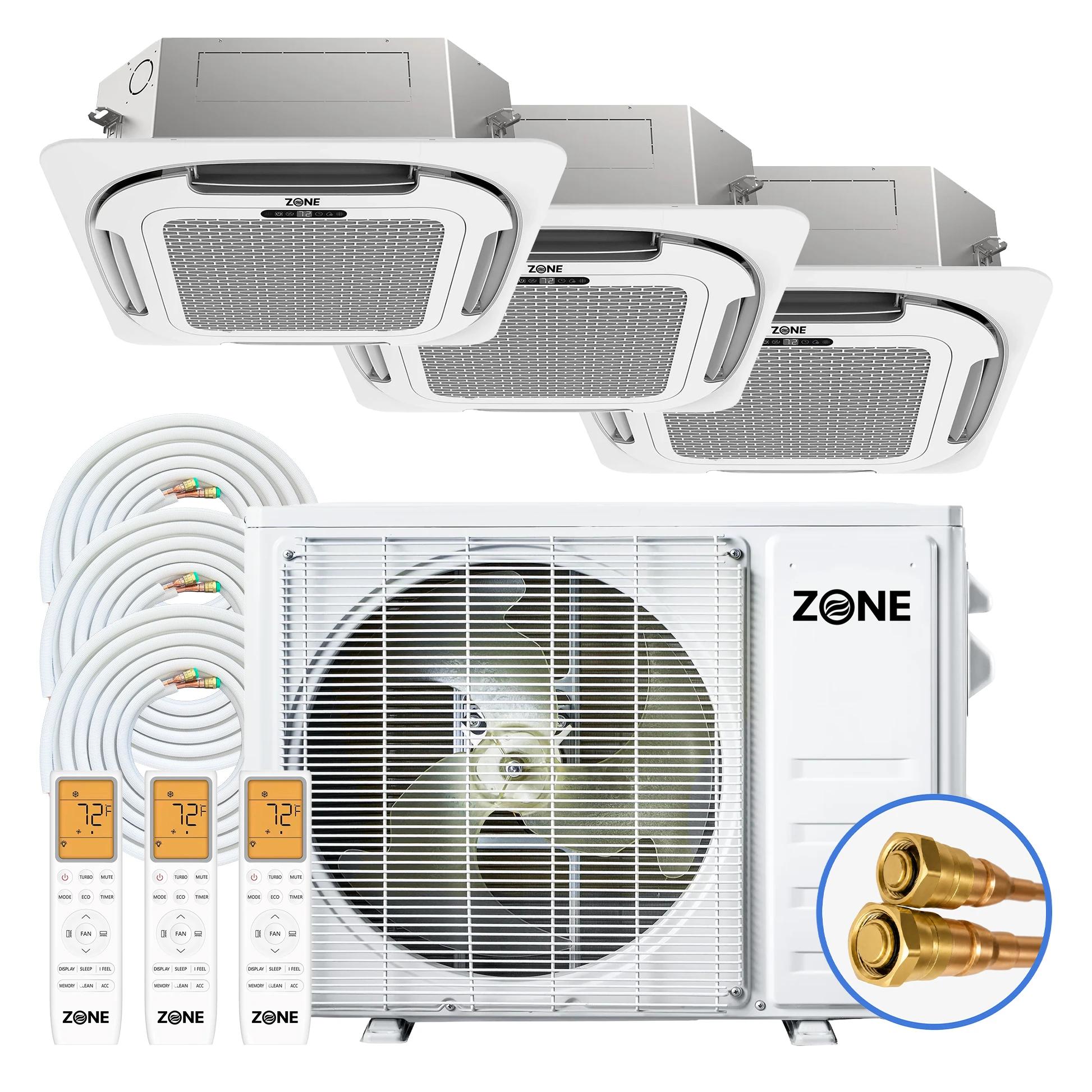
Zone Air® Airframe 3 ZONE 36,000 BTU (12K+12K+12K) 24 SEER2 230V Ceiling Cassette Mini-Split Heat Pump System - Up to 1,800 Sq Ft
Zone Air® Airframe 3 ZONE 28,500 BTU (9.5K+9.5K+9.5K) 24 SEER2 230V Ceiling Cassette Mini-Split Heat Pump System - Up to 1,425 Sq Ft
Zone Air® Airframe 3 ZONE 31,000 BTU (12K+9.5K+9.5K) 24 SEER2 230V Ceiling Cassette Mini-Split Heat Pump System - Up to 1,550 Sq Ft
Zone Air® Airframe 3 ZONE 33,500 BTU (12K+12K+9.5K) 24 SEER2 230V Ceiling Cassette Mini-Split Heat Pump System - Up to 1,675 Sq Ft
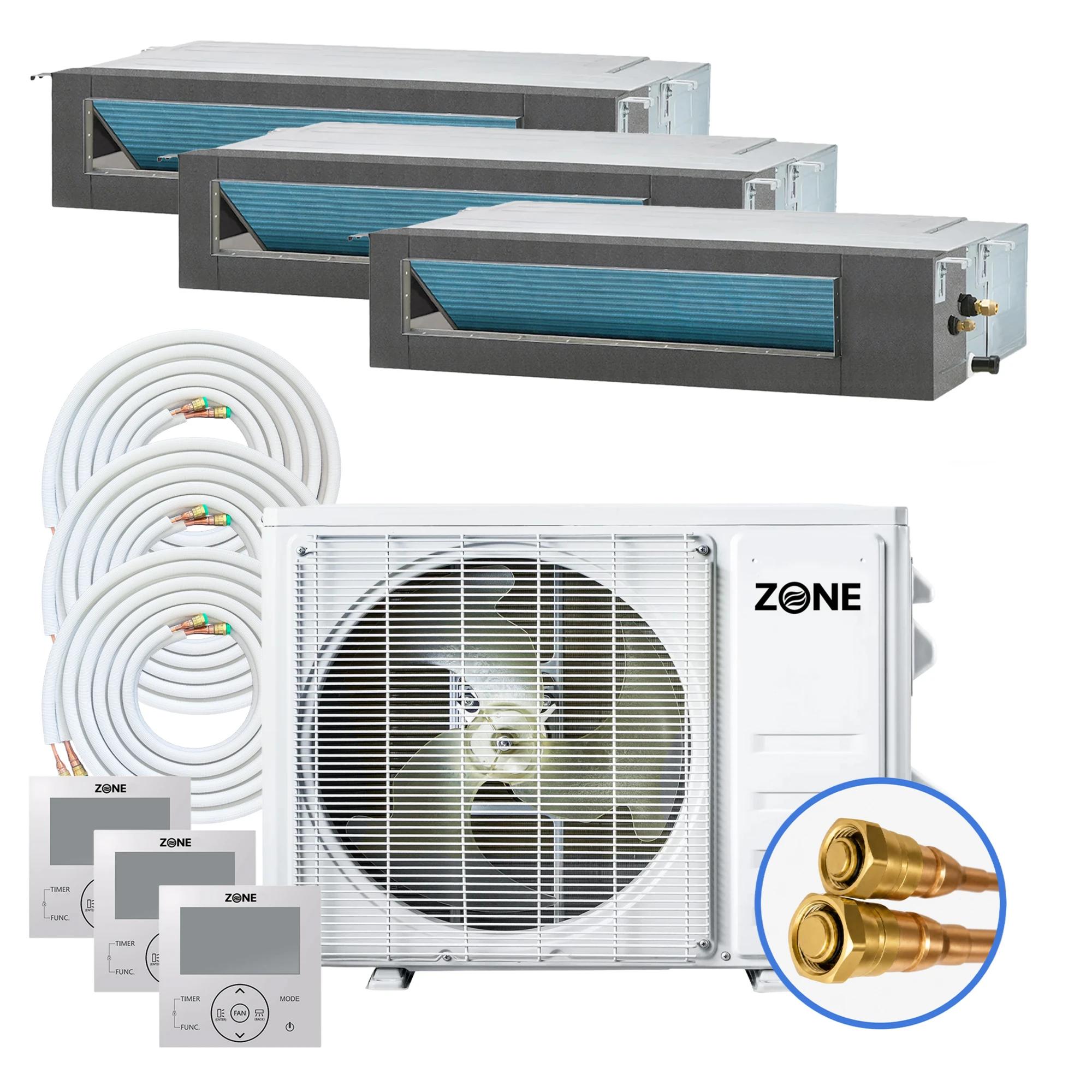
Zone Air® Thin-Air 3 ZONE 33,000 BTU (11K+11K+11K) 22 SEER2 230V Concealed Mini-Split Heat Pump System - Up to 1,650 Sq Ft
Zone Air® Thin-Air 3 ZONE 28,500 BTU (9.5K+9.5K+9.5K) 22 SEER2 230V Concealed Mini-Split Heat Pump System - Up to 1,425 Sq Ft
Zone Air® Thin-Air 3 ZONE 30,000 BTU (11K+9.5K+9.5K) 22 SEER2 230V Concealed Mini-Split Heat Pump System - Up to 1,500 Sq Ft
Zone Air® Thin-Air 3 ZONE 31,500 BTU (11K+11K+9.5K) 22 SEER2 230V Concealed Mini-Split Heat Pump System - Up to 1,575 Sq Ft
Whole-home sizing starts with a room-by-room load, not a total square footage.
Try the Mini Split Sizing Calculator →Adding a single room to an existing layout, or planning 4 and 5-zone builds? Browse the full catalog or start from the complete DIY mini split lineup.
Fast Answer: Can a Mini Split Really Handle Your Whole Home?
Zone Air’s whole-home building blocks include a dual-zone 24K (12K+12K) system at $3,039.99 rated 24 SEER2 for up to 1,200 sq ft, and every 2026 unit heats down to -13°F. Yes. A properly sized ductless mini split system with multiple indoor units can handle heating and cooling for your entire home, delivering comfort that matches or beats central air while skipping the expensive installation of new ductwork. Many homeowners replace aging central AC, noisy window AC units, or inefficient baseboard heaters with a multi-zone mini split and see immediate improvements in comfort, air quality, and utility costs.
Zone Air DIY mini splits are designed so homeowners can cover their whole house without hiring an HVAC company, often saving $3,000–$5,000 on installation. Consider a concrete example: a 2,000 sq ft, 3-bedroom house using a 36,000 BTU multi-zone outdoor unit with 3–5 indoor air handlers serving the entire house — living room, bedrooms, and a home office each on independent zones.
If you’re in an older home with no ducts, stuck with window units, or running an aging HVAC system that costs a fortune each month, a whole home mini split is worth serious consideration.
How Whole Home Mini Split Systems Work
Zone Air’s 2026 whole home mini splits connect multiple WiFi-controlled indoor units to one outdoor unit using pre-charged R-454B quick-connect line sets and zero ductwork. A whole home mini split uses one outdoor compressor connected via refrigerant lines to multiple indoor units placed throughout your house. Each indoor unit — whether wall-mounted, ceiling cassette, or concealed duct — creates its own comfort zone. A WiFi controller lets you manage each room from your phone.
Mini splits pump chemical refrigerant to transfer heat rather than generating it through combustion or resistive coils. Their inverter-driven compressors modulate capacity continuously instead of cycling on and off, which is the foundation of their superior energy efficiency. Unlike central air that pushes conditioned air through long ducts (losing 20–30% of energy along the way), ductless systems send refrigerant directly to each room, cutting energy loss dramatically. A whole home design can mix ductless mini splits with short-run ducted air handlers to cover hallways or multiple bedrooms off one corridor. For a room-by-room comparison of the top multi-zone systems — DIY and contractor-installed — see our guide to the best multi zone mini split systems.
Whole Home Mini Split vs Central Air (and Traditional Heat Pumps)
Zone Air’s ductless lineup reaches up to 24 SEER2 in 2026, while central air loses 20–30% of conditioned energy through ductwork. Many homeowners compare mini splits to central air and conventional heat pumps when planning a whole home upgrade. Here’s how they stack up across three key areas.
Efficiency & SEER2 Ratings
Ductless mini splits can achieve up to 24 SEER2 ratings, while older central air systems common in homes built before 2015 sit at just 10–14 SEER. Because ductless systems eliminate energy loss associated with ducts, more of every dollar you spend on power actually reaches each room. Installing a whole-home mini-split HVAC system delivers measurable energy efficiency benefits from day one.
Comfort & Zoning
Each air handler has its own thermostat, so a bedroom can hold a set point of 68°F while the living room sits at 72°F. Central air forces one temperature on the entire home, which means someone is always uncomfortable. Mini splits also improve indoor air quality by avoiding the recirculation of dust and allergens through dirty ductwork, and built-in filtration keeps the air cleaner in each space. Ductless mini splits can dehumidify indoor air effectively — even in heating mode — addressing high humidity and improving humidity management without a separate dehumidifier.
Installation Cost & Disruption
Adding ductwork to a 1970s–1990s house can run $8,000–$15,000. A mini split installation only requires a small hole in the wall for refrigerant lines — minimally invasive compared to tearing open ceilings and walls. That said, if your existing ductwork is in good shape, a ducted mini split air handler can pair with it for a hybrid approach. Traditional central air systems may last 15–20 years while mini splits last around 10–12 years, but the efficiency gains and lower operating cost often offset the difference.
Designing a Whole Home Ductless Mini Split Layout
Zone Air’s 2026 multi-zone layouts start with a dual-zone 18K (9K+9K) at $3,039.99 covering up to 900 sq ft and scale to a dual-zone 24K covering up to 1,200 sq ft. Note what those numbers describe: on every in-stock 2 zone and 3 zone bundle, the BTU in the name is the connected indoor capacity — the heads added together — while the outdoor unit is the same 27,000 BTU multi-zone condenser in every case. Only 4 and 5 zone builds, which are custom-quoted, move up to a larger outdoor unit. A successful whole home mini split project comes down to correct design: matching system size, zoning capabilities, and indoor unit placement to your home’s layout. Most whole house systems use 24,000–48,000 BTU outdoor units, but proper design always starts with a load calculation.
Group rooms into zones by usage: one zone for the main living area, one for bedrooms, and one for a finished basement or bonus room, each with its own air handler. Long, open floor plans may only need one unit or two, while chopped-up 1950s homes with many walls and different rooms often perform better with several smaller wall-mounted mini splits. For homes with an upstairs hallway and three bedrooms, a single low-static ducted air handler in the attic can serve all three specific rooms with short duct runs. Where the second floor is the only real problem, a mini split for upstairs is a smaller fix than re-zoning the whole house, and a finished attic conversionneeds sizing for the roof above it rather than its floor area.
Zone Air offers multi-zone DIY systems with pre-charged line sets, making it realistic for a confident homeowner to set up a 3–5 zone system over a weekend.
Key Design Factors: Load, Insulation, and Climate
Every Zone Air mini split is rated for heating down to -13°F in 2026, which simplifies load planning in cold climates. Proper sizing is crucial for mini-split system effectiveness. A Manual J–style load calculation considers square footage, window area, orientation, ceiling height, and insulation levels. Good insulation enhances mini-split system efficiency — an 1,800 sq ft 1995-built house in Columbus, Ohio, may need a significantly smaller cooling system after adding R-49 attic insulation and air sealing compared to its original leaky shell.
Climate matters too. Cold-climate ductless mini splits with hyper heat technology maintain strong heating output even when outdoor temperatures drop to 0–5°F. Mini-split heat pumps can operate efficiently in temperatures as low as -5°F, and premium models go even lower.
Can Ductless Mini Splits Really Heat and Cool the Entire House Year-Round?
An 18K Zone Air heat pump rated 23 SEER2 heats and cools up to 900 sq ft year-round as of 2026. Modern ductless mini split heat pumps are built for both heating mode and cooling mode — not just air conditioning. In heating mode, the outdoor condensing unit works to absorb heat from outside air and move it indoors, even when the air feels cold. In cooling mode, the process reverses.
In many U.S. regions — Pacific Northwest, Mid-Atlantic, much of the Midwest — a properly sized system can replace a furnace and central AC entirely, solving uneven heating issues that frustrate homeowners. In very cold climates (northern Minnesota, Maine), homeowners often pair hyper heat mini splits with a backup system for extreme cold snaps.
Zoning, Comfort, and Everyday Use
Every Zone Air indoor unit ships with WiFi control and a 30 dB quiet mode in 2026, so each zone holds its own schedule and set point. Each indoor unit can operate independently for zoning — parents can cool specific zones from the couch while a teenager keeps their upstairs bedroom at a different temperature for sleep. You can maintain consistent temperatures in the spaces you use and let unused guest rooms drift to 60°F in winter to save money on energy. Top mini splits can operate at low noise levels around 19 dB, quieter than a whisper, and inverter technology means the equipment modulates rather than cycling noisily. Mini-split systems can dehumidify while heating or cooling, so every room stays comfortable regardless of the floor or season. Modern mini splits often feature Wi-Fi connectivity for smart control, letting you adjust each zone from anywhere.
How to Divide a House Into Comfort Zones
A zone is a space you want to control independently, which is not the same as a room. The practical exercise is to walk the house and group spaces by how they get used and when. The family room, kitchen, media room, playroom and bedrooms all run on different schedules and hold different amounts of heat, and each grouping that genuinely needs its own set point becomes a zone with its own indoor unit.
Scheduling is where zoning pays for itself. A bedroom can sit well below your daytime set point while nobody is in it and come back up before bedtime; a guest room nobody is using can be shut off entirely instead of being conditioned to match the rest of the house. Central air cannot do either — it forces one temperature on the whole envelope, which is why someone in the house is always uncomfortable and why the utility bill reflects rooms nobody occupied.
Underneath that, the inverter-driven compressor is what makes partial loads efficient. Instead of running full-out and shutting off, it varies its output continuously to match what the calling zones actually need and hold the set point. A system serving two zones at low demand throttles down rather than short-cycling, which is the difference between a heat pump that holds a steady temperature and one that overshoots and coasts. Zone Air multi-zone condensers support up to five indoor units, with 2 zone and 3 zone bundles in stock and larger builds custom-quoted.
Mixing Ducted and Ductless in the Same House
Whole-home layouts rarely use one kind of indoor unit throughout. Larger zones are often better served by a ducted air handler that can feed several spaces off short runs, while smaller zones get a ductless head that needs no ductwork at all. The two approaches are designed to coexist on the same outdoor unit.
The classic case is an upstairs hallway with three bedrooms off it. One concealed ducted unit tucked above the ceiling can serve all three through short duct runs, which is tidier and cheaper than three separate heads — provided the runs are genuinely short and the static pressure in the ducts is low. Long runs through unconditioned attic space give back the efficiency that made ductless attractive in the first place, so the calculation is worth doing rather than assuming.
For everything else, ductless is the simpler answer. Wall-mounted heads are the standard choice and the easiest to install, and ceiling cassettes mount flush into the ceiling with four-way airflow where a wall unit would be visually intrusive or where the room has no good exterior wall. A common whole-home result is one ducted zone covering the bedroom wing and cassettes or wall units handling the living areas.
What a Whole-Home Heat Pump Does Not Do
A ductless system is purpose-built for heating and cooling, and it is worth being clear about where that scope ends. A mini split conditions air that is already inside the house — it does not introduce outside air. Any house tight enough to be efficient needs a deliberate ventilation strategy, and the tighter the envelope, the more that matters.
In practice that means planning three things alongside the zones rather than after them. Fresh air: bath and kitchen exhaust that actually terminates outside, and in a very tight house a dedicated ventilation appliance. Filtration: each indoor unit filters the air it recirculates, which is already an improvement on pulling air through dusty ducts, but whole-house filtration is a separate decision. And humidity: mini splits dehumidify while they cool and hold humidity down better than a fixed-speed system because they run longer at lower output, but a damp basement in a humid climate can still want a standalone dehumidifier.
Auxiliary heat is the fourth item, and it is a climate question rather than a universal one. Zone Air systems are rated to keep producing heat at -13°F, which covers the design temperature in most of the country outright. Further north, keeping an existing furnace or baseboard circuit for the coldest nights is a reasonable hedge rather than an admission the heat pump failed — see cold climate mini splits for what the ratings mean.
Retrofitting an Older House
Older houses are the strongest case for going ductless, because they are the houses where adding ducts is most disruptive and most expensive. They are also the houses where the order of operations matters most: air sealing and insulation come before sizing, not after. Doing the envelope work first commonly drops the heating and cooling load enough to change the equipment you need, and paying for capacity you have designed out is the most expensive mistake available in this project.
A representative retrofit looks like this. A 1,600 sq ft house gets its attic insulation brought up to current levels and its obvious leaks sealed, and only then gets divided into three zones — a ducted unit handling the central living space, and a recessed ceiling cassette in each of the two adjacent zones. The hybrid layout gives the main space even distribution without exposed equipment and gives the smaller rooms independent control, on one outdoor unit and without a single new duct chase through finished walls.
The efficiency work usually pays twice. Utility and state programs frequently rebate insulation, air sealing and heat pump equipment separately, and heat pump rebates commonly require a NEEP listing that Zone Air systems carry — the rebate calculator shows what your state offers. Replacing combustion heat with a heat pump also removes the gas line and flue venting from the picture, which is a meaningful part of why whole-home heat pump retrofits have become the default answer for older housing stock.
DIY Whole Home Mini Split with Zone Air
A DIY whole-home install with Zone Air saves $3,000–$5,000 versus contractor labor, and Zone Air averages 4.8/5 across 141 verified reviews as of 2026. Zone Air focuses on energy efficient, DIY-friendly ductless mini splits and multi-zone heat pump systems for homeowners who want to determine the right setup without paying an HVAC professional thousands in labor. Pre-charged line sets eliminate the need for an HVAC license — no gauges, no vacuum pumps — so DIY mini-split systems can be installed without specialized training. Installation of DIY systems can be completed in just a few hours per zone using the step-by-step guide.
Build Your Whole-Home System by Zone Count
One indoor head per room is one zone. Start with the rooms you use most and add zones outward — all pre-charged for DIY install, with free shipping and a 7-year compressor warranty.
Dual Zone (2 Zone)
One outdoor condenser powers two indoor heads on independent thermostats. The building block of a whole-home layout — main living area plus a bedroom.
Shop dual zone bundles →3 Zone
Three heads, one condenser, one set of penetrations through the envelope. Covers a living area plus two bedrooms, or a floor plus a finished basement.
Shop 3 zone systems →Multi Zone (2–5 Zone)
How multi-zone builds are sized, which bundles fit a 3+ room project, and how 4 and 5-zone whole-house systems are custom-quoted.
Compare multi zone →What Whole-Home Installers Say
As of 2026, the Zone Air multi-zone mini split range holds an average rating of 4.8 out of 5 across 34 verified customer reviews spanning 24 systems, with owners most often mentioning cooling performance, heating performance, and quiet operation.
I'm pretty handy and installed this myself (67 years old). Had no problem handling this myself. I only needed help moving the outdoor condenser around. Upstairs bedrooms were usually about five or six degrees warmer than downstairs. Now the grands can finally come stay over in the summer again.
on the Zone Air 3-zone mini split system →I am glad I went with a DIY option. The install was manageable, and the room is finally comfortable.
on the Zone Air 2-zone ceiling cassette mini split →Summer was a lot easier with this installed. The room stayed comfortable even during the hottest part of the day.
on the Zone Air 2-zone mini split system →The setup was simple, and the comfort improvement was immediate. I noticed the room feeling better the same day.
on the Zone Air 2-zone mini split system →This is a nice option for someone who wants to handle the install themselves. The system works well and feels very practical for a homeowner.
on the Zone Air 2-zone ceiling cassette mini split →For a system I could install myself, the performance has been excellent. It feels like a much more expensive setup than I expected.
on the Zone Air 2-zone ceiling cassette mini split →Read all 33 written reviews
I was a little nervous before getting started, but the process was pretty straightforward. Once it was running, I was surprised at how quickly the room cooled down.
on the Zone Air 2-zone ceiling cassette mini split →I put this in a room that was always either too hot or too cold, and it honestly fixed the problem right away. It has been quiet, easy to use, and way better than the window unit I had before.
on the Zone Air 2-zone mini split system →As an HVAC contractor I've installed my fair share of dual-zone systems - and this one is an excellent value. The build quality is rock solid, the installation is pretty DIY-friendly with the pre-charged lines, and customers just love the independent zone control. The 24 SEER2 rating means real energy savings, not just some pie-in-the-sky promise.
on the Zone Air 2-zone mini split system →Installing two units in our open plan office - one for the main work area and one in the conference room. The 360° airflow keeps everyone comfortable no matter where they sit. Having independent control lets us cool down the conference room when the big meetings are happening. Plus the units look super professional.
on the Zone Air 2-zone ceiling cassette mini split →I installed one unit in the master suite (bedroom, bathroom, closet) and another in the main living areas (living room, dining room, kitchen). The only stuff you can see are some small linear vents - and that's it. You'd never even guess there's a mini-split system back there. Each zone stays exactly the right temperature on its own.
on the Zone Air 2-zone concealed ducted mini split →We needed some new heating and cooling for our 1890s Victorian, but we wanted to keep the place looking historic. These units got installed in the attic with little ducts going to these tiny ceiling vents - and the original plaster and trim are completely untouched. It operates super quietly and handles our crazy New England winters like a breeze.
on the Zone Air 2-zone concealed ducted mini split →Three zone system in an older house. Easy enough.
on the Zone Air 3-zone mini split system →The system works great, was a bigger project than I anticipated.
on the Zone Air 2-zone mini split system →We use them constantly, no more fighting over the thermostat.
on the Zone Air 2-zone mini split system →I am really happy with how quickly it cools. I can feel the room changing within a short time after turning it on.
on the Zone Air 2-zone mini split system →The heat has been really nice on cold mornings. It warms the space quickly and makes the room much easier to use.
on the Zone Air 2-zone mini split system →The quality has been better than I expected. It feels solid, runs smoothly, and has been reliable.
on the Zone Air 2-zone mini split system →It has been running great since I put it in. Cooling, heating, and everyday use have all been solid.
on the Zone Air 2-zone mini split system →The room feels completely different now. It is more comfortable, more usable, and just feels nicer to spend time in.
on the Zone Air 2-zone mini split system →My office was almost unusable in the afternoon before this. Now I can work in there all day without getting overheated.
on the Zone Air 2-zone mini split system →The heating side has been very useful. It warms the room quickly and makes cold mornings a lot more comfortable.
on the Zone Air 2-zone mini split system →I honestly notice how quiet it is more than anything. It cools the room well without that constant background roar.
on the Zone Air 2-zone mini split system →The temperature in this room used to swing a lot. Now it stays much more consistent and comfortable.
on the Zone Air 2-zone mini split system →The finished look is clean, and the performance has been great. It cools the room quickly without being loud.
on the Zone Air 2-zone mini split system →I had a hard time keeping this room comfortable before. After putting this in, it finally feels like the rest of the house.
on the Zone Air 2-zone mini split system →It has plenty of power without being noisy. The room cools down quickly, but it does not sound like a big appliance running.
on the Zone Air 2-zone mini split system →I waited a bit before writing this because I wanted to see how it would hold up. So far, it has been reliable and definitely worth the money.
on the Zone Air 2-zone mini split system →It has done exactly what I needed it to do. The room is more comfortable, the controls are simple, and I have no complaints so far.
on the Zone Air 2-zone mini split system →My finished attic needed its own comfort solution, and this did the job. It keeps the space usable even when temperatures change outside.
on the Zone Air 2-zone mini split system →My office used to get stuffy by the afternoon, especially with the computer running. Now it stays comfortable all day, and I can actually focus.
on the Zone Air 2-zone concealed ducted mini split →Everything about this has been simple in a good way. It looks clean, cools well, and has been one of those purchases I’m glad I didn’t overthink.
on the Zone Air 2-zone mini split system →We've got one air handler over the dining area and one over the bar. Both zones stay perfectly comfortable thanks to independent control. What I really love is the super quiet operation - guests can have real conversations without the constant hum of the heating or air conditioning. Plus the ceiling mount is way more classy than wall units.
on the Zone Air 2-zone ceiling cassette mini split →Whole Home Mini Split FAQ
The questions that come up when a mini split has to cover the whole house rather than one room.
Can one mini split system really heat and cool an entire house?
How much does a whole home mini split system cost?
How many zones do I need for a whole house?
Do I need ductwork for a whole home mini split?
Will a whole home mini split work in a cold climate?
Is a whole home mini split cheaper to run than central air?
Can I install a whole home mini split myself?
Can I add zones later, or do I have to buy them all at once?
Do all the zones have to run at the same time?
What does a whole home mini split not cover?
Ready to condition the whole house?
Plan your zones, then build your whole-home system from Zone Air multi-zone units — pre-charged for DIY, free shipping, 7-year compressor warranty.