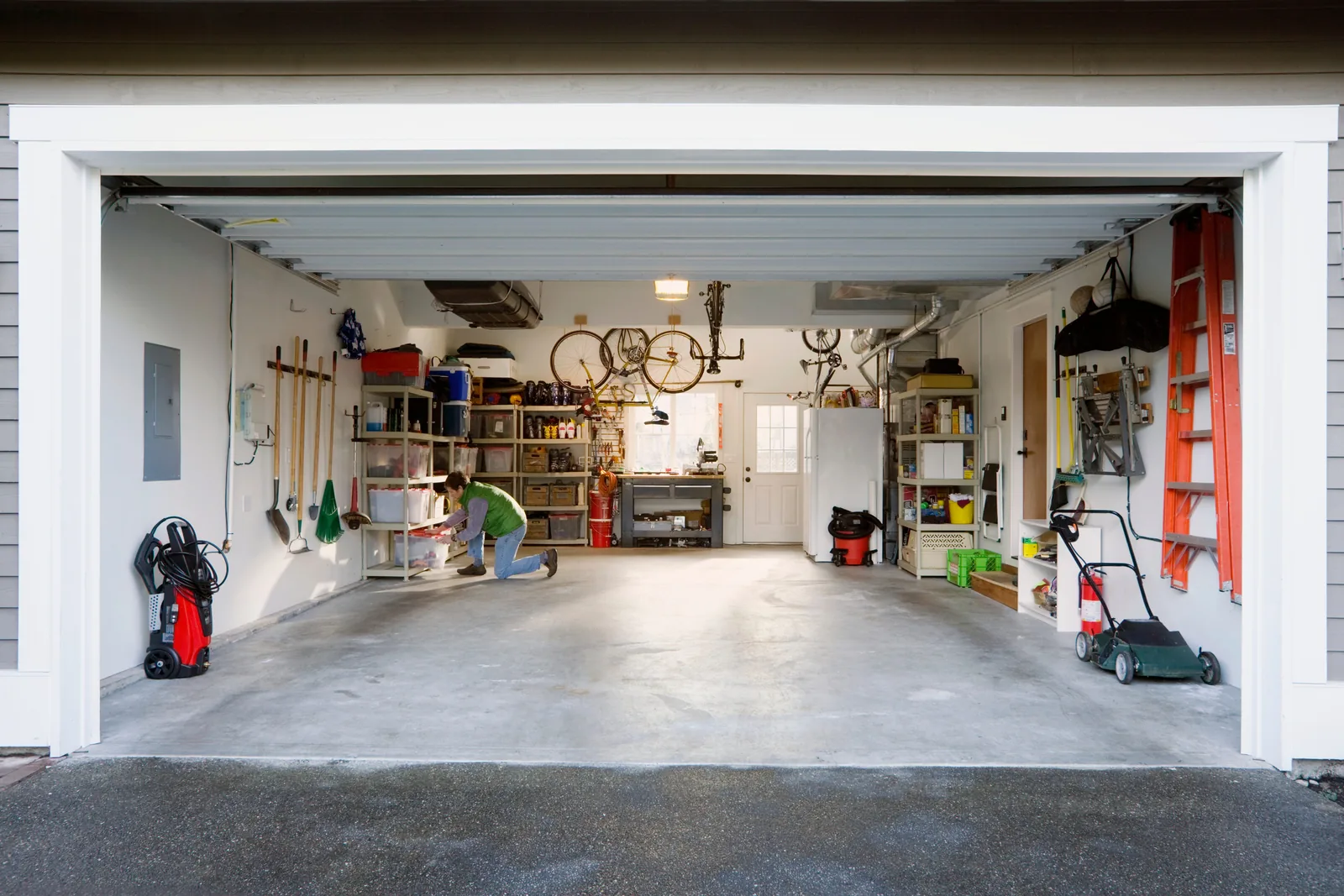

A garage can be the hardest room in the house to heat and cool. Between the garage door, bare concrete, high ceilings, and constant energy loss, the right garage mini split has to balance power, energy efficiency, durability, and installation cost. Here are the six best mini splits for garage use — with Zone Air ranked #1 for DIY-friendly reliability.
Shop Zone Air garage mini splits →
How We Chose the Best Garage Mini Splits
We compared each mini split system by BTU range, cold-weather heat output, SEER2 and HSPF2 ratings, noise level, warranty, and install difficulty. SEER2 measures cooling efficiency and HSPF2 measures heating efficiency — higher ratings generally mean better performance, comfort, and long-term savings. Higher SEER2 numbers translate into greater long-term energy savings, and the best garage units reach up to 24 SEER2.
Every system trades off efficiency against durability and cost. Garages are notorious for poor insulation, so plan to add BTU capacity for poorly insulated spaces or high ceilings. At the same time, oversized units waste energy, can't dehumidify properly, and cost more to run — so the right size matters as much as the brand. Our garage sizing calculator dials it in for your space.
Best 6 Mini Splits for Garage Heating and Cooling
1. Zone Air DIY Ductless Mini Split — best overall for DIY reliability
Zone Air is our top pick because it is built around the real garage problem: homeowners want professional-grade air conditioning and heat without paying thousands for a complicated installation. Zone Air systems are assembled, tested, and inspected in the USA, and every DIY unit ships with pre-charged, easy-install refrigerant line sets.
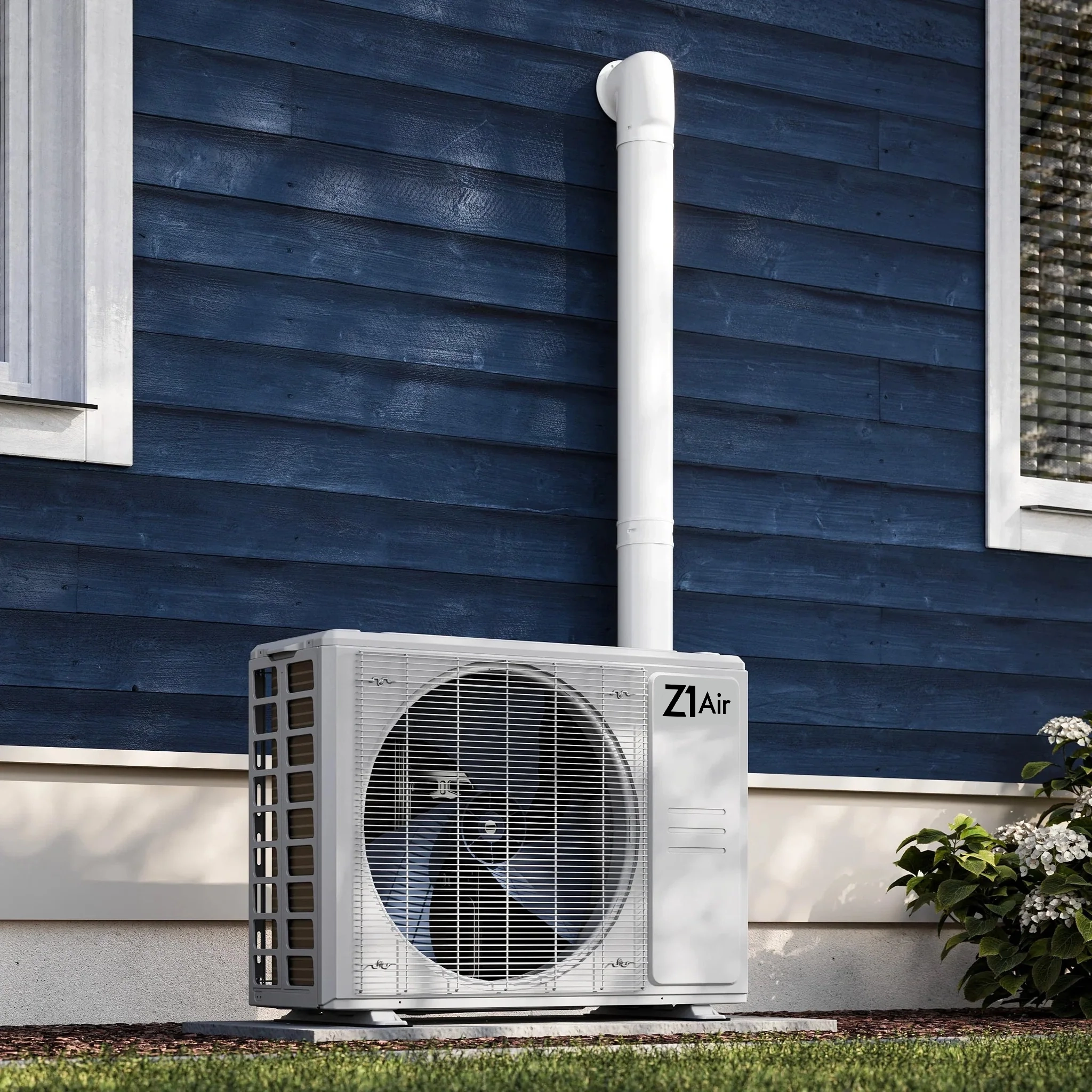
Why it stands out: Pre-charged line sets remove the need for professional HVAC experience. The indoor unit and outdoor unit connect through a single small hole in the wall, so you skip ductwork entirely and keep the install simple.
Best for: A homeowner who wants a ductless mini split for a shop, storage area, small workspace, or full workshop — with independent, precise temperature control and no need to extend central AC into the garage.
Shop the Zone Air DIY mini split lineup →
2. MRCOOL DIY 5th Generation — best budget DIY
MRCOOL remains a popular DIY option, built around quick-connect fittings and smart controls.
Why it stands out: DIY access — especially for homeowners who want a single unit or multi-zone flexibility.
Best for: A garage-plus-loft or connected room where multiple zones matter.
3. Pioneer WYS Series — best basic budget pick
Pioneer is a budget ductless option for basic garage comfort.
Why it stands out: Low upfront pricing and a simple high-wall unit.
Best for: A mild-climate garage where cooling matters more than deep-winter heat.
4. Senville SENL Series — best mid-range value
Senville offers strong value for homeowners who want capacity at a lower price.
Why it stands out: A mid-range cooling solution offered in several BTU sizes.
Best for: A budget-focused two-car-garage owner in a moderate climate.
5. Mitsubishi MZ-GL Series — best premium
Mitsubishi is a premium choice for buyers who want long-term performance.
Why it stands out: Quiet operation, durability, and strong cold-weather engineering.
Best for: Professional workshops and premium workspace applications.
6. Daikin 19 Series — best for professional installs
Daikin is another proven professional-grade option for garage climate control.
Why it stands out: Reliable operation and a strong contractor support network.
Best for: Homeowners who prefer contractor installation over DIY.
Quick Comparison of the Best Garage Mini Splits
Across the board, mini splits give a garage independent temperature control, install without ductwork, run efficiently in temperatures as low as -13°F, improve air quality with multi-stage filtration, and use less energy than extending your central HVAC system.
How to Choose the Right Garage Mini Split
The right system matches your square footage, insulation, ceiling height, climate, and how often you use the garage.
Garage square footage and BTU
A standard 2-car garage runs about 400–500 sq ft, and most need 9,000–18,000 BTU. For a heavily used workshop, step up to an 18,000–24,000 BTU unit; a 24,000 BTU system suits garages up to roughly 1,000 sq ft. Don't size on square footage alone — add capacity for poor insulation, high ceilings, a frequently opened door, or a hot south-facing wall with poor airflow. Our Manual J sizing calculator factors all of it in.
Installation preferences
A single-zone wall-mount is usually the best fit for a garage — one indoor head controls the bay cleanly. DIY systems with a pre-charged refrigerant line set keep costs down, and a small hole through the wall is enough to connect it; the indoor unit just needs clear wall space for proper placement and airflow. Professional installation is worth it when you need a new electrical circuit, long line runs, permits, or tricky mounting access.
Climate and heating needs
If your garage gets serious winter use, choose a cold-climate heat pump rated for low ambient temperatures. Inverter technology lets the compressor vary its speed for better efficiency through changing loads. In cold regions, holding a steady temperature depends on insulation and sealed doors as much as on the unit itself.
Which Garage Mini Split Is Best for You?
Choose Zone Air if you want DIY installation, USA-assembled reliability, quiet operation, and a high-efficiency garage mini split. Choose MRCOOL if you prioritize budget-friendly DIY. Choose Mitsubishi if you need premium performance and have a professional-installation budget. Choose Pioneer if you want basic functionality at the lowest cost.
Final Thoughts
The best mini split for a garage isn't always the biggest AC unit — it's the right size, the right install plan, and the right efficiency level for your space. For most homeowners, Zone Air is the top all-around choice because it combines DIY savings, pre-charged line sets, cold-climate performance, and USA assembly, testing, and inspection. If you want year-round comfort without adding ductwork, start with Zone Air and match the unit to your garage's square footage, insulation, and heating needs.
Frequently Asked Questions
What size mini split do I need for my garage?
For a typical 1-car garage (200–300 sq ft, insulated drywall walls, R-9 garage door), a 9,000 BTU mini split is the right size — that's roughly 30 BTU/sq ft, the standard derating for garage spaces. A 2-car garage (400–600 sq ft) almost always needs a 12,000 BTU unit, and a poorly insulated 2-car garage with a metal roof or uninsulated walls jumps to 15,000–18,000 BTU. If the garage has 10-foot ceilings instead of 8-foot, add 20% to your BTU count. For an exact load calculation use our Manual J sizing calculator — it factors in insulation R-value, ceiling height, sun exposure, and climate zone.
Can a mini split heat an uninsulated garage?
Yes, but it's the wrong starting point. An uninsulated 1980s-era detached garage with metal cladding can need 35–40 BTU/sq ft to maintain 65°F in winter — almost double an insulated space. A 500 sq ft uninsulated garage demands an 18,000 BTU heat pump running near full load, doubling your operating cost vs the same garage with R-13 walls. Insulating first (R-13 batt walls, R-9 garage door, R-19 ceiling) typically pays for itself in 3–4 winters. The DOE's insulation guide lists R-values by climate zone and assembly type. Spend $400 on insulation and save $1,200 over the heat pump's 15-year lifespan.
Do I need 230V for a garage mini split?
Not for most 1-car or 2-car garages. A 115V wall-mounted mini split up to 12,000 BTU plugs into a standard 20-amp dedicated circuit and is the simplest install — no electrician required if you already have a free outlet on a 20-amp breaker. 230V is only needed for 18K BTU and larger systems serving 3-car garages or workshops. Steady-state running watts: a 12K BTU 115V unit pulls 800–1,100 watts (7–10 amps) under typical load. Startup (compressor inrush) hits 14–18 amps for under 0.5 seconds — well within a 20-amp breaker's tolerance.
How cold can a garage mini split heat?
Modern cold-climate heat pump mini splits maintain 100% rated heating capacity down to 5°F outdoor and continue running with reduced output to -13°F. Real-world COP (coefficient of performance) numbers from a 12K BTU Zone Air unit: COP 4.0 at 47°F outdoor, COP 2.8 at 17°F, COP 2.0 at -5°F. For comparison, a resistance space heater is fixed at COP 1.0 — a heat pump still delivers 2× the heat per watt at -5°F. The DOE's heat pump primer explains why this efficiency advantage holds even in subzero climates. North Dakota, Maine, and Minnesota Zone Air installs run heat pumps as primary garage heat with no backup.
Will a mini split work in a 2-car garage?
Yes — a 2-car garage is the most common Zone Air install. Standard sizing: 400–500 sq ft × 22 BTU/sq ft (insulated) = 8,800–11,000 BTU, so a 12,000 BTU mini split covers it with margin. If the garage door is uninsulated or the space is wide-open with vaulted ceilings, step up to 15K–18K BTU. Mount the indoor head on the long wall opposite the door so airflow sweeps the full bay. Indoor sound: 30–46 dB depending on fan speed (quieter than a refrigerator at low speed). Browse our single zone systems for the standard 2-car configuration.
Is a mini split better than a kerosene heater for a garage?
Yes, by every measure that matters — operating cost, safety, year-round usefulness. Kerosene heater fuel cost: roughly $0.40–0.60 per hour at 1 gallon per 10 hours of runtime. Mini split heat pump cost: $0.10–0.18 per hour for the same heat output (at $0.14/kWh and COP 3.0). Over a 4-month garage-heating season at 6 hours/day, the kerosene heater costs $290–$430; the heat pump costs $72–$130. Plus a kerosene heater has zero cooling capability — you're back to space heaters or fans in summer. ENERGY STAR's ductless heating and cooling guide ranks heat pumps among the lowest operating-cost heating sources for unconditioned spaces like garages.
Related Articles & Hubs:
- What Size Mini Split Do I Need?
- How Much Money Can a Mini Split Save Me?
- How to Install a Mini Split
- What is a SEER Rating?
- Can One Mini Split Cool a Whole House? — sq-ft sizing tables
- Best Mini Split Brands of 2026 — SEER2, warranty, and cold-climate ranked head-to-head
- Shop 9,000 BTU Mini Splits — 1-car garages, 200–350 sq ft
- Shop 12,000 BTU Mini Splits — 2-car garages, 350–550 sq ft
- Shop 18,000 BTU Mini Splits — 3-car garages, 600–850 sq ft
- Shop 115V Wall-Mounted Mini Splits — standard outlet, no electrician
- Shop Single Zone Systems — one indoor head, one outdoor unit
- Shop All Wall-Mounted Mini Splits — every BTU and voltage class
- Shop Dual Zone Mini Split Bundles — one outdoor unit, two zones, from $3,299
- Shop Concealed Duct Mini Splits — hide above a finished ceiling
- Mini Split Sizing Calculator — adjust for insulation, ceiling height, and climate zone
- Run the savings math: How Much Money Can a Mini Split Save You? — up to $15,000+ in some states