Choosing the best mini split system in 2026 means wading through dozens of brands, conflicting specs, and marketing noise. This guide cuts through it. We break down how mini split systems actually work, how to size one for your space, and which configurations make sense for specific rooms and climates. Whether you are researching mini splits for a single bedroom or planning to condition a whole house, the sections below give you concrete numbers, honest trade-offs, and clear recommendations anchored around Zone Air's DIY-friendly lineup.
Quick Answer: What Is the Best Mini Split Right Now?
For most DIY-focused homeowners in 2026, the best mini split system is a high-efficiency ductless mini split heat pump with a SEER2 rating above 20 and verified cold climate performance. That combination delivers year-round heating and cooling from one unit, eliminates duct losses, and qualifies for federal and local energy rebates.
Zone Air is our top pick for most homeowners because it checks every critical box without requiring a contractor. Its systems ship with pre-charged R-454B line sets, reach up to 24 SEER2, heat down to -13°F, and carry a 5-year parts / 7-year compressor warranty plus a 45-day satisfaction guarantee. Contractor-only brands like Mitsubishi and Daikin build excellent hardware, but installed costs often run $4,000–$7,000 per zone. Budget DIY brands like MrCool and Pioneer hit lower price points but frequently trail on cold-climate documentation, support responsiveness, or warranty depth.
Here is how the Zone Air lineup breaks down by scenario:
The rest of this article explains how mini split systems work, how to size them, and how to decide between DIY installation and professional installation.
What Is a Ductless Mini Split Air Conditioner and Heat Pump?
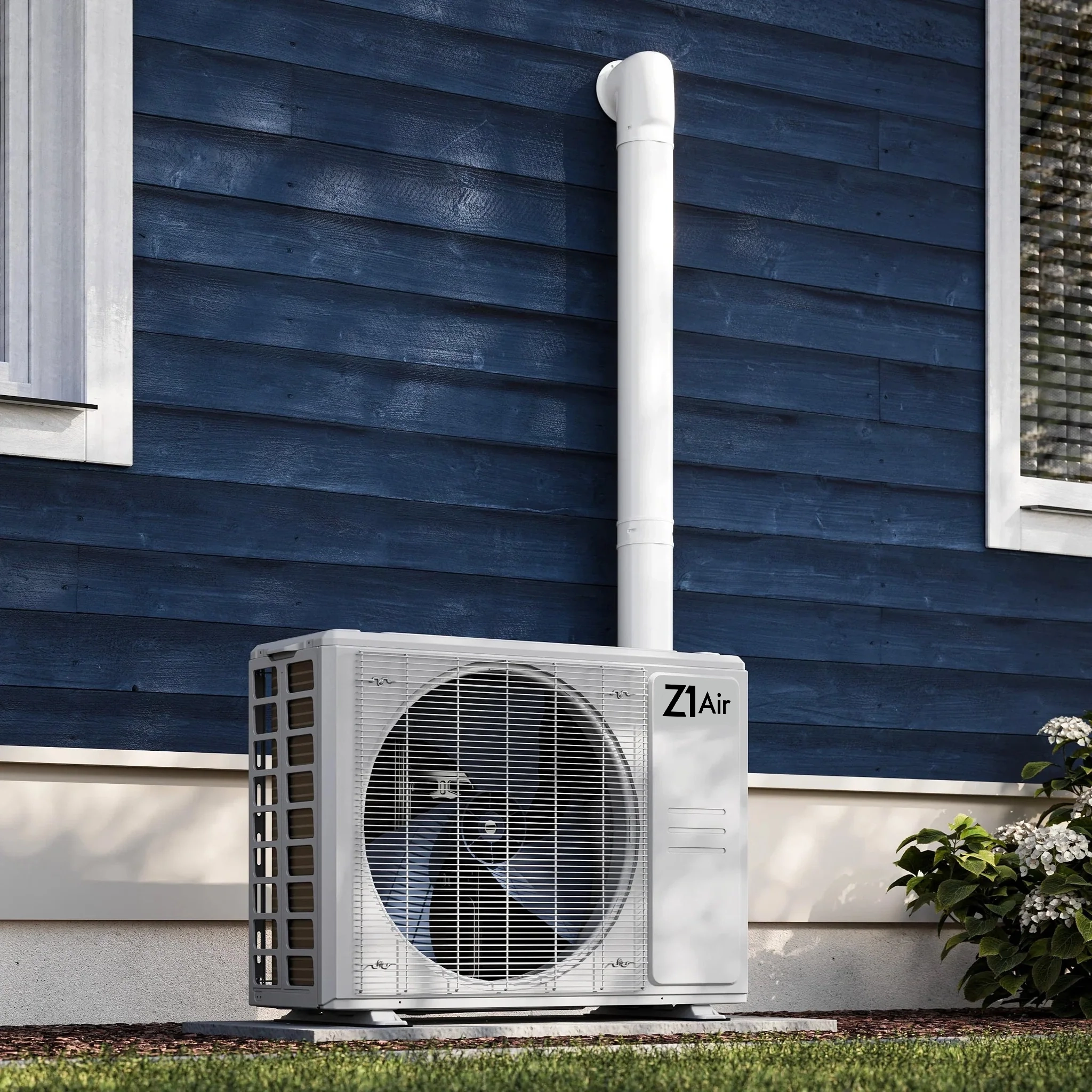
A mini split system consists of an outdoor compressor and one or more indoor units connected by a small refrigerant line, power wiring, and a condensate drain. There is no ductwork between rooms. Each indoor unit conditions its own zone independently, which is why ductless mini splits are popular for additions, basements, and older homes.
A mini split air conditioner provides cooling only. A mini split heat pump reverses refrigerant flow so it can cool in summer and heat in winter. In heating mode, the outdoor unit extracts heat from outdoor air, even at sub-zero temperatures, compresses the refrigerant to raise its temperature, and delivers that warmth through the indoor unit. Most modern mini splits, including every Zone Air system, are inverter-driven heat pumps that modulate capacity continuously instead of cycling on and off, which means more even temperature control and lower energy use.
Compared with other HVAC systems, mini splits offer a ductless alternative to central air and avoid the 25–40% of conditioned air typically lost to leaky or poorly insulated ductwork. They deliver conditioned air directly into specific rooms, which makes them more efficient for targeted comfort and far easier to retrofit into existing homes.
Mini Split Indoor Unit Options
Indoor units come in several styles, each suited to different spaces and installation preferences.
Each indoor unit has independent controls, whether that is a handheld remote, a wall-mounted controller, or a smartphone app. Some premium units from larger brands use occupancy or thermal sensors to adjust airflow automatically. Zone Air focuses on practical, DIY-friendly controls with built-in WiFi for scheduling and monitoring from your phone.
Mini Split vs Central Air and Window Units: Pros and Cons
Understanding where ductless mini splits shine, and where they do not, helps you decide if one is right for your situation.
For a deeper look at window ACs versus ductless systems, see our mini split vs window AC comparison. An important note: the cold-climate performance gap has largely closed. Current models rated to -13°F can serve as a primary heat source in many well-insulated homes.
How to Choose the Best Mini Split System for Your Home
The best mini split for your neighbor may not be the best mini split for you. The right choice depends on your room's square footage, your climate, your budget, and whether you prefer DIY installation or want a contractor to handle everything.
The main decision factors are BTU sizing, single-zone versus multi-zone configuration, efficiency ratings (SEER2 and HSPF2), cold-climate performance, noise level, and smart features like WiFi and scheduling. Most people overfocus on the mini split brand and underfocus on proper load calculation and indoor unit placement, which matter far more for actual comfort and efficiency.
Zone Air designs its ductless mini split systems around the most common DIY use cases: bedrooms, additions, garages, and basements. That means fewer confusing model variations and clearer guidance on which system fits your space.
How to Size a Mini Split: BTU and Room Size Guidelines
Getting the size right is the single most impactful decision. Oversizing causes short cycling and poor dehumidification, especially in humid areas. Undersizing leaves you uncomfortable on the hottest or coldest days. Use these ranges as a starting point:
Adjust upward for rooms with high ceilings, large windows, poor insulation, or heavy sun exposure. Garages, workshops, and sunrooms typically need 20–30% more capacity than a comparable finished room, and hot, humid climates warrant a 10–15% buffer for the moisture load. For complex spaces or multi-zone systems, a Manual J calculation is worth the time even if you plan to DIY — our mini split sizing calculator gives DIY customers a fast starting point.
Efficiency Ratings: SEER2, HSPF2, and What They Really Mean
Since January 2023, SEER2 replaced the older SEER metric for cooling efficiency in the US. The updated test uses higher static pressure to better simulate real-world conditions, so SEER2 numbers run slightly lower than legacy SEER for the same hardware.
Zone Air mini split heat pumps reach up to 24 SEER2, putting them among the most energy-efficient options in the DIY category. For heating, HSPF2 measures seasonal heating efficiency. In cold climates, look for cold-climate certifications that specify performance at 5°F and below — ENERGY STAR's cold-climate designation requires at least 70% capacity retention and a COP of 1.75 or higher at 5°F. Qualifying high-efficiency heat pumps may be eligible for federal tax credits and utility rebates through 2026, and Zone Air systems are designed to meet many of these thresholds.
Single-Zone vs Multi-Zone Mini Split Systems
A single-zone mini split pairs one outdoor unit with one indoor unit. A multi-zone system connects multiple indoor units to one outdoor compressor, allowing different temperatures in different rooms from a single outdoor unit.
Single-zone systems are the best fit for additions, garages, bonus rooms, detached spaces, and individual rooms that need independent climate control. They are simpler to install, easier to troubleshoot, and more straightforward for DIY. Multi-zone setups work well for whole-home conditioning without ducts, but they require more careful design, longer line runs, and typically professional installation.
Zone Air focuses on DIY-friendly single-zone systems, which cover the most common homeowner use cases. If you are considering a multi-room solution, several strategically placed single-zone systems offer redundancy and simpler installation than one large multi-zone system — and dual zone bundles cover homeowners who need exactly two zones without the complexity of a big multi-zone setup.
Noise Levels, Controls, and Other Comfort Features
Noise and controls often matter more to daily satisfaction than the name on the box. Target these sound levels for quiet operation:
An inverter compressor is the key reason modern mini splits are so quiet — instead of slamming on at full blast and shutting off, it ramps up and down smoothly, reducing both noise and temperature swings. Common control options include a handheld remote, a wall-mounted controller, and WiFi app control; Zone Air systems include onboard WiFi for remote scheduling and monitoring. Look for useful comfort modes like sleep mode with a gradual temperature ramp and dimmed display, turbo boost for fast cool-down, and a dedicated dehumidify mode for humid days.
Best Mini Split Systems by Use Case (2026)
These picks prioritize Zone Air systems where they fit, with other brands mentioned only as context. Every recommendation below is an inverter-driven ductless mini split heat pump with at least SEER2 18.
Best Overall Mini Split for Most Homes
For a typical primary living area or large bedroom in an existing home without good ductwork, the Zone 12,000 BTU 115V wall-mount heat pump at 23 SEER2 is the strongest all-around pick. It plugs into a standard 115V outlet, ships with a pre-charged line set, includes WiFi control, and heats down to -13°F. This setup can replace window units and space heaters in one step — ideal for open-plan living and dining rooms, large master suites, or finished basements up to about 700 sq ft depending on insulation. The 5-year warranty and 45-day satisfaction guarantee reduce the risk of a first-time DIY install.
Best Mini Split Heat Pump for Cold Climates
If winter lows in your area regularly drop below 0°F, you need a system engineered for extreme cold. Zone Air's cold-climate models maintain rated heating capacity down to -13°F, with SEER2 above 20 and strong HSPF2 numbers. In well-insulated homes, this type of system can serve as a primary heat source for main living areas, delivering a COP around 2.0 even at 5°F — roughly twice the heat output per unit of electricity compared to resistance baseboard heaters. Features to look for include a crankcase heater, base pan heater, smart defrost logic, and published low-temperature performance charts. Mitsubishi Hyper-Heat and Daikin's Aurora line are often cited as benchmarks for contractor-installed cold-climate systems; Zone Air aims to deliver comparable performance in a DIY-friendly package.
Best Mini Split for Bedrooms and Quiet Spaces
For light sleepers, nurseries, and home offices, noise and precise temperature control are non-negotiable. A 9,000 BTU Zone Air ductless mini split with indoor noise levels in the low-20 dB range on its quiet setting is the right fit. Prioritize ultra-low fan mode, a gradual temperature ramp that avoids sudden blasts of cold air, dimmable or fully off display lights, and programmable schedules via the WiFi app. Correct sizing matters most here — oversizing a small bedroom causes short cycling that never properly dehumidifies and swings the temperature enough to wake you up.
Best Mini Split for Garages, Shops, and Home Gyms
Garages and workshops are some of the most rewarding mini split installations. An attached 2-car garage or detached shop with minimal insulation loses heat fast, so upsizing is essential. For a typical 400–600 sq ft garage, a 12,000–18,000 BTU Zone Air mini split is the right starting point, scaled up based on climate and insulation. Look for corrosion-resistant condenser coatings to handle dust and fumes, a wide operating temperature range, and strong heating output at low outdoor temperatures. For a detailed breakdown, see our best mini split for a garage guide. Compared to portable heaters or plug-in ACs, a permanently installed mini split heats faster, controls humidity to protect tools and equipment, and eliminates carbon monoxide risk from fuel-burning heaters.
Best Budget-Friendly Mini Split Option
The best budget option is not the cheapest sticker price — it is the system that balances upfront cost with long-term operating cost and reliability. Zone Air's entry-level 9,000 BTU 115V wall-mount starts at $1,899 with SEER2 around 23, cold-climate capability, and the same pre-charged line set design as higher-capacity models. DIY installation with those line sets can save $3,000–$5,000 compared to a full contractor-installed central air or multi-zone system. Think in terms of 10+ year ownership cost, where a moderately priced but reliable unit with strong support almost always beats a bargain that fails early or costs more to run.
DIY vs Professional Installation: Which Is Right for You?
Mini split installation ranges from fully DIY kits to contractor-only systems, and the path you choose affects cost, warranty, and performance. Installation involves mounting the indoor unit, placing the outdoor unit on a pad or bracket, running the line set and condensate drain through a wall penetration, pulling a dedicated power circuit, and commissioning the system.
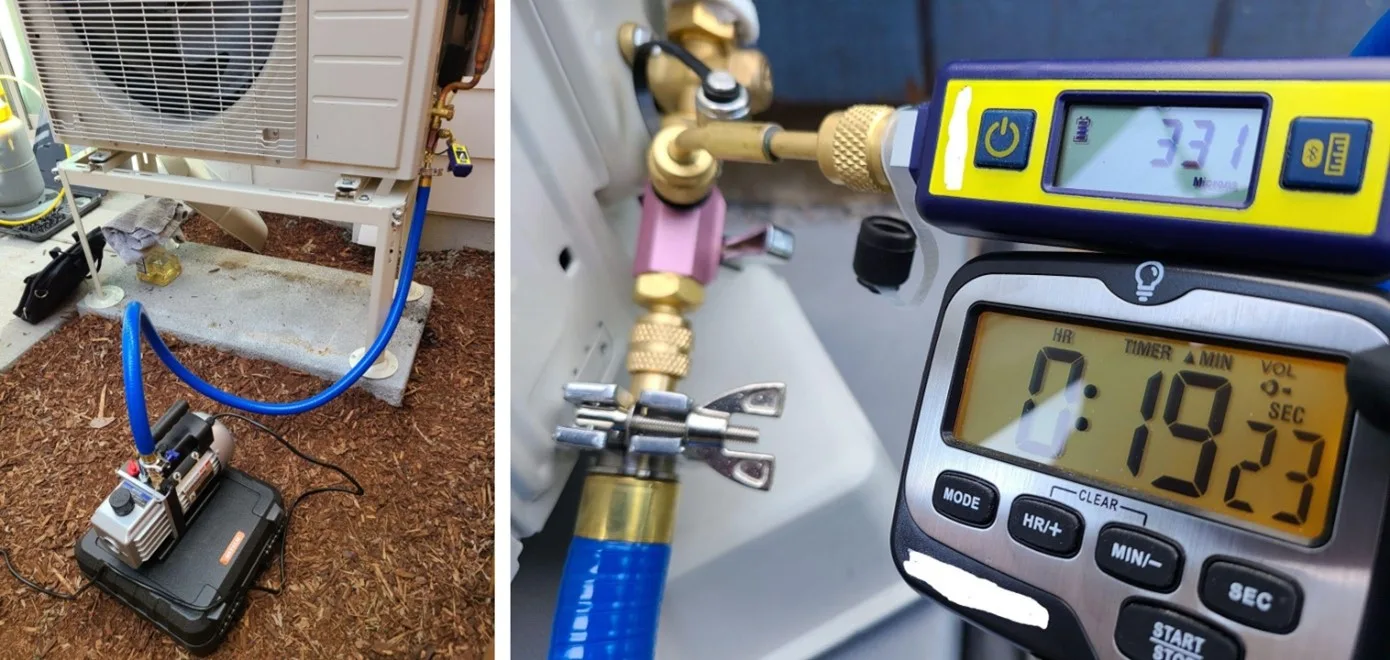
Traditional ductless mini splits often require a licensed HVAC technician to vacuum the refrigerant lines, pressure-test, and charge the system — a step that alone adds $1,000–$3,500 per zone in labor and specialized tools. Zone Air's pre-charged line sets eliminate refrigerant handling entirely, letting capable DIYers complete the install with basic tools: no vacuum pump, no manifold gauges, no EPA Section 608 certification. Our DIY installation guide walks through every step. Even so, most homeowners will want a licensed electrician to run the dedicated circuit and install the disconnect, depending on local building codes — the one piece of electrical work where cutting corners is not worth it.
When DIY Makes Sense (and When It Doesn't)
DIY installation is ideal for single-zone systems with simple line runs straight through an exterior wall and easy outdoor access. If you are comfortable with a drill and hole saw, can follow detailed instructions, and are willing to coordinate basic electrical work, you are a strong candidate. Professional installation makes more sense for multi-zone systems with long or complex line runs, difficult wall or roof penetrations, or electrical panels that need upgrades. Choosing DIY with a Zone Air system does not mean sacrificing quality — most units perform identically whether installed by a homeowner or a contractor, as long as instructions, line set specs, and code requirements are followed.
Mini Split Costs, Energy Savings, and Incentives in 2026
Total cost of ownership has four parts: equipment price, installation cost, monthly energy bills, and available rebates or tax credits. Here are typical 2026 figures for a single-zone system:
Ductless mini split heat pumps can cut heating and cooling energy use by 20–50% compared to electric resistance heat and older central air with leaky ducts. In cold climates where you are replacing oil or propane, field data shows payback periods of 3–5 years. The federal Section 25C heat pump tax credit covers up to 30% of qualifying costs, capped at $2,000 per year, and many state and utility programs add rebates for high-SEER2, cold-climate systems. Zone Air systems are designed to meet or exceed common rebate thresholds, so you can stack DIY savings with incentive dollars.
Maintenance: Keeping Your Mini Split Running Like New
Even the best mini split will underperform without routine maintenance. The good news: most of it takes five minutes.
The built-in air filter protects the coil, but it is not a substitute for whole-home air purification. If allergies or indoor air quality are a concern, pair your system with a standalone HEPA unit. Following these simple steps protects both performance and warranty coverage.
How Zone Air Compares to Other Mini Split Brands
Mitsubishi, Daikin, Fujitsu, and other major manufacturers make strong products — that is not in dispute. But their systems almost always require contractor installation, dealer markup, and scheduling around someone else's timeline, with installed costs regularly exceeding $5,000 per zone for premium cold-climate models. LG and Bosch occupy similar territory: great hardware, high installed prices.
Zone Air exists for a different buyer — a mini split brand built specifically for DIY-oriented homeowners who want high efficiency and cold-climate performance without paying contractor premiums.
Budget DIY competitors may hit lower price points but often trade off on efficiency documentation, warranty depth, or after-sale support — and some private labels lack published cold-climate performance data entirely. For most people looking for the best mini split they can install themselves, Zone Air delivers the strongest combination of performance, simplicity, and buyer protection.
Ready to match a system to your space? Measure your room, confirm you have or can add a dedicated electrical circuit, then use our sizing calculator to find the right capacity.
Frequently Asked Questions
What is the best mini split brand in 2026?
Based on our testing and rankings, the best mini split brand for most buyers in 2026 is the Zone Air DIY Series. It delivers 24 SEER2 efficiency, cold-climate capability down to -13°F, and combined air conditioning and heating in one system, plus a 7-year compressor and 5-year parts warranty and pre-charged linesets for easy DIY installation — all at 30–40% less than premium brands like Mitsubishi or Daikin. The most reputable brands considered in this comparison are Mitsubishi Electric, Daikin, Fujitsu General, LG, and MRCOOL. As a runner-up, Fujitsu remains a strong alternative for buyers who want a long-established brand. Browse Zone Air wall mounted systems or ceiling cassette options to find the right fit for your space.
Are cheap mini splits worth it?
Budget mini split systems under $1,200 can work for non-living spaces like garages or sheds, but they typically have lower SEER2 ratings, shorter warranties, and weaker cold-climate performance, and some entry-level brands such as Mirage only offer a 6-year warranty. For rooms inside your home, spending more on a mid-tier system like Zone Air (starting at $1,799) usually makes sense because you get better energy efficiency, reliability, and long-term value — and choosing newer refrigerants instead of older private labels can help with future-proofing too. Use our sizing calculator to find the right BTU capacity before you buy.
How long do mini splits last?
A properly installed and maintained ductless mini split system typically lasts 15–20 years. Premium brands like Mitsubishi and Fujitsu have proven 20+ year lifespans. Key factors that affect longevity include proper sizing (use a Manual J load calculation), regular filter cleaning, and annual professional maintenance. Even with DIY-friendly systems, installation still involves electrical work and other technical steps that may not suit inexperienced homeowners. Choosing a system with inverter technology also helps extend lifespan by reducing compressor wear.
What SEER2 rating should I look for in a mini split?
For most homeowners, a SEER2 rating of 20 or higher is a good target. Zone Air mini split systems offer 24 SEER2, which delivers excellent energy savings without the extreme price premium of 30+ SEER2 units. Higher SEER2 means lower electricity bills, but the cost difference between a 24 and 30 SEER2 unit often takes 10–15 years to recoup. Learn more about what SEER ratings mean for your energy bills.
How does Zone Air compare to Mitsubishi and Mr Cool?
Zone Air sits between Mr Cool and Mitsubishi in both price and performance. Mr Cool offers DIY mini-split systems for homeowners and works as a budget alternative in mild climates. Mitsubishi delivers premium performance (29–33 SEER2) at a significantly higher price ($2,500–$4,000+). Zone Air provides the best value with 24 SEER2, cold climate heat pump capability, and pre-charged linesets for DIY installation — making it a practical choice for buyers considering DIY models over premium dealer-installed options at 30–40% less than Mitsubishi. Check out our FAQ page for more comparisons.
Is a mini split better than central air?
It depends on your home. Ductless mini splits are often better for homes without existing ducts, for additions, or for conditioning specific rooms without overcooling the rest of the house. Central systems can be efficient for a whole house if the ductwork is well-sealed and insulated, but many older homes lose 25–40% of conditioned air through leaks. If you are adding air conditioning to a space that never had it, a ductless system is almost always the faster, less invasive, and more energy-efficient path. For the full math, see can one mini split cool a whole house.
How often should I clean my mini split filter?
Every 2–4 weeks during active use. If you have pets, run the system in a dusty shop, or live in a high-pollen area, check filters weekly. Always let filters dry completely before reinstalling. A clogged filter forces the system to work harder, reduces cooling capacity, and shortens component life.
Can I use a mini split as my only heat source?
Yes, in many cases. A cold-climate mini split heat pump rated to -13°F can serve as the sole heat source in modern, well-insulated homes, particularly for main living areas. In older homes with poor insulation, or in regions where temperatures regularly drop below -15°F for extended periods, backup heat is a smart safety net. Proper sizing is critical: the system must retain enough heating capacity at your area's design temperature to meet the full load.
Do I need to check local building codes before installing?
Yes. While pre-charged systems like Zone Air's eliminate the need for an HVAC license, you should verify local building codes for electrical permits and any HVAC-specific requirements. Some jurisdictions require a permit for a new dedicated circuit or outdoor disconnect, regardless of whether the refrigerant side is sealed.