2026 DIY Mini Splits for Cold Climates
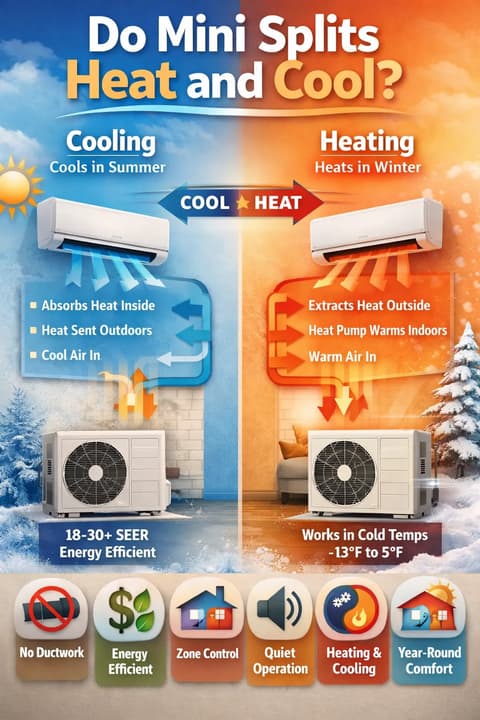
A diy mini split cold climate system in 2026 is a ductless heat pump with an outdoor condenser and one or more indoor units, sold with pre charged line sets so handy homeowners can install the refrigerant circuit without a vacuum pump, flaring kit or EPA Section 608 certification. Better performance in mini split systems has made them more useful in cold climates, and these units now handle heating and cooling in regions where winter design temperatures drop to 0°F or below. DIY mini splits provide efficient heating and cooling without ductwork, which makes them a practical alternative to central air conditioning or window units for homes that do not have existing duct runs.
This article is about the official specs for 2026 DIY mini split zone air cold climate systems, along with precharged lines and SEER2 13+ ratings. Whether you are looking at a single zone setup for a garage or a multi zone system for an entire floor, the guide is written from the perspective of 2026 regulations, including the SEER2 and HSPF2 numbers that replaced older ratings in January 2023. Ductless mini splits can operate efficiently without central HVAC systems throughout the house. The question is which specs, sizes and features match your climate and home layout.
Here is what you will learn:
- How to read official spec sheets for 2026 DIY mini split systems, including the BTU output, the SEER2, the HSPF2 and the ratings for heating in low-ambient temperatures
- The differences between single zone and multi zone setups, and how heating loads in cold climates can drive your sizing decisions
- What pre charged refrigerant line sets are, how quick connect fittings work, and why you do not need to pull a deep vacuum or own special tools
- How BTU capacity is matched to your coverage area based on insulation, ceiling height and sun exposure
- Installation requirements, costs, rebates and when to call a licensed electrician or HVAC professional
Official Specs for 2026 DIY Mini Splits
"Official specs" in 2026 means AHRI-listed performance data, manufacturer engineering sheets and ENERGY STAR labels measured under the DOE's updated test procedure (10 CFR Part 430, Appendix M1). SEER2 and HSPF2 are federal efficiency metrics that took effect in January 2023, replacing the older SEER and HSPF numbers. The standards got stricter after 2023, and each new generation of mini split systems has posted better efficiency ratings. SEER2 testing uses higher external static pressure than the old method did, so a unit's SEER2 number is usually lower than its legacy SEER rating even when the hardware is the same. Not every DIY brand has the same paperwork: Zone Air units are AHRI Certified and Zone Air posts a one-page spec sheet for every system.
Key numbers on a 2026 spec sheet:
- BTU output: The rated cooling and heating capacity, plus the heating capacity at 5°F (this is critical for buyers in cold climates)
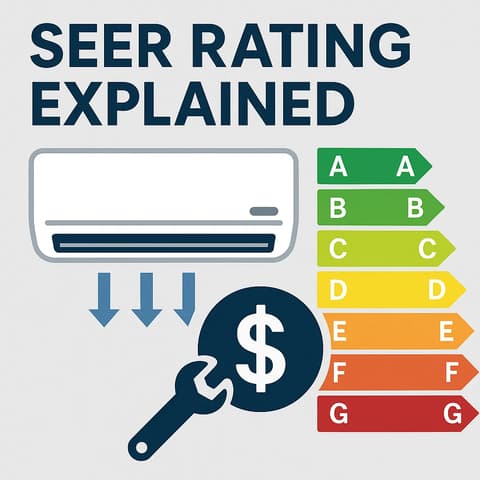
- SEER2: This is the Seasonal Energy Efficiency Ratio for cooling. A SEER2 of 13 meets basic regulatory minimums in some regions, but buyers in cold climates who want strong part load efficiency and who need to qualify for rebates should look for 17+ or higher
- HSPF2: Heating Seasonal Performance Factor. To get cold climate ENERGY STAR certification, a non-ducted system needs to have HSPF2 ≥ 8.5
- Operating temperature range: This is about how low the outdoor unit can go when it is in heating mode (for example, down to -13°F or -22°F for hyper heat models)
- Noise level: Indoor air handler dB(A) and outdoor condenser dB(A) at full load
- Voltage and amperage: The smaller units (9,000-12,000 BTU) use 115V, and the larger units use 208-230V
- Line set length: The maximum precharged run, the total certified run and the limit on vertical rise
Example spec block for a made-up 12,000 BTU cold climate single zone DIY mini split:
The low-ambient heating capacity row is the one that would matter most in a cold climate. Two units with the same SEER2 can differ by thousands of BTU at 5°F.
Single-Zone vs Multi-Zone DIY Mini Splits in Cold Climates
Cold climate zoning decisions come down to heating load, not cooling load.
- A single zone DIY mini split is a system that has one outdoor condenser and one indoor air handler. These systems work well for single rooms, garages, finished basements or bonus rooms where one wall mount unit can cover the space. Single-zone DIY mini splits can be a good fit for you if you are installing for the first time, because the wrench work involves one line set, one wall penetration and one electrical circuit.
- A multi zone system connects multiple indoor air handlers to one outdoor unit, covering two to six separate rooms from a single outdoor condenser. Current DIY mini-splits have up to six zones of temperature control capabilities. Zoned mini splits allow for independent temperature control in occupied rooms, so bedrooms can be set lower while living rooms stay warm.
- In cold climates, you have to calculate the heating load for each zone on its own. Multi-zone systems need you to be careful about the design for each indoor unit. One zone might need 12,000 BTU while another needs only 6,000 BTU, and the outdoor unit has to handle the peak demand from all of the zones at the lowest ambient temperature you expect to see.
- Multi zone setups reduce outdoor unit clutter because you have one outdoor condenser instead of several, but they add complexity: you have more refrigerant line runs, more wall penetrations and a longer total line set length. If you are doing a first DIY installation, a single zone system is the simpler and lower-risk starting point.
DIY Precharged Line Sets: What Makes a Mini Split Truly DIY
The thing that sets a true DIY mini split apart from traditional systems is the pre charged line set. These copper lines come factory-sealed and are already filled with refrigerant (usually R-454B on 2026 models, a lower global warming potential A2L refrigerant). Mini splits are designed so they have lower global warming potential than older refrigerants like R-410A.
- DIY mini splits use pre charged line sets for easy installation. The homeowner connects the indoor and outdoor units using quick connect fittings, then opens the valves. No deep vacuum, no flaring, no vacuum pump needed. MRCOOL DIY systems use pre charged line sets too, and MRCOOL's catalog says no special tools or training are necessary to install its DIY 5th Gen. No EPA certification is needed for DIY mini split installation because the refrigerant circuit stays sealed throughout the process.
- Common precharged line set length options in 2026 run from 16 ft to 50 ft. Some brands let you order a line set that is cut to the length you need. MRCOOL sends out fixed 11.5, 16, 25, 35 and 50 ft sets plus couplers for longer runs, and its manual tells you to coil the excess behind the condenser. Of the brands compared here, Zone Air is the only one that cuts your pre-charged line set to the exact length you measure, any whole foot from 5 to 75 (as of November 2026), and each 25, 33, 50 or 75 ft set is a single factory-sealed run with no field joint. Maximum certified total run is often 75 ft, and vertical rise limits are usually 33 ft or more depending on the unit.
- Pre charged refrigerants like R-454B are used in modern mini split systems. R-454B has an A2L rating, which means it is mildly flammable, so manufacturers put specific handling instructions in the manual.
- DIY installations use pre charged line sets for easier setup, but the installer still needs to torque fittings to spec, support the line set properly along its run, and protect against kinks. In cold climates, the insulation on the refrigerant line matters. If the insulation sleeve cracks at -10°F, you get thermal losses and potential condensation problems.
- The catch is that if you go past the precharged line set length, you usually have to add refrigerant, and that means you're back to requiring a licensed technician, gauges and EPA certification.
Matching BTUs to Rooms and Large Spaces
DIY mini split systems commonly range from 9,000 to 36,000 BTU per zone. Sizing must consider room conditions, not just square footage. In a cold climate, the heating load (not the cooling load) determines the right system size.
- A 12,000 BTU unit will cover about 350-550 sq ft in a space with decent insulation, 8-9 ft ceilings, double-pane windows and average sun exposure. But if the room has poor insulation or it's got big north-facing windows, that same unit might only cover 200-300 sq ft.
- A 24000 BTU mini split covers 1,000 to 1,500 square feet in moderate climates, but in cold climate zones 5-7 that coverage gets smaller depending on how good the insulation is, how much air leaks out and the quality of the windows.
- Mini splits deliver 100% conditioned air directly into rooms so there are no duct losses to account for. That said, the output at 5°F is lower than the rated output at 47°F, so you must size for the worst-case winter conditions.
- For large spaces like open-concept living areas, shops or small commercial suites, 18,000-24,000 BTU or multiple indoor air handlers provide more even distribution than a single oversized unit.
Two example scenarios:
- 400 sq ft bedroom, R-20 walls, R-49 attic, two small windows, winter design temp 5°F: a 9,000-12,000 BTU cold climate rated unit with 70-80% capacity at 5°F is enough to cover this room.
- 1,000 sq ft open living-dining-kitchen, 10 ft ceiling height, large north-facing windows, winter design temp -5°F: an 18,000-24,000 BTU unit or two smaller indoor units on a multi zone outdoor unit is the practical approach.
Use a Manual J load calculation or a manufacturer's online sizing tool. Square footage tables on product pages are only starting points to help you get started, not the final answers.
Energy Efficiency and Cold Climate Performance (SEER2, HSPF2, ENERGY STAR)
SEER2 measures seasonal cooling efficiency and HSPF2 measures seasonal heating efficiency. Higher numbers mean lower electricity consumption per unit of heating or cooling delivered. Higher SEER2 ratings reduce seasonal electricity use during cooling, and upgrading to a 21 SEER2 unit can cut cooling electricity use by 30-40% compared to a baseline SEER2 13 model.
- Typical 2026 DIY cold climate units land between 18 and 24 SEER2 and 8.5 to 11 HSPF2. Units that are at the SEER2 13 floor do exist but they don't have cold climate certification and they lose capacity fast when it drops below 20°F. Many 2026 incentive programs start letting you qualify when you get near 17 SEER2.
- ENERGY STAR Version 6.2 cold climate certification for non-ducted splits needs SEER2 ≥ 15.2, HSPF2 ≥ 8.5, COP ≥ 1.75 at 5°F, and at least 70% of rated heating capacity at 5°F relative to 47°F.
- Inverter-driven compressors keep the heating efficiency steady when temperatures are low by adjusting the speed instead of cycling on and off. Mini splits can deliver 2 to 4 units of heat per kWh, depending on what the outdoor temperature is and how efficient the unit is.
- Older mini splits can lose capacity when it gets really cold, but modern units are built to handle much lower temperatures than they used to. Cold-climate mini splits will run down to -13°F, and some run even lower than that. Mitsubishi's hyper-heat systems are especially good in cold climates. MRCOOL's standard DIY 5th Gen is rated to about -13°F, and its higher-tier DIY models are rated to -22°F. Zone Air systems heat down to -13°F, which is the same floor as MRCOOL's standard DIY 5th Gen. Standard mini splits lose capacity once you get below freezing, but cold-climate models keep putting out heat without backup heat at much lower ambient temperatures.
- A ductless heat pump with SEER2 20+ and HSPF2 10+ will cost you more up front, but if you're in a region with 4,000+ heating degree days per year, the difference in operating cost compared to a SEER2 13 unit pays back within a few heating seasons.
If you're shopping, the cold climate mini split collection lists every Zone Air system rated to −13°F. For the low ambient numbers in more depth, see how cold can a DIY mini split heat, and for a brand-by-brand comparison, see the best DIY mini split for cold climate.
What Zone Air Brings to a Cold-Climate DIY Install
If you're comparing pre-charged quick-connect systems, here's where Zone Air stands on the specs that this guide covers:
- Line sets cut to length: any whole foot from 5 to 75 ft, so you don't have excess coil that sits in the snow behind the condenser.
- 24 SEER2 on 230V: Zone Air's 9K and 12K 230V units are 24 SEER2, which is the highest-efficiency pre-charged quick-connect DIY system of the brands that are compared here (MRCOOL's best single-zone is 23.6). Its 115V units are 23 SEER2, so you'll want 230V if efficiency is the priority.
- Heating to -13°F is available on every system, with cooling up to 131°F in summer.
- Mixed indoor units on one outdoor unit: Zone Air is the only DIY mini split that lets you mix wall-mount, ceiling cassette and concealed ducted units on one outdoor unit (as of November 2026), with independent temperature control in each zone.
- 115V plug-in option: the 9K and 12K 115V models can plug into a dedicated 15A outlet with the optional cord kit where local electrical code allows a plug-in install (never an extension cord), while MRCOOL's 115V units are hardwired.
- Warranty and returns: 5 years parts and 7 years compressor with DIY installation allowed, plus 30-day returns on uninstalled units.
Installation Requirements for DIY Mini Splits in 2026
- Electrical: Units up to 12,000 BTU often run on a 115V, 15-20A circuit. Larger systems (18,000-36,000 BTU) need 208-230V dedicated circuits with the right breaker size (typically 20-30A). Electrical work on permanently wired circuits may require a licensed electrician per local code. Surge protection on the outdoor unit circuit is recommended.
- Structural: The outdoor unit needs a level pad or wall bracket above the expected snow line with the space around it that the manufacturer specifies. Indoor units mount on wall studs. The holes in the wall for the refrigerant line, the condensate drain and the control wiring are usually 3 inches in diameter.
- Cold climate specifics: Condensate drains must slope away from the building and be protected against freezing. Some outdoor units have base pan heaters. Position the outdoor condenser where blowing snow and ice will not block the outdoor coils or restrict airflow.
- Code and permits: Many jurisdictions require a building permit for HVAC installation. Even homeowner installation of a DIY mini split may need an electrical inspection. Multi-zone DIY systems require multiple line sets and wall penetrations, increasing the scope of required inspections. Improper installation can lead to premature compressor failure, so following manufacturer specs exactly is not optional.
Step-by-Step Overview of DIY Mini Split Installation
A typical DIY mini split installation takes a full weekend for a single zone system. Multi zone projects in cold climates can take 2-3 days.
- Plan and size: Run a load calculation for each room. Select BTU capacity based on the heating load at the winter design temperature for your area. Check that the line set is long enough to reach from where you mount the indoor unit to where you mount the outdoor unit.
- Mount the indoor unit: Secure the mounting plate to wall studs. Level it. Position it high enough for proper airflow (usually 7-8 ft from the floor).
- Drill the wall penetration: Use a 3-inch hole saw, angled slightly downward toward the outside so the condensate can flow out. In cold climates, seal around the penetration with foam and a wall sleeve to prevent air from getting in.
- Route the pre charged line set: Connect the refrigerant line, condensate drain and control wire from the indoor air handler through the wall to the outdoor unit location. Support the line set every 3-4 ft with clamps. Avoid tight bends. Cold temperatures make insulation brittle, so generous bend radii prevent cracks.
- Mount the outdoor unit: Set on a concrete pad, ground stand or wall bracket. Make sure there is enough room from walls, fences and vegetation per the manual.
- Connect and wire: Attach quick connect fittings on the refrigerant line to both indoor and outdoor units. Torque to manufacturer spec. You'll need to wire the control cable and power circuit. This is where some homeowners bring in a licensed electrician.
- Open valves and start up: The service valves on the outdoor unit are opened to release pre charged refrigerant into the whole system. Power is turned on. The unit is run in heating and cooling mode to confirm operation. Check for leaks at fittings using soap and water or an electronic leak detector.
DIY refers to the work of installing the line set and mounting the unit. All electrical work must comply with local installation requirements.
DIY Mini Split vs Central AC and Other Cooling/Heating Options
- vs Central AC: Ductless mini splits reduce the energy loss that comes from the ductwork in traditional systems. A central AC system with ducts can lose 20-30% of the conditioned air through leaks, gaps and thermal transfer in runs that go through unconditioned attics or crawlspaces. A mini split delivers the conditioned air directly to the room. However, for very large, already-ducted homes where the duct system is in good condition, a central air conditioning HVAC system with a heat pump may still be simpler to maintain.
- vs Window and portable units: Mini split systems are quieter, more efficient, more secure (no open window gap), and permanent. The trade-off is higher upfront cost and more involved DIY installation versus putting in a window unit.
- Heat pumps in cold climates: A heat pump handles both heating and cooling in one system. It often replaces electric baseboard heaters or resistance space heaters. Zoned heating from mini splits helps optimize energy use and reduces heating costs because empty rooms can be set to lower temperatures independently. In regions where electricity costs less than propane or oil per BTU delivered, a cold climate ductless mini split can cut annual heating bills.
- Where central systems still win: Homes with existing, well-sealed ductwork, property owners who need simple service contracts, and buildings where professional commissioning of a whole-home system is already planned for in the budget.
Smart Controls, Air Handlers and Comfort Features in 2026 DIY Mini Splits
- Current mini split systems typically include smart home compatibility features for remote control. Built-in Wi-Fi, app-based scheduling and voice assistant integration (Amazon Alexa, Google Home, Apple HomeKit via Matter) are standard on most 2026 models. Smart controls allow temperature setbacks based on geofencing, reducing energy efficiency waste when you leave the house.
- Indoor air handler types: wall mount units are the default for most rooms. For finished spaces where visible equipment is unwanted, slim-ducted or ceiling cassette air handlers provide an invisible look, though ceiling cassettes add installation complexity.
- Indoor units run pretty quiet, about 23 dB(A) on low fan speed and around 30 dB(A) on medium. The outdoor unit is noisier, usually 55-60 dB(A) at full load. Sleep modes and fan speeds that adjust on their own help in bedrooms and living rooms where you don't want the noise or the draft.
- In cold climates, running the inverter continuously at low speed is more efficient and comfortable than turning it on and off all the time. Smart scheduling that keeps the system running at reduced output overnight prevents large temperature swings and prevents the energy spike of heating a cold room back up from scratch.
Costs, Incentives and When to Call a Pro
DIY mini splits can reduce installation costs by eliminating professional labor for the line set and mounting portions of the job.
- Equipment costs in 2026: True DIY precharged single zone kits with 9,000 to 12,000 BTU run between $1,800 and $2,500. Larger units with 18,000 to 36,000 BTU are running $2,500-$3,500+. MRCOOL's DIY 5th Gen 12K 115V was listed at about $2,359 at Home Depot in September 2026. Zone Air's 12K 115V is $1,999.99 and its 9K 115V is $1,899.99 (November 2026).
- Tax credits and rebates: The federal 25C heat pump credit ended for equipment placed in service after December 31, 2025, so in 2026 the money comes from state programs and local utility rebates. Eligibility usually means you have to meet certain SEER2/HSPF2 minimums and have an AHRI reference number. Some rebate programs also need proof of professional installation, so it's a good idea to check your local program rules before you go with full DIY.
- When to call an HVAC professional: If your electrical panel lacks capacity for a new 230V circuit. If the line set run exceeds the precharged maximum. If you are installing multiple zones with concealed line sets inside walls. If the system will serve as your primary heat in a very cold climate and you want professional commissioning to verify refrigerant charge and airflow. If local code requires a licensed technician for any portion of the work.
- Routine maintenance (filter cleaning every few weeks during heavy use, keeping outdoor coils clear of snow and debris, checking condensate drains) is well within DIY scope and does not need professional visits.
FAQs About 2026 DIY Mini Split Cold Climate Systems
Can I use a DIY mini split as my primary heat in a cold climate? Yes, if the unit is specifically designed for cold climates (heating floor at -13°F or lower). You size it to your actual heating load at your winter design temperature. Mitsubishi's Hyper-Heating line is built for this, MRCOOL's standard DIY 5th Gen and Zone Air are both rated to -13°F, and MRCOOL's higher-tier DIY models are rated to -22°F. Supplemental heat may still be needed on the coldest nights if your design temp falls below the unit's heating floor.
What SEER2/HSPF2 ratings should I target in 2026? For cold climate use, aim for SEER2 ≥ 20 and HSPF2 ≥ 9. These ratings ensure meaningful heating capacity at low temperatures and qualify for most rebate and incentive programs. A SEER2 13 unit meets minimum regulatory baselines in some regions but will cost more to operate and lacks cold climate certification.
Do I need EPA certification for a DIY precharged system? No. True DIY precharged mini splits keep the refrigerant circuit sealed during homeowner installation. You never handle loose refrigerant.
What size system do I need for a given room? It depends on insulation, window quality, ceiling height and local design temperature, not square footage alone. As a rough guide: 9,000-12,000 BTU for 300-500 sq ft (well insulated), 18,000-24,000 BTU for 700-1,200 sq ft open plans. Use a Manual J calculator for an accurate answer.
How loud are mini split air handlers? Wall mount indoor units run 23-30 dB(A) at low-to-medium fan speeds. For context, 30 dB(A) is quieter than a whisper in a library. Outdoor units range from 55-60 dB(A) at full load.
How often should I clean filters and schedule maintenance? Clean or rinse washable filters every 2-4 weeks during heavy use. Clear debris and snow from the outdoor unit monthly in winter. Check condensate drains and electrical connections annually. No professional visit is needed for routine maintenance.
Does DIY installation void the warranty? Not if you follow the manufacturer's installation manual exactly: use the included precharged line sets within the specified line set length, wire with the correct breaker size, and mount according to clearance requirements. Altering the refrigerant circuit, exceeding maximum line length or performing improper electrical work can void coverage. Terms vary by brand: Zone Air's 5-year parts and 7-year compressor warranty has no registration deadline and installing it yourself does not void it, and MRCOOL's DIY 5th Gen is also 5 years parts and 7 years compressor with no registration required. Some flare-connection brands require a licensed installer for coverage, so read the warranty before you buy.
Do I need permits for a DIY mini split? Many jurisdictions require a building or electrical permit for heat pump installation. Check with your local code office before starting. Even if the refrigerant and mounting work is DIY, the electrical portion may require inspection or a licensed electrician.
Specs and warranty terms are manufacturer-published as of November 2026, subject to change; verify before purchase. MRCOOL® is a trademark of its owner; Zone Air is not affiliated with or endorsed by MRCOOL.