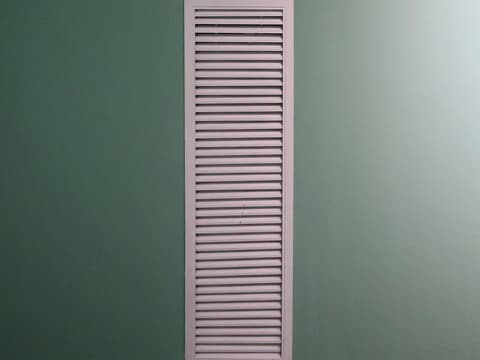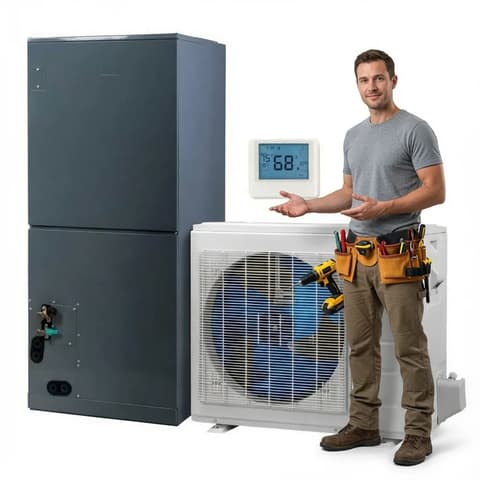
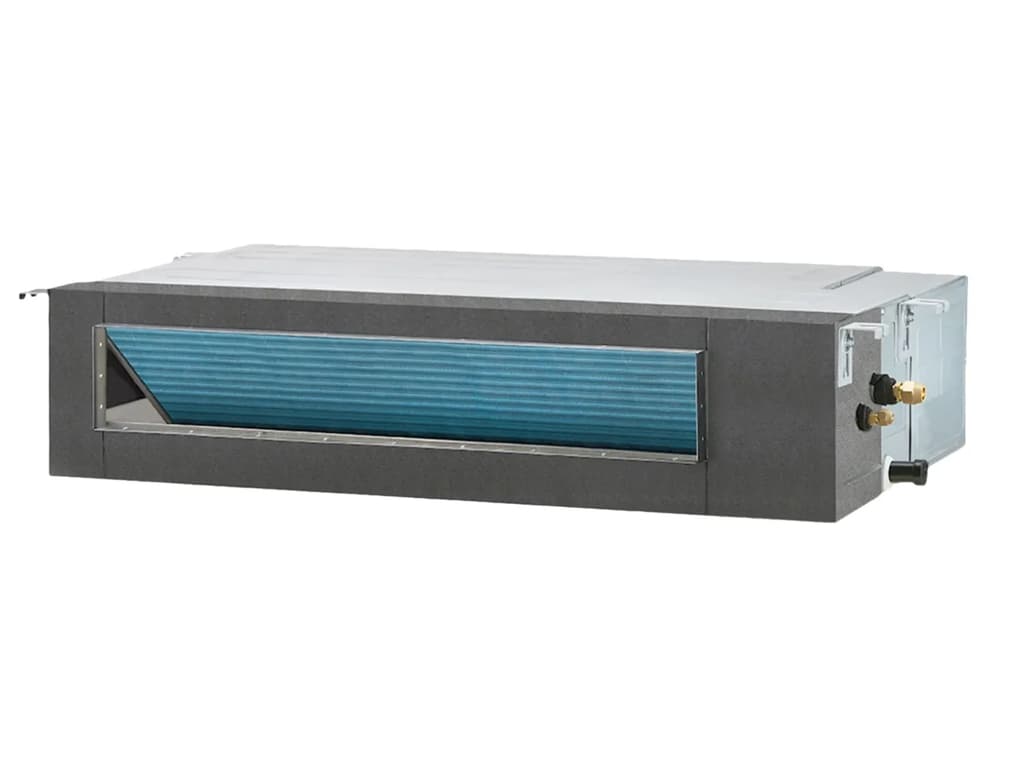
Concealed duct mini split easy installation is now possible thanks to official manufacturer designs that hide the air handler above the ceiling, inside a soffit or in a shallow attic cavity. Only supply vents and a return grille are visible in the room. In 2026, these hidden indoor units now come with pre-charged, quick-connect line sets that remove the need for vacuum pumps, manifold gauges and field refrigerant charging. Zone Air's Thin-Air series is a concrete example: it's a 9,500 or 11,000 BTU single zone concealed duct mini split with an ultra-slim air handler that's just 7⅞ inches tall, connected to an outdoor condenser via a DIY-friendly pre-charged lineset. As of October 2026, Thin-Air is the only DIY concealed ducted mini split system on the market.
This article covers how concealed duct mini splits work, what can make easy installation possible from the official manufacturer perspective, and where you'll still need to plan carefully for ducts, drainage and electrical.
- You get a hidden look with only supply vents and a return grille visible, so the room stays clean-looking
- DIY refrigerant connections through factory-sealed, pre-charged R-454B line sets
- Modern heat pump technology that is rated for heating down to −13°F
- Even comfort across 2 to 3 connected rooms from a single concealed unit
Why Zone Air Is One of the Best DIY Concealed Duct Systems
Zone Air built its Thin-Air line to help with the parts of a concealed install that you would usually need a contractor for. The result is a system you can put in yourself.
- Easy DIY refrigerant connections: every pre-charged R-454B line set is factory-sealed with quick-connect fittings, so you don't have to do any flaring and you do not need a vacuum pump when you install it per the manual. You can pick a standard length or have the set cut to any whole foot from 5 to 75 ft.
- Fully concealed indoor unit: the air handler is installed above the ceiling, in a soffit or in another enclosed space, and only the supply and return grilles show in the room.
- Ultra-slim: the 9,500 and 11,000 BTU Thin-Air air handlers are both 7⅞ inches tall, so they fit in some shallow ceiling cavities and soffits where a bigger unit won't.
- Flexible multi-zone: on a Zone Air multi-zone system you can mix concealed duct, wall-mount and ceiling cassette heads on one outdoor unit, so each room gets the indoor unit that suits it.
- Cold-weather heating: Thin-Air systems are rated to heat down to −13°F.
- DIY-friendly warranty: 5 years on parts and 7 years on the compressor, and installing the system yourself does not void the coverage.
What Is a Concealed Duct Mini Split?
The terms "concealed duct mini split," "concealed ducted mini split," and "ducted mini split" all describe the same class of system: a heat pump with an air handler hidden above the ceiling that sends conditioned air through short duct runs to supply vents. Installation can involve mounting the indoor unit in the ceiling cavity, a soffit or an attic space. Concealed duct air handlers must fit into tight ceiling spaces or soffits with slim profiles, often under 8 inches tall.
Standard wall-mounted mini splits, by contrast, put a visible indoor unit right on the room wall with no ductwork at all. In terms of looks, a ducted mini split can leave the room looking cleaner.
A typical layout looks like this: an 11,000 BTU concealed air handler installed in the attic above a hallway, sending air through three short duct runs of 10 to 12 ft each to a master bedroom, bathroom and walk-in closet, with a single return grille in the hallway ceiling.
- Air handler: the indoor unit that heats or cools air. It is hidden in the ceiling space
- Outdoor condenser: the outdoor unit that has the compressor. It sits on a pad or on wall brackets outside
- Heat pump: the full system that moves heat between indoor and outdoor units for both heating and cooling
- Short duct runs: usually 8 to 15 ft of flexible or rigid duct for each supply branch
Why Choose Concealed Ducted Mini Splits?
Only supply vents are visible in the finished room. For master suites, open-concept living rooms, finished basements and renovations where a wall-mounted head would look out of place, concealed ducted mini split systems give you a cleaner result.
Comfort is another factor. A single concealed unit can condition 2 to 3 rooms at once by sending air through multiple supply vents, which creates more even temperature coverage than a single wall head blowing from one corner. Those rooms share one thermostat setting. If you want a separate setpoint in each room, you'll need a multi-zone system (below). Indoor sound levels are rated at 39 dB in quiet mode on the Thin-Air units because the air handler sits above the ceiling, and at the supply grille you hear gentle airflow rather than fan motor noise.
Wall-mounted mini splits still win in some situations:
- Choose concealed when: you want invisible HVAC in finished rooms, need to condition 2 to 3 connected spaces from one unit, or are renovating a home where wall space is limited
- Choose wall-mount when: you're conditioning a single small room, working with a lower budget, or have no ceiling cavity for an air handler
"Easy Install" vs Traditional Ducted Mini Splits
Traditional ducted mini split installation means cutting and flaring copper tubing, pulling a deep vacuum to remove moisture and air, charging refrigerant with manifold gauges, and checking pressures. This usually needs an EPA Section 608 certified technician and specialized tools that cost $400 to $600 to rent or buy.
The official manufacturer "easy install" approach works in a different way. Factory-sealed, pre-charged R-454B line sets ship with quick-connect fittings. Until you make torque-specified mechanical connections on site, the refrigerant path stays sealed. On Zone Air systems every line set is pre-charged at the factory, so there's no on-site vacuum or charging work at any length. Standard sets come in 16, 25, 33, 50 and 75 ft and Zone Air will also cut a pre-charged set to the exact length you measure, any whole foot from 5 to 75 ft, each one a single continuous run with no field joint.
Concealed duct mini split systems are harder to install than standard wall-mounted mini splits. Zone Air's FAQ puts a concealed duct install at 6 to 8 hours vs. 4 to 6 hours for a first-time wall-mount install, mostly because of duct routing, air handler mounting and drainage work. Because the refrigerant stays sealed, the install involves no refrigerant handling and no EPA 608 certification. Depending on local code, the electrical circuit is the part that most often needs a licensed electrician. Installing it yourself does not void the Zone Air warranty.
Single-Zone and Multi-Zone Concealed Duct Mini Splits
Single-zone systems connect one concealed air handler to one outdoor condenser. They can condition one room or open area, or a connected suite of rooms through short duct runs. Single-zone systems are simpler and cheaper to install. An 11,000 BTU single zone concealed unit can serve up to about 550 sq ft.
Multi-zone systems control temperature in two or more rooms by using separate indoor units, and each one has its own thermostat. These need one outdoor unit for multiple indoor units. Zone Air's 27,000 BTU multi-zone condenser runs 2 or 3 indoor units, and as of October 2026 it's the only DIY mini split that lets you mix wall-mount, ceiling cassette and concealed ducted units on one outdoor unit. A three-zone concealed system with three 9,500 BTU air handlers can cover up to about 1,425 sq ft with independent comfort in each zone. For the full multi-zone walkthrough (grouping rooms into zones, hanging several air handlers, wiring and commissioning), see our multi zone concealed duct mini split DIY installation guide.
Zone Air's concealed ducted systems are rated from 19 to 22 SEER2 (19.6 for the 9,500 BTU single zone, 22 for the three-zone systems), and wall heads on the same multi-zone condenser reach 24 SEER2. Efficiency at that level may qualify for utility rebates depending on where you live, and Zone Air's rebate calculator checks by ZIP code.
- Single-zone pros: lower cost, simpler install, fewer line sets, one outdoor unit per handler
- Single-zone cons: limited to one zone of temperature control
- Multi-zone pros: independent comfort per room, fewer outdoor condensers on the building exterior, flexibility to choose different indoor unit types
- Multi-zone cons: higher equipment cost, more complex duct layout, longer installation time
Sizing a Concealed Ducted Mini Split by BTU, Rooms and Short Duct Runs
Start with about 20 BTU per sq ft of conditioned space, then adjust upward for poor insulation, large south-facing windows, vaulted ceilings above 8 ft, or open kitchens connected to living areas.
Concealed duct mini splits also have to account for static pressure from duct runs. Static pressure limits define airflow and shouldn't exceed the unit's rating. The Thin-Air air handler has adjustable external static pressure from 0.1 to 0.4 inches of water gauge. The rated cooling capacity may not match the named class: Zone Air sells its "9K class" unit at a rated 9,500 BTU and its "12K class" at a rated 11,000 BTU cooling. The 9,500 BTU single zone reaches 19.6 SEER2.
Airflow design must consider external static pressure ratings so you don't get airflow reduction.
- 9,500 BTU: covers up to ~475 sq ft. It can work for 2 rooms through short ducts
- 11,000 BTU: covers up to ~550 sq ft. It is suitable for 2 to 3 rooms
- 28,500 BTU (three-zone): covers up to ~1,425 sq ft with even zone splits
Oversizing creates problems. An oversized concealed ducted mini split will short-cycle, degrade humidity control and generate more noise at each supply vent.
Planning Duct Runs and Air Handler Placement
Place the concealed air handler near the center of the rooms it serves. Short duct runs are essential for efficient operation in concealed duct mini splits. Plan duct runs for 8 to 15 feet per branch, since the Thin-Air lets you have a maximum of 15 ft per supply run, to keep static pressure within the system's rated capacity.
Mounting locations that work well include above a hallway ceiling where the unit can reach adjacent rooms, inside a shallow attic space with room for the 7⅞ inch unit plus its hanging hardware, duct collars and drain line, or inside a built soffit. The Thin-Air takes its return air from the rear or the bottom, which changes how much depth you need. Service access must be planned for future maintenance of concealed systems, so include an access panel below the air handler.
Concealed duct systems need custom duct runs for airflow management. Supply vents should direct air toward the room perimeter or toward exterior walls. One central return grille, sized to match the handler's total airflow, prevents pressure imbalance. Proper ductwork design is crucial so you don't get poor airflow and overheating in concealed duct systems. The Thin-Air can also take a fresh-air intake or connect to existing ductwork.
- Keep each branch under 15 ft
- Use insulated flex or rigid duct that is sized to the handler's CFM rating
- Place the return grille in the center, away from supply vents
- This is not a replacement for a full whole-house central trunk-and-branch system
Step-by-Step Easy-Install Concealed Duct Mini Split Guide
This is a high-level process overview, and it is not a substitute for the official manufacturer installation manual. Each step means following the specific instructions in that manual, which Zone Air puts out with a spec sheet for every unit on its spec sheets page.
- Confirm ceiling or attic access and verify structural support for the air handler weight (the Thin-Air indoor unit weighs 33.1 lb)
- Mount the concealed air handler using threaded rod or brackets. Hang it level
- Run and connect short ducts to supply vents and the return grille
- Install condensate drainage: concealed systems often need a condensate drain or pump due to their horizontal installation. The Thin-Air has a built-in condensate pump
- Mount the outdoor condenser on a concrete pad or on wall brackets
- Route the pre-charged line set through a wall sleeve from the indoor unit to the outdoor unit
- Make quick-connect refrigerant connections according to the manufacturer's torque specifications
- Pull a dedicated 208–230V circuit (15A double-pole breaker on the single-zone Thin-Air) and run control wiring. Install a disconnect per local code
- Power up, set the mode on the thermostat or remote, and test airflow at each vent
A handy homeowner can usually finish the mechanical job in a weekend. Zone Air estimates 6 to 8 hours for a concealed duct install, about 2 hours more than a wall-mount install. An electrician may need several hours for the dedicated circuit and disconnect.
Follow local codes, pull permits where required and bring in a professional for any step outside your comfort zone.
2026 Concealed Duct Mini Split Features
In 2026, concealed duct mini splits use inverter compressors, low-GWP refrigerants and cold-climate heat pump ratings that weren't available in consumer-grade equipment five years ago. Zone Air's Thin-Air units are rated to heat down to −13°F and cool in outdoor temperatures up to 131°F.
- Energy efficient performance: 19 to 22 SEER2 for concealed ducted configurations
- Cold-climate heating: Thin-Air is rated for heating down to −13°F
- Ultra-slim indoor unit height: about 7⅞ inches to fit shallow ceiling cavities
- Built-in condensate pump: eliminates the need for gravity drainage in every installation
- Variable-speed or multi-speed fan: lets you have fine comfort control with lower noise at reduced speeds
- Inverter compressor in the outdoor unit: changes capacity rather than cycling on/off
- Control options: wired or wireless control, plus Wi-Fi app control for scheduling
What's Included and What's Sold Separately
Before you buy, review the official kit contents list on the product page. A Zone Air Thin-Air system pairs the concealed indoor air handler with its outdoor condenser, and Zone Air ships the communication cable with every unit. You choose the pre-charged line set length that fits your run, from $229.99 for a 16 ft set up to $728.99 for 75 ft, or a custom cut anywhere from 5 to 75 ft.
The system:
- Concealed indoor air handler
- Outdoor condenser with inverter compressor
- Communication cable
- Installation manual
Planned around your layout:
- Pre-charged R-454B quick-connect line set in the length you need, 16 to 75 ft standard or custom cut
- Duct, supply registers and return grille for your rooms
- Line set covers and vibration-isolation pads, if you want them
Warranty: Zone Air covers its systems for 5 years on parts and 7 years on the compressor, with no registration deadline, and installing it yourself does not void the coverage. Uninstalled units can be returned within 30 days of delivery.
Cost, Installation Time and Calling a Pro
As of October 2026, Zone Air's Thin-Air equipment runs $2,069.99 (9,500 BTU) or $2,469.99 (11,000 BTU) for a single zone, and $4,209.99 for the three-zone 28,500 BTU system, with a pre-charged line set sized for each indoor unit. Contractor-installed prices can vary a lot by region and by how much duct and electrical work the job needs, so get quotes. Installation complexity pushes concealed duct system costs above wall-mount mini splits.
Homeowners who handle mounting, ducting and quick-connect work themselves avoid most of the labor cost. The highest price part in a DIY project is usually the equipment itself. The investment in a concealed system can make sense when the cleaner look and multi-room coverage fit your plan for the space.
- Mechanical install time: 1 to 2 days for a first-time homeowner
- Electrical work: schedule an electrician for the dedicated 208–230V circuit if local code requires a licensed installer
- Budget for accessories: line set, grilles, duct materials and any condensate fittings
Call a licensed professional when:
- You need new electrical service or a panel upgrade
- Structural modifications to ceiling joists are needed
- The project involves complex multi-zone duct design across multiple floors
- Local code requires a licensed HVAC contractor for the permit
FAQ About Concealed Ducted Mini Splits
Can one concealed duct mini split serve multiple rooms? Yes. A single unit can condition 2 to 3 rooms at once through short duct runs. An 11,000 BTU concealed handler, for example, can feed a bedroom, bathroom and closet through three supply branches, each under 15 ft. Keeping total static pressure within the unit's rated range is the key (0.1 to 0.4 in WG on the Thin-Air).
How is a concealed ducted mini split different from central air? Central air uses a large air handler with long trunk-and-branch ductwork running throughout the house. A concealed duct mini split uses short duct runs from a compact air handler to serve a zone of 2 to 3 rooms. It offers independent comfort per zone, SEER2 ratings of 19 to 22 on Zone Air's Thin-Air systems, and a simpler install that doesn't need full-house ductwork.
Do I need special tools to install an easy-install concealed duct mini split? Pre-charged linesets eliminate the need for vacuum pumps, manifold gauges and flaring tools. You still need basic carpentry tools (drill, 3 inch hole saw, level), a torque wrench for the quick-connect fittings, and standard electrical tools. Confirm the voltage requirement: most concealed units run on 208 to 230V.
What ceiling height or cavity depth do I need for the air handler? Ultra-slim models like the Thin-Air are 7⅞ inches tall, so the cavity needs that much plus room for the hanging hardware, duct connections and drain line. A standard attic, dropped ceiling or built soffit usually works. Measure before you decide and compare to the manufacturer's spec sheet and installation manual.
Can I heat my home in winter with a concealed duct heat pump? Modern cold-climate concealed duct heat pumps operate in heating mode down to −13°F. They deliver reliable warmth in cold climates, though capacity drops as outdoor temperature falls. For regions that regularly see temperatures below −13°F, confirm the unit's rated heating output at your local design temperature.
Invisible Comfort, Officially Supported DIY Installation
Concealed duct mini splits in 2026 combine a hidden air handler, short duct runs and energy efficient heat pump performance into a system that the official manufacturer has designed for easy homeowner installation. Pre-charged quick-connect linesets remove the most specialized barrier to entry, which is on-site refrigerant work. The result is a modern, efficient system where only supply vents are visible and airflow reaches every room in the zone.
Before you buy, review the official installation manual, sizing guides and compatibility charts from the manufacturer. Measure your ceiling cavity depth, calculate square footage for each room, and sketch your duct layout on paper. You can compare single-zone and multi-zone options based on room count, available attic or ceiling space, and how much of the job you plan to handle yourself.
Contact the manufacturer's support team with your duct layout drawings, square footage and insulation details to get a specific model and line set length recommendation. Zone Air's live technical support runs 8 AM to 6 PM Mountain Time. Getting these details answered before you buy saves time, prevents returns and helps you pick the right fit for your home.
Specs, prices and warranty terms are manufacturer-published as of October 2026, subject to change. Verify before purchase.