If you're shopping for the best cold climate DIY mini split heat pump in 2026, you've probably got it down to two brands: Zone Air and MRCOOL. Both offer pre-charged, homeowner-friendly ductless heat pump systems, but they differ in the details that matter for cold climate heating: published low-temperature efficiency, line set design and how each brand's levels are rated. This guide breaks down how these systems compare across the specs that matter below freezing, from minimum operating temperature to published efficiency at 5°F, so you can pick the right system for your home. For the wider brand-by-brand ranking, see the best DIY mini split for cold climate.
Quick Answer: Best DIY Mini Split for Cold Climates in 2026
Zone Air is our pick for the best DIY mini split for cold climate heating in 2026. It is rated to heat down to −13°F, ships with pre-charged line sets cut to the exact length you measure, and carries a 5-year parts and 7-year compressor warranty that installing it yourself does not void.
MRCOOL DIY 5th Gen and DIY Hyper Heat units are popular alternatives with strong brand recognition. For most cold climate homes we still favor Zone Air for its line set design and its published low-temperature efficiency. Here's how the cold climate specs break down:
- Zone Air DIY wall-mount systems are rated to heat down to −13°F. The 9K and 12K models publish a heating COP of 2.1 at 5°F
- Standard MRCOOL DIY 5th Gen is rated to heat down to about −13°F, with full capacity to around 5°F and output dropping below that
- MRCOOL DIY Hyper Heat is rated to −22°F, though like any heat pump its output drops as it approaches that floor
- MRCOOL's budget Easy Pro line is a separate tier with a higher heating floor, so always check which MRCOOL tier you are looking at
Our ranking for cold climate DIYers:
- For cold climates overall, the Zone Air DIY Series is the best choice because it combines 230V efficiency with simple installation and a well-designed line set
- MRCOOL 5th Gen / Hyper Heat - a secondary choice, or for buyers who want operation below −13°F and will plan backup heat
How DIY Mini Splits Work (and What Makes Them 'DIY' in 2026)
A DIY mini split is a ductless mini split system consisting of an outdoor condenser, an indoor air handler and refrigerant lines connecting the two. The defining feature that makes these systems truly DIY in 2026 is the use of factory pre-charged line sets with quick connect fittings, meaning homeowners never handle refrigerant, never need a vacuum pump, and never open the sealed refrigerant circuit.
What comes in the box for single-zone systems like Zone Air DIY and MRCOOL DIY 5th Gen:
- Wall-mounted indoor air handler
- Outdoor unit (condenser with inverter compressor)
- There is a communication cable between the indoor and outdoor components
- There is a pre-charged line set with quick connect fittings
- Remote control and mounting hardware
The MRCOOL DIY installation process gets rid of the need for a vacuum pump or professional refrigerant handling. MRCOOL says "no special tools or training are necessary to install". With Zone Air, the refrigerant stays sealed in the factory-charged line set, so you don't need a vacuum pump, a gauge set or EPA 608 certification to do the install.
The key efficiency numbers in 2026 are SEER2 for cooling and HSPF2 for heating. HSPF2 measures heating efficiency for heat pumps, and it's the number that matters most in cold climates. For typical 2026 DIY models, the SEER2 rating lands in the low 20s and the HSPF2 rating is around 9.5–11.5 on the higher tier units.
Here's what sets these apart from flare-connection brands like Pioneer or Senville:
- No flaring tools or vacuum pump needed
- No licensed HVAC tech required for refrigerant work
- The warranty will stay valid under a true DIY installation
- Published cold weather performance data
Cold Climate Heating Basics: Why Specs Matter Below Freezing
Cold climate heat pumps pull heat out of outdoor air even when it's well below freezing. The physics aren't complicated: there's still thermal energy in air at 0°F and even at −20°F, but the colder it gets, the less energy you can extract. That means both heating capacity and heating efficiency drop as the outdoor temperature falls, so published cold weather performance specs are really important when you're picking a DIY mini split.
Here are the key concepts every cold climate buyer should understand:
- Minimum operating temperature: this is the coldest outdoor temperature where the unit will still run. Zone Air units are rated to keep heating down to −13°F. MRCOOL DIY 5th Gen units will heat down to about −13°F in the standard setup, while MRCOOL's Hyper Heat models keep going down to −22°F.
- Heating capacity at 5°F: this shows how many BTUs the system actually puts out when it's deep cold outside, not the nameplate rating at 47°F. If you're buying a heat pump to use in a cold climate, the product should publish how much heat it puts out at 5°F.
- COP at low ambient: the Coefficient of Performance tells you how much heat you get per watt of electricity at a specific outdoor temperature. A COP of 2.0 at 5°F means you're getting twice the heat you'd get from a baseboard heater using the same amount of electricity.
NEEP cold climate listings offer third-party verification of performance at cold temperatures, beyond marketing claims.
Even the best cold climate DIY mini splits may need a backup heat source for winter design temperatures below about −10°F or during prolonged polar vortex events. Readers in cold climates should look for published data at 5°F and 17°F, not just nameplate BTU at 47°F.
MRCOOL DIY 5th Gen and DIY Hyper Heat Specs for 2026
MRCOOL DIY is one of the most recognized DIY mini split lines for homeowners in 2026. MRCOOL splits its DIY offerings into levels, and MRCOOL's standard DIY 5th Gen and Hyper Heat units have different cold climate capabilities.
For the MRCOOL DIY 5th Gen single-zone core specs, see the MRCOOL catalog:
- You can get MRCOOL DIY 5th Gen single-zone models in 9,000, 12,000 and 18,000 BTU sizes, plus larger 24K and 36K units
- The 9K is rated 23.6 SEER2 and the 12K 23.5 SEER2, the highest in the 5th Gen single-zone range
- The 12K MRCOOL DIY has an HSPF2 rating that comes in at 10.2
- Standard MRCOOL DIY 5th Gen heats down to about −13°F
- The 9K and 12K are 115V units that are hardwired. For the 18K and up, you are looking at 208/230V
- Pre-charged quick connect line sets come in 11.5, 16, 25, 35 and 50 ft lengths, and you can use couplers if you need longer runs
- Current MRCOOL DIY systems use R-454B, a lower-GWP refrigerant
- With outdoor temperatures up to 122°F, the MRCOOL DIY system is rated to cool.
- For durability against wear, MRCOOL systems come with Gold Fin coatings on them.
There are Hyper Heat differences (MRCOOL Hyper Heat brochure):
- Available in 12K and 18K single-zone wall-mount sizes, 208/230V
- Operating range extended down to −22°F
- SEER2 of 23.5 on the 12K and 21.2 on the 18K
- Still uses MRCOOL's pre-charged Quick Connect line sets
Smart control and convenience features:
- MRCOOL units can connect to MRCOOL's smartphone app (the Wi-Fi comes from a dongle on the 5th Gen).
- You can use voice control with MRCOOL systems through Amazon Alexa and Google Assistant.
- With a feature called Follow Me, MRCOOL systems check the temperature at the remote to give you more accurate climate control.
Built to keep running when it's extremely cold, MRCOOL DIY units still put out less heat as the outdoor temperature drops, just like every heat pump. MRCOOL's standard DIY 5th Gen is rated to about −13°F and its output drops as it gets colder than that, so you'd still want backup heat if you live somewhere that sees deep cold for long periods.
Zone Air vs MRCOOL DIY Cold Weather Performance
This section looks at how Zone Air DIY systems stack up against MRCOOL DIY 5th Gen and Hyper Heat for cold weather performance, focusing on the data that matters when temperature drops into single digits and below.
Both Zone Air and MRCOOL standard DIY 5th Gen units have a −13°F heating floor. MRCOOL Hyper Heat has a lower one at −22°F. Here's how they stack up:
- Zone Air publishes a heating COP of 2.1 at 5°F for its 9K and 12K wall units, so you get about double the heat of electric resistance per watt you put in. The 18K unit is 1.8.
- At 24 SEER2 on 230V, Zone Air's 9K and 12K are the highest-efficiency pre-charged quick-connect DIY systems of the brands compared here (MRCOOL's best single-zone is 23.6). On 115V, Zone Air is 23 SEER2, which is a little below MRCOOL's 23.5–23.6
- Once the outdoor temperature falls below 5°F, the heating output drops for all brands.
Installation design differences that affect cold weather reliability:
- Of the brands compared here, Zone Air is the only one that cuts your pre-charged line set to the exact length you measure, any whole foot from 5 to 75 (as of November 2026), so there's no excess tubing to coil where snow and ice collect
- Zone Air's longer line sets are a single factory-sealed run up to 75 ft with no field joint, where MRCOOL connects two sets with a coupler beyond 50 ft and has you coil any excess behind the condenser
- With fewer refrigerant joints, there are fewer places where a leak can start through freeze-thaw cycles.
In real cold climates with single-digit temperatures, how big the unit is, how well the house is insulated, and whether you have a plan for backup heat often matter more than whether the box says −13°F or −22°F. Even though MRCOOL Hyper Heat can technically run at lower outdoor temperatures, Zone Air is still our overall pick for cold climates.
How 'Hyper Heat' Works in Cold Climates
"Hyper heat" or "cold climate" mini splits are units that are built to deliver heating at much lower outdoor temperatures than standard heat pumps can handle. They do this through enhanced vapor injection (EVI) or similar vapor injection compressor technologies, plus variable-speed inverter controls, expanded coil surfaces and defrost cycles that are tuned to work better.
Here are the key points about hyper heat models and cold climate technology:
- Enhanced vapor injection allows the compressor to keep higher discharge temperatures and capacity as the temperature outside drops toward and below 0°F
- MRCOOL DIY Hyper Heat units are rated for operation down to −22°F.
- Rather than going for the lowest possible operating floor, Zone Air aims for cold climate performance down to −13°F, with strong published 5°F COP numbers.
- "Rated to −22°F" does not mean you get full BTU at −22°F. Once a heat pump hits its minimum operating temperature, it delivers well below its rated heating capacity.
- MRCOOL's own documentation rates the standard DIY 5th Gen to about −13°F, with output dropping as it gets colder. Higher-tier DIY models are rated lower
- Buyers should focus on capacity retention, which is the percentage of 47°F heating capacity that's still available at 5°F, rather than just the marketing phrase "hyper heat."
With the MRCOOL DIY Hyper Heat series aimed at extreme cold weather performance, the practical question is whether your climate actually needs operation below −13°F often enough to make the trade-offs worth it.
MRCOOL DIY vs Zone Air Product Tiers
MRCOOL offers multiple product levels with varying degrees of how easy they are for a DIYer, while Zone Air takes a more one-size-fits-all approach. Understanding which level you're actually buying matters because not all MRCOOL units are DIY mini split systems, and the DIY ones are not all rated the same. The MRCOOL levels (MRCOOL catalog) break down like this:
- DIY 5th Gen: the main DIY line, pre-charged Quick Connect line sets, heats to about −13°F, ENERGY STAR, 5-year parts and 7-year compressor warranty with no registration required
- DIY Hyper Heat: 12K and 18K single-zone units rated to −22°F
- DIY Select: sold under the same DIY name, with lower SEER2 (17.3–17.5 on 9K–18K) and a 1-year parts / 2-year compressor warranty
- Easy Pro: a budget single-zone line with a 16 ft line set and a higher heating floor than the 5th Gen
- Advantage and Olympus: professional installation lines, which MRCOOL says are meant to be installed by a qualified HVAC technician
Zone Air's approach:
- A DIY lineup with the same −13°F heating floor across all models
- Pre-charged line sets cut to the exact length you need (5–75 ft) as one continuous run, with no coupler joints
- An optional 115V plug-in cord kit for the 9K and 12K, so they can plug into a dedicated 15A GFCI outlet where local electrical code allows (never an extension cord), where MRCOOL's 115V units are hardwired
- On multi-zone, it is the only DIY mini split that lets you mix wall-mount, ceiling cassette and concealed ducted units on one outdoor unit (as of November 2026)
- Every model is built for homeowner installation, and installing it yourself does not void the warranty
MRCOOL's minimum operating temperature, SEER2 and warranty vary by tier and size, so buyers should check whether a specific MRCOOL unit is a DIY model (pre-charged, quick connect) or a pro-install line, and which DIY tier it is. Zone Air keeps it simpler: every Zone Air system is built for homeowner installation. You don't have to sort through tiers to figure out what you're getting.
9K, 12K and 18K DIY Mini Split Cold Climate Specs
The 9,000–18,000 BTU range covers most bedrooms, living rooms, offices and small apartments in cold climates. These are the main units people buy in the DIY mini split market. Zone Air figures below come from its spec sheets, and MRCOOL figures come from the MRCOOL catalog.
9,000 BTU (9K) models:
- SEER2 is about 23–24 depending on the brand and the voltage
- It is good for about 300–400 sq ft in cold climates if the insulation is decent
- Zone Air 9K: 23 SEER2 (115V), 24 SEER2 (230V), heating to −13°F, COP 2.1 at 5°F
- MRCOOL 5th Gen 9K (115V): 23.6 SEER2, 11.5 HSPF2
12,000 BTU (12K) models:
- Zone Air's 12K unit is rated 24 SEER2 on 230V (23 on 115V) with a COP of 2.1 at 5°F
- MRCOOL DIY 5th Gen 12K: 23.5 SEER2, 10.2 HSPF2, listed for up to 550 sq ft
18,000 BTU (18K) models:
- For its DIY 18K, MRCOOL lists coverage of up to 800 sq ft
- Zone Air 18K wall mount (230V): 23 SEER2, heating to −13°F, COP 1.8 at 5°F
- MRCOOL 18K DIY 5th Gen: 22.5 SEER2, 11.5 HSPF2
Certification differs by brand. MRCOOL DIY 5th Gen units are ENERGY STAR certified, and Zone Air systems are AHRI Certified. Rebate programs set their own rules, so you'll need to check which listing your utility or state program actually asks for.
Sizing a DIY Mini Split for Cold Climates
Right-sizing matters more in cold climates because the capacity of a heat pump falls as the outdoor temperature drops. A unit that looks like it's enough based on square footage alone can leave you cold on the worst winter nights.
Here's how to size it correctly:
- Use Manual J-style calculators (like the Zone Air sizing calculator) or manufacturer sizing tables based on your winter heating load, not just square-foot rules of thumb
- Account for insulation quality, window area, ceiling heights, air infiltration and your winter design temperature
- Rough cold climate guidelines assuming decent insulation and standard 8-ft ceilings:
- 9K for approximately 250–350 sq ft
- 12K for approximately 350–550 sq ft
- 18K for approximately 550–800 sq ft
Avoid common sizing mistakes:
- In poorly insulated homes or design temps below 0°F, go bigger by about 10–20% or plan supplemental backup heat
- Don't go too big. It causes short cycling, reduced dehumidification in shoulder seasons, and more defrost cycles
- For extreme cold climates, a slightly larger Zone Air DIY unit plus an inexpensive electric backup heat source is often a better strategy than relying solely on a smaller unit rated to −22°F
Winter Design Temperature and Backup Heat Strategy
Your winter design temperature is the ASHRAE 99% design temp for your zip code: the temperature your area stays at or above for 99% of winter hours. It's the single most important number when selecting a cold climate DIY ductless heat pump. You can think of it in three broad climate bands.
- Mild cold (design temp +15°F to +30°F): almost any DIY mini split will heat your home just fine. With its 230V efficiency and easy line set design, Zone Air is still our pick.
- Moderate cold (0°F to +15°F): Zone Air DIY or MRCOOL 5th Gen standard units will get you through most of the heating hours. A small backup heat source covers the coldest nights. An electric baseboard heater or plug-in space heater works fine.
- Severe cold (below 0°F to −20°F): Zone Air with generous sizing plus planned backup heat, or MRCOOL Hyper Heat plus backup. Either way, no mini split alone should be your only heat source at these lows.
Backup heat is realistic planning, not failure:
- Your options include electric baseboards, plug-in space heaters, pellet or wood stoves or an existing oil or gas furnace that you keep as a safety net.
- Design your backup heat source intentionally before winter. Don't wait until a cold snap exposes under-sizing.
- In many homes a well-sized DIY system will carry most of the annual heating load, with backup covering only the coldest few nights.
- Backup heat isn't a sign that your heat pump failed. It's smart cold climate planning, and it keeps your family comfortable on the worst winter nights.
Installing Zone Air vs MRCOOL DIY 5th Gen in Cold Climates
Both Zone Air and MRCOOL DIY mini splits are sold for DIY installation, but the details of installing them are different in ways that matter more in cold climates. Joints, how much tubing is exposed, and where you put the condenser all face tougher conditions when it gets really cold. Here is how the install process works for the MRCOOL DIY.
- MRCOOL DIY systems use pre-charged Quick Connect line sets in fixed lengths (11.5 to 50 ft).
- Excess tubing must be coiled behind the condenser and properly supported. You can't let it get kinked or left sitting in snow.
- Runs longer than one standard set need a coupler, which adds a joint.
- You'll drill a hole through the wall to run the line set between the indoor unit and the outdoor unit.
- Torque the Quick Connect fittings to the manufacturer's specifications so you don't get refrigerant leaks.
- The 115V 9K and 12K units are hardwired, so plan the circuit with an electrician where local code requires one.
Zone Air DIY install process:
- Pre-charged line sets are cut to your exact required length (5–75 ft), which eliminates excess tubing and extra couplers.
- Fewer joints means there are fewer places where a leak could happen during freeze-thaw cycles.
- The optional 115V plug-in cord kit on the 9K and 12K cuts down on electrical work where code allows a plug-in install
- It uses the same wall bracket mounting and a 3-inch hole through the wall, but the line set is easier to manage.
General installation notes for both brands:
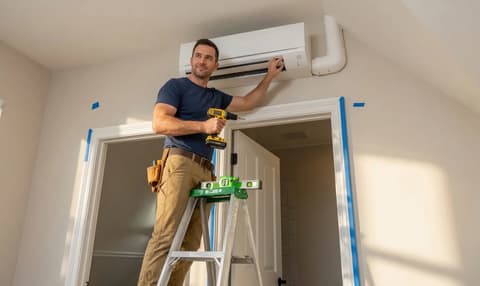
- According to Zone Air, a first-time single-zone wall install with two people takes 4 to 6 hours, plus whatever electrical work you need to do separately.
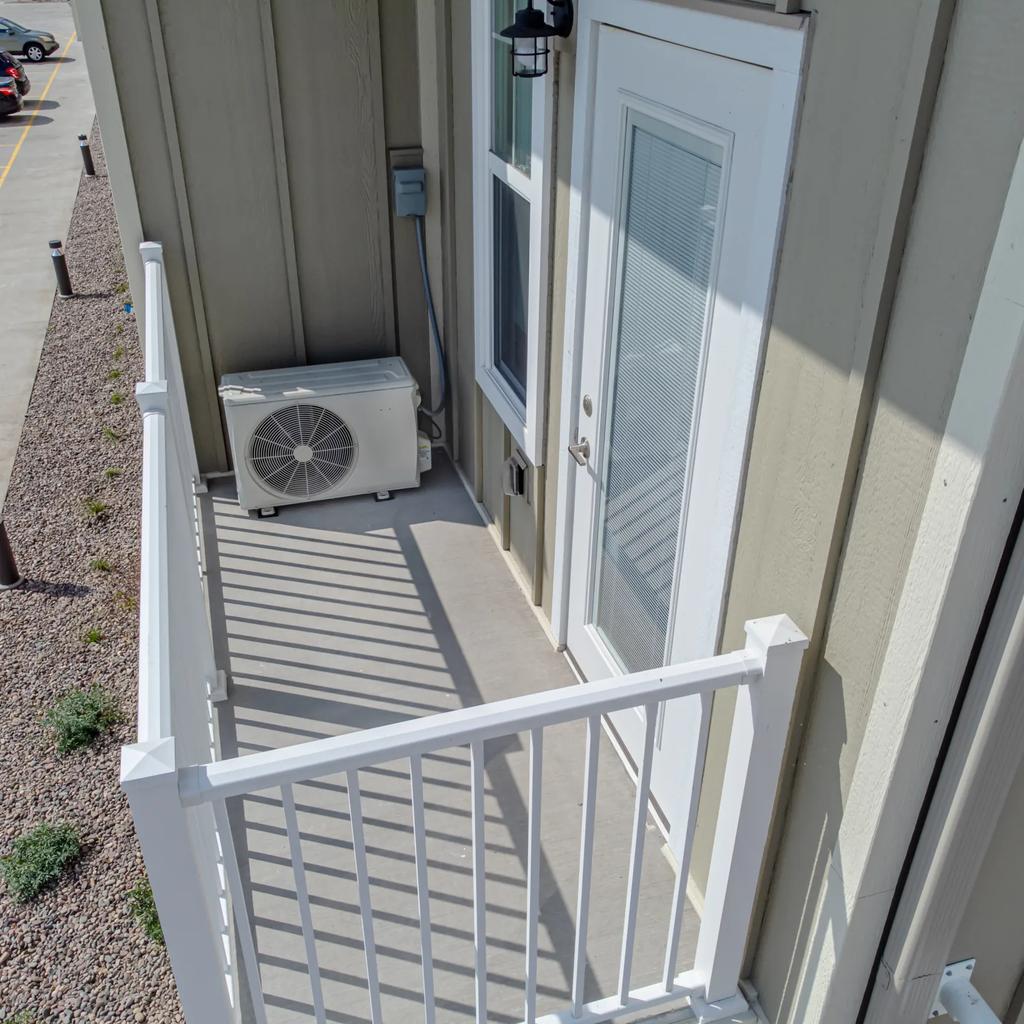
- In areas with heavy snow, mount the outdoor condenser on a wall bracket or raised stand so it sits above the level of the snow drifts.
- Leave the space around the outdoor unit that the install manual calls for.
- Follow all installation instructions exactly for both brands so you don't void the warranty.
AHRI, ENERGY STAR and Cold Weather Operating Costs
HSPF2 and SEER2 ratings directly affect your electricity bills, and in cold climates where you use heating mode for most of your energy use each year, HSPF2 and low-temperature COP are the numbers to watch.
What to look for:
- At minimum, you'll want SEER2 20+ and HSPF2 9.5+ for cold climate heating.
- The DIY 9K and 12K 230V models from Zone Air reach 24 SEER2. The company has published a COP of 2.1 at 5°F.
- For the MRCOOL DIY 5th Gen, the 9K and 12K units are 23.6 and 23.5 SEER2, with HSPF2 of 11.5 and 10.2.
- Some hyper heat models hold ENERGY STAR Cold Climate certification, which can help you qualify for rebates.
Operating cost impact:
- At COP 2.0+ at 5°F, you're getting double the heat output per kilowatt compared to a baseboard heater, so a mini split can about cut heating costs in half compared to electric resistance heat even on cold days.
- If you pair a mini split with solar panels, you can cut winter electricity costs even more.
Rebate considerations for 2026:
- State and utility rebates vary a lot from place to place. Some programs need specific SEER2/HSPF2 ratings or a certification listing, and may need professional installation paperwork even on DIY-capable units.
- The federal 25C tax credit ended for equipment placed in service after December 31, 2025, so don't count on it.
- Always check the current rebate rules for your zip code before buying, for example with the Zone Air rebate calculator.
Owner Feedback and Reliability for Zone Air and MRCOOL DIY
Across owner reviews, the consistent things people say about DIY mini splits are easy installation, energy savings versus older heating systems, and occasional install-related issues.
What you see in MRCOOL reviews:
- On MRCOOL's Trustpilot profile, people reviewing as of September 2026 mention warranty claims turned down on self-installed units, slow support replies, shipping charges on warranty replacement parts, and failures within a few years. These are individual reports from people reviewing, not a measured failure rate.
Zone Air's design approach:
- Zone Air's single continuous custom-length line sets cut down on the number of joints and couplers, which is the most common place for a DIY refrigerant leak to start.
- Zone Air sells direct and offers live technical support from 8 AM to 6 PM MT, plus an install video library and a written DIY manual.
- Customer reviews are published on the site for you to read.
Reliability practices that help any brand:
- Use proper torque tools on all fittings.
- Follow the install manual exactly. Don't wing it.
- Install surge protection on the electrical circuit.
- Clean filters monthly and coils annually.
- Ensure the condensate drain has proper slope and doesn't freeze in winter.
For long-term reliability in cold climates, Zone Air's design choices (custom-length pre-charged line sets, fewer joints and published low-temperature specs) give it an edge over MRCOOL DIY mini splits and other DIY systems in the market.
Licensing, Permits and DIY Legality in 2026
DIY mini splits are engineered so that homeowners don't ever have to open up the refrigerant circuit. With Zone Air, the refrigerant stays sealed in the factory-charged line set, so there is no EPA 608 certification in the install. MRCOOL describes its DIY install as requiring no special tools or training.
What you still need to know:
- Handling the refrigerant (cutting, flaring and filling it back up) still needs an EPA-certified technician by U.S. law. Pre-charged DIY units avoid this completely.
- Building permits and electrical permits may be required depending on your local area, even for DIY-labeled systems.
- Check with your local building department about permits for adding a 230V circuit, mounting an exterior outdoor condenser, or making wall penetrations.
- A licensed electrician may be required by local code for 230V wiring, even if the rest of the install is DIY.
- Zone Air's custom-length line sets remove the urge to cut or join tubing back together, which helps you stay within DIY scope.
- The key legal distinction is that if you never open the refrigerant circuit, you're operating within DIY scope. Pre-charged quick connect systems are specifically designed so you don't have to open the refrigerant circuit.
Which DIY Mini Split Setup Is Best for Your Cold Climate Home?
This is where the specs, the climate reality and what you need for installation come together into a clear recommendation. For cold climate heating in 2026, Zone Air DIY systems are our overall choice:
- Every model is rated to heat down to −13°F, which is the same floor as MRCOOL's standard DIY 5th Gen. Higher-tier DIY models like Hyper Heat are rated to heat at a lower temperature.
- The 9K and 12K units have a published COP of 2.1 at 5°F.
- The 230V 9K and 12K have a 24 SEER2 rating, which is the highest of the pre-charged DIY systems compared here.
- Pre-charged line sets cut to your exact length (5–75 ft) as one continuous run
- You can mix wall-mount units, ceiling cassette units and concealed ducted units on one multi-zone outdoor unit.
- There is an optional 115V plug-in cord kit for the 9K and 12K in areas where code allows it.
- 5-year parts and 7-year compressor warranty with no registration deadline, valid under homeowner installation
- Final assembly, testing, and inspection in the USA, from globally-sourced components
- You get 30-day returns on uninstalled units and free shipping to the lower 48.
MRCOOL DIY Hyper Heat is for buyers who need heating operation to −22°F, but even those systems can benefit from planned backup heat and careful DIY installation. With that in mind, here's the final guidance for you if you're a cold climate DIYer:
- A single-zone DIY mini split is the simplest choice if you have one cold room. You can go with a multi-zone system when you need to heat several rooms from one outdoor unit
- Focus on getting the right size, the room layout, insulation improvements and backup heat planning instead of chasing the very lowest temperature rating alone
- Check which certification your rebate program asks for (ENERGY STAR, AHRI, NEEP) before buying
- Plan your backup heat source before winter arrives, not during the first big cold snap
In 2026, for most homeowners in real-world cold climates, Zone Air is the best DIY mini split choice for balancing cold weather performance, DIY simplicity and long-term reliability. Size it right, plan your backup heat and you'll have a ductless mini split system that heats efficiently through even the toughest winter nights.
Specs and warranty terms are manufacturer-published as of November 2026, subject to change; verify before purchase. MRCOOL® is a trademark of its owner; Zone Air is not affiliated with or endorsed by MRCOOL.