With the best DIY mini split heat pump options for 2026, it isn't just about finding the lowest price tag, because what each system actually needs on install day matters just as much. This guide breaks down Zone Air, MRCOOL, Pioneer and Senville side by side, covering real costs, cold weather performance, warranty fine print and which brand fits better depending on your house, your climate and how comfortable you are with tools.
Quick Answer: Which DIY Mini Split Is Best in 2026?
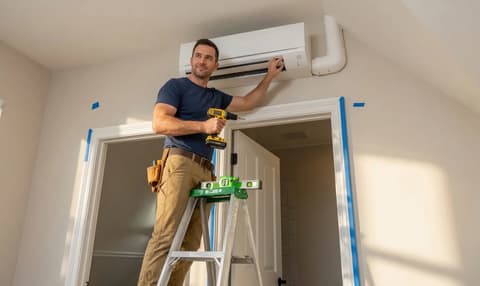
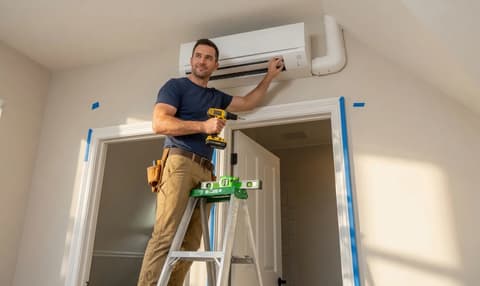
For true DIY installation, meaning no vacuum pump, no gauge set and no HVAC technician on speed dial, two brands make systems built for it: Zone Air and the MRCOOL DIY 5th Gen. Both use pre-charged quick-connect line sets, and both have a warranty that covers parts for 5 years and the compressor for 7 years, with no registration required. Zone Air is the better fit for most homes because it cuts the pre-charged line set to the exact length you measure, reaches 24 SEER2 on its 230V units, and lets you mix wall-mount, ceiling cassette and concealed ducted units on one outdoor unit. MRCOOL DIY has the biggest size range, and its higher-tier DIY models are rated to heat below −13°F.
Pioneer and Senville are excellent mini split brands, but their "DIY" installs still need an HVAC tech for refrigerant work. Here's the quick breakdown:
- Best all-around DIY choice: Zone Air (single zone and multi zone)
- Best DIY size range: MRCOOL DIY 5th Gen (single zone and multi zone)
- Best lower price "DIY-adjacent" choice: Pioneer Diamante and Quantum series (you'd need a vacuum pump or a tech)
- Best budget cold climate standard: Senville AURA cold-climate mini splits
With this guide, the goal is to help homeowners find the better fit between DIY and standard mini split systems, not just the lowest equipment price on the shelf. For picks by room and use, see our best DIY mini splits roundup.
How We Picked the Best DIY Mini Split Heat Pumps for 2026
Our ranking is about 2026 models and real-world DIY install paths, not spec sheets that were tuned in a lab. We looked at six factors for every brand and model:
- Total cost - equipment price plus installation, electrical work and add-ons you might need.
- Install path - true DIY with quick connect fittings versus traditional refrigerant connections that need professional tools.
- Efficiency - SEER2 and HSPF2 ratings, especially when the unit is in heating mode. SEER2 ratings measure how efficient the air conditioning is over the season, and energy efficiency ratings can vary a lot between different mini split models.
- Cold weather performance - heating capacity at 5°F, -13°F, and -22°F design temperatures.
- Warranty and support - compressor coverage, how long parts are covered, and whether the warranty holds up after self-installation.
- Owner experience - noise, app control, reliability and parts availability.
Everything is framed as of the 2026 cooling and heating season, with regulatory changes on refrigerants and new efficiency standards worked in. We put a lot of weight on code compliance and safety. We prioritize mini split systems that you, as an informed homeowner, can actually install without cutting corners.
What Counts as a True DIY Mini Split in 2026?
The difference between "true DIY" and "DIY-adjacent" is whether you can get the entire installation done yourself in a way that's legal and safe, and still keep the factory warranty when you're done. True DIY mini split systems:
- Use pre-charged, sealed, quick connect line sets - no flaring, no brazing.
- Do not need you to have a vacuum pump or manifold gauges. MRCOOL says "no special tools or training are necessary to install" its DIY line. On Zone Air, the refrigerant is sealed in the factory-charged line set and never opens to atmosphere, so there is no vacuum pump, no gauge set and no EPA 608 certification in the install.
- Allow the homeowner to keep the factory warranty after self-installation.
Standard mini splits (this includes most Pioneer and Senville models):
- Ship with a pre-charged outdoor unit, but the refrigerant circuit must be evacuated and opened by a licensed technician.
- Often void the warranty if someone without a license installs the unit.
Examples: Zone Air and the MRCOOL DIY 5th Gen qualify as true DIY with quick connect style fittings. Pioneer Diamante, Quantum Ultra, Senville LETO and AURA are standard systems needing refrigerant tools and professional help. DIY-friendly mini split heat pumps allow homeowners to install without hiring technicians - but only if the system is specifically designed for it.
Even with a true DIY line, electrical work and local permits may still require a licensed electrician depending on your jurisdiction.
Best Overall DIY Mini Split in 2026: Zone Air
Zone Air sells direct at zone-air.com and builds every system around pre-charged quick-connect line sets, with final assembly, testing, and inspection in the USA from globally-sourced components.
Product range:
- Single zone wall mount: 9K and 12K at 115V or 230V, and 18K at 230V
- Multi zone: one 27,000 BTU outdoor unit that runs 2–3 indoor units
- Ceiling cassette and Thin-Air concealed ducted units that go alongside the wall units
- Uses R-454B refrigerant
Installation pathway: Of the brands compared here, Zone Air is the only one that cuts your pre-charged line set to the exact length you measure, any whole foot from 5 to 75 (as of November 2026). Standard lengths are 16, 25, 33, 50 and 75 ft and each one is a single factory-sealed run with no field joint, where MRCOOL joins two sets with a coupler beyond 50 ft. A single-zone wall system comes with a 16 ft pre-charged line set in the box.
Performance: At 24 SEER2 on 230V, Zone Air is the highest-efficiency pre-charged quick-connect DIY system of the brands compared here (MRCOOL's best single-zone is 23.6). With the 115V models, you get 23 SEER2, which is a touch below MRCOOL's 115V units at 23.5–23.6. Every Zone Air system is rated to heat down to −13°F, the same floor as MRCOOL's standard DIY 5th Gen. Higher-tier MRCOOL DIY models are rated lower. Zone Air units are also rated to cool in outdoor temperatures up to 131°F (MRCOOL publishes 122°F).
Multi zone: Zone Air is the only DIY mini split that lets you mix wall-mount, ceiling cassette and concealed ducted units on one outdoor unit (as of November 2026), set up through its system builder. It is also the only DIY concealed ducted mini split system on the market as of November 2026: the Thin-Air unit is 7⅞ in tall and feeds 2–3 rooms from one unit. Its ceiling cassette throws air in four directions from a 22-inch square chassis, where MRCOOL's OuttaSight is a 50-inch single-slot cassette that puts air out one way.
Power: Zone Air has 115V models that you can plug into a dedicated 15A outlet with the optional cord kit, where local electrical code allows a plug-in install (never an extension cord). MRCOOL's 115V units are hardwired.
Warranty and terms: Zone Air carries 5-year parts and 7-year compressor coverage with no registration deadline, and installing it yourself does not void it. There is free shipping to the lower 48, with 1–2 business days to process and 2–5 in transit, and you get 30-day returns on uninstalled units. Support is live technical help 8 AM–6 PM MT from the people who built it, plus an install video library and a written DIY manual.
Price: the Zone Air 12K 115V is $1,999.99 and the 12K 230V is $2,199.99 (November 2026), each with the 16 ft line set included.
Best DIY Size Range in 2026: MRCOOL DIY 5th Gen
MRCOOL's DIY 5th Gen is one of the best-known self-installed heat pumps in 2026, and it covers more sizes than anyone else in the DIY class.
Product range:
- Single zone sizes: 9K, 12K, 18K, 24K, and 36K BTU
- Multi zone condensers supporting 2–6 indoor heads, covering whole homes or large apartments
- Uses R-454B refrigerant to comply with post-2026 GWP limits
Installation pathway: MRCOOL DIY uses pre-charged Quick-Connect lines in fixed lengths of 11.5, 16, 25, 35 and 50 ft, plus couplers when one set isn't long enough (75 ft max per indoor unit), and the manual has you keep excess line coiled behind the condenser. No vacuum pump, no gauges - the homeowner tightens flareless fittings to spec, mounts the outdoor unit and indoor head, and handles wiring.
Performance: MRCOOL DIY 5th Gen single-zone units reach up to 23.6 SEER2 (9K), and the 18K multi-zone condenser is rated 23.9 SEER2. Inverter technology enhances energy efficiency and reduces compressor cycling in these mini splits. MRCOOL's standard DIY 5th Gen is rated to about −13°F, and higher-tier DIY models are rated lower: the single-zone DIY Hyper Heat (12K and 18K, 230V) is rated to −22°F.
Warranty: MRCOOL DIY 5th Gen carries a 5-year parts and 7-year compressor warranty with no registration required, the same headline term as Zone Air. It is built for homeowner installation, unlike Senville - a critical difference for homeowners who want to handle the project themselves. MRCOOL publishes no manufacturer return policy, so returns depend on the seller.
The MRCOOL 12K 115V (DIY-12-HP-C-115D25-O) listed at about $2,359 at a major home-improvement retailer in September 2026, with a 25 ft pre-charged line set included. That's a higher equipment price than standard competitors, but the total cost picture changes fast once you factor in labor.
Where MRCOOL Easy Pro and Advantage Fit
Not every MRCOOL model is what you'd call a core DIY unit. Here's where the other lines sit:
MRCOOL Easy Pro:
- Aimed at entry-level buyers and smaller spaces (9K, 12K BTU), single zone only
- Uses a pre-charged quick connect line set with R-454B
- Efficient cooling (19.5–20.2 SEER2), but heating is tuned for milder winters - not for deep cold
- A fine pick for rentals, offices or sunrooms in temperate climates where a lower price and fast summer cooling matter more than heating performance
MRCOOL Advantage 5th Gen:
MRCOOL DIY Select:
- Sold under the same DIY sign, but it only comes with a 1-year parts / 2-year compressor warranty.
If you want the biggest size range, stronger cold climate performance and longer compressor coverage, the core MRCOOL DIY 5th Gen line is the better fit over Easy Pro, Advantage or DIY Select.
Pioneer Mini Splits in 2026: Budget DIY-Adjacent Pick
Pioneer is known for offering heating and cooling equipment at cheap prices. It's one of the most visible lower price mini split brands for standard installs.
Key 2026 lines:
- Diamante / Diamante Ultra - popular budget wall-mounted units, many still on R-410A
- Quantum Ultra - R-454B, higher efficiency, better for cold climate operation
- Quantum Hyperformance - specifically designed for cold weather focused heating
Pioneer uses conventional flare refrigerant connections on its line sets, so you need a vacuum pump, manifold gauges, a torque wrench and leak testing equipment. Homeowners either rent tools and try a full DIY install (not recommended and potentially warranty-voiding), or they mount the indoor and outdoor unit themselves and then pay an HVAC tech to handle the refrigerant work.
Pioneer units typically offer SEER2 ratings between 19 and 21, with Quantum Ultra models reaching higher. They're rated to heat down to -13°F. Pioneer provides a 5-year warranty on parts, with longer compressor coverage on select lines. Pioneer and Senville both require professional installation to keep the warranty intact.
Pioneer often wins on lower equipment price for the same BTU. But the all-in cost can land close to a true DIY system once you pay a technician. It's a better fit for buyers who are comfortable coordinating a hybrid install or who already have an HVAC pro they trust. For the full head-to-head, see MRCOOL vs Pioneer.
Senville Mini Splits in 2026: Value for Pro-Assisted Installs
Senville sells direct to you and has built a reputation for offering strong value in the mini split space. But "value" needs context.
Key lines:
- LETO series (e.g., SENL-12CD) is the budget line. Senville's LETO model is rated 21.2 SEER2. The Senville LETO is priced at $799.99 for a 12,000 BTU system.
- AURA series - cold-climate line. Senville AURA models have SEER2 ratings in the low 21s. The heating works down to about 5°F. Some hyper-heat types push lower.
- ELITE - newer R-454B models are positioned for higher efficiency and to meet future refrigerant compliance.
Senville still has traditional flared line sets. The outdoor unit comes pre-charged, but the lines have to be evacuated and opened by a licensed tech. The installation needs a licensed technician, and if you install Senville yourself you void the warranty coverage. Senville needs a licensed technician for refrigerant work, and there are no exceptions for warranty purposes.
Senville has 7 years on the compressor and 2 years on parts. Self-installation voids its warranty. That is the key difference from Zone Air and MRCOOL DIY, whose warranties (Zone Air, MRCOOL) are written for homeowner installs.
Senville is cheaper per BTU but may have higher installation costs. The $799.99 LETO looks attractive until you add $1,000–$2,000 for a professional install, electrical and accessories. It is a better fit than true DIY systems if you are fine hiring an HVAC technician and want lower equipment pricing. If you are looking for a quick connect, self-install path, Zone Air or MRCOOL DIY stays the better fit. We compare the two brands in more depth in MRCOOL vs Senville.
Single-Zone vs Multi Zone DIY Systems
How many rooms you're conditioning matters as much as which brand you purchase. A single zone mini split is the simplest place to start if you are new to this.
- There is one indoor unit for each outdoor unit - simplest for DIY
- These are ideal for bonus rooms, home offices, basements, garages or additions
- Often quieter and more efficient when serving one space with a stable load
Multi zone mini splits:
- One outdoor unit can run 2 to 6 indoor heads. Zone Air's 27K outdoor unit can run 2 to 3. MRCOOL DIY multi zone condensers can handle up to 6.
- Good for small homes, apartments or spaces that are close together with short, accessible line runs
- Zone Air's multi-zone outdoor unit can start with one head. You can add a second or third later on a spare port. A single-zone outdoor unit can't be converted.
Key cautions:
- Overloading a multi zone outdoor unit with too many small rooms can make it work less efficiently.
- Turning off several heads at once can cause short-cycling if the minimum load drops too low.
- Multiple single zone systems can sometimes work better for you than one big multi zone unit, especially if you're a DIYer and you want to manage the quality of your own installation.
Cold Climate Performance: Zone Air vs MRCOOL vs Pioneer vs Senville in Real Winters
How the heat pump does in cold weather is the difference maker for buyers in climate zones 4 through 7. Here's how the major brands compare.
Zone Air and the standard MRCOOL DIY 5th Gen both heat down to about −13°F, and MRCOOL's single-zone DIY Hyper Heat models heat down to −22°F. Mitsubishi's Hyper-Heating systems also operate down to -22°F, and Mitsubishi's Hyper-Heating models provide 100% heating at 5°F. Daikin AURORA maintains heating capacity at -13°F and Daikin AURORA systems reach up to 21 SEER2. Senville's AURA series heats effectively down to 5°F but trails the deepest cold ratings.
Homeowners should check the heating capacity at their design day temperature (e.g., 5°F or -5°F), not just the absolute minimum the outdoor unit can turn on. Right-sizing for design day temperatures, with a tool like the Zone Air sizing calculator, keeps the system from relying on expensive backup heat during prolonged cold snaps. For more on winter heating, see the best DIY mini split for cold climate.
2026 Refrigerant Rules and Long-Term Costs
Refrigerant choice and efficiency ratings affect both lifetime cost and how easy it will be to get service in the future.
Older models use R-410A, which has a high GWP and is being cut back under the AIM Act. That includes the closed-out MRCOOL 4th Gen and many pre-2025 Senville and Pioneer units. Newer Zone Air, MRCOOL DIY 5th Gen, Pioneer Quantum Ultra and Senville ELITE lines are moving to lower-GWP R-454B.
What this means for you:
- R-410A systems may be cheaper on clearance but could face higher repair costs by the early 2030s as refrigerant supply gets tight
- R-454B systems match up with 2026+ regulations and future parts availability
- If you plan to keep the system 10+ years, paying more now for a current-generation model is usually the better fit
Pairing a mini split with solar panels and a grid-tied solar power system can further reduce operating costs over the life of the unit, especially in regions with high summer cooling loads or time-of-use electric rates. A solar array on the roof can offset a lot of the electricity that the heat pump uses over the course of a year.
Real All-In Cost: DIY vs Standard Systems
A lower equipment price doesn't always mean a lower total cost. Homeowners often need to consider installation complexity when choosing mini split systems.
Typical cost components:
- Equipment price (indoor unit, outdoor unit, line set, wall sleeve, mounting kit, pad)
- Electrical work (a new 240V circuit, a disconnect and permits)
- Labor for the installation (an HVAC technician, an electrician or both)
- Accessories (a condensate pump, line hide and surge protection)
Scenario comparison - a single zone with 12,000 BTU:
Handling refrigerant needs proper tools and techniques to keep the warranties in place. Senville or Pioneer only end up at a truly lower price if you get very competitive labor rates. You should request written quotes for "owner-supplied equipment" installs before you decide that a lower price brand is really cheaper. Warranties for mini-split systems may depend on professional installation. That is a factor that shifts the math a lot.
When Zone Air, MRCOOL, Pioneer or Senville Makes Sense
How do you decide which mini split is right for you? The "best" mini split is the one that fits your specific house, climate, budget and installation skill level.
Choose Zone Air when:
- You want a true DIY install with a pre-charged line set that is cut to the exact length that your run needs
- You want the highest SEER2 in the DIY class (24 on 230V) or a 115V unit that can plug in where code allows
- You want to mix wall-mount units, ceiling cassette units and concealed ducted units on one outdoor unit
Choose MRCOOL DIY when:
- You want a true DIY install that uses quick connect line sets, but you need a size that Zone Air doesn't make - like a 24K or 36K single zone, or 4 to 6 zones on one outdoor unit
- You're in a very cold climate and you want a single-zone DIY Hyper Heat model that is rated down to −22°F
- You're going to be staying in the home long enough for the 7-year compressor warranty and R-454B to pay off
Choose Pioneer when:
- You have access to an HVAC technician who is willing to commission equipment that you supply
- You want the lowest equipment price and you're okay with a hybrid approach that uses DIY and pro work together
- You want flexible multi zone options and indoor unit options that go beyond the common wall head
Choose Senville when:
- You're price-sensitive but you're fine with paying for a professional install from day one
- You want a lower price way to get into mini split systems and you still want decent cold weather AURA performance
- You don't need true DIY. Handing the refrigerant work to an installer is no problem for you
For comparison, premium brands like Mitsubishi offer 10 to 12 years warranty on parts, but at substantially higher equipment and installation costs. Those are fine for homeowners with bigger budgets who want tier-one service networks, but they're outside the DIY conversation.
Zone Air and MRCOOL DIY lead the pack for genuine DIY mini splits in 2026, while Pioneer and Senville are excellent lower price standard mini split brands when paired with a good installer. The federal 25C heat pump tax credit ended for equipment placed in service after December 31, 2025, so look at state and utility rebates instead; the Zone Air rebate calculator can help you find them.
Final Verdict: The Best DIY Mini Split Heat Pump of 2026
Zone Air is the best overall DIY mini split of 2026 for most homeowners. The reasons stack up clearly:
- The line sets come pre-charged with quick connect fittings and are cut to the exact length you measure, from 5 to 75 ft, with no coupler required on long runs
- 24 SEER2 on 230V, which is the highest of the pre-charged quick-connect DIY systems compared here
- You can mix wall-mount units, ceiling cassette units and concealed ducted units on one outdoor unit
- Heating down to −13°F and a 5-year parts warranty and a 7-year compressor warranty that installing it yourself does not void
The MRCOOL DIY 5th Gen is the pick for sizes Zone Air doesn't make and, through its single-zone Hyper Heat models, for the coldest weather. Pioneer and Senville deliver strong performance and lower price hardware, but they are standard mini split systems that require professional refrigerant work. Their warranties reflect that reality.
Before you purchase, there are two things you'll want to decide first:
- Do you want a true DIY path, or are you fine with getting a pro involved?
- What's the temperature on your design day, and does the model you're looking at keep its real heating capacity at that number?
Once you've answered those questions, comparing brands on cold climate performance, total cost and warranty becomes straightforward. The right system isn't always the cheapest on the shelf - it's the one that keeps your house comfortable through every summer and winter without surprise costs down the line.
Best DIY Mini Split Heat Pump FAQ
What is the best DIY mini split heat pump in 2026? Zone Air is the best overall DIY mini split of 2026 for most homeowners. It cuts the pre-charged line set to the exact length you measure, reaches 24 SEER2 on its 230V units, and lets you mix wall-mount, ceiling cassette and concealed ducted units on one outdoor unit. The MRCOOL DIY 5th Gen is the pick for sizes Zone Air doesn't make.
Can I install a Pioneer or Senville mini split myself? Pioneer uses conventional flare refrigerant connections on its line sets, so you need a vacuum pump, manifold gauges, a torque wrench and leak testing equipment. With Senville, the lines have to be evacuated and opened by a licensed tech, and if you install Senville yourself you void the warranty coverage.
Does installing a DIY mini split yourself void the warranty? Not on Zone Air or MRCOOL DIY. Zone Air carries 5-year parts and 7-year compressor coverage with no registration deadline, and installing it yourself does not void it. MRCOOL DIY 5th Gen carries a 5-year parts and 7-year compressor warranty with no registration required.
How cold can a DIY mini split heat pump heat? Zone Air and the standard MRCOOL DIY 5th Gen both heat down to about −13°F, and MRCOOL's single-zone DIY Hyper Heat models heat down to −22°F.
Can I still get the federal heat pump tax credit? No. The federal 25C heat pump tax credit ended for equipment placed in service after December 31, 2025, so look at state and utility rebates instead; the Zone Air rebate calculator can help you find them.
Specs and warranty terms are manufacturer-published as of November 2026, subject to change; verify before purchase. MRCOOL® is a trademark of its owner; Zone Air is not affiliated with or endorsed by MRCOOL.